
Wenn Sie das Heizelement Ihres Trockners austauschen müssen, können Sie mit Kosten zwischen $20 und $150 für eine selbst durchgeführte Reparatur rechnen, oder zwischen $70 und $250, wenn Sie einen Fachmann beauftragen. Die meisten Hausbesitzer zahlen für eine Trocknerreparatur zwischen $70 und $350, abhängig vom Ersatzteil und den Arbeitskosten. Die Kenntnis der Kosten für den Austausch des Trockner-Heizelements hilft Ihnen, Reparaturen zu planen und unerwartete Ausgaben zu vermeiden. Die Kenntnis der typischen Trocknerreparaturkosten gibt Ihnen außerdem Sicherheit beim Vergleich von Serviceangeboten.
Das richtige Wissen kann Ihnen Zeit und Geld sparen, wenn Ihr Trockner nicht mehr heizt.
Kosten für den Austausch eines Trockner-Heizelements
Die Kenntnis der anfallenden Trocknerreparaturkosten hilft Ihnen, fundierte Entscheidungen zu treffen und Überraschungen zu vermeiden. Der Preis hängt davon ab, ob Sie sich für einen DIY-Ansatz entscheiden oder einen Fachmann beauftragen, von der Art Ihres Trockners und von eventuell anfallenden Zusatzgebühren.
Durchschnittliche Trocknerreparaturkosten
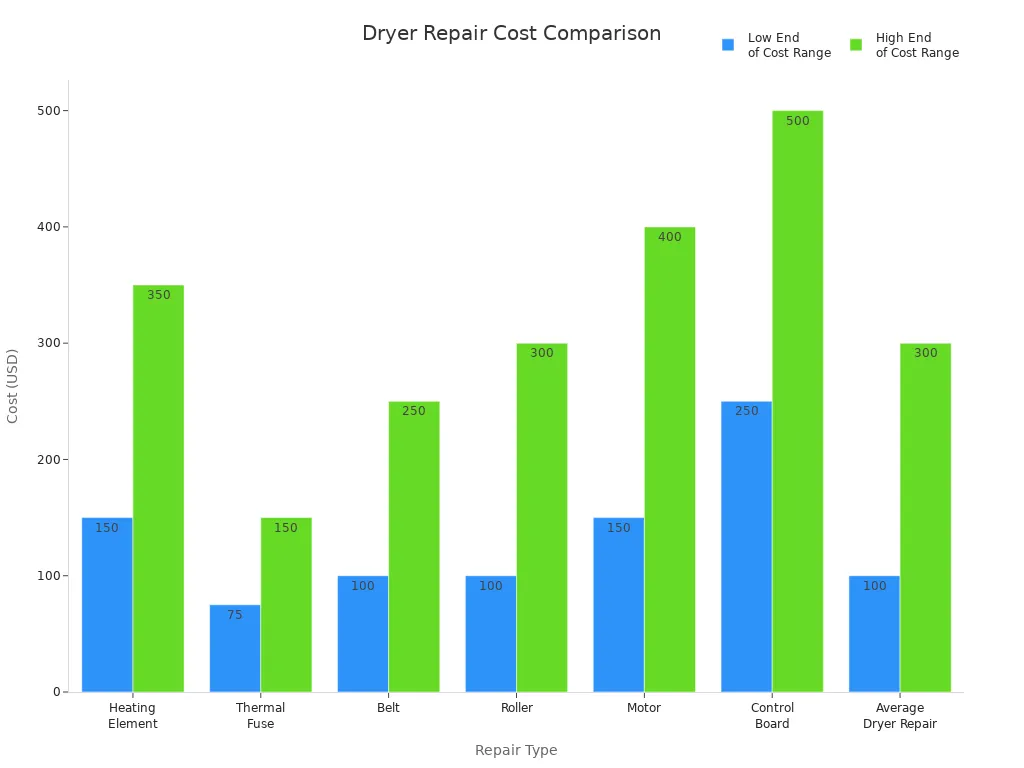
Die durchschnittlichen Kosten für eine Trocknerreparatur variieren je nach dem Teil, das ausgetauscht werden muss. Sie werden feststellen, dass die Kosten für die Reparatur eines Trocknerheizelement typischerweise im mittleren bis oberen Bereich im Vergleich zu anderen üblichen Reparaturen liegen.
| Reparatur Typ | Durchschnittlicher Kostenbereich (USD) | Hinweise zum Vergleich |
|---|---|---|
| Heizelement | 150 – 350 € | Mittlerer bis oberer Bereich der typischen Trocknerreparaturkosten |
| Thermosicherung | 75 – 150 € | Unter höhere Kosten als der Austausch des Heizelements |
| Riemen | 100 – 250 € | In der Regel kostengünstiger als die Heizelementreparatur |
| Rolle | 100 – 300 € | Vergleichbar, aber oft etwas geringer als beim Heizelement |
| Motor | $150 – $400 | Vergleichbar oder etwas höher als beim Heizelement |
| Steuerplatine | 250 – 500 € | Höhere Kosten als Heizelementaustausch zu bestätigen. |
| Durchschnittliche Trocknerreparatur | 100 – 300 € | Austausch des Heizelements liegt in diesem Bereich |
Kosten für den DIY-Austausch
Wenn Sie sich entscheiden, das Heizelement des Trockners selbst auszutauschen können Sie damit rechnen, dass die Kosten für ein Trockner-Heizelement für elektrische Trockner zwischen 35 € und 100 € liegen. Möglicherweise benötigen Sie auch grundlegende Werkzeuge, aber die meisten Hausbesitzer haben diese bereits zur Hand. Die geschätzten Gesamtkosten für eine DIY-Reparatur liegen in der Regel zwischen 35 € und 150 €, was diese Option erschwinglicher macht, wenn Sie sich mit der Reparatur von Geräten wohlfühlen.
Kosten für den professionellen Austausch
Die Beauftragung eines Fachmanns für die Trocknerreparatur erhöht die Kosten, bietet Ihnen jedoch Fachwissen und Sicherheit. Die durchschnittlichen Trocknerreparaturkosten für den Austausch eines Heizelements liegen zwischen $150 bis $350. Dieser Preis beinhaltet sowohl das Teil als auch die Arbeitsleistung. Dienstleister können eine Diagnosegebühr berechnen, die oft auf die Endrechnung angerechnet wird, wenn Sie die Reparatur durchführen lassen.
Kostenaufschlüsselung nach Trocknertyp
Die Art Ihres Trockners beeinflusst die Reparaturkosten. Elektro- und Gastrockner haben unterschiedliche Komponenten und Arbeitsanforderungen, was sich auf den Gesamtpreis auswirkt.
| Trockner Typ | Ausgetauschtes Bauteil | Teilekostenbereich | Arbeitskostenbereich | Gesamtkostenbereich | Zusätzliche Hinweise |
|---|---|---|---|---|---|
| Elektrotrockner | Heizelement | $35 bis $100 (DIY) | $100 bis $350 (Profi) | $150 bis $350 | Heizelement ist spulenbasiert; DIY möglich, aber riskant |
| Gastrockner | Zünder | In Gesamtsumme enthalten | In Gesamtsumme enthalten | $100 bis $250 | Zünder entzündet Gasbrenner; Austausch erfordert Erfahrung |
Kosten für Heizelement bei Elektrotrocknern
Elektrisch Trockner verwenden ein spulenbasiertes Heizelement. Die Kosten für ein Trockner-Heizelement für elektrische Modelle liegen je nach Marke und Qualität zwischen 35 € und 150 €. Die Arbeitskosten für die professionelle Installation betragen in der Regel zusätzlich 100 € bis 200 €, sodass die Gesamtkosten für die Reparatur eines Trockners zwischen 150 € und 350 € liegen.
Kosten für Heizelement bei Gastrocknern
Gastrockner verwenden kein herkömmliches Heizelement. Stattdessen verlassen sie sich auf einen Zünder, um den Gasbrenner zu entzünden. Die Kosten für die Reparatur eines Trocknerzünders liegen in der Regel zwischen 100 € und 250 €. Dieser Preis umfasst sowohl Teile als auch Arbeitskosten. Reparaturen an Gastrocknern erfordern aufgrund von Sicherheitsbedenken oft mehr Fachkenntnisse, was die durchschnittlichen Trocknerreparaturkosten erhöhen kann.
Zusätzlich zu berücksichtigende Kosten
Bei der Planung einer Trocknerreparatur müssen Sie mehr als nur die Heizelementkosten berücksichtigen. Mehrere Zusatzkosten können Ihre Endrechnung beeinflussen.
| Kostenkomponente | Typischer Kostenbereich (USD) | Beschreibung und Auswirkung auf die Gesamtkosten |
|---|---|---|
| Reparatur des Trockner-Heizelements | 150 € – 250 € | Grundkosten für Teile und Arbeitskosten zum Austausch des Heizelements. |
| Diagnose- / Servicegebühr | 55 € – 100 € | Deckt Anreise und Erstdiagnose des Technikers; wird oft bei Durchführung der Reparatur angerechnet. Erhöht die Vorabkosten. |
| Zusätzliche Servicegebühren | 50 € – 100 €+ | Beinhalten Abend-, Wochenend-, Feiertags- oder Notfallzuschläge und erhöhen die Gesamtkosten. |
| Arbeitsstundensätze | $50 – $150 pro Stunde | Variiert je nach Fachwissen des Technikers und Unternehmen; beeinflusst die endgültigen Arbeitskosten. |
| Erforderliche Werkzeuge | Implizit abgedeckt | Werden nicht separat berechnet, sondern sind in Diagnose- und Arbeitsgebühren enthalten. |
Möglicherweise stoßen Sie auch auf diese üblichen Zusatzkosten:
- Anfängliche Servicegebühr
- Arbeitszeit, die davon abhängt, wie lange die Reparatur dauert
- Kosten für Teile, die je nach Marke und Modell variieren
- Komplexität der Reparatur
- Art Ihres Trockners
- Durchschnittliche Lebenshaltungskosten in Ihrer Region
Tipp: Fragen Sie Ihren Techniker immer nach einer detaillierten Aufschlüsselung aller Kosten, bevor Sie der Reparatur zustimmen. So vermeiden Sie unerwartete Gebühren und können die Kosten für die Trocknerreparatur nach Teil vergleichen.
Indem Sie die durchschnittlichen Trocknerreparaturkosten, die Kosten für ein Trockner-Heizelement, und alle damit verbundenen Ausgaben verstehen, können Sie die beste Entscheidung für Ihr Zuhause und Ihr Budget treffen.
Faktoren, die die Kosten für den Austausch des Trockner-Heizelements beeinflussen
Wenn Sie eine Trocknerreparatur planen, beeinflussen mehrere Faktoren die endgültigen Kosten. Das Verständnis dieser Variablen hilft Ihnen, fundierte Entscheidungen zu treffen und unerwartete Ausgaben zu vermeiden.
Einfluss von Marke und Modell auf die Kosten
Beliebte Trocknermarken
Sie könnten erwarten, dass die Marke Ihres Trockners eine große Rolle bei den Kosten des Heizelement Austauschs spielt. In der Realität haben die meisten großen Marken – wie Maytag, Whirlpool, LG, Samsung und Speed Queen – ähnliche Reparaturkosten für vergleichbare Modelle. Die Kosten für ein Trocknerheizelement für diese Marken bleiben konstant, sodass Sie sich keine Sorgen machen müssen, nur aufgrund des Markennamens einen Aufpreis zu zahlen.
Spezial- oder High-End-Modelle
Das spezifische Modell Ihres Trockners kann einen größeren Einfluss auf die Kosten haben. Komplexe oder High-End-Modelle erfordern oft mehr Zeit für Diagnose und Reparatur, was die Arbeitskosten erhöht. Einfachere Modelle haben in der Regel weniger Komponenten, sodass der Reparaturprozess schneller und günstiger ist. Wenn Sie einen Spezial- oder fortschrittlichen Trockner besitzen, sollten Sie aufgrund der zusätzlichen Zeit und des erforderlichen Fachwissens mit höheren Kosten rechnen.
Teilequalität und Beschaffung
OEM- vs. Aftermarket-Trockner-Heizelemente
Wenn Sie nach einem Ersatzteil suchen, finden Sie sowohl OEM- (Original Equipment Manufacturer) als auch Aftermarket-Optionen. Der Kostenunterschied zwischen diesen Optionen kann erheblich sein:
- OEM-Trockner-Heizelemente kosten oft drei- bis viermal mehr als Aftermarket-Teile. Zum Beispiel könnten Sie 80 € für ein OEM-Teil bezahlen, aber nur 25 € für eine Aftermarket-Version.
- OEM-Teile haben in der Regel dickere Spulen und hochwertigere Materialien, was zu länger haltbaren Reparaturen führen kann.
- Aftermarket-Teile bieten niedrigere Anschaffungskosten, können aber schneller ausfallen, was zu zusätzlichen Reparaturkosten in der Zukunft führt.
- Viele Fachleute empfehlen OEM-Teile aus Gründen der Zuverlässigkeit, auch wenn die Anschaffungskosten höher sind.
Wo man Trockner-Heizelemente kaufen kann
Sie können Trockner-Heizelemente in Geräte- Teilegeschäften, bei Online-Händlern oder direkt beim Hersteller kaufen. Die Preise variieren je nach Quelle, daher sollten Sie Optionen vergleichen, um das beste Angebot zu finden. Überprüfen Sie immer, ob das Teil zu Ihrem Trocknermodell passt, um zusätzliche Kosten durch Rücksendungen oder falsche Installationen zu vermeiden.
Arbeits- und Servicegebühren
Lokale vs. nationale Trocknerreparaturdienste
Arbeits- und Servicegebühren können je nach Standort und gewähltem Anbieter stark variieren. Lokale Reparaturwerkstätten bieten möglicherweise niedrigere Kosten, während nationale Ketten manchmal mehr für Bequemlichkeit und Markenbekanntheit verlangen. In Ballungsgebieten können Sie aufgrund höherer Geschäftsausgaben wie Parkgebühren, Versicherungen und lokaler Steuern höhere Stundensätze sehen. Ländliche Gebiete können Reisekosten hinzufügen, die die Gesamtkosten Ihrer Trocknerreparatur erhöhen.
Kosten für Notfall- oder Same-Day-Service
Wenn Sie eine dringende Trocknerreparatur benötigen, rechnen Sie mit einem Aufpreis. Notfall- oder Same-Day-Service-Einsätze sind oft mit höheren Gebühren verbunden, um Überstunden und schnelle Reaktionszeiten abzudecken. Einige Unternehmen bieten rund um die Uhr Service zu wettbewerbsfähigen Preisen an, andere verlangen jedoch zusätzliche Gebühren für Besuche außerhalb der Geschäftszeiten. Fragen Sie immer nach diesen Kosten, bevor Sie Ihre Reparatur planen, um Überraschungen zu vermeiden.
Tipp: Der Vergleich von Dienstleistern und das Verständnis aller potenziellen Kosten hilft Ihnen, Ihre gesamten Trocknerreparaturausgaben zu kontrollieren.
DIY vs. professioneller Austausch des Trockner-Heizelements
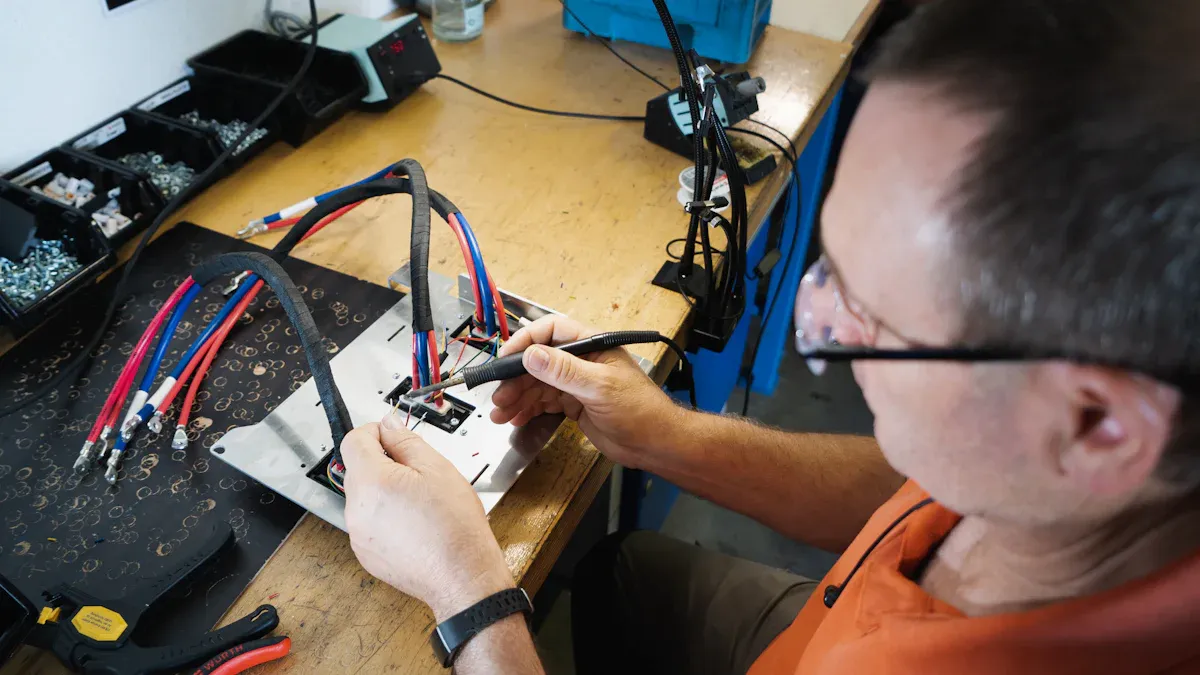
Die Wahl zwischen DIY und professionell Der Austausch des Heizelements eines Trockners erfordert eine sorgfältige Abwägung von Kosten,, Fachkenntnissen, Sicherheit und langfristigem Nutzen. Jeder Ansatz bietet einzigartige Vorteile und Nachteile, die sich auf Ihre gesamten Trocknerreparaturkosten und die Zuverlässigkeit Ihres Geräts auswirken.
Vor- und Nachteile des DIY-Austauschs
Kosteneinsparungen und Ausgaben
Der Selbstaustausch ist für viele Hausbesitzer attraktiv, da er die Kosten für die Reparatur eines Trockners erheblich senken kann. Sie vermeiden Arbeitskosten und zahlen nur für das Heizelement und eventuell benötigte Werkzeuge. Es können jedoch versteckte Kosten entstehen, wenn Sie das Problem falsch diagnostizieren oder bei der Reparatur Fehler machen. Diese Fehler können zu zusätzlichen Ausgaben führen, wie dem Austausch anderer beschädigter Teile oder der späteren Inanspruchnahme professioneller Hilfe.
Erforderliche Fähigkeiten und Werkzeuge
Sie benötigen grundlegende mechanische Fähigkeiten und die richtigen Werkzeuge, um eine Trocknerreparatur selbst durchzuführen. Viele Trockner erfordern das Entfernen von Verkleidungen, das Abklemmen von Drähten und den Umgang mit empfindlichen Komponenten. Ohne Erfahrung riskieren Sie, den Trockner zu beschädigen oder den Austausch falsch durchzuführen. Einige Modelle haben komplexe Baugruppen, die selbst erfahrene Heimwerker herausfordern.
Sicherheitsbedenken und Risiken
Die Sicherheit sollte immer an erster Stelle stehen. Hochspannungsgeräte wie Trockner bergen echte Risiken, darunter Stromschläge und Verletzungen durch scharfe Metallkanten. Häufige Fehler sind das Vergessen, den Trockner vom Stromnetz zu trennen, die Fehldiagnose des Problems oder die Anwendung unsicherer Reparaturmethoden. Der Versuch, gebrochene Heizelementdrähte zu splicen oder zu wickeln, kann Kurzschlüsse und weitere Schäden verursachen. Experten empfehlen, das Heizelement auszutauschen, anstatt es zu reparieren, da unsachgemäße Reparaturen das Gehäuse unter Spannung setzen und die Gefahr eines Stromschlags erhöhen können.
⚠️ Trennen Sie vor Beginn einer Trocknerreparatur immer die Stromversorgung, um Verletzungen zu vermeiden.
Häufige Fehler bei der Selbstreparatur:
- Fehldiagnose des Heizelements als Problemursache.
- Falscher Zusammenbau des Trockners nach dem Austausch.
- Übersehen kritischer Sicherheitsschritte, wie dem Ausschalten der Stromversorgung.
Vor- und Nachteile der Beauftragung eines Fachmanns
Fachwissen und Garantie
Professionelle Trocknerreparaturdienste bieten eine genaue Diagnose und den ordnungsgemäßen Austausch mit Spezialwerkzeugen. Techniker sind geschult, um komplexe Modelle zu handhaben und sichere, zuverlässige Reparaturen zu gewährleisten. Die meisten professionellen Installationsdienste beinhalten Garantien, die Sie vor zukünftigen Kosten schützen, falls Probleme auftreten.
Zeit und Bequemlichkeit
Die Beauftragung eines Fachmanns spart Ihnen Zeit und Mühe. Techniker führen den Austausch schnell durch und bieten oft einen Service am selben Tag oder einen Notdienst. Sie vermeiden den bei Selbstreparaturen üblichen Versuch-und-Irrtum-Prozess und gewinnen die Gewissheit, dass die Arbeit den Industriestandards entspricht.
Potenzielle Nachteile
Der Hauptnachteil einer professionellen Reparatur sind die höheren Kosten. Arbeits- und Servicegebühren erhöhen die gesamten Trocknerreparaturkosten im Vergleich zur Selbstreparatur. Es kann auch zu Verzögerungen kommen, wenn örtliche Techniker nur begrenzt verfügbar sind. Viele Unternehmen bieten jedoch transparente Preise an und verzichten möglicherweise auf Servicegebühren, wodurch unerwartete Kosten reduziert werden.
Vergleich der gesamten Trocknerreparaturkosten
Die folgende Tabelle fasst die wichtigsten Unterschiede zwischen dem Selbstaustausch und dem professionellen Austausch des Heizelements eines Trockners zusammen::
| Aspekt | Selbstreparatur | Professioneller Service |
|---|---|---|
| Kosten | Niedrigere Anfangskosten (nur Teile) | Höhere Kosten (Teile + Arbeit + mögliche Servicegebühren) |
| Erforderliche Fähigkeiten | Erfordert Erfahrung und richtige Werkzeuge | Fachtechniker übernehmen alle Aspekte |
| Zeit | Kann zeitaufwändig und herausfordernd sein | Schnellere Fertigstellung, spart Zeit |
| Risiko | Höheres Risiko von Fehlern und Sicherheitsgefahren | Geringeres Risiko, korrekte Diagnose und Installation |
| Zufriedenheit | Persönliche Zufriedenheit durch erfolgreiche Reparatur | Seelenfrieden durch garantierte Arbeit |
| Garantie | Kann Garantie ungültig machen, wenn Fehler auftreten | Beinhaltet oft Garantie und Arbeitsgarantien |
| Sicherheit | Strenge Sicherheitsvorkehrungen müssen befolgt werden | Fachleute sind geschult, um alle Sicherheitsrisiken zu managen |
Wenn Sie die Kosten für Reparatur versus Austausch vergleichen, mag die Selbstreparatur zunächst günstiger erscheinen. Die professionelle Installation verhindert jedoch oft wiederkehrende Probleme und bietet langfristigen Nutzen. Berücksichtigen Sie Ihr Können, Ihre verfügbare Zeit und die Komplexität Ihres Trockners, bevor Sie entscheiden, welche Option am besten Ihren Bedürfnissen und Ihrem Budget entspricht.
Schritt-für-Schritt-Anleitung zum Austausch des Heizelements eines Trockners
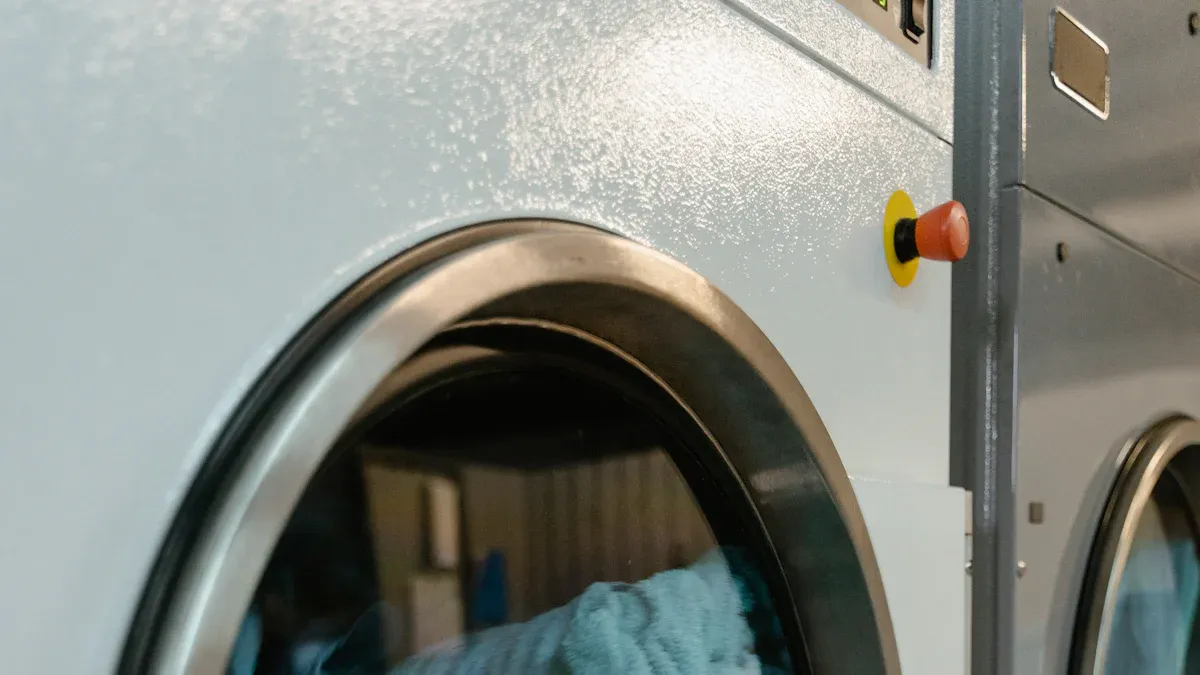
Der Austausch eines Heizelements eines Trockners erfordert sorgfältige Vorbereitung, die richtigen Werkzeuge und Aufmerksamkeit für die Sicherheit. Sie können dieser detaillierten Anleitung folgen, um den Austauschprozess effizient und sicher durchzuführen.
Vorbereitungs- und Sicherheitsschritte
Trennen des Trockners vom Stromnetz
Bevor Sie mit dem Austausch beginnen, müssen Sie Ihre Sicherheit gewährleisten. Beginnen Sie damit, den Schutzschalter auszuschalten, der Ihren Trockner mit Strom versorgt. Dieser Schritt stellt sicher, dass während der Reparatur kein Strom fließt. Trennen Sie als Nächstes den Trockner von der Steckdose. Versuchen Sie niemals, das Heizelement eines Trockners auszutauschen, während das Gerät noch an die Stromversorgung angeschlossen ist.
Tragen Sie Schutzausrüstung wie Handschuhe, um Ihre Hände vor scharfen Kanten zu schützen, und eine Schutzbrille, um Ihre Augen vor Staub und Schmutz zu schützen. Öffnen Sie ein Fenster oder eine Tür, um den Bereich zu belüften und Staub oder Dämpfe zu verteilen. Ein sauberer, organisierter Arbeitsplatz hilft, Unfälle zu vermeiden und den Austausch reibungsloser zu gestalten.
Sammeln der notwendigen Werkzeuge und Teile
Sie benötigen die richtigen Werkzeuge und Teile, um den Austausch das Heizelement eines Trockners auszutauschen, erfolgreich durchzuführen. Experten für Gerätereparatur empfehlen Folgendes:
- Kreuzschlitz- und Schlitzschraubendreher
- Nuss- oder Steckschlüsseleinsätze
- Verstellbare Schraubenschlüssel
- Spitzzange
- Multimeter zur Prüfung der elektrischen Durchgängigkeit
- Taschenlampe zur Beleuchtung dunkler Bereiche
- Elektroisolierband zur Isolierung von Drahtverbindungen
Sammeln Sie das neue Teil Trocknerheizelement das zu Ihrem Modell passt. Überprüfen Sie die Teilenummer in Ihrer Bedienungsanleitung oder auf der Website des Herstellers. Überprüfen und reinigen Sie das Abluftsystem, indem Sie den Abluftschlauch abtrennen und Flusenablagerungen entfernen. Dieser Schritt verhindert Überhitzung und gewährleistet einen sicheren Betrieb nach dem Austausch.
Tipp: Bewahren Sie alle Schrauben und Kleinteile in einem Behälter auf, um Verlust während des Vorgangs zu vermeiden.
Zugang zum Heizelement des Trockners
Entfernen der Trocknerverkleidung
Um auf das Trocknerheizelement, zuzugreifen, müssen Sie die entsprechende Abdeckung entfernen. Bei den meisten Trocknern muss die Rückwand abgenommen werden, einige Modelle verwenden jedoch eine vordere oder untere Abdeckung. Verwenden Sie einen Kreuzschlitzschraubendreher oder einen Nussenschrauber, um die Schrauben der Abdeckung zu lösen. Bewahren Sie die Schrauben an einem sicheren Ort für den späteren Zusammenbau auf.
Ziehen Sie die Verkleidung vorsichtig vom Trockner weg. Wenn Sie auf Widerstand stoßen, überprüfen Sie auf versteckte Schrauben oder Clips. Verwenden Sie eine Taschenlampe, um dunkle Ecken zu inspizieren und sicherzustellen, dass Sie keine Befestigungselemente übersehen.
Auffinden des Heizelements
Nachdem Sie die Abdeckung entfernt haben, suchen Sie das Trocknerheizelement. Bei den meisten elektrischen Trocknern befindet sich das Heizelement in einem Metallgehäuse nahe dem Boden oder der Rückseite des Geräts. Das Heizelement ähnelt einer gewickelten Drahtspule oder einem Metallrahmen mit Anschlüssen für die elektrischen Verbindungen.
Verwenden Sie Ihr Multimeter, um das Heizelement auf Durchgang zu prüfen. Platzieren Sie die Sonden an den Anschlüssen. Wenn die Anzeige keinen Durchgang zeigt, haben Sie die Notwendigkeit eines Austauschs bestätigt.
Ausbauen und Einsetzen des Heizelements
Abklemmen des alten Heizelements des Trockners
Beginnen Sie damit, die Drähte zu trennen, die an den Anschlüssen des Heizelements befestigt sind. Verwenden Sie eine Spitzzange, um die Stecker vorsichtig zu lösen. Machen Sie ein Foto oder notieren Sie die Positionen der Drähte, um den korrekten Zusammenbau sicherzustellen.
Entfernen Sie alle Befestigungsschrauben oder Clips, die das Heizelement an Ort und Stelle halten. Schieben Sie das alte Heizelement vorsichtig aus seinem Gehäuse. Vermeiden Sie dabei, benachbarte Komponenten oder Verkabelungen zu beschädigen.
Einbau des neuen Trockner-Heizelements
Setzen Sie das neue Trocknerheizelement in das Gehäuse ein und richten Sie es an den Montagebohrungen aus. Befestigen Sie es mit den zuvor entfernten Schrauben oder Klammern. Schließen Sie die Drähte wieder an die korrekten Anschlüsse an, entsprechend Ihrer Notizen oder Referenzfotos.
Verwenden Sie Ihr Multimeter, um die korrekten elektrischen Verbindungen zu überprüfen. Isolieren Sie vorübergehend überbrückte Drähte mit Elektroisolierband und stellen Sie sicher, dass keine blanken Drähte das Trocknergehäuse berühren. Stellen Sie alle Sicherheitskomponenten, wie die Thermosicherung, wieder in ihren ursprünglichen Zustand zurück.
Hinweis: Wenn Sie sich zu irgendeinem Zeitpunkt unsicher fühlen oder der Trockner nach dem Austausch anhaltende Probleme zeigt, wenden Sie sich an einen professionellen Techniker, um Sicherheitsrisiken zu vermeiden.
Sie haben nun die grundlegenden Schritte zum Austausch des Heizelements des Trockners abgeschlossen. Die nächste Phase umfasst den Zusammenbau des Trockners und die Prüfung seines Betriebs, um sicherzustellen, dass Ihr Austausch eine zuverlässige Leistung erbringt.
Zusammenbau und Prüfung
Wiederanbringen der Verkleidungen
Nachdem Sie den Austausch des Heizelements abgeschlossen haben, müssen Sie Ihren Trockner wieder zusammenbauen. Beginnen Sie damit, die zuvor entfernte Abdeckung sorgfältig auszurichten. Befestigen Sie sie mit den Originalschrauben und stellen Sie sicher, dass jede fest sitzt. Falls Ihr Trockner mit Clips arbeitet, drücken Sie diese ein, bis Sie ein Klicken hören. Überprüfen Sie, dass keine Kabel oder Teile zwischen der Abdeckung und dem Rahmen eingeklemmt werden. Eine lose Abdeckung kann während des Betriebs Klappergeräusche verursachen oder sogar das Gerät beschädigen.
Sie sollten auch den Abluftschlauch wieder anschließen, wenn Sie ihn während des Austauschs getrennt haben. Schieben Sie den Abluftschlauch zurück auf den Auslass und ziehen Sie die Schelle fest. Dieser Schritt gewährleistet eine ordnungsgemäße Luftzirkulation und verhindert Flusenansammlungen, die zu Überhitzung führen können. Nachdem Sie alle Verkleidungen und Verbindungen wieder angebracht haben, überprüfen Sie den Bereich auf zurückgelassene Werkzeuge oder Teile. Ein sauberer Arbeitsplatz hilft, zukünftige Probleme zu vermeiden.
Tipp: Nehmen Sie sich einen Moment Zeit, um Ihre Arbeit zu überprüfen, bevor Sie fortfahren. Eine schnelle Inspektion jetzt kann Ihnen ersparen, den Trockner später wieder öffnen zu müssen.
Prüfen des Trockners nach dem Austausch
Jetzt müssen Sie den Trockner testen, um den Erfolg Ihres Austauschs zu bestätigen. Stecken Sie den Trockner wieder in die Wandsteckdose oder schalten Sie den Schutzschalter wieder ein. Stellen Sie den Trockner auf einen Standard-Trocknungszyklus und starten Sie die Maschine. Hören Sie auf ungewöhnliche Geräusche wie Rasseln oder Schleifen, die auf eine nicht sichere Verkleidung hinweisen könnten.
Überprüfen Sie, ob die Trommel gleichmäßig dreht und warme Luft aus dem Abluftauslass strömt. Wenn der Trockner aufheizt und einen Zyklus ohne Fehler abschließt, war Ihr Austausch erfolgreich. Wenn Sie Probleme wie keine Wärme oder einen ausgelösten Schutzschalter bemerken, schalten Sie den Trockner sofort aus. Überprüfen Sie Ihre Installationsschritte erneut, um sicherzustellen, dass alle Drähte richtig angeschlossen sind und das Heizelement in der korrekten Position sitzt.
Hinweis: Bleiben Sie während des ersten Testzyklus immer in der Nähe. Wenn Sie Brandgeruch oder Rauch bemerken, stoppen Sie den Trockner und ziehen Sie sofort den Netzstecker.
Sicherheitstipps und häufige Fehler
Wenn Sie das Heizelement eines Trockners auszutauschen,, Sicherheit muss Ihre oberste Priorität bleiben. Viele Hausbesitzer übersehen grundlegende Vorsichtsmaßnahmen, was zu Verletzungen oder Schäden führen kann. Befolgen Sie diese wesentlichen Sicherheitstipps jedes Mal, wenn Sie einen Austausch durchführen:
- Trennen Sie den Trockner vom Stromnetz, indem Sie den Netzstecker ziehen oder den Schutzschalter ausschalten, bevor Sie mit Austauscharbeiten beginnen. Dieser Schritt verhindert Stromschläge.
- Lassen Sie den Trockner vollständig abkühlen, wenn Sie ihn kürzlich benutzt haben. Heiße Oberflächen können Verbrennungen verursachen.
- Arbeiten Sie langsam und sorgfältig. Eile erhöht das Unfallrisiko.
- Stellen Sie sicher, dass Ihr Arbeitsplatz gut beleuchtet ist, damit Sie alle Teile klar sehen können.
- Halten Sie den Bereich sauber und frei von Unordnung. Kinder und Haustiere sollten sich vom Arbeitsbereich fernhalten.
- Berühren Sie niemals innere Teile mit nassen Händen. Halten Sie den Arbeitsbereich trocken, um elektrische Gefahren zu vermeiden.
- Konsultieren Sie Ihr Benutzerhandbuch für spezifische Sicherheits- oder Installationsanweisungen zu Ihrem Trocknermodell.
- Gehen Sie vorsichtig mit allen Teilen um. Grobe Handhabung kann das Gerät beschädigen oder zu Verletzungen führen.
- Tragen Sie isolierte Handschuhe, um Ihre Hände vor scharfen Kanten und elektrischen Gefahren zu schützen.
- Vermeiden Sie es, freiliegende Drähte oder Anschlüsse zu berühren. Wenn Sie sie handhaben müssen, verwenden Sie nicht leitende Werkzeuge oder Isolierhandschuhe.
- Dokumentieren Sie die Verdrahtungsanschlüsse, bevor Sie etwas trennen. Dieser Schritt gewährleistet den korrekten Zusammenbau beim Austausch.
⚠️ Priorisieren Sie immer die Sicherheit vor der Geschwindigkeit. Wenn Sie sich zu irgendeinem Zeitpunkt unsicher fühlen, stoppen Sie und konsultieren Sie einen Fachmann.
Häufige Fehler, die vermieden werden sollten:
- Vergessen, den Strom vor Beginn des Austauschs zu trennen.
- Versäumnis, Drahtverbindungen zu dokumentieren, was zu falschem Zusammenbau führt.
- Verwendung des falschen Ersatzteils für Ihr Trocknermodell.
- Übermäßiges Anziehen von Schrauben, was Gewinde beschädigen oder Verkleidungen reißen kann.
- Überspringen des abschließenden Testzyklus nach dem Zusammenbau.
Sie können die meisten Probleme vermeiden, indem Sie diese Sicherheitstipps befolgen und während des gesamten Austauschprozesses organisiert bleiben. Sorgfältige Aufmerksamkeit für Details stellt sicher, dass Ihr Trockner sicher und effizient arbeitet, nachdem Sie das Heizelement des Trockners ausgetauscht haben.
Wann Sie einen Fachmann für den Austausch des Heizelements des Trockners rufen sollten
Zu wissen, wann Sie einen Fachmann für den Trockner Heizelementaustausch zu bestätigen. rufen sollten, kann Ihnen Zeit, Geld und Stress sparen. Einige Situationen erfordern fachkundige Aufmerksamkeit, um Ihre Sicherheit und die langfristige Leistung Ihres Geräts zu gewährleisten.
Anzeichen, dass Sie eine fachmännische Trocknerreparatur benötigen
Sie können grundlegende Wartungsarbeiten durchführen, aber bestimmte Warnsignale bedeuten, dass Sie einen Fachmann für die Trocknerreparatur kontaktieren sollten. Achten Sie auf diese Probleme:
Komplexe Trocknermodelle
Moderne Trockner verfügen oft über fortschrittliche Elektronik, Digitalanzeigen und spezialisierte Komponenten. Wenn Ihr Trockner Fehlercodes anzeigt oder eine komplizierte Baugruppe hat, sollten Sie die Reparatur nicht selbst versuchen. Komplexe Modelle erfordern spezielle Werkzeuge und Kenntnisse. Der Versuch, diese Trockner ohne entsprechende Schulung zu reparieren, kann zu weiteren Schäden führen oder Ihre Garantie ungültig machen.
Bedenken hinsichtlich der elektrischen oder Gassicherheit
Sicherheit muss immer an erster Stelle stehen. Wenn Sie eines der folgenden Probleme bemerken, stellen Sie die Nutzung Ihres Trockners ein und rufen Sie einen Fachmann:
- Übermäßige Trocknungszeiten von mehr als 30-45 Minuten, selbst nach Reinigung des Flusensiebs.
- Brandgeruch oder Anzeichen von Überhitzung während des Betriebs.
- Der Trockner stoppt mitten im Zyklus oder startet nicht.
- Ungewöhnliche Geräusche wie Quietschen, Rasseln oder Schleifen.
- Kleidungsstücke bleiben nach einem vollständigen Programm trotz normaler Einstellungen feucht.
- Auf dem digitalen Display erscheinen Fehlercodes.
⚠️ Brandgeruch und Überhitzung stellen eine ernsthafte Brandgefahr dar.. Anhaltende Probleme nach der Reinigung des Lüftungsschlauches oder Filters erfordern sofortige professionelle Reparatur.
Sie sollten auch dann fachkundige Hilfe suchen, wenn Sie einen Gastrockner besitzen. Gasgeräte bergen zusätzliche Risiken, einschließlich Gaslecks und Kohlenmonoxidbelastung. Nur geschulte Techniker sollten Reparaturen an Gastrocknern durchführen.
Was Sie von einem Trockner-Reparaturservice erwarten können
Wenn Sie eine professionelle Trocknerreparatur vereinbaren, können Sie von Anfang bis Ende einen klaren und effizienten Ablauf erwarten.
Typischer Serviceablauf
- Sie kontaktieren den Reparaturservice telefonisch oder online.
- Ein Techniker trifft ein, um das Trocknerproblem zu diagnostizieren.
- Der Techniker erstellt einen detaillierten Kostenvoranschlag für Teile und Arbeitszeit.
- Mit Ihrer Zustimmung beginnt der Techniker mit der Reparatur.
- Der Techniker schaltet die Stromversorgung aus, entfernt die erforderlichen Verkleidungen und lokalisiert das defekte Heizelement.
- Der Techniker trennt die Verkabelung, testet das Element und ersetzt es durch ein neues Teil.
- Der Techniker baut den Trockner wieder zusammen und testet ihn, um die einwandfreie Funktion zu bestätigen.
Dieser Prozess stellt sicher, dass Ihr Trockner einer gründlichen Inspektion und einer zuverlässigen Reparatur unterzogen wird. Die meisten Fachleute legen Wert auf qualitativ hochwertige Arbeit und Kundenzufriedenheit.
Fragen, die Sie Ihrem Techniker stellen sollten
Bevor die Reparatur beginnt, sollten Sie Ihrem Techniker einige wichtige Fragen stellen:
- Was hat den Ausfall des Heizelements verursacht?
- Handelt es sich bei dem Ersatzteil um ein OEM- oder ein Aftermarket-Teil?
- Ist die Reparatur mit einer Garantie verbunden?
- Wie lange wird die Reparatur dauern?
- Gibt es zusätzliche Kosten, die nicht im Kostenvoranschlag enthalten sind?
- Welche Wartungsschritte können helfen, zukünftige Trocknerprobleme zu vermeiden?
Tipp: Eine klare Kommunikation mit Ihrem Techniker hilft Ihnen, den Reparaturprozess zu verstehen und unerwartete Ausgaben zu vermeiden.
Indem Sie die Anzeichen erkennen, die professionelle Hilfe erfordern, und wissen, was Sie bei einem Serviceeinsatz erwartet, schützen Sie Ihr Zuhause und stellen sicher, dass Ihr Trockner sicher und effizient arbeitet.
Vermeidung zukünftiger Probleme mit dem Trockner-Heizelement
Regelmäßige Wartung spielt eine entscheidende Rolle bei der Verlängerung der Lebensdauer Ihres Trockners und der Vermeidung kostspieliger Reparaturen. Indem Sie einige einfache Schritte befolgen, können Sie Ihr Gerät effizient halten und das Risiko verringern, dass Ihr Trockner nicht heizt, wenn Sie ihn am meisten brauchen.
Tipps zur regelmäßigen Trocknerwartung
Reinigen des Flusensiebs und der Trocknerlüftungsschläuche
Sie sollten immer Reinigen Sie das Flusensieb nach jedem Trocknungsgang.. Diese einfache Gewohnheit verhindert, dass Flusen in das Lüftungssystem gelangen, was zu Überhitzung führen und die Brandgefahr erhöhen kann. Flusenansammlungen schränken den Luftstrom ein, zwingen Ihren Trockner härter zu arbeiten und belasten das Heizelement zusätzlich.
Eine professionelle Reinigung der Trocknerlüftung wird mindestens einmal jährlich empfohlen.. Wenn Sie jedoch einen großen Haushalt haben, Ihren Trockner häufig nutzen oder Haustiere besitzen, müssen Sie die Lüftung möglicherweise häufiger reinigen. Anzeichen, die eine sofortige Reinigung erfordern, sind längere Trocknungszeiten, Überhitzung,, Brandgeruch oder sichtbare Flusen um die Lüftungsöffnung. Regelmäßige Reinigung hält Ihren Trockner nicht nur sicher, sondern verbessert auch die Effizienz und verlängert seine Lebensdauer.
Tipp: Die National Fire Protection Association empfiehlt eine jährliche Reinigung der Trocknerlüftung,, Sie sollten die Häufigkeit jedoch basierend auf Ihrer Nutzung und Ihren Haushaltsbedürfnissen anpassen.
Vermeidung einer Überladung des Trockners
Eine Überladung Ihres Trockners kann zu mechanischer Belastung und übermäßigem Verschleiß des Heizelements führen. Befolgen Sie stets die Beladungskapazitätsrichtlinien des Herstellers. Wenn Sie die Trommel überladen, reduzieren Sie den Luftstrom und zwingen den Trockner zu längeren Programmen, was das Risiko von Überhitzung und vorzeitigem Ausfall des Heizelements erhöht. Durch richtiges Beladen des Trockners tragen Sie zur Aufrechterhaltung einer optimalen Leistung bei und schützen alle internen Komponenten.
Erkennen früher Warnsignale eines Heizelementausfalls
Sie können oft frühe Anzeichen von Problemen erkennen, bevor Ihr Trockner vollständig ausfällt. Achten Sie auf diese häufigen Indikatoren:
- Der Trockner heizt zunächst auf, hört dann aber auf, Wärme zu erzeugen, während die Trommel sich weiterdreht.
- Sie stellen fest, dass der Trockner selbst bei hohen Heizeinstellungen nur niedrige Temperaturen erreicht.
- Trocknungsprogramme dauern viel länger als gewöhnlich, oder Kleidungsstücke bleiben nach einem vollständigen Programm feucht.
- Sie sehen sichtbare Schäden am Heizelement, wie Brüche, Verbrennungen oder Verfärbungen.
- Es erscheinen keine Fehlercodes oder Warnleuchten, aber der Trockner heizt dennoch nicht richtig.
Eingeschränkter Luftstrom durch verstopfte Lüftungsschläuche oder Flusenfilter kann ebenfalls dazu führen, dass das Heizelement überhitzt und vorzeitig abschaltet. Defekte Thermostate oder Sensoren können zu ungleichmäßiger Heizung beitragen. Wenn Sie eines dieser Symptome beobachten, sollten Sie das Heizelement und die zugehörigen Komponenten überprüfen. Die Verwendung eines Multimeters zur Durchgangsprüfung kann Ihnen helfen zu bestätigen, ob das Heizelement ausgetauscht werden muss.
Hinweis: Das frühzeitige Beheben dieser Warnsignale hilft Ihnen, unerwartete Ausfälle zu vermeiden und die Lebensdauer Ihres Trockners zu verlängern.
Durch die Wartung Ihres Trockners mit regelmäßiger Reinigung und sachgemäßer Nutzung verringern Sie das Risiko eines Heizelementausfalls und gewährleisten einen sicheren und effizienten Betrieb für die kommenden Jahre.
Die richtige Wahl für Ihre Trocknerreparaturkosten und -bedürfnisse treffen
Abwägen von Kosten und Bequemlichkeit
Wenn Sie vor einem Austausch des Trockner-Heizelements stehen,, müssen Sie die Kosten gegen die Bequemlichkeit eines professionellen Services abwägen. Die Kosten für eine professionelle Reparatur liegen typischerweise zwischen 150 und 350 Euro, einschließlich Technikergebühren und Arbeitszeit. Wenn Sie sich für einen DIY-Ansatz entscheiden, geben Sie möglicherweise nur 35 bis 100 Euro für Teile aus. Sie müssen jedoch mehr als nur die anfänglichen Kosten berücksichtigen.
- Eine DIY-Reparatur kann Geld sparen, erfordert jedoch Zeit, Mühe und die Bereitschaft zu lernen.
- Der professionelle Service bietet Fachkenntnis, Sicherheit und Seelenfrieden, insbesondere bei komplexen Trocknermodellen.
- Die Art des Trockners – elektrisch oder gasbetrieben – beeinflusst sowohl die Kosten als auch die Komplexität des Austauschs.
- DIY-Reparaturen bergen Risiken, wie persönliche Verletzungen oder die Verursachung weiterer Schäden, die Ihre Gesamtkosten erhöhen könnten.
- Professionelle Reparatur stellt sicher, dass die Arbeit gleich beim ersten Mal richtig erledigt wird, und verringert die Wahrscheinlichkeit wiederkehrender Probleme.
Tipp: Wägen Sie die geringeren Kosten einer DIY-Reparatur gegen den Wert Ihrer Zeit und die Sicherheit einer professionellen Reparatur ab.
Einschätzung Ihrer DIY-Fähigkeiten bei der Trocknerreparatur
Bevor Sie eine Trocknerreparatur versuchen, sollten Sie ehrlich Ihre Fähigkeiten und Ressourcen einschätzen. Berücksichtigen Sie folgende Faktoren:
- Ihr technisches Verständnis und Ihre Fähigkeit, detaillierte Anweisungen für den Austausch zu befolgen.
- Erfahrung mit der Diagnose elektrischer Schaltkreise und der Verwendung von Spezialwerkzeugen.
- Vertrautheit mit Sicherheitsvorkehrungen, wie dem Arbeiten mit Strom oder Gas, und der Verwendung geeigneter Schutzausrüstung.
- Bisherige Erfolge bei Gerätereparaturen und Vertrautheit mit Ihrem spezifischen Trocknermodell.
- Zugang zu notwendigen Werkzeugen, originalen Ersatzteilen und zuverlässigen Reparaturanleitungen.
- Der Zeitaufwand und die Kosten für das Erlernen und Durchführen der Reparatur, einschließlich des Risikos von Fehlern.
- Das Alter und der Wert Ihres Trockners, da neuere oder hochwertige Modelle die Kosten für einen professionellen Service rechtfertigen können.
- Ihre Fähigkeit zu erkennen, wann eine Reparatur Ihre Fähigkeiten übersteigt, insbesondere bei elektrischen oder gasbezogenen Problemen.
Trennen Sie Ihren Trockner vor Beginn jeglicher Reparatur immer vom Stromnetz. Tragen Sie Handschuhe und Schutzbrille und ziehen Sie Ihr Benutzerhandbuch oder vertrauenswürdige Online-Ressourcen zu Rate.
Wenn Sie sich bei einem Schritt unsicher sind oder die Reparatur komplexe Verkabelungen oder Gasanschlüsse betrifft, sollten Sie einen professionellen Austausch in Betracht ziehen. Sicherheit und einwandfreie Funktion sollten immer Vorrang haben.
Checkliste für die endgültige Entscheidung von Hausbesitzern
Nutzen Sie diese Checkliste, um Ihre Entscheidung zwischen DIY- und professioneller Trocknerreparatur zu treffen:
- Identifizieren Sie Symptome eines defekten Heizelements, wie z.B. keine Wärme, Brandgeruch oder sichtbare Beschädigungen.
- Überprüfen Sie den Leistungsschalter, um sicherzustellen, dass er nicht ausgelöst hat.
- Verwenden Sie ein Multimeter, um das Heizelement und verwandte Komponenten auf Durchgang zu prüfen.
- Entfernen Sie die Rückwand des Trockners, um das Heizelement visuell auf Brüche oder Verfärbungen zu überprüfen.
- Stellen Sie sicher, dass das Ersatzteil mit Ihrem Trocknermodell übereinstimmt.
- Besorgen Sie alle notwendigen Werkzeuge: Schraubendreher, Nussdreher, Multimeter, Zangen und einen Staubsauger.
- Verwenden Sie geeignete Schutzausrüstung: Gummihandschuhe, Schutzbrille und nicht leitendes Schuhwerk. Trennen Sie immer die Stromversorgung, bevor Sie beginnen.
- Vermeiden Sie häufige Fehler, wie das Überspringen von Thermosicherungstests oder das Ignorieren von Sicherheitsprotokollen.
- Vergleichen Sie die Gesamtkosten: DIY-Teile und Werkzeuge können 50–120 € kosten, während professionelle Reparaturen zwischen 150 und 300 € liegen.
- Wissen Sie, wann Sie einen Profi rufen sollten: wenn Ihnen Werkzeuge fehlen, Sie sich bei elektrischen Tests unsicher sind, frühere Reparaturversuche fehlschlugen oder Sie Rauch oder Funken bemerken.
- Bedenken Sie die Vorteile eines professionellen Services, einschließlich Garantien, gründlicher Diagnosen und des beruhigenden Gefühls.
Indem Sie diese Checkliste befolgen, können Sie eine sichere Wahl treffen, die Ihrem Budget, Ihren Fähigkeiten und Sicherheitsbedürfnissen entspricht.
Wenn Sie den Austausch des Trockner-Heizelements in Betracht ziehen, müssen Sie die Gesamtkosten, abwägen, die oft Diagnosegebühren, Arbeitslohn und Teile. umfassen. Die Kosten hängen von Marke, Modell Ihres Trockners und der Komplexität der Reparatur ab. Arbeitskosten und Ihr Standort beeinflussen ebenfalls den Endpreis. Immer Vor Beginn jeglicher Reparatur die Stromversorgung trennen. Um Sicherheit zu gewährleisten. Wenn Sie keine Erfahrung haben, bietet eine professionelle Reparatur Sicherheit und kann zukünftige Kosten senken. Regelmäßige Wartung, wie das Reinigen der Flusensiebe und Lüftungsöffnungen,, hilft, kostspielige Reparaturbedarfe zu vermeiden. Bewerten Sie das Alter Ihres Trockners und vergleichen Sie die Reparaturkosten mit einem Ersatzgerät, um die beste Entscheidung zu treffen.
FAQ
Woran erkennt man, ob das Heizelement des Trockners defekt ist?
Möglicherweise stellen Sie fest, dass Ihr Trockner läuft, aber keine Wärme erzeugt. Die Kleidung bleibt nach einem kompletten Zyklus feucht. Sie könnten sichtbare Brüche oder Brandstellen am Heizelement sehen. Verwenden Sie ein Multimeter, um die Durchgangsfähigkeit zu prüfen und das Problem zu bestätigen.
Kann man ein Trockner-Heizelement selbst austauschen?
Du kannst Ersetzen Sie ein Trockner-Heizelement, wenn Sie grundlegende mechanische Fähigkeiten und das richtige Werkzeug besitzen. Trennen Sie vor Beginn immer die Stromversorgung. Wenn Sie unsicher sind oder ein komplexes Modell besitzen, ziehen Sie in Betracht, aus Sicherheitsgründen einen Fachmann zu beauftragen.
Wie lange dauert der Austausch eines Trockner-Heizelements?
Die meisten DIY-Austausche dauern 30 bis 90 Minuten. Fachleute erledigen die Arbeit in der Regel in weniger als einer Stunde. Die Dauer hängt vom Modell Ihres Trockners und Ihrer Erfahrung mit Gerätereparaturen ab.
Welche Werkzeuge benötigt man zum Austausch eines Trockner-Heizelements?
Sie benötigen einen Schraubendreher, einen Nussdreher, eine Spitzzange und ein Multimeter. Für einige Modelle ist ein Steckschlüssel erforderlich. Prüfen Sie stets die Bedienungsanleitung Ihres Trockners auf spezifische Werkzeuganforderungen.
Lohnt sich die Reparatur eines alten Trockners?
Wenn Ihr Trockner älter als 10 Jahre ist oder häufige Reparaturen benötigt, könnte ein Ersatz einen besseren Wert bieten. Vergleichen Sie die Reparaturkosten mit dem Preis eines neuen Trockners. Berücksichtigen Sie Energieeffizienz und Garantievorteile.
Was führt zum Ausfall eines Trockner-Heizelements?
Überladung, schlechte Luftzirkulation durch verstopfte Lüftungsschlitze und normaler Verschleiß können zu einem Ausfall führen. Flusenansammlung und defekte Thermostate tragen ebenfalls dazu bei. Regelmäßige Wartung hilft, die Lebensdauer Ihres Heizelements zu verlängern..
Kann ein defektes Heizelement einen Brand verursachen?
Ja. Ein beschädigtes oder kurzgeschlossenes Heizelement kann überhitzen und Flusen entzünden. Gehen Sie Heizprobleme stets umgehend an und reinigen Sie Ihr Flusensieb und die Lüftungsöffnungen regelmäßig, um das Brandrisiko zu verringern.

