Pillar Page ? ~4000 words ? Global ? 7 FAQs ? Homeowner-friendly, engineering-backed
Heating elements are the core heat engine inside many GE appliances, but the element is only one part of a larger system that includes insulation, terminals, sensors, and safety devices. This guide explains how heating elements work, how GE ovens/dryers/dishwashers use them differently, and how to diagnose failures without guessing. It also provides safety rules and a parts-selection checklist to reduce repeat failures.
Engineering reference: TUTCO defines a heating element as a component composed of both electrically conductive and insulating material, designed for heating, and discusses why environment, watt density, and integration affect reliability and life. https://tutco.com/conductive/heating-elements
- Heating element basics (definition, materials, and heat transfer)
- GE ovens: bake/broil elements and common symptoms
- GE dryers: airflow-heating system and why elements burn out
- GE dishwashers: heating elements and wash/dry performance
- Why elements fail (and what causes repeat failures)
- Quick diagnostic map by symptom
- Replacement safety rules
- Element types beyond appliances (tubes, plates, films, die-cast modules)
- Buying checklist (specs, approvals, and fit)
- FAQ (7)
- References & required internal links
A heating element is an assembly where an electrically conductive alloy converts electrical energy into heat (resistive/Joule heating), integrated with insulating materials and lead connectors that safely connect it to the circuit.
This assembly view matters in appliance repair: failures can occur at the coil, the insulators, or the terminals. TUTCO reference.
- Convection: dryers and many dishwashers rely heavily on air movement and heat exchange.
- Radiation: oven broil and bake elements provide radiant heat to food and oven surfaces.
- Conduction: embedded/tubular designs transfer heat through insulating powders and metal sheaths.
TUTCO classifies wire elements within a framework as suspended, embedded, or supported each affects heat transfer and design tradeoffs. Source.
- Primary sustained heat source for baking and preheating
- Failures often show as slow preheat, underbaking, uneven temps
- High radiant heat for browning and broiling
- Failures show as weak browning or broil not energizing
TUTCO describes tubular heaters as a coil surrounded by insulating powder within a metal sheath and notes they are commonly found inside electric kitchen ovens. Reference
In electric dryers, the element heats air that the blower moves through the drum and out the vent. When airflow is restricted, the element runs hotter and safeties trip more often accelerating oxidation and deformation over time.
If a dryer element keeps failing, treat the vent system and wiring terminals as root-cause suspects before installing a second element.
- Boosts water temperature for cleaning performance
- Supports drying (varies by model and cycle)
Not drying is not always a failed element; it can also be related to cycle settings, sensors, or airflow/venting designs in newer platforms. When an element is involved, correct electrical rating and safe installation are essential.
Based on heater-life principles described by TUTCO (oxidation, deformation, resistance changes, cycling stress) and typical appliance service patterns.
TUTCO notes all resistance heating elements eventually burn out. Oxidation, resistance change, damage, and deformation limit longevity. Design choices like lowering watt density (reducing element temperature) can extend life. Reference
| Appliance | Symptom | Likely causes | First checks |
|---|---|---|---|
| Oven | Slow preheat / underbakes | Weak/open bake element; sensor/control issues | Visual check for cracks/blisters; continuity test (power off) |
| Oven | Broil weak or not heating | Broil element open; relay/control issue | Confirm broil energizes; continuity test |
| Dryer | Tumbles, no heat | Element open; thermal fuse; power supply issue | Vent airflow + fuse/element continuity + confirm correct supply |
| Dishwasher | Poor drying / lukewarm water | Heater circuit fault; control/sensor/cycle factors | Confirm cycle settings; check heater circuit continuity and terminals |
Table 1 Use symptoms to narrow the circuit before replacing parts.
Whirlpool s element replacement guidance (water heater context) explicitly says to verify the new element is the correct replacement by referring to the unit s data plate for voltage and wattage. Reference. Use the same discipline for appliance elements: match model, wattage, voltage, and geometry.
Whirlpool warns not to restore power until the water heater tank is full, or the element can burn out ( dry fire ). That s a general heater principle: ensure proper heat removal conditions before energizing. Source. For dryers this means adequate airflow; for dishwashers it means correct installation and water flow; for ovens it means correct seating and protected wiring.
Whirlpool also notes to ensure wire connections are tight. Loose spade connections increase resistance at the contact point, creating localized heating and damage over time. Reference.
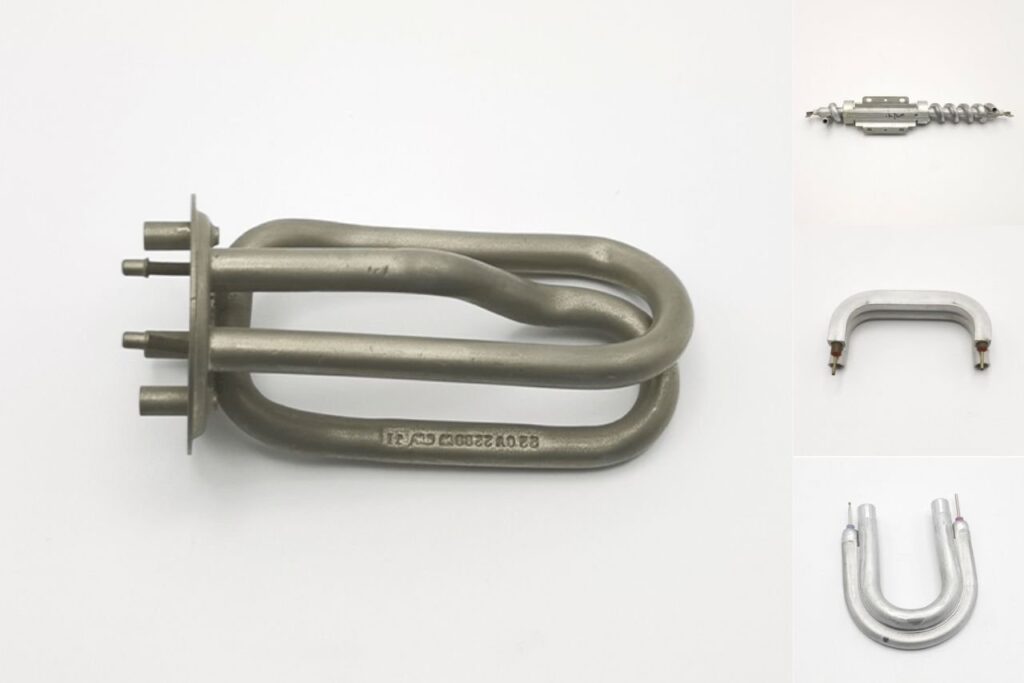
Heating element covers multiple technologies. JINZHO groups products into Heating Tubes, Heating Plate, and Heating Film, plus integrated modules under Die Casting Heating Solutions and compact assemblies under Electric Boiler Heater.
The Heating Tubes listing includes products such as 12-380V Water Heating tube, Boiler Heating tube, bundle rod heater, and application-specific heaters. View category.
The Heating Plate listing includes coffee maker heating plate, Dishwasher Heater Element, Egg Boiler Heating Plate, and Customized Heating Plate. View category.
The Heating Film listing includes thick-film and thin-film heater products (e.g., thick film heating element/system and thin film heater ). View category.
The Die Casting Heating Solutions listing includes items like 1400 Watt Boiler Heat Exchanger, Boiler Heater For Espresso Machine, and coffee-machine heater parts. View category.
- Electrical rating: voltage and wattage matched to the appliance circuit and model.
- Geometry and mounting: correct length, bends, brackets, and terminal orientation.
- Connection integrity: replace overheated/loose spade terminals rather than reusing.
- Compliance/approvals: look for safety approvals when relevant to the product category.
Hudson Reed s 1000 Plug-In Watt Electric Heating Element provides a good example of clear specs: 1000W power, IP67 ingress protection, UL Approved, ABS & stainless steel materials, 35.4" cable, and a 2-year warranty. It s designed for a radiator/towel warmer, not a GE appliance, but it demonstrates what good spec disclosure looks like for heater products. Source
No. The resistive heating principle is the same, but the element s shape, mounting, insulation, heat transfer method, and wattage are application-specific. TUTCO emphasizes a heating element is a designed component (conductive + insulating materials + connectors). Reference.
Most commonly due to restricted airflow (lint/vent issues) causing overheating, or loose terminals causing localized hot spots. Fix the root cause before replacing the element again.
It could be the bake element, but also could involve sensors, controls, or airflow/convection behavior. Start with a visual inspection and a continuity test (power off).
Not automatically. Confirm cycle settings and symptoms first. If heater performance is suspected, test the heater circuit and inspect terminals/wiring.
Verify the element is the correct replacement (voltage/wattage/fit) and do not energize it until the system can safely remove heat. Whirlpool s dry fire warning is a clear example of energizing too early destroying an element. Reference.
Loose connections raise resistance and generate heat at the contact point (hot spots), which can damage wiring and shorten element life. Whirlpool explicitly advises ensuring wire connections are tight. Source.
Tubular-style elements are commonly used. TUTCO notes tubular heaters are often found inside electric kitchen ovens. Reference.
- TUTCO heating element engineering overview: https://tutco.com/conductive/heating-elements
- Whirlpool element replacement safety and verification steps: https://www.whirlpoolwaterheaters.com/support/help/element-was-out-of-range/24
- JINZHO product category references: Heating Tubes, Heating Plate, Heating Film, Electric Boiler Heater
- Hudson Reed heater product spec example: https://usa.hudsonreed.com/1000-plug-in-watt-electric-heating-element-76309
Disclaimer: This page is informational and not a GE service manual. Appliance models vary; follow model-specific service instructions and local electrical codes.