
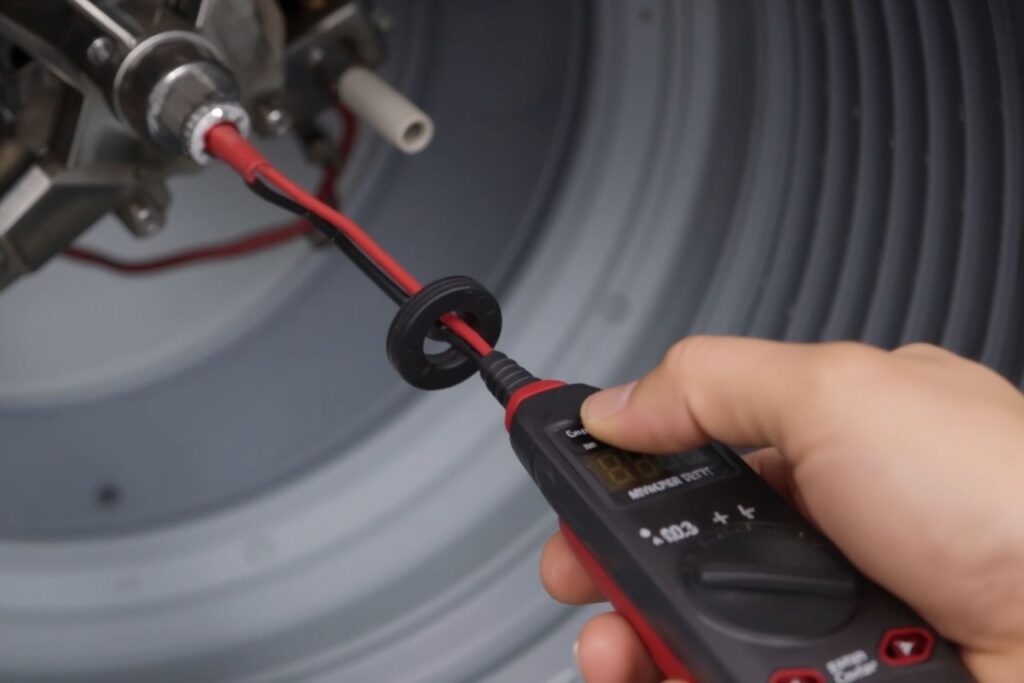
Catching heater-strip problems early can prevent a “first cold night” failure. The most useful pre-winter warning signs fall into three buckets: (1) performance symptoms (long warm-up, weak heat, cycling), (2) electrical/connection symptoms (odor, discoloration, buzzing), and (3) airflow-driven symptoms (high-limit trips from restricted flow). This matters because heater engineering guidance defines a heating element as an assembly—conductive alloy plus insulating/support framework and lead connectors—so terminals and supports can fail before the coil fully burns open.
Related resources: Heating Element, Heating Element manufacturer, Heating Element Factory, Die Casting Heating Solutions.
Why failures show up before winter
Many electric furnaces run lightly in shoulder seasons. When winter arrives, the heating elements operate longer and cycle more often. Resistance heating alloys and their supports experience thermal expansion and oxidation over time; connections also loosen under repeated heating/cooling. Engineering guidance notes heater materials have temperature-dependent properties, and that heating elements are assemblies with insulators and lead connectors—so partial degradation may only become obvious when demand rises.
Section summary
Winter exposes marginal elements, connectors, and airflow problems because runtime and peak load increase.
8 early warning signs to watch for
| Warning sign | What it often indicates | Why it matters |
|---|---|---|
| 1) Longer time to reach setpoint | One heat strip bank not energizing; reduced wattage | System “works,” but capacity is falling—failure may be imminent |
| 2) Heat feels weak though blower runs normally | Open element in one stage, or control not powering elements | A partial element loss can go unnoticed until colder days |
| 3) Heat cycles on then shuts off | High-limit/thermal cutoff opening from overheating | Often airflow-related; repeated trips accelerate wear |
| 4) Burning smell that persists | Connector overheating, dust on element, or wiring damage | Persistent odor is not “normal startup smell” and can signal risk |
| 5) Discolored terminals (brown/black), melted insulation | High-resistance connections, arcing, poor contact | Connections are part of the element assembly; damage can spread |
| 6) Buzzing/clicking beyond normal staging | Loose connection or failing relay/contactor | Electrical noise can precede trips or complete no-heat events |
| 7) Breaker nuisance trips when heat starts | Short to chassis or failing wiring/insulation | High-stakes safety symptom; repeated resets increase hazard |
| 8) Uneven heating between rooms after heat call | Airflow restrictions or partial heat staging failure | Airflow problems raise element temperature and shorten life |
Most likely contributors to pre-winter element failures (prioritization)
Priorities reflect the engineering reality that elements transfer heat by convection in airflow systems and that terminals are part of the assembly.
Section summary
Early signs often point to airflow stress or connection problems—both of which can be corrected before the coil burns open.
Fast checks homeowners can do safely
The safest checks focus on airflow and observable conditions—without opening energized electrical cabinets.
- Replace or clean the air filter (first-line defense against overheating and limit trips).
- Verify returns and supplies are unblocked (furniture, rugs, and closed registers can restrict flow).
- Listen for blower strength (weak airflow increases element temperature).
- Note odors and timing: a brief dust smell on first start is different from persistent burning odor.
- Track heat performance: if warm-up time is trending longer week-to-week, schedule service before peak season.
Across heating appliances, replacement guidance stresses verifying the correct replacement by matching voltage and wattage to the equipment’s data plate, and ensuring all wire connections are tight before restoring power. That discipline prevents wrong-part installs and connection heating.
Section summary
Airflow and symptom tracking catch many problems early without requiring electrical testing.
When to stop and call a technician
Do not continue DIY troubleshooting if any occur
- Breaker trips when heat is called (possible short/ground fault).
- Visible scorching, melted wiring, or persistent burning smell.
- Repeated heat shutdowns after a short run (possible overheating or control fault).
- Any need to test live voltage in the cabinet.
Section summary
Electrical faults and heat damage are safety issues—professional evaluation is the correct next step.
Pre-winter prevention checklist
The goal is to lower element temperature and reduce stress on terminals and insulators. Engineering guidance notes environment and integration affect heater life, and that seemingly small improvements (installation and assembly quality, terminals, airflow) can prevent costly field failures.
| Action | What it prevents | Timing |
|---|---|---|
| New filter + open airflow paths | Overheat trips, accelerated oxidation, element sag risk | Before first cold spell |
| Cabinet dust management (service) | Hot spots and temperature rise around elements | Annually |
| Terminal inspection and tightening (service) | Resistance heating, arcing, intermittent heat | Annually |
| Verify correct element ratings if replacing | Wrong wattage/voltage causing safety and reliability issues | At replacement time |
Section summary
Most failures are prevented by airflow hygiene and connection integrity—two high-leverage maintenance levers.
FAQ (8)
1) What is a heating element, technically?
Engineering guidance describes it as a component made of conductive and insulating material, assembled with supports and lead connectors to produce heat by resistive (Joule) heating.
2) Why does restricted airflow affect element life?
In airflow heaters, elements transfer heat primarily by convection (and radiation). Reduced airflow raises element temperature, increasing stress and triggering protective limits.
3) Are “burning smells” always dangerous?
A brief dust smell on first use can happen. A persistent burning smell, especially with discoloration or buzzing, suggests overheating connections or wiring damage and should be treated as a stop-use condition.
4) Can a furnace still heat if one element bank failed?
Often yes—staged systems may still produce some heat. That partial failure is why longer warm-up times are a key early warning sign.
5) What should be verified before installing a replacement element?
Verify the element matches the equipment’s voltage and wattage, and ensure wire connections are tight. Similar heater replacement guidance explicitly calls out these steps.
6) What’s the biggest “hidden cost” of ignoring early signs?
Emergency breakdowns typically cost more due to downtime, after-hours calls, and repeat visits—exactly the kind of less-obvious cost heater engineering guidance warns about.
7) Does element material choice matter?
Yes. Heater guidance notes different alloys have different thermal/electrical properties and behavior as temperature changes; appropriate design choices improve performance and longevity.
8) How do heater product families relate to furnaces?
In broader heating design, suppliers group solutions into tubes, plates, films, and integrated modules (including die-cast thermal modules). For residential furnaces, the focus remains on correct rating, safe assembly, and airflow.
Conclusion
Pre-winter heater failures rarely “come out of nowhere.” The most reliable early indicators are longer warm-up times, weak heat while airflow seems normal, cycling shutdowns, and any evidence of connector overheating (odor, discoloration, buzzing). Because a heating element is an engineered assembly with supports and terminals, addressing airflow restrictions and connection integrity early can prevent a mid-winter no-heat event.
References
-
Heating element definition, alloys/materials, suspended/embedded/supported frameworks, airflow considerations, and hidden costs:
https://tutco.com/conductive/heating-elements -
Replacement discipline principles (verify voltage/wattage; ensure tight wire connections; secure covers before restoring power) from heater service guidance:
https://www.whirlpoolwaterheaters.com/support/help/element-was-out-of-range/24 -
Product-family context and manufacturing capabilities (heating tubes/plates/films; integrated die-cast modules):
https://jinzho.com/product-category/heating-element/
https://jinzho.com/product-category/heating-element/heating-tubes/
https://jinzho.com/product-category/heating-element/heating-plate/
https://jinzho.com/product-category/heating-element/heating-film/
https://jinzho.com/product-category/die-casting-heating-solutions/
https://jinzho.com/
https://jinzho.com/about/ -
Example of clear heater product specification fields (wattage, materials, approvals, warranty/returns) used as a procurement-quality illustration:
https://usa.hudsonreed.com/1000-plug-in-watt-electric-heating-element-76309
Disclaimer: This content is general educational information. Electric furnace designs and safety requirements vary; consult a qualified professional for electrical testing or repairs.

