
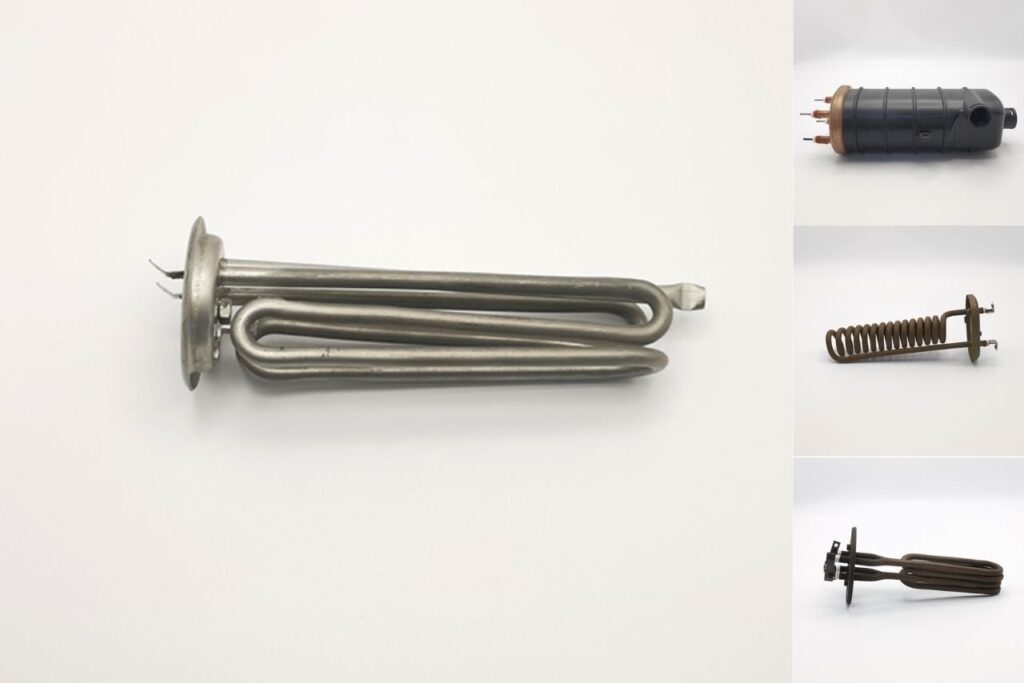
Documented heater component price
$209.95
Hudson Reed listing (example pricing disclosure)
Power rating (example listing)
1000W
Disclosed on the same product page
Ingress rating (example listing)
IP67
Shows how specs can affect price
Approval (example listing)
UL
UL Approved (listing statement)
- How Samsung dryer heating elements are priced (what drives cost)
- Buying checklist: compatibility first, price second
- Cost breakdown: parts, labor, and hidden redo costs
- Quality and lifespan: what TUTCO s engineering view implies for buyers
- Where heating element types differ (coil, tubular, film, plate) and why it matters
- Procurement angle: manufacturer capability and stable supply
- FAQ (8)
- Citations and outbound links
A dryer heating element is not a commodity wire in a bag. As TUTCO explains, a heating element is a component made from electrically conductive and insulating materials, assembled with a framework and lead connectors to serve a heating purpose. That definition matters because price rises as the component includes stronger insulation systems, better terminations, tighter manufacturing tolerances, or materials selected for higher durability.
- Compatibility (model-specific shape, mounting points, and terminal style)
- Material choice and alloy variability (TUTCO notes alloys and properties vary by manufacturer)
- Quality consistency and trace elements (TUTCO describes trace elements as contaminants or enhancements that can change properties)
- Seller-side cost factors: packaging, QC, warranty handling, and returns logistics
For readers who manage heating component sourcing across appliances (not only dryers), these category hubs provide broader context: Heating Element, plus supplier background as a Heating Element manufacturer and Heating Element Factory.
The most expensive outcome is buying the wrong part twice. A professional buying sequence uses compatibility gates before comparing prices.
- Exact dryer model identification (including variant suffixes)
- Element assembly vs coil-only part (some dryers sell an assembly)
- Connector and mounting match (bracket geometry and terminal orientation)
- Electrical rating match to the dryer s design (avoid close enough substitutions)
- Seller reputation, return policy, and proof of listing accuracy
- Packaging that protects terminals and insulators during shipping
- Warranty clarity
- Reasonable lead time and stock reliability
Total cost is a sum of direct and indirect terms: Part price + delivery/returns friction + installation labor + downtime + risk-adjusted rework.
| Hidden cost | What causes it | How to reduce it |
|---|---|---|
| Repeat purchase | Wrong fitment (model mismatch, wrong terminal style) | Compatibility gates first; verify element form |
| Repeat teardown | Element fails early or arrives damaged | Choose reliable sellers; ensure protective packaging |
| Downtime | Waiting for parts; multiple shipping cycles | Prefer stocked items and clear delivery policies |
| Quality fallout | Inconsistent alloys/trace elements affecting life (per TUTCO) | Use suppliers with documented quality controls |
Hudson Reed s heater-element page provides an example of transparent specification disclosure (price $209.95, power 1000W, material, IP67, UL Approved, warranty). While not a dryer part, it demonstrates how better documentation reduces buying ambiguity.
Source: https://usa.hudsonreed.com/1000-plug-in-watt-electric-heating-element-76309
TUTCO s overview highlights that heating element performance and longevity depend on the conductive alloy, insulation framework, and operating environment. It notes that similar alloys from different manufacturers may contain different trace elements that can change properties sometimes meaningfully.
- Early failure can come from poor alloy match, thermal cycling stress, or manufacturing inconsistency.
- Elements are an engineered assembly (framework + terminations), so terminal quality matters for safe operation.
- Cheap upfront can become expensive after labor and downtime are added.
TUTCO heating element overview: https://tutco.com/conductive/heating-elements
Dryer elements are commonly coil-based assemblies. However, across appliances the heating element category includes multiple constructions wire/ribbon, tubular, thick-film, thin-film, and die-cast integrated heaters. Jinzhong s product categories provide a practical map of these families.
- Heating Tubes (60 results shown on category page)
- Heating Plate (30 results shown on category page)
- Heating Film (9 results shown on category page)
- Die Casting Heating Solutions (49 results shown on category page)
- Electric Boiler Heater (26 results shown on category page)
Buyers typically search for: dryer heating element, heating coil assembly, thermal cutoff, high-limit thermostat, airflow restriction, lint buildup, no heat dryer, and OEM vs aftermarket. These terms connect cost to failure causes and replacement scope.
Jinzhong states it has 30+ years of electric heating industry experience, full-chain capabilities from product design and mold development to precision manufacturing, and multiple international certifications (ISO9001/ISO14001/ISO45001, VDE, UL, RoHS, etc.), plus scaled capacity and automated production lines. For buyers managing recurring maintenance or OEM production, these factors can reduce total cost by improving delivery stability and lowering defect-driven rework.
Source: https://jinzho.com/
Heating Element Heating Element manufacturer Heating Element Factory Die Casting Heating Solutions
What is the normal cost of a Samsung dryer heating element?
Pricing varies by exact model and region. This guide recommends evaluating total cost: part price, fitment certainty, installation time, and rework probability. The only explicit price in the supplied sources is a heater component example at $209.95 (Hudson Reed), used as a transparency benchmark rather than a dryer price reference.
Why do two similar heating elements have different prices?
TUTCO explains that heating elements are assemblies (not just the alloy), and that alloy composition can vary by supplier due to trace elements, which can materially affect properties, performance, and life.
Should buyers prefer OEM elements over aftermarket?
The decision should be based on proven compatibility, documented specifications, quality consistency, and warranty/returns. OEM can reduce fitment uncertainty, while high-quality aftermarket can be viable when documentation and quality control are strong.
What information is needed before buying a replacement element?
The exact dryer model identifier and confirmation of the element s form factor, terminals, and mounting. Buying without these checks increases the probability of repeat purchase and repeat teardown.
What are the biggest hidden costs in element replacement?
Downtime, repeat purchases from incorrect fitment, and repeat labor when a low-quality element fails early. TUTCO s article emphasizes that these less-obvious costs can exceed upfront savings.
Do certifications and ratings affect price?
Often. Hudson Reed s listing highlights attributes such as UL approval and IP67 rating on a heater component, illustrating how compliance and protection claims can influence price.
How can buyers reduce the chance of early failure?
Prioritize compatibility and quality documentation, ensure airflow conditions are correct (dryers are sensitive to airflow), and choose suppliers with consistent manufacturing controls aligned with TUTCO s discussion of materials, environment, and trace element variability.
Where can buyers learn about different heating element families beyond dryer coils?
Jinzhong s category pages provide a structured view of heater families: Heating Tubes, Heating Plate, Heating Film, and Die Casting Heating Solutions.
- TUTCO heating element definition, materials, trace elements, and less-obvious costs: https://tutco.com/conductive/heating-elements
- Hudson Reed documented heater component price/spec transparency example ($209.95, 1000W, IP67, UL Approved): https://usa.hudsonreed.com/1000-plug-in-watt-electric-heating-element-76309
- Jinzhong manufacturer and category references used for heater-family context and required anchors: https://jinzho.com/, https://jinzho.com/product-category/heating-element/, https://jinzho.com/about/, https://jinzho.com/product-category/die-casting-heating-solutions/, https://jinzho.com/product-category/heating-element/heating-tubes/, https://jinzho.com/product-category/heating-element/heating-plate/, https://jinzho.com/product-category/heating-element/heating-film/, https://jinzho.com/product-category/electric-heater-parts/electric-boiler-heater/

