- OEM vs aftermarket: what equivalent should mean
- How dryer heating elements fail (and why that matters to buyers)
- Decision framework: which option is best for which user
- Verification checklist for aftermarket elements (practical, not theoretical)
- Total cost of ownership (TCO): the hidden costs that dominate
- Sourcing context: what manufacturers and factories signal (without hype)
- FAQ
- References and outbound links
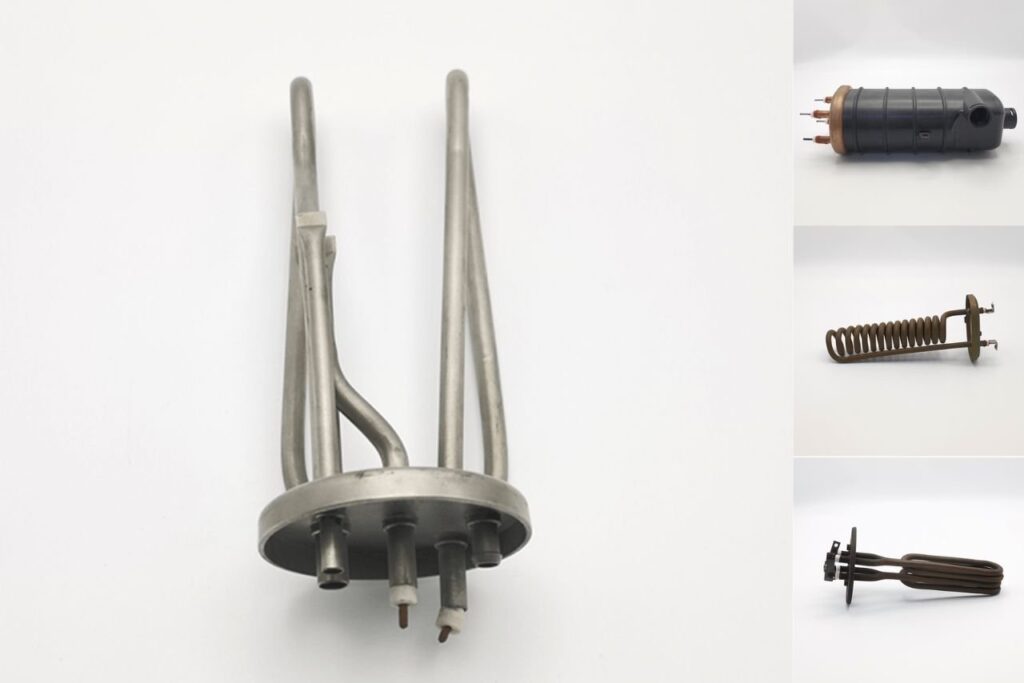
In dryer repairs, OEM typically refers to an original part specification intended for the machine s design envelope. Aftermarket refers to a compatible replacement sold by another supplier. The buying mistake is treating compatibility as purely physical fit. True equivalence also includes:
- Electrical rating alignment (voltage/wattage profile appropriate for the appliance design)
- Thermal robustness under cycling (heater life is affected by oxidation, deformation, and temperature stress)
- Termination quality (lead connectors/terminals must handle current without hot spots)
- Insulation and framework integrity (the element is an assembly, not just wire)
Engineering source context: https://tutco.com/conductive/heating-elements
TUTCO defines a heating element as a component composed of electrically conductive and insulating material, emphasizing it is more than the heating alloy alone and includes framework and lead connectors. In other words, an element s reliability depends on design and integration not only on matching shape.
A Samsung dryer heating element is a resistive heater that is repeatedly cycled under airflow and lint exposure. TUTCO s engineering overview explains several failure drivers that translate directly into buying criteria.
- Burnout/open circuit over time from oxidation and thermal stress
- Deformation/sag if the element is not properly supported (design issue)
- Hot terminals from poor connections (termination quality and installation)
- Environment-driven degradation (contaminants, humidity, lint, and airflow conditions)
TUTCO highlights that material properties change with operating conditions and that similar alloys may behave differently between suppliers due to trace elements (contaminants or enhancements). That is a practical explanation for why two compatible aftermarket parts can have very different service lives.
| Scenario | Best default choice | Why |
|---|---|---|
| Newer dryer / warranty sensitivity | OEM | Fit-and-spec certainty and fewer disputes about compatibility |
| High utilization (family, shared laundry, facility) | OEM (or proven aftermarket) | Total cost of ownership dominates; repeat repairs are costly |
| Older dryer near end-of-life | Aftermarket | Cost control may outweigh marginal reliability differences |
| Aftermarket listing provides poor specs | Avoid | Lack of data increases mismatch and early failure risk |
A credible aftermarket option should withstand a basic evidence audit before purchase:
- Clear compatibility statement (model family and revision clarity)
- Stated electrical specs (voltage/wattage or equivalent)
- Materials or construction disclosure where relevant
- Reasonable warranty/returns policy
Hudson Reed s 1000W plug-in heater listing (for radiators/towel warmers, not dryers) demonstrates strong disclosure discipline: it states 1000W, IP67, UL Approved, materials, cable length, and a 2-year warranty. That same spec transparency mindset is what buyers should look for in dryer replacement listings.
Example source: https://usa.hudsonreed.com/1000-plug-in-watt-electric-heating-element-76309
- Inspect and tighten terminals (poor connections create heat at the connector)
- Confirm airflow path is clean to prevent overheating
- Do not overlook thermal fuses/thermostats if repeated failures occur
TUTCO s article discusses the less obvious costs of heater choices: labor, rework, field failure, and reputation/operational impact. For dryer owners, the equivalent is repeat teardown time, additional parts, and downtime.
Total Cost = Part price + Install time + (Probability of early failure Cost of redo)
This is why a slightly higher-priced element can be the cheaper option if it reduces redo probability.
For consumers, OEM vs aftermarket is a retail choice. For distributors and brands, it is also a supply-chain and quality-system decision. Jinzhong positions itself as a long-running electric heating supplier with full-chain capability (design, molds, manufacturing) and multiple international certifications, plus scaled capacity. These claims matter because process control and certification discipline reduce the cost of quality failures described by TUTCO.
Jinzhong s die-casting category lists multiple appliance heater bodies and heat-exchanger style components (e.g., boiler heat exchangers and coffee-machine heater parts), highlighting that some appliances use integrated heater modules rather than a simple exposed coil. This is relevant to OEM decision-making even if a dryer uses a different heater construction.
Is OEM always better than aftermarket for a Samsung dryer heating element?
Not always. OEM tends to minimize fit/spec uncertainty, but a high-quality aftermarket part can be an excellent value when it provides clear electrical specs, robust terminations, and consistent materials. The deciding factor is evidence of equivalence, not brand labeling.
What should be checked before blaming the heating element for no heat ?
Airflow restrictions, thermal fuses/thermostats, wiring, and terminal condition should be evaluated. Poor connections and restricted airflow can overheat elements and shorten life.
Why do two compatible elements have different lifespans?
TUTCO explains that alloys may have different properties between suppliers due to trace elements (contaminants or enhancements), and environment conditions can shorten life if the alloy is poorly matched.
What s the safest way to buy aftermarket online?
Prefer sellers who publish clear compatibility details and electrical specifications, offer reasonable returns, and provide evidence of quality control. Avoid listings that only say fits Samsung without technical details.
- TUTCO Heating element definition, materials, integration types, trace elements, and cost-of-quality discussion: https://tutco.com/conductive/heating-elements
- Hudson Reed Example of detailed heater listing disclosure (1000W, IP67, UL Approved, warranty) and price reference: https://usa.hudsonreed.com/1000-plug-in-watt-electric-heating-element-76309
- Jinzhong internal references used for manufacturer/sourcing context and required anchors: https://jinzho.com/, https://jinzho.com/product-category/heating-element/, https://jinzho.com/about/, https://jinzho.com/product-category/die-casting-heating-solutions/