Wenn Sie die Kosten für den Austausch eines Heizelement Heizelements in Ihrem Backofen betrachten, sehen Sie sich einer großen Preisspanne gegenüber. Wenn Sie sich für einen DIY-Ansatz entscheiden, zahlen Sie typischerweise 10 bis 50 € für Ersatzteile aus Hersteller von Heizelementen wie zum Beispiel Jinzhong Elektroheizung. Professionelle Backofenreparaturdienste berechnen oft 150 bis 400 €, wobei die Arbeitskosten zwischen 50 und 200 € pro Stunde liegen.
| Kostenkomponente | Kosten für den DIY-Austausch | Kosten für den professionellen Austausch |
|---|---|---|
| Ersatzteil (Heizelement) | 10 bis 50 € | 10 bis 50 € |
| Arbeit | $0 | $50 bis $200 pro Stunde |
| Geschätzte Gesamtkosten | 10 bis 50 € | 150 bis 400 € |
Das Verständnis der Backofenreparaturkosten hilft Ihnen, fundierte Entscheidungen über Heizelemente für Haushaltsgeräte. Reparaturen zu treffen. Mehrere Faktoren beeinflussen die endgültige Reparaturrechnung:
- Ofentyp und Modell beeinflussen die Installationskomplexität.
- Marke und Verfügbarkeit von Ersatzteilen sind wichtig, insbesondere für Luxus- oder nicht mehr hergestellte Modelle.
Sie werden feststellen, dass die meisten Hausbesitzer professionelle Dienstleister für die Backofenreparatur bevorzugen, aber die Kenntnis dieser Kostentreiber ermöglicht Ihnen eine vorausschauende Planung.
Kosten für den Austausch eines Heizelements in einem Backofen

Typische Preisspanne für Backofenreparaturen
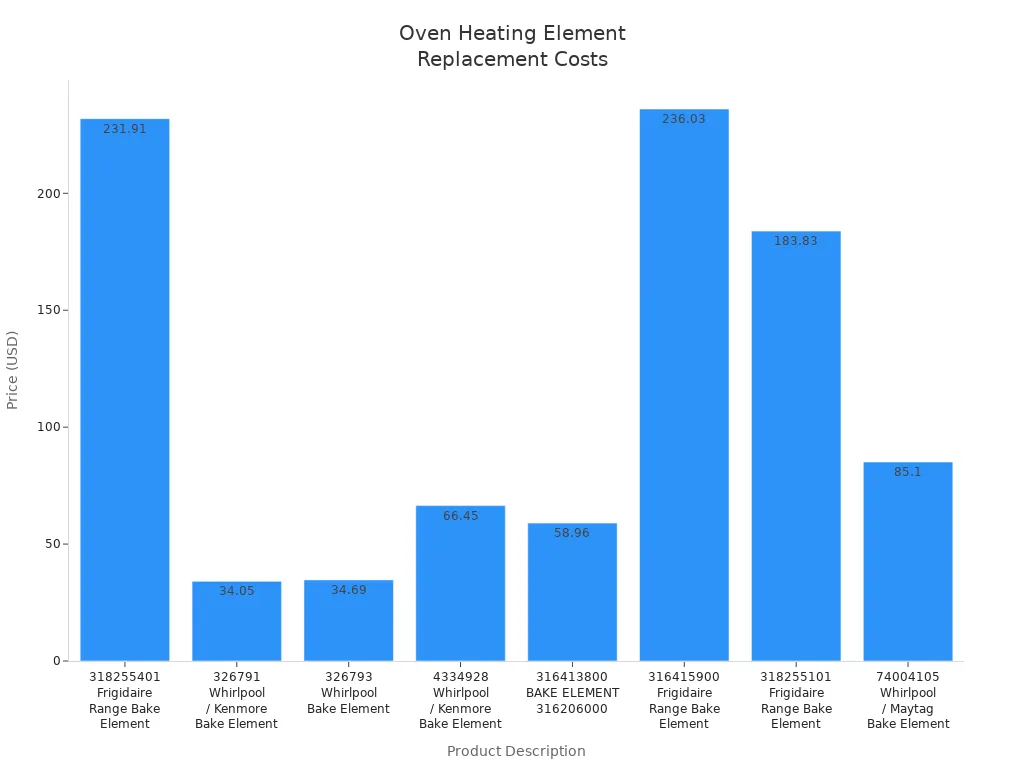
Sie werden eine große Spanne bei den Kosten für den Austausch eines Heizelements in einem Ofen. Die Preise hängen von der Marke, dem Modell und Ihrem Wohnort ab. Ein grundlegendes Heizelement für gängige Ofenmarken kostet in der Regel zwischen $25 und $85. Einige Spezial- oder High-End-Modelle, wie bestimmte Elemente von Frigidaire oder Whirlpool, können über $200 liegen. Die folgende Tabelle zeigt die Preisspanne für mehrere beliebte Modelle:
| Produktbeschreibung | Preis |
|---|---|
| 318255401 Frigidaire Backofen-Bake-Element | $231.91 |
| 326791 Whirlpool / Kenmore Bake-Element | $34.05 |
| 326793 Whirlpool Bake-Element | $34.69 |
| 4334928 Whirlpool / Kenmore Bake-Element | $66.45 |
| 316413800 BAKE ELEMENT 316206000 | $58.96 |
| 316415900 Frigidaire Backofen-Bake-Element | $236.03 |
| 318255101 Frigidaire Backofen-Bake-Element | $183.83 |
| 74004105 Whirlpool / Maytag Bake-Element | $85.10 |
Ihr Standort beeinflusst ebenfalls die Backofenreparaturkosten. In städtischen Gebieten zahlen Sie oft mehr aufgrund höherer Nachfrage und Lebenshaltungskosten. In ländlichen Gebieten können die Gebühren niedriger sein, aber Unternehmen berechnen möglicherweise zusätzliche Anfahrtskosten – manchmal 2 € für jede Meile außerhalb ihres Servicegebiets.
Ersatzteile vs. Arbeitskosten: Aufschlüsselung der Austauschkosten
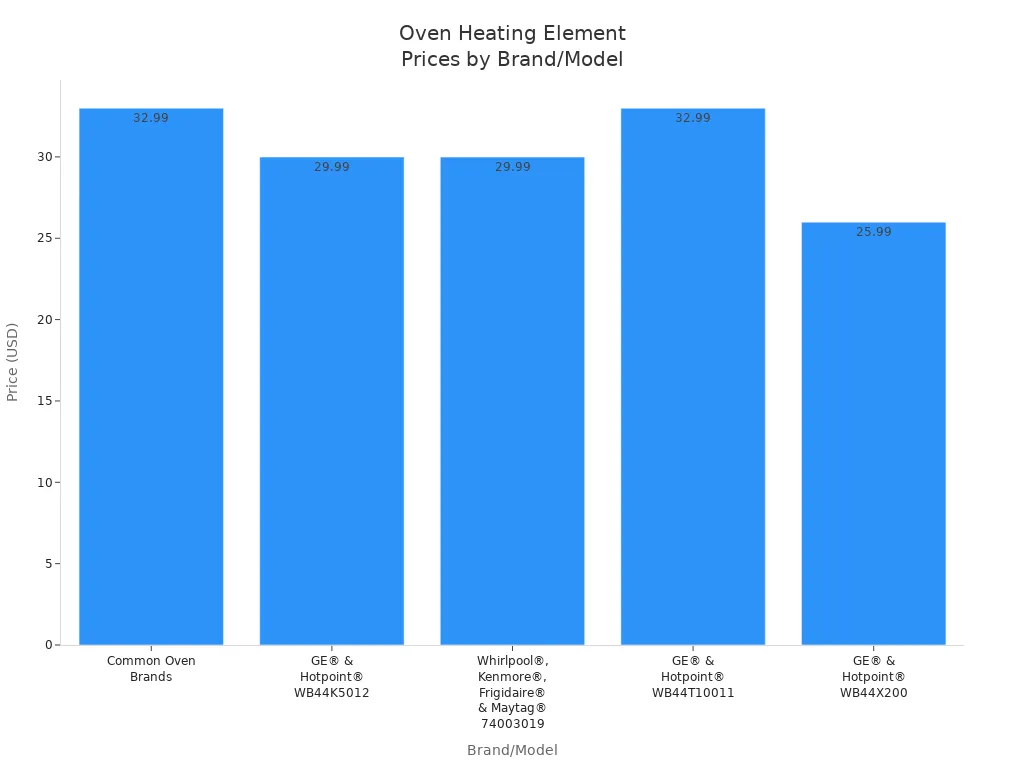
Wenn Sie die Gesamtkosten betrachten Kosten für den Austausch eines Heizelements, müssen Sie sowohl Teile als auch Arbeitskosten berücksichtigen. Der Preis des Ersatzteils variiert je nach Marke und Modell. Beispielsweise kostet ein GE® & Hotpoint® WB44K5012 Heizelement etwa 29,99 €, während ein Whirlpool®, Kenmore® oder Frigidaire® Element zwischen 25,99 € und 32,99 € liegen kann.
| Marke/Modell | Preis |
|---|---|
| Gängige Backofenmarken | $32.99 |
| GE® & Hotpoint® WB44K5012 | $29.99 |
| Whirlpool®, Kenmore®, Frigidaire® & Maytag® 74003019 | $29.99 |
| GE® & Hotpoint® WB44T10011 | $32.99 |
| GE® & Hotpoint® WB44X200 | $25.99 |
Arbeitskosten machen einen erheblichen Teil der gesamten Backofenreparaturkosten aus. Die meisten Fachleute berechnen zwischen 50 und 100 € für die Arbeitsleistung. In einigen Fällen können die Arbeitskosten bis zu 200 € pro Stunde betragen, insbesondere bei komplexen Reparaturen oder High-End-Öfen. Wenn Sie weit von einem Dienstleister entfernt wohnen, können zusätzliche Kilometerpauschalen anfallen.
DIY-Backofenreparaturkosten vs. Professioneller Service
Sie können Geld sparen, indem Sie das Heizelement selbst austauschen. Die DIY-Kosten für den Austausch eines Heizelements liegen normalerweise zwischen 10 und 85 €, abhängig vom benötigten Teil. Professionelle Backofenreparaturdienste berechnen typischerweise zwischen 125 und 350 €, was sowohl Ersatzteile als auch Arbeitskosten umfasst.
| Reparatur Typ | Kostenspanne |
|---|---|
| DIY (nur Ersatzteile) | 10 – 75 € |
| DIY-Heizelement | 25 – 85 € |
| Professionelle Reparatur | 125 – 350 € |
Tipp: Sie können einen erheblichen Betrag sparen, wenn Sie den DIY-Weg wählen, müssen jedoch die Risiken und versteckten Kosten abwägen.
Zu den häufigen versteckten Kosten bei DIY-Backofenreparaturen gehören:
- Risiko eines Stromschlags oder Brandes bei unsachgemäßem Umgang mit Hochspannungsgeräten.
- Fehldiagnose, die zu unnötigen oder falschen Reparaturen führen kann.
- Erlöschen der Herstellergarantie, wodurch Sie für zukünftige Reparaturen verantwortlich werden.
- Körperliche Verletzungen durch den Umgang mit schweren oder komplexen Backofenteilen.
- Höhere Kosten, wenn Sie während der Reparatur weiteren Schaden verursachen.
Sie sollten Ihr Können, Sicherheitsaspekte und den Garantiestatus berücksichtigen, bevor Sie sich zwischen DIY und professionellem Service entscheiden. Wenn Sie unsicher sind, kann die Beauftragung eines Fachmanns helfen, kostspielige Fehler zu vermeiden und eine sichere, zuverlässige Reparatur zu gewährleisten.
Was beeinflusst die Backofenreparaturkosten?
Art des Backofens und des Heizelements
Wenn Sie eine Austausch des Ofenheizelements, Backofenreparatur planen, müssen Sie die Art Ihres Backofens berücksichtigen. Das Design und die Technologie jedes Backofenmodells beeinflussen direkt die Komplexität und den Preis der Reparaturen.
Reparaturkosten für Elektro- vs. Gasherde
Sie werden feststellen, dass Elektroherde in der Regel einen unkomplizierteren Reparaturprozess bieten. Die Komponenten in einem Elektroherd sind weniger komplex, was bedeutet, dass Sie weniger für Arbeitszeit und Ersatzteile bezahlen.
- Reparaturen an Elektroherden kosten typischerweise zwischen 100 € und 250 €.
- Austauschen eines Das Heizelement in einem Elektro- herd kostet in der Regel zwischen 150 € und 400 €, oft am unteren Ende im Vergleich zu Gasherden.
- Gasherde verfügen über komplexere Systeme und Sicherheitsanforderungen. Sie müssen mit höheren Reparaturkosten rechnen, da Techniker Gasleitungen handhaben und zusätzliche Sicherheitsprüfungen durchführen müssen.
Hinweis: Die Kosten für den Austausch eines Heizelements bei Elektroherden sind tendenziell niedriger als bei Gasherden, insbesondere bei fortschrittlichen Modellen.
Kosten für den Austausch von Einbauherd vs. Standherd
Auch die Bauart Ihres Herdes spielt eine Rolle bei den Gesamtkosten. Einbauherde und Standherde unterscheiden sich in Installation und Zugänglichkeit.
- Bei Elektroherden liegen die Reparaturkosten typischerweise zwischen 100 € und 250 €.
- Gasherde können Reparaturkosten verursachen, die bis zu 600 € erreichen können, insbesondere wenn die Reparatur mehr als nur das Heizelement umfasst.
- Die Kosten für den Austausch von Heizelementen Variiert je nach Marke und Modell, wobei Standardteile zwischen $25 und $77 kosten, während Premiumteile $200 übersteigen können.
Wenn Sie einen Einbauherd besitzen, zahlen Sie möglicherweise mehr für die Arbeitszeit, da Techniker zusätzliche Zeit benötigen, um das Gerät zu erreichen und auszubauen. Standherde, die Kochfeld und Backofen kombinieren, ermöglichen oft einen einfacheren Zugang für Reparaturen.
Einfluss von Marke und Modell auf die Herd-Reparatur
Die Marke und das Modell Ihres Herdes können den Reparaturprozess erheblich beeinflussen.
- Luxusgerätemarken wie Sub-Zero, Viking, Thermador, Miele und Wolf haben höhere Reparaturkosten aufgrund von proprietären Teilen.
- Diese Marken verwenden einzigartige Komponenten, die nicht mit generischen Teilen austauschbar sind.
- Für diese Marken sind spezialisierte Reparaturdienste erforderlich, da ihre Teile kundenspezifisch für bestimmte Funktionen entwickelt wurden.
Wenn Sie einen Premium-Herd besitzen, sollten Sie mit höheren Preisen sowohl für Teile als auch für Arbeitszeit rechnen. Standardmarken verwenden oft universelle Heizelemente, was die Austauschkosten senkt.
Preisunterschiede bei Heizelementen
Die Preise für Heizelemente variieren stark je nach Herdmodell.
- Die durchschnittlichen Kosten eines Heizelements für einen Haushaltsherd liegen zwischen 20 € und 100 € oder mehr.
- Basisaustauschelemente für Standardherde liegen in der Regel am unteren Ende der Preisspanne.
- Hochwertige oder spezialisierte Herdelemente sind tendenziell teurer.
- Auch die Art des Heizelements (Unterhitze, Oberhitze, Umluft usw.) beeinflusst den Preis.
Sie sollten die Spezifikationen Ihres Herdes überprüfen, bevor Sie ein Ersatzteil kaufen. Wenn Sie ein Spezialelement benötigen, zahlen Sie möglicherweise einen Aufpreis.
Tipp: Überprüfen Sie stets die Kompatibilität des Heizelements mit Ihrem Herdmodell, um unnötige Ausgaben zu vermeiden.
Arbeitskosten und Servicegebühren für die Herd-Reparatur
Wenn Sie eine Herd-Reparatur vereinbaren, machen Arbeitskosten und Servicegebühren einen erheblichen Teil Ihrer Gesamtrechnung aus. Die meisten Reparaturfirmen berechnen eine pauschale Servicegebühr allein für die Diagnose des Problems. Diese Gebühr liegt in der Regel zwischen 50 € und 100 €. Wenn Sie die Reparatur durchführen lassen, verrechnet das Unternehmen diese Gebühr oft mit Ihrer endgültigen Rechnung.
Sie werden feststellen, dass die Arbeitskosten von der Komplexität des Auftrags und der Erfahrung des Technikers abhängen. Einfache Herd-Reparaturen, wie z. B. ein Heizelementaustausch zu bestätigen., dauern in der Regel weniger als eine Stunde. Für diese Arbeiten zahlen Sie möglicherweise zwischen 50 € und 100 € für die Arbeitszeit. Kompliziertere Reparaturen, insbesondere bei High-End-Herden oder schwer zugänglichen Teilen, können die Arbeitskosten auf bis zu 200 € pro Stunde treiben.
Auch Ihr Standort spielt eine große Rolle dabei, wie viel Sie für die Arbeitszeit zahlen. In städtischen Gebieten sind die Arbeitskosten oft höher aufgrund der gestiegenen Nachfrage und der höheren Lebenshaltungskosten. In ländlichen Regionen können die Arbeitskosten niedriger sein, aber es können zusätzliche Gebühren anfallen, wenn der Techniker eine weite Anreise zu Ihrem Zuhause hat.
Tipp: Fragen Sie stets nach einer detaillierten Aufschlüsselung der Arbeits- und Servicekosten, bevor Sie einer Herd-Reparatur zustimmen. Dies hilft Ihnen, unerwartete Ausgaben zu vermeiden und gibt Ihnen ein klares Bild davon, wofür Sie bezahlen.
Standort und Teileverfügbarkeit
Wo Sie wohnen, beeinflusst sowohl die Geschwindigkeit als auch den Preis Ihrer Herd-Reparatur. In Städten haben Sie Zugang zu mehr Reparaturdiensten und Teilelieferanten. Dieser Wettbewerb kann helfen, die Preise angemessen zu halten und Wartezeiten auf Teile zu verkürzen.
Wenn Sie in einer abgelegenen oder ländlichen Gegend wohnen, müssen Sie möglicherweise mit höheren Kosten für die Herd-Reparatur rechnen. Techniker berechnen oft Anfahrtsgebühren, wenn sie lange Strecken zu Ihrem Zuhause fahren müssen. Diese Gebühren können sich schnell summieren, insbesondere wenn Ihr Standort weit vom nächsten Serviceanbieter entfernt ist. Manchmal berechnen Unternehmen eine Gebühr pro Kilometer, was Ihre Gesamtrechnung erhöht.
Die Teileverfügbarkeit beeinflusst ebenfalls Ihre Reparaturerfahrung. In abgelegenen Gebieten führen lokale Lieferanten möglicherweise nicht die spezifischen Herdteile, die Sie benötigen. In diesem Fall müssen Techniker Teile aus entfernten Lagern bestellen. Dieser Prozess kann sowohl die Kosten als auch die für Ihre Reparatur erforderliche Zeit erhöhen. Möglicherweise müssen Sie mehrere Tage auf das richtige Teil warten, was frustrierend sein kann, wenn Sie für die tägliche Küchenarbeit auf Ihren Herd angewiesen sind.
Hinweis: Der eingeschränkte Zugang zu Teilen und Reparaturdiensten in ländlichen Gebieten führt für Hausbesitzer oft zu höheren Gesamtkosten und längeren Reparaturzeiten.
Wenn Sie Ihren Herd reibungslos am Laufen halten möchten, berücksichtigen Sie diese Faktoren bei der Planung eines Austauschs oder einer Reparatur. Das Verständnis, wie Standort und Teileverfügbarkeit Ihre Reparaturkosten beeinflussen, hilft Ihnen, bessere Entscheidungen zu treffen und Überraschungen zu vermeiden.
Herd-Reparatur in Eigenregie vs. Beauftragung eines Fachmanns
Vor- und Nachteile der DIY-Ofenreparatur
Kosteneinsparungen und Risiken
Wenn Sie in Betracht ziehen, ein Heizelement in Ihrem Herd selbst auszutauschen , haben Sie mehrere Vorteile. Sie sparen Geld bei den Arbeitskosten und haben die Kontrolle über den Zeitpunkt Ihrer Reparatur. Sie können auch ein Gefühl der Erfüllung verspüren, wenn Sie die Aufgabe selbst erledigen.
- Kosteneinsparungen bei den Arbeitskosten
- Flexibilität, die Reparatur nach Ihrem Zeitplan durchzuführen
- Zufriedenheit durch die eigenständige Durchführung des Herdaustauschs
Sie müssen diese Vorteile jedoch gegen die Risiken abwägen. Die Arbeit mit elektrischen Geräten setzt Sie Sicherheitsrisiken wie Stromschlag oder Verbrennungen aus. Wenn Sie das falsche Teil einbauen oder einen Fehler machen, könnten Sie Ihren Herd beschädigen oder die Garantie ungültig machen. Ihnen könnten auch zusätzliche Kosten entstehen, wenn Sie später Fehler korrigieren müssen.
- Sicherheitsrisiken, einschließlich Stromschlag und Verbrennungen
- Potenzial für Fehler, wie z. B. Einbau des falschen Heizelements oder Beschädigung des Herdes
- Garantiebedenken, da Reparaturen in Eigenregie die Herstellergarantie ungültig machen können
Tipp: Wenn Sie Kabel identifizieren können, über grundlegende Werkzeuge verfügen und Schaltpläne lesen können, fühlen Sie sich möglicherweise wohl dabei, eine Herd-Reparatur selbst durchzuführen. Bei integrierten Smart-Herden, Gas-Hybriden oder fest verdrahteten Geräten sollten Sie einen Fachmann rufen..
Sicherheits- und Qualifikationsanforderungen
Sie müssen Ihr Qualifikationsniveau einschätzen, bevor Sie mit einem DIY-Ofenaustausch beginnen. Grundlegende Reparaturen erfordern, dass Sie die Stromversorgung trennen, Werkzeuge sicher handhaben und die Anweisungen genau befolgen. Wenn Sie keine Erfahrung mit elektrischen Systemen haben, riskieren Sie Verletzungen oder weitere Schäden an Ihrem Ofen. Sicherheit sollte stets Ihre oberste Priorität sein.
Vor- und Nachteile einer professionellen Ofenreparatur
Fachwissen, Garantie und Bequemlichkeit
Die Beauftragung eines Fachmanns für die Ofenreparatur bietet mehrere Vorteile. Techniker verfügen über die Ausbildung und Erfahrung um Elektrogeräte sicher zu handhaben. Sie stellen eine korrekte Installation sicher und können zugrunde liegende Probleme diagnostizieren, die Sie möglicherweise übersehen. Viele professionelle Reparaturen beinhalten Garantien oder Gewährleistungen, die Sie vor unerwarteten Kosten schützen.
Die Garantiedeckung für Haushaltsöfen geht oft über das hinaus, was die Herstellergarantie Ihres Herdes abdecken möchte. Letztere hat in der Regel eine viel kürzere Laufzeit und gilt nicht für Verschleißschäden.
| Garantie Typ | Details zum Versicherungsschutz |
|---|---|
| Gerätegarantien | Deckt unerwartete Reparaturen, versehentliche Beschädigungen und Fehlfunktionen ab. |
| ShieldGold | Deckt bis zu $2.000 für jedes versicherte Gerät ab. |
| ShieldPlatinum | Deckt bis zu $4.000 für jedes versicherte Gerät ab und beinhaltet bei Bedarf einen Ersatz. |
- Haushaltsgarantien können Öfen abdecken, Herde und Kochfelder und bieten Schutz vor unerwarteten Reparaturkosten.
- Herstellergarantien haben in der Regel eine begrenzte Laufzeit und decken möglicherweise keinen Verschleiß ab.
Sie gewinnen Seelenfrieden, da Sie wissen, dass Ihr Ofen in fachkundigen Händen ist, und vermeiden die Risiken, die mit DIY-Reparaturen verbunden sind.
Höhere Kosten für die Ofenreparatur
Eine professionelle Ofenreparatur kostet in der Regel mehr als ein DIY-Ansatz. Sie bezahlen für das Fachwissen des Technikers, die Anfahrts- und Servicegebühren. Während Sie zunächst mehr investieren, verringern Sie das Risiko von Fehlern und profitieren von der Garantiedeckung.
Hinweis: Sie sollten die höheren Kosten gegen die Bequemlichkeit, Sicherheit und den langfristigen Schutz abwägen, den eine professionelle Ofenreparatur bietet.
Schritt-für-Schritt-Anleitung: So ersetzen Sie ein Ofenheizelement
Sicherheitsvorkehrungen für die Ofenreparatur
Trennen der Stromversorgung und Verwendung von Schutzausrüstung
Sie müssen der Sicherheit Vorrang einräumen, bevor Sie mit einer Ofenreparatur beginnen. Schalten Sie immer den Sicherungsautomaten aus, der Ihren Ofen mit Strom versorgt. Ziehen Sie den Netzstecker des Geräts, um das Risiko eines Stromschlags auszuschließen. Warten Sie, bis der Ofen vollständig abgekühlt ist. Dieser Schritt verhindert Verbrennungen und gewährleistet eine sichere Arbeitsumgebung. Überprüfen Sie das Innere des Ofens und entfernen Sie alle Hindernisse, die Ihre Arbeit behindern könnten. Sammeln Sie alle notwendigen Werkzeuge und tragen Sie Schutzhandschuhe und eine Schutzbrille. Räumen Sie den Bereich um den Ofen frei, damit Sie genügend Platz haben, um sich zu bewegen und effizient zu arbeiten.
Tipp: Versuchen Sie niemals, das Heizelement auszutauschen, während der Ofen eingesteckt oder heiß ist. Schutzausrüstung schützt Sie vor versehentlichen Verletzungen.
Benötigte Werkzeuge und Materialien für die Ofenreparatur
Sie benötigen die richtigen Werkzeuge und Materialien, um eine Austausch des Ofenheizelements. abzuschließen. Bereiten Sie die folgenden Gegenstände vor, bevor Sie beginnen:
- Kreuzschlitzschraubendreher
- Schlitzschraubendreher (falls erforderlich)
- Spitzzange
- Steckschlüssel
- Multimeter (optional, für Durchgangsprüfung)
- Austausch-Heizelement für den Ofen (erhältlich bei Lieferanten wie PRS Parts Inc.)
- Arbeitshandschuhe
Ein Multimeter hilft Ihnen, das alte Heizelement auf Durchgang zu prüfen. Dieser Schritt bestätigt, ob das Teil ersetzt werden muss. Arbeitshandschuhe schützen Ihre Hände vor scharfen Kanten und elektrischen Komponenten.
Entfernen des alten Heizelements
Befolgen Sie diese Schritte, um das alte Heizelement aus Ihrem Ofen zu entfernen:
- Trennen Sie die Stromversorgung, indem Sie den Ofen ausstecken oder den Sicherungsautomaten ausschalten.
- Entfernen Sie die Metallabdeckplatte im Inneren des Ofens, um die Anschlüsse des Heizelements freizulegen.
- Trennen Sie die Drähte vorsichtig, indem Sie die Steckverbinder abziehen. Notieren Sie sich ihre Positionen für den Wiedereinbau.
- Schrauben Sie alle Befestigungsschrauben heraus, die das Heizelement halten.
- Heben Sie das alte Heizelement heraus und legen Sie es beiseite.
Sie müssen das neue Heizelement mit dem alten abgleichen, um die Kompatibilität sicherzustellen. Richten Sie die Stifte aus und befestigen Sie das neue Teil an Ort und Stelle. Schließen Sie die Drähte fest an und setzen Sie die Abdeckplatte wieder auf. Stellen Sie die Stromversorgung des Ofens wieder her und testen Sie seine Leistung. Wenn der Ofen richtig heizt, haben Sie den Austausch des Heizelements erfolgreich abgeschlossen.
Anmerkung: Überprüfen Sie stets die Anweisungen des Herstellers für Ihr spezifisches Ofenmodell. Einige Öfen erfordern möglicherweise besondere Schritte oder zusätzliche Werkzeuge.
Einbau des neuen Heizelements
Sie haben das alte Heizelement entfernt und Ihre Werkzeuge vorbereitet. Jetzt können Sie das neue Teil in Ihrem Ofen installieren. Befolgen Sie diese bewährten Verfahren, um eine sichere und effektive Installation zu gewährleisten:
- Nehmen Sie das neue Heizelement aus seiner Verpackung. Überprüfen Sie es vor dem Fortfahren auf sichtbare Schäden.
- Setzen Sie das Element in Ihren Ofen ein und richten Sie es an den Befestigungslöchern aus.
- Befestigen Sie die Drähte am neuen Heizelement. Stecken Sie die Flachstecker auf die Anschlüsse, bis sie fest sitzen.
- Bewegen Sie das Element in die korrekte Position im Ofeninnenraum.
- Befestigen Sie das Element mit den Originalschrauben oder -klammern. Ziehen Sie sie fest, um Bewegungen während des Betriebs zu verhindern.
- Überprüfen Sie alle Verbindungen doppelt. Stellen Sie sicher, dass die Drähte fest angebracht sind und das Element bündig an der Ofenwand anliegt.
Tipp: Gleichen Sie das neue Heizelement vor der Installation immer mit dem alten ab. Dieser Schritt hilft Ihnen, Kompatibilitätsprobleme zu vermeiden und eine ordnungsgemäße Funktion sicherzustellen.
Sie sollten vermeiden, das Element mit bloßen Händen zu berühren. Öle von Ihrer Haut können heiße Stellen verursachen und die Lebensdauer des Teils verkürzen. Verwenden Sie für diesen Schritt Handschuhe. Sobald Sie fertig sind, können Sie zur Wiederherstellung der Stromversorgung und zum Testen des Ofens übergehen.
Testen des Ofens nach der Reparatur
Nachdem Sie das neue Heizelement installiert haben, müssen Sie überprüfen, ob Ihr Ofen korrekt funktioniert. Ein ordnungsgemäßer Test gewährleistet die Sicherheit und bestätigt, dass die Reparatur erfolgreich war. Hier ist ein schrittweiser Prozess zum Testen des neuen Ofenheizelements:
- Stellen Sie die Stromversorgung des Ofens wieder her , indem Sie ihn einstecken oder den Sicherungsautomaten wieder einschalten.
- Stellen Sie den Ofen auf Backen bei einer hohen Temperatur ein, z. B. 350°F.
- Beobachten Sie das neue Heizelement. Es sollte innerhalb weniger Minuten rot glühen, was anzeigt, dass es richtig heizt.
- Überprüfen Sie das Innere des Ofens auf eine gleichmäßige Wärmeverteilung. Für genauere Ergebnisse können Sie ein Ofenthermometer verwenden.
- Wenn das Element nicht glüht oder der Ofen nicht heizt, schalten Sie sofort die Stromversorgung aus. Überprüfen Sie die Kabelverbindungen erneut. Wenn die Probleme bestehen bleiben, konsultieren Sie einen professionellen Techniker.
Anmerkung: Für eine zusätzliche Sicherheitsebene können Sie mit einem Multimeter den Durchgang des Heizelements prüfen. Setzen Sie die Sonden auf die Anschlüsse. Ein Messwert zwischen 0 und 50 Ohm bedeutet, dass das Element wie erwartet funktioniert..
Sie haben nun den Installations- und Testprozess abgeschlossen. Ihr Ofen sollte mit dem neuen Heizelement effizient arbeiten.
Anzeichen, dass Sie eine Ofenreparatur oder einen Austausch benötigen
Häufige Symptome eines defekten Heizelements
Sie verlassen sich für die tägliche Zubereitung von Speisen auf Ihren Ofen. Daher hilft das frühzeitige Erkennen von Problemen, größere Schwierigkeiten zu vermeiden. Ein defektes Heizelement zeigt oft deutliche Symptome. Wenn Sie eines dieser Probleme bemerken, sollten Sie Ihren Ofen überprüfen, bevor sich die Situation verschlimmert.
- Ungleichmäßige ErwärmungUngleichmäßiges Garen: Speisen können an manchen Stellen roh und an anderen verbrannt sein.
- Vollständige Heizungsausfall: Der Ofen bleibt kalt, selbst nachdem Sie die Temperatur eingestellt haben.
- Seltsame Geräusche: Summ- oder Knallgeräusche können auf elektrische Fehler hinweisen.
- Brandgeruch: Überhitzte Elemente erzeugen manchmal einen starken Geruch.
- Sichtbare Schäden: Risse, Brüche oder Verfärbungen am Element deuten auf Verschleiß hin.
Wenn Sie sichtbare Schäden oder Brandgeruch feststellen, schalten Sie Ihren Ofen sofort aus. Die weitere Verwendung eines beschädigten Heizelements kann zu weiteren Komplikationen oder Sicherheitsrisiken führen.
Möglicherweise bemerken Sie auch längere Vorheizzeiten oder ungleichmäßige Backergebnisse. Diese Probleme deuten oft auf einen Ausfall des Heizelements hin. Durch regelmäßige Überprüfung Ihres Ofens auf diese Symptome stellen Sie sicher, dass Sie Probleme frühzeitig erkennen und kostspielige Reparaturen vermeiden.
Wann eine Ofenreparatur nicht ausreicht
Manchmal ist eine Reparatur Ihres Ofens finanziell nicht sinnvoll. Sie sollten die Reparaturkosten gegen den Preis eines neuen Geräts abwägen. Wenn Sie beispielsweise einen günstigen Herd besitzen und eine Reparaturrechnung von $212 erhalten, ist ein Austausch des Ofens möglicherweise praktischer, insbesondere wenn ein neues Modell etwa $800 kostet. Wenn Sie hingegen einen Premium-Ofen haben, der ursprünglich $1.250 oder mehr gekostet hat, kann eine Investition in eine $212-Reparatur dessen Lebensdauer oft um viele Jahre verlängern.
Berücksichtigen Sie diese Faktoren bei der Entscheidung zwischen Reparatur und Austausch:
- Alter des Ofens: Ältere Öfen können häufiger Probleme entwickeln, sodass ein Austausch die bessere langfristige Lösung darstellt.
- Reparaturkosten: Wenn die Reparaturkosten nahe an den Preis eines neuen Ofens herankommen, bietet ein Austausch in der Regel ein besseres Preis-Leistungs-Verhältnis.
- Modellqualität: Teure oder hochwertige Öfen rechtfertigen oft die Reparaturkosten, während günstige Modelle dies möglicherweise nicht tun.
- Häufigkeit von Ausfällen: Wiederholte Reparaturen deuten darauf hin, dass Ihr Ofen sich dem Ende seiner Nutzungsdauer nähert.
Tipp: Vergleichen Sie immer die gesamten Reparaturkosten, einschließlich Arbeits- und Teilekosten, mit dem Preis eines neuen Ofens. Dieser Ansatz hilft Ihnen, eine kluge und kosteneffiziente Entscheidung zu treffen.
Wenn Sie feststellen, dass Sie häufige Reparaturen planen oder mit anhaltenden Heizelementausfällen zu kämpfen haben, kann ein Austausch des Ofens Ihnen auf lange Sicht Geld und Frustration ersparen.
Tipps zur Senkung Ihrer Ofenreparaturkosten
Erschwingliche Heizelemente finden
Sie können Ausgaben reduzieren, indem Sie klug einkaufen, wenn Sie ein neues Ofenheizelement benötigen. Beginnen Sie mit der Überprüfung von Online-Händlern für Geräteteile, die oft wettbewerbsfähigere Preise als lokale Geschäfte bieten. Vergleichen Sie die Preise auf mehreren Websites, bevor Sie einen Kauf tätigen. Viele Hersteller und Drittanbieter bieten Originalteile zu günstigeren Preisen an, wenn Sie nach Angeboten oder Restposten suchen.
Sie sollten auch generische oder universelle Heizelemente in Betracht ziehen, wenn Ihr Ofenmodell diese unterstützt. Diese Alternativen kosten in der Regel weniger als markenspezifische Teile und bieten dennoch zuverlässige Leistung. Überprüfen Sie vor dem Kauf immer die Kompatibilität mit Ihrem Ofen. Wenn Sie einen älteren Ofen haben, suchen Sie nach generalüberholten oder überschüssigen Teilen von seriösen Händlern. Dieser Ansatz kann Ihnen helfen, ein Qualitätsersatzteil zu einem Bruchteil des Originalpreises zu finden.
Tipp: Halten Sie die Modellnummer Ihres Ofens bereit. Diese Informationen stellen sicher, dass Sie das richtige Teil auswählen und unnötige Rücksendungen vermeiden.
Nutzung von Rabatten und Gutscheinen für die Ofenreparatur
Sie können Rabatte und Gutscheine nutzen, um Ihre Ofenreparaturkosten zu senken. Viele Dienstleister bieten Sonderangebote für Neukunden, Senioren oder die Installation mehrerer Geräte an. Die Erwähnung dieser Angebote bei der Buchung Ihres Termins kann zu erheblichen Einsparungen führen.
Hier ist eine Zusammenfassung Häufig verfügbare Rabatte:
| Rabatt Typ | Betrag | Bedingungen |
|---|---|---|
| Neukundenrabatt | $30 NACHlass | Erwähnen Sie diesen Gutschein bei der Buchung. |
| Seniorenrabatt | $40 NACHlass | Erwähnen Sie diesen Gutschein bei der Buchung. |
| Installation von 2 oder mehr Geräten | $50 NACHlass | Erwähnen Sie diesen Gutschein bei der Buchung. |
Sie sollten vor der Terminvereinbarung für Ihre Ofenreparatur immer nach aktuellen Aktionen fragen. Einige Unternehmen schließen Serviceeinsatzgebühren von Rabatten aus, daher klären Sie die Bedingungen im Voraus. Selbst kleine Einsparungen bei jeder Reparatur helfen Ihnen, Ihr Haushaltsbudget effektiver zu verwalten.
Wissen, wann man einen Fachmann rufen sollte
Sie möchten kleinere Ofenprobleme vielleicht selbst beheben, aber bestimmte Situationen erfordern fachkundige Aufmerksamkeit. Das Rufen eines Fachmanns gewährleistet Ihre Sicherheit und schützt Ihre Investition. Berücksichtigen Sie diese Faktoren bei der Entscheidung, Hilfe zu suchen:
- Sicherheit zuerst: Öfen können Risiken wie Gaslecks oder Stromschläge darstellen. Fachleute sind geschult, diese Gefahren zu bewältigen.
- Kenntnis spezialisierter Teile: Techniker verstehen komplexe Ofensysteme und können Probleme genau diagnostizieren.
- Gas- und Elektrosicherheit: Fachleute besitzen das Fachwissen, um sicher mit Gas- und Elektroöfen zu arbeiten.
- Aufrechterhaltung der Herstellergarantien: Fachgerechte Reparaturen helfen, Ihre Garantie gültig zu halten, was den Wert Ihres Ofens schützt.
- Langfristige Zuverlässigkeit: Techniker können vorbeugende Maßnahmen ergreifen, um zukünftige Ausfälle zu reduzieren.
Hinweis: Wenn Sie sich bei irgendeinem Aspekt der Ofenreparatur unsicher sind, stellen Sie Ihre Sicherheit an erste Stelle und rufen Sie einen qualifizierten Techniker.
Zusammenfassung der Ofenreparaturkosten und wichtige Erkenntnisse
Wiederholung der wichtigsten Kostenpunkte
Sie haben gesehen, dass die Kosten für den Austausch eines Heizelements in Ihrem Ofen stark variieren können. Der Preis hängt von mehreren Faktoren ab, wie der Art des Ofens, der Marke und Ihrem Standort. Wenn Sie einen Do-it-yourself-Ansatz wählen, zahlen Sie oft nur für das Teil, das normalerweise zwischen $10 und $85 liegt. Wenn Sie einen Fachmann beauftragen, zahlen Sie sowohl für Teile als auch für Arbeitszeit, was Ihre Gesamtkosten auf $150 oder mehr bringen kann. Bei einigen High-End-Modellen oder schwer zu findenden Teilen können die Austauschkosten sogar noch höher sein.
Hier ist eine kurze Zusammenfassung, was Ihre Ofenreparaturkosten beeinflusst:
- Art des Ofens (elektrisch oder Gas)
- Marke und Modell (Standard oder Luxus)
- Arbeitskosten und Servicegebühren
- Standort und Teileverfügbarkeit
Denken Sie daran: Die Arbeitszeit macht oft den größten Teil Ihrer Rechnung aus. Sie sollten immer einen detaillierten Kostenvoranschlag anfordern, bevor Sie einer Reparatur zustimmen.
Sie sollten auch das Alter und den Zustand Ihres Backofens berücksichtigen. Wenn Ihr Gerät alt ist oder häufige Probleme aufweist, kann die Investition in einen neuen Backofen langfristig Geld sparen.
Letzter Rat für Hausbesitzer
Sie sollten immer Ihre Optionen abwägen, bevor Sie entscheiden, wie Sie mit einem Austausch des Ofenheizelements. Wenn Sie grundlegende Fähigkeiten haben und sich mit der Arbeit an Elektrogeräten wohlfühlen, können Sie Geld sparen, indem Sie die Arbeit selbst erledigen. Stellen Sie sicher, dass Sie alle Sicherheitsvorkehrungen beachten und das richtige Ersatzteil für Ihren Ofen verwenden.
Wenn Sie unsicher sind oder Ihr Backofen ein komplexes Design hat, ist die Beauftragung eines Fachmanns sinnvoll. Sie gewinnen dadurch Ruhe und schützen Ihre Investition. Fachleute können zudem andere Probleme erkennen, die Ihnen möglicherweise entgehen.
Um die Kosten niedrig zu halten, vergleichen Sie Preise für Ersatzteile und fragen Sie bei der Buchung eines Services nach Rabatten oder Gutscheinen. Halten Sie die Modellnummer Ihres Backofens bereit, um das richtige Teil zu kaufen. Regelmäßige Wartung und zeitnahe Problemlösung helfen, größere Reparaturkosten in der Zukunft zu vermeiden.
Tipp: Setzen Sie stets Sicherheit an erste Stelle. Wenn Sie unsicher sind, rufen Sie einen qualifizierten Techniker für die Backofenreparatur.
Indem Sie die tatsächlichen Kosten für den Austausch eines Heizelements verstehen und wissen, wann Sie Hilfe suchen sollten, treffen Sie kluge Entscheidungen, die Ihren Backofen effizient laufen lassen und Ihr Haushaltsbudget im Rahmen halten.
Sie verstehen nun die tatsächlichen Kosten für den Austausch eines Heizelements in Ihrem Backofen. Nehmen Sie sich Zeit, um DIY- und professionelle Reparaturoptionen zu vergleichen, bevor Sie sich entscheiden. Priorisieren Sie stets die Sicherheit und berücksichtigen Sie Ihre Fähigkeiten, die Komplexität der Aufgabe und den langfristigen Wert Ihres Geräts. Sorgfältige Planung hilft Ihnen, die beste Wahl für Ihr Zuhause zu treffen.
FAQ
Woran erkennen Sie, dass Ihr Ofen-Heizelement ausgetauscht werden muss?
Möglicherweise bemerken Sie ungleichmäßiges Garen, längere Aufheizzeiten oder sichtbare Schäden am Heizelement. Wenn Ihr Backofen nicht heiß wird oder Sie Funken sehen, benötigen Sie wahrscheinlich ein neues Heizelement.
Können Sie ein Ofen-Heizelement selbst austauschen?
Ja, Sie können es selbst austauschen, wenn Sie sich im Umgang mit Elektrogeräten sicher fühlen. Trennen Sie stets die Stromversorgung, bevor Sie beginnen. Wenn Sie unsicher sind, beauftragen Sie aus Sicherheitsgründen einen Fachmann.
Wie lange dauert es, ein Heizelement zu ersetzen?
Die meisten Austausche dauern 30 bis 60 Minuten. Der Prozess umfasst das Entfernen des alten Elements, die Installation des neuen und das Testen des Backofens. Komplexe Modelle können mehr Zeit erfordern.
Sind alle Backofen-Heizelemente universell einsetzbar?
Nein, Heizelemente sind nicht universell einsetzbar. Sie müssen das Ersatzteil auf die Marke und das Modell Ihres Backofens abstimmen. Überprüfen Sie stets die Kompatibilität vor dem Kauf.
Welches Werkzeug benötigen Sie für den Austausch des Ofenheizelements?
Sie benötigen einen Schraubendreher, eine Spitzzange und Arbeitshandschuhe. Ein Multimeter hilft beim Testen des alten Elements. Befolgen Sie stets die Herstelleranweisungen für Ihren spezifischen Backofen.
Wird die Garantie für Ihren Backofen durch den Austausch des Heizelements ungültig?
DIY-Reparaturen können die Herstellergarantie erlöschen lassen. Prüfen Sie Ihre Garantiebedingungen, bevor Sie beginnen. Professionelle Reparaturen halten die Garantie oft aufrecht.
Wie viel berechnet ein Fachmann für den Austausch eines Backofen-Heizelements?
Für einen professionellen Austausch können Sie mit Kosten zwischen 150 und 400 Euro rechnen. Der Preis beinhaltet Teile, Arbeitszeit und Servicegebühren. Bei Highend-Backöfen können die Kosten höher ausfallen.
Was sollten Sie tun, wenn Ihr Backofen nach dem Auswechseln des Elements immer noch nicht heizt?
Überprüfen Sie alle Anschlüsse und stellen Sie die korrekte Installation sicher. Wenn der Backofen immer noch ausfällt, könnte ein anderes Bauteil defekt sein. Wenden Sie sich für eine weitere Diagnose an einen qualifizierten Techniker.