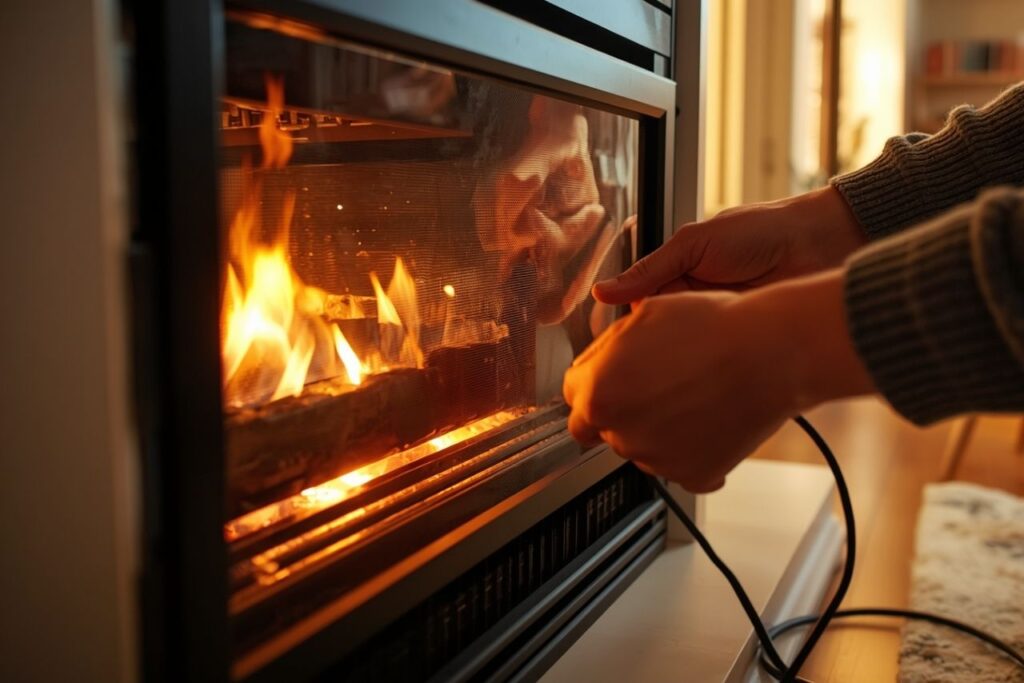
When an electric furnace stops producing heat, the immediate question is usually “repair the heating element or replace the furnace?” The most cost-effective answer depends on four variables: (1) whether the element problem is truly the root cause (vs. a control, relay, airflow, or wiring issue), (2) the furnace’s age and overall condition, (3) parts availability and labor complexity, and (4) the “hidden costs” of repeat failures—downtime, emergency service calls, and comfort loss. In engineering terms, a heating element is not just wire; it is an assembly that includes conductive alloy, insulating/support framework, and lead connectors, so “repair” can mean restoring terminals and supports as much as replacing the coil itself.
Product and manufacturing context: Heating Element | Heating Element manufacturer | Heating Element Factory | Die Casting Heating Solutions
What “heating element” means in an electric furnace
Electric furnaces heat air by pushing it over resistive heating elements—often coils mounted on insulators in a frame. From a heater-engineering perspective, a heating element is a component composed of electrically conductive and insulating materials and is designed to serve a heating purpose. It is an assemblage that includes the conductive alloy and a framework of insulating material plus lead connectors. Heat output is produced through resistive (Joule) heating when current flows through the element alloy.
Why this definition matters for cost
If the element “assembly” fails, the cheapest fix is not always “buy a new coil.” Sometimes the coil is intact, but a high-resistance connector, loose terminal, degraded insulator, or heat-damaged wiring is the real culprit. Conversely, repeated “repairs” that do not address airflow restrictions or control issues can lead to more expensive failures later.
Failure type
Open element
No continuity: coil has burned out. Replacement is typical.
Failure type
Connector/terminal heating
Loose or oxidized spade/terminal creates heat, arcing, and intermittent shutdowns.
Failure type
Controls/relays
Element is fine, but it never receives power due to control chain faults.
Failure type
Airflow/overheat events
Blocked returns or dirty filters raise temperatures and shorten element life.
Section summary
“Element cost” includes the element assembly and its connections; therefore, diagnosis quality directly affects whether repair spend is productive.
Cost structure: what you’re really paying for
For most homeowners and facilities teams, total cost splits into parts, labor, and risk premium (downtime, return visits, emergency scheduling). Even when a component seems inexpensive, hidden costs can dominate—especially when failures recur or when a diagnosis is wrong. Heater engineering guidance explicitly highlights less obvious costs such as field replacements, assembly time, and the knock-on impact of poor quality.
Cost components (practical breakdown)
| Cost category | Examples | How it changes repair vs replace |
|---|---|---|
| Direct parts | Heating element kit, connectors, relays, limit switches | Repair favors lower parts cost—if the correct part is identified early |
| Labor and access | Disassembly/reassembly time, testing, travel time | Older/awkward installations can make “cheap parts” expensive to install |
| Diagnostic uncertainty | Return visits, swapped parts that didn’t fix root cause | If uncertainty is high, replacement becomes more attractive |
| System condition | Blower health, duct issues, wiring integrity | If multiple subsystems are near end-of-life, replacement is often rational |
| Downtime and comfort | No-heat days, temporary heaters, business interruption | High downtime cost pushes toward durable, one-and-done outcomes |
A “spec clarity” signal: how listings can reduce wrong-part cost
An example product listing for a plug-in heater element demonstrates what “spec clarity” looks like in practice: wattage, materials, protection rating, approvals, warranty, and a returns policy. Even though that product is for radiators/towel warmers, the lesson applies to furnaces: better specification data reduces ordering mistakes and repeat labor.
Example spec fields (for context): a 1000W plug-in heating element listing provides wattage (1000W), materials (ABS and stainless steel), ingress protection (IP67), UL approval, and a 2-year warranty plus a 30-day return policy. These are the kinds of procurement signals that help control total cost.
Section summary
The “price of the element” is only one line item; labor, access, uncertainty, and downtime often decide repair vs replace.
Repair vs replace decision framework
Use a structured framework rather than a gut feel. The right choice is the option that minimizes total cost over the next few years while meeting reliability and safety expectations.
Decision table (high-level)
| Situation | Repair is usually best when… | Replacement is usually best when… |
|---|---|---|
| Single element failure | Root cause confirmed; rest of system is healthy | Multiple failures occurred recently or diagnosis is uncertain |
| Repeated element burnouts | A clear external cause (airflow restriction, loose terminals) is fixed | Underlying issues persist or controls/wiring are degraded |
| Older furnace | Parts are available and labor is straightforward | Parts are scarce, labor is high, or multiple subsystems are worn |
| Safety concerns | No heat damage; wiring/terminals are intact | Evidence of arcing, melted insulation, or chassis short risk |
Quick scoring model (simple and practical)
This heuristic helps prioritize: higher “Replace Score” suggests replacement is more economical and reliable.
Section summary
Repair wins when the cause is confirmed and isolated; replacement wins when uncertainty, repeat failures, or safety risk raise total cost.
Diagnosis steps that prevent wasted spend
The single most common reason for “repair that didn’t work” is skipping verification. In other heating systems, manufacturer guidance explicitly says to verify the new element by matching voltage and wattage to the equipment data plate and to ensure wire connections are tight. While that guidance is for a water heater, the principles apply across resistive heating appliances: correct rating and tight connections prevent immediate failure and hazards.
Recommended diagnostic workflow (before buying parts)
- Confirm power is isolated and follow local electrical safety practice.
- Inspect airflow constraints (filter condition, return blockage, blower condition). Airflow problems can elevate element temperature and shorten life.
- Check connections: look for discoloration, melted insulation, loose terminals (a classic source of localized resistance heating).
- Measure element continuity/resistance with the unit de-energized.
- Verify control chain if element tests good (relays, limits, sequencing; exact steps depend on furnace design).
- Only then select a replacement part matching rated voltage and wattage.
High-stakes red flags (stop and escalate)
- Breaker trips repeatedly
- Arcing, buzzing at terminals, or burning odor that persists
- Melted wiring or heat damage to nearby components
- Evidence of element contact/short to chassis
Section summary
Verification steps reduce wrong-part orders and prevent connector-related overheating—two major drivers of “repair cost creep.”
Common scenarios (with recommended action)
Below are typical field scenarios with a practical “repair vs replace” recommendation. The goal is to minimize repeat service events and the hidden costs highlighted in heater engineering experience.
| Scenario | What it usually means | Best next move |
|---|---|---|
| One element open; no visible damage elsewhere | Normal end-of-life for resistive element | Repair: replace element; inspect and tighten terminals; restore airflow |
| Repeated element failures within a short period | External stressor (airflow restriction, overvoltage, control cycling) or poor connections | Repair only if stressor is identified and corrected; otherwise replace |
| Burned connectors/terminal block | High-resistance joint or loose wiring creating heat and arcing | Repair with scope: replace damaged connectors/wiring and element if needed; consider replace if widespread heat damage |
| No heat; element tests good | Control chain fault (relay/limit) or power delivery issue | Repair: pay for diagnosis; don’t buy elements “just in case” |
| Multiple subsystems failing (blower noise, frequent trips) | System nearing end-of-life | Replace: reduces repeat visits and downtime |
Section summary
The more the issue looks systemic (repeat failures, heat damage, multiple worn components), the more replacement tends to dominate on total cost.
How to reduce total cost of ownership
Heater engineering guidance emphasizes that the “cost of quality” shows up later in field failures and rework. That idea translates directly to furnace elements: a cheap part paired with poor terminals, poor airflow, or rushed installation is often more expensive over time.
Six practical levers that reduce cost
- Airflow hygiene: replace filters and keep returns unblocked
- Terminal integrity: ensure tight, clean connections; replace heat-damaged spades
- Correct ratings: match voltage and wattage; don’t “close enough” the spec
- Installation time discipline: photos, correct routing, and reassembly reduce errors
- Plan for access: schedule service before peak season to avoid emergency premiums
- Choose appropriate element architectures for industrial/custom applications (tubes, plates, films, integrated modules)
For manufacturing or custom heater projects (not typical residential furnaces), it can be helpful to think in terms of heater families: heating tubes (sheath + MgO + resistance wire), heating plates (surface uniformity and strength), heating films (thin, flexible, low-voltage operation), and integrated die-cast heating modules that combine heating elements with metal die-casting for improved heat transfer and mechanical robustness.
Section summary
Most “cost control” is operational: airflow, terminals, and correct rating—then choosing quality parts to reduce repeat labor.
FAQ (6)
1) Is a furnace heating element “just a coil”?
Not in engineering terms. Heater guidance defines a heating element as an assembly including conductive alloy, an insulating framework, and lead connectors—so terminals and supports are part of the reliability picture.
2) Why do heating elements fail repeatedly?
Repeats commonly point to external stressors—restricted airflow, overheating events, connector resistance heating, or control problems causing harsh cycling—rather than “bad luck.”
3) What is the single most important spec to match when replacing an element?
Match the equipment’s rated voltage and wattage. Manufacturer-style replacement guidance in other heater systems explicitly instructs verifying these values on the equipment data plate before installation.
4) Can loose wiring really increase my repair bill?
Yes. Loose connections create localized resistance heating and can lead to arcing, damaged terminals, and additional component replacement—turning a simple element swap into a larger electrical repair.
5) When is replacement the smarter choice even if the element is cheap?
When there is evidence of heat damage, repeated failures, poor parts availability, or multiple worn subsystems. Hidden costs—downtime, repeat visits, and customer impact—often outweigh the low part price.
6) How can buyers reduce wrong-part purchases?
Favor suppliers and listings with clear specifications (wattage, materials, approvals), warranty coverage, and returns policies. A well-specified listing reduces ordering mistakes and repeat labor.
Conclusion
The repair-versus-replace decision is most accurate when it treats the heating element as an engineered assembly and prioritizes diagnosis, correct specifications, and connector/airflow integrity. Repair is usually the economical path for a confirmed, isolated element failure in an otherwise healthy furnace. Replacement tends to win when uncertainty, repeat failures, safety risk, or broader system wear increases the hidden costs of continued repair attempts.
References
-
Heating element definition, frameworks (suspended/embedded/supported), materials, environment effects, and hidden cost discussion:
https://tutco.com/conductive/heating-elements -
Replacement verification principles (verify voltage/wattage; ensure wire connections are tight; secure covers before energizing)—shown for a different heating appliance but broadly applicable to resistive heaters:
https://www.whirlpoolwaterheaters.com/support/help/element-was-out-of-range/24 -
Heater solution families and manufacturing capabilities (tubes/plates/films, die-cast modules, certifications, production capacity):
https://jinzho.com/
https://jinzho.com/product-category/heating-element/
https://jinzho.com/product-category/heating-element/heating-tubes/
https://jinzho.com/product-category/heating-element/heating-plate/
https://jinzho.com/product-category/heating-element/heating-film/
https://jinzho.com/product-category/die-casting-heating-solutions/
https://jinzho.com/about/ -
Example of a consumer heater listing demonstrating clear spec fields, approvals, warranty, and returns policy (used as a procurement-quality illustration):
https://usa.hudsonreed.com/1000-plug-in-watt-electric-heating-element-76309
Disclaimer: This content is general information. Electric furnaces and local electrical regulations vary. For high-risk symptoms (arcing, melted wiring, repeated breaker trips), consult a qualified HVAC/electrical professional.