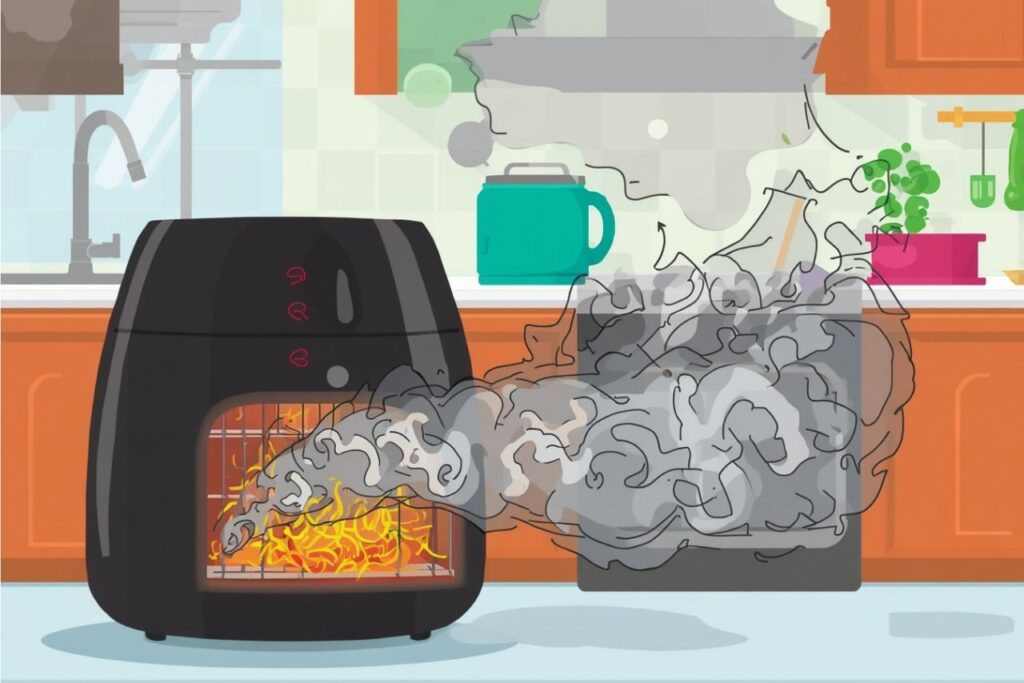
If your air fryer heating element is smoking, the most common reason is simple: something on or near the hot element is burning off (grease, food residue, or manufacturing oils). Less commonly, smoke can signal a failing component, damaged insulation, or overheating caused by poor airflow.
What to do immediately (safety first)
- Turn the unit off and unplug it.
- Move it away from walls/cabinets and anything flammable.
- Let it cool fully before inspecting or cleaning.
- If you see flames, use appropriate fire safety steps (do not throw water on electrical appliances).
An electric heating element is fundamentally an engineered component: it contains electrically conductive material that converts electrical energy to heat (resistive/Joule heating) and insulating/support materials that keep that conductive part safely positioned and electrically isolated. When smoke appears, it’s either contamination burning off, or a fault that’s making something get hotter than it should.
Is any smoke “normal”?
A small amount of odor or a faint wisp of smoke can happen:
Top reasons an air fryer heating element smokes
1) Grease or food residue burning on the hot zone
The most common cause is simple contamination: grease aerosol, sauce splatter, crumbs, or fat deposits land near the heater and carbonize when the element reaches high temperature. Because the element’s job is to deliver heat fast, anything organic on it is likely to smoke.
2) Drips hitting a hot plate or heater support area
Many heaters sit within a framework. Even when the conductive part isn’t directly exposed, the surrounding metal surfaces get hot. Drips can hit those surfaces and produce smoke even if the element itself looks clean.
3) Airflow restriction causing overheating
Air fryers rely on forced airflow. If vents are blocked, filters/screens are clogged, or the unit is pushed tight against a wall, heat can build up. In heater design terms, the operating environment matters: heating elements behave differently depending on airflow, contaminants, and heat transfer conditions.
4) Residues from cleaners or non-stick sprays
Some sprays and cleaners can leave films that smoke at cooking temperatures. This often shows up as “mysterious smoke” even when there’s no visible grease.
5) Electrical insulation breakdown or damaged internal materials (less common, more serious)
Heating elements are not just “wire that gets hot.” They’re assemblies that pair conductive alloys with insulating/support materials. If internal insulation is compromised, abnormal heating or leakage can occur. This is the category where you should stop using the unit until it’s inspected or repaired.
How to clean safely (without damaging the element)
Cleaning is the most effective fix when smoke is caused by grease or residue. The key is to clean thoroughly while avoiding bending, scraping aggressively, or saturating electrical areas.
- Unplug and cool completely.
- Remove basket/tray and wash those normally.
- For the heater area, use a damp (not dripping) cloth or soft sponge with mild detergent.
- Wipe again with clean water on a cloth to remove soap film.
- Dry fully and let it air-dry before powering on.
If the unit’s heater is an embedded/sheath style design (common across many appliance heaters), the insulation system is part of what makes it safe. Avoid actions that could crack coatings, deform supports, or introduce moisture into sensitive areas.
When smoke means “stop using it”
Use this checklist to decide whether you’re dealing with a cleanable residue issue or a potential component failure:
- Smoke is accompanied by sparks, arcing, or a visible electrical flash.
- You smell burning plastic or see melting/warping.
- It smokes even after a careful cleaning and drying.
- The unit trips a breaker/GFCI or behaves erratically (fans not running, rapid cycling, etc.).
- You see damaged wiring, brittle insulation, or scorched internal parts.
- The smoke is light, clearly tied to greasy cooking, and stops quickly.
- No electrical symptoms (no sparks, no tripping, fan behaves normally).
- You can remove residues and the smoke does not return.
FAQs
1) Why does my air fryer smoke more when I cook fatty foods?
Fatty foods render grease that can aerosolize and deposit on hot surfaces near the heating area. Once those deposits accumulate, they burn off during preheat or cooking, producing smoke. A deeper clean (not just washing the basket) often fixes recurring smoke.
2) Is it dangerous if the heating element smokes once during the first use?
A brief, light burn-off can happen when residues from manufacturing or packaging heat up for the first time. It should be minimal and should not persist across multiple sessions. If the smoke is heavy, smells like burning plastic, or repeats after cleaning, stop using the unit and have it checked.
3) Can blocked vents really make a heating element smoke?
Yes. Heater performance depends on its environment—especially airflow and heat transfer. If airflow is restricted, temperatures in the heater compartment can rise, increasing the chance that residues burn and, in worse cases, stressing insulating/support materials. Ensure vents are clear and the fan path is unobstructed.
Note: This article provides general guidance. Always follow your air fryer’s manual and safety labels, and use qualified service when electrical damage is suspected.