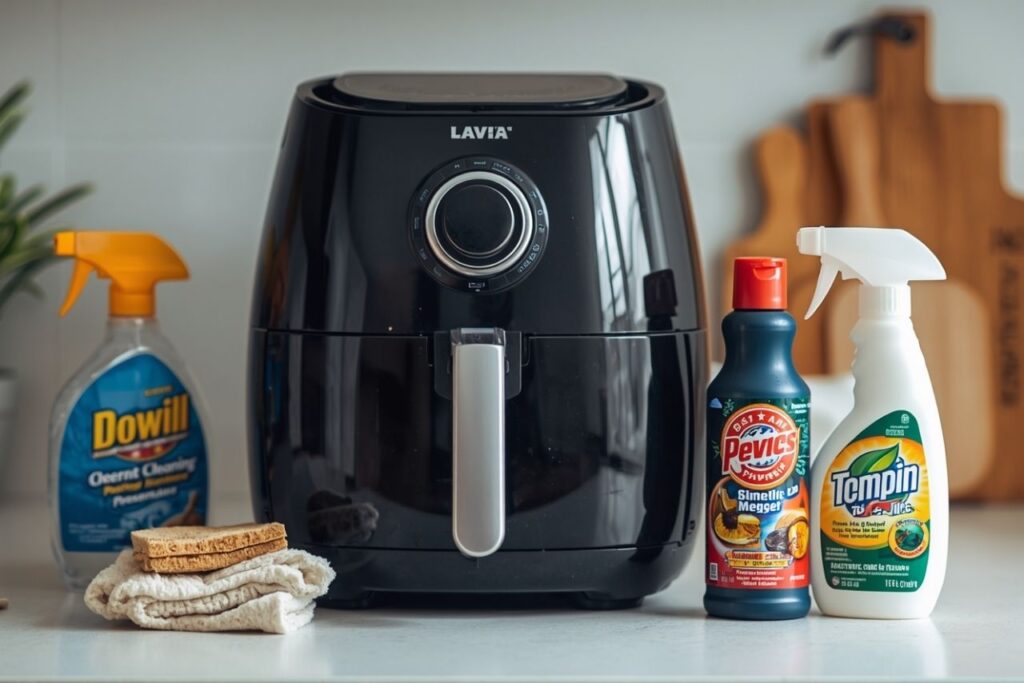
Cluster page for cleaning/maintenance under the broader “Heating Element” topic. This guide focuses on practical, low-risk ways to remove grease from an air fryer heating element—and what products are safest to use depending on element construction.
Before you clean: know what you’re touching
A “heating element” is not just a hot wire. In many designs it’s an engineered assembly that combines electrically conductive material (the part that generates heat) with insulating/support materials and connectors. Some elements are open and exposed (e.g., coils), while others are embedded or sheathed (where the heat-generating conductor is inside insulating material and a metal sheath).
Why it matters for degreasing: the safer the element surface is (smooth sheath/plate), the wider your cleaning options. The more exposed the conductor/insulators are (open coil, fragile supports), the more you need “gentle + minimal moisture.”
- Open coil (wire visible, sometimes supported by ceramic/mica points)
- Sheathed/tubular (smooth metal tube; conductor insulated inside)
- Plate/embedded (heater bonded/embedded to a panel in some appliances)
Thin grease films carbonize and become sticky varnish. They can smoke, smell, and in extreme cases create hot spots. Cleaning is about removing the film without damaging insulation, coatings, terminals, or nearby plastics.
Best product types for degreasing (and when to use each)
Instead of recommending a single brand, use the product type that matches your element construction and soil level. Below are the safest “classes” of products and what they’re good at.
| Product type | Best for | How to use safely on/near a heating element |
|---|---|---|
| Mild dishwashing liquid (hand dish soap) | Light grease haze; routine maintenance | Dilute in warm water; apply to cloth or soft brush (not directly to electrical parts). Wipe, then wipe again with clean damp cloth. Dry fully before powering on. |
| Non-caustic kitchen degreaser (alkaline but “surface-safe”) | Sticky oil film on metal guards, baskets, and interior walls | Spray onto cloth, not into vents/terminals. Keep off insulation pads, wiring, and any labels. Rinse-wipe thoroughly to prevent residue smoking. |
| Baking soda paste (mild abrasive) | Baked-on spots on stainless surfaces (not delicate coatings) | Use a very soft cloth; avoid aggressive scrubbing on coated parts or open coils. Remove all residue (powder can burn/smoke). |
| Isopropyl alcohol (IPA) (quick-evaporating solvent) | Spot degrease on metal surfaces when minimal water is preferred | Use sparingly on a cloth. Ventilate well. Keep away from sparks/flames. Do not soak insulation or allow pooling. |
Stronger chemicals remove grease faster, but they also increase the risk of attacking coatings, plastics, adhesives, and insulating supports. Many heating assemblies rely on insulating frameworks and materials; harsh cleaners can shorten life if they wick into crevices and remain there.
Quick match guide: element construction → cleaner choice
- Open coil + visible supports: prioritize “wipe only” cleaning with mild dish soap solution or small IPA spot cleaning; avoid sprays.
- Sheathed/tubular metal element: mild dish soap for routine; non-caustic degreaser for heavier film; always wipe-rinse residue.
- Plate/embedded heating surfaces: treat as a coated surface—mild detergent first; avoid abrasives unless the manufacturer says it’s safe.
Step-by-step degreasing method (low risk)
- Unplug the air fryer and let it cool completely.
- Dry clean first: use a soft brush or dry microfiber to remove crumbs/dust (wet cleaning turns dust into paste).
- Make a mild solution: warm water + a few drops of hand dishwashing liquid.
- Apply to the cloth/brush, not the appliance: wipe the metal surfaces near the element. For tight spots, use a soft toothbrush.
- For stubborn spots, hold a lightly damp soapy cloth on the area for 30–60 seconds to soften, then wipe (don’t scrape).
- Rinse-wipe: use a clean cloth dampened with plain water to remove detergent residue (residue can smoke on next heat cycle).
- Dry thoroughly: wipe dry, then let the unit air-dry with the drawer/basket open before plugging in.
- Test run: run empty at a low-to-medium setting for a few minutes in a ventilated area to burn off trace moisture (expect minimal odor, not smoke).
Many heater constructions use insulation (e.g., MgO in sheathed designs) and frameworks/supports (ceramic/mica in open coils). Liquid cleaners that seep into seams can carry dissolved grease and residues into places that later burn, smell, or degrade insulation.
What to avoid (most common damage causes)
- Spraying degreaser directly upward into the ceiling/element area (drips can reach wiring, thermostats, and connectors).
- Oven cleaner / highly caustic cleaners on unknown coatings or aluminum parts (risk of surface attack and residue).
- Metal scrapers / hard abrasives on coils or coated guards (can nick the surface and create new burn points).
- Soaking the cooking chamber or “rinsing under a tap” (liquid intrusion risk).
- Powering on while damp (steam + residue = odor and potential electrical issues).
FAQ
Can I use dish soap to degrease the heating element?
Yes—as a mild, diluted cleaner applied to a cloth/soft brush, not sprayed or poured into the unit. Dishwashing liquid is a gentle starting point and is also commonly referenced in appliance procedures as a safe lubricant/agent in other contexts. The key is to wipe-rinse and dry completely to prevent residue smoking.
Why does my air fryer smoke after cleaning?
Most often it’s leftover detergent/degreaser residue or loosened grease that wasn’t fully removed. Repeat with a lighter cleaner, wipe with clean water, and dry thoroughly before a short ventilated test run.
Does the heater “type” change how I should clean?
Yes. Open-coil elements with insulating supports demand minimal moisture and no abrasion. Smooth sheathed/tubular elements tolerate wiping better. In broader heating product families (tubes, plates, films, integrated modules), construction drives cleaning compatibility—so default to gentle methods unless you have manufacturer-approved instructions.
Safety note: Always follow your specific air fryer’s manual. If grease buildup is severe or you suspect damage to wiring/insulation, consider professional service or replacement—especially because heating elements are assemblies of conductive and insulating components, not just “metal that gets hot.”