Si su calentador de agua deja de producir agua caliente, a menudo se enfrenta a un problema simple con el elemento del calentador de agua. Puede restaurar rápidamente la comodidad revisando este componente primero. Muchos propietarios eligen reemplazar un elemento calefactor ellos mismos, ahorrando tanto tiempo como dinero.
- Reparar un elemento del calentador de agua cuesta entre $200 y $300.
- El elemento calefactor en sí cuesta aproximadamente $20.
- La mano de obra y los materiales de fabricantes de elementos calefactores o proveedores de servicios pueden elevar los costos hasta $300.
Calefacción eléctrica Jinzhong suministra confiables elementos calefactores de electrodomésticos, haciendo accesibles las reparaciones de bricolaje.
Por qué el elemento del calentador de agua es a menudo el problema
Cuando su calentador de agua deja de funcionar, a menudo encuentra que el elemento del calentador de agua es el culpable. Usted depende de los elementos calefactores para calentar el agua en su tanque. Si estos componentes fallan, su calentador de agua eléctrico no puede suministrar agua caliente. Los expertos en reparación de electrodomésticos informan que los elementos calefactores experimentan fallas más frecuentes que otras partes del calentador de agua .
Razones comunes para la falla del elemento del calentador de agua
Acumulación de minerales en los elementos calefactores
La acumulación de minerales presenta un desafío importante para los elementos calefactores. El agua dura contiene minerales que se depositan dentro del tanque de su calentador de agua. Con el tiempo, estos minerales forman una capa de sedimento alrededor del elemento. Este sedimento aísla el elemento calefactor, causando que se sobrecaliente y eventualmente se queme. Es posible que escuche ruidos de chasquidos o crujidos provenientes del tanque cuando se acumula sedimento.
Consejo: Purgar regularmente el tanque de su calentador de agua ayuda a reducir la acumulación de minerales y extiende la vida útil de su elemento calefactor.
Edad y desgaste del elemento del calentador de agua
Los elementos calefactores no duran para siempre. El desgaste provocado por los ciclos constantes de calentamiento debilita el elemento. La mayoría elementos de calentador de agua duran entre seis y diez años. A medida que el elemento envejece, pierde eficiencia y puede no calentar el agua adecuadamente. La acumulación de sarro o la corrosión también aceleran el desgaste, especialmente en unidades más antiguas.
Problemas eléctricos y sobretensiones
Los problemas eléctricos a menudo dañan los elementos calefactores. Las sobretensiones, el cableado defectuoso o las conexiones sueltas pueden causar un cortocircuito en el elemento. Si su disyuntor se dispara repetidamente, es posible que tenga un problema eléctrico que afecte el elemento del calentador de agua. El daño mecánico por una instalación o mantenimiento inadecuados también puede provocar fallas.
Señales de que el elemento de su calentador de agua necesita atención
Sin agua caliente en absoluto
Nota que sale agua fría de sus grifos. Esto generalmente significa que el elemento del calentador de agua ha fallado por completo. Si ambos elementos calefactores dejan de funcionar, su calentador de agua no puede producir agua caliente.
El agua no se calienta lo suficiente
Es posible que experimente Temperatura del agua inconsistente o solo agua tibia. Un elemento calefactor defectuoso no puede alcanzar la temperatura establecida. Un volumen reducido de agua caliente o que el agua tarde más en calentarse también indica un elemento con problemas.
Disyuntor disparado o fusible fundido
Un disyuntor disparado o un fusible fundido indica un problema eléctrico con su calentador de agua. Los disparos repetidos a menudo indican un elemento deteriorado o un cableado defectuoso. Debe inspeccionar el elemento del calentador de agua si nota este problema.
Nota: Los calentadores de agua más nuevos pueden mostrar códigos de error cuando el elemento funciona mal. Siempre consulte el manual de su unidad para obtener consejos de solución de problemas.
Pasos de seguridad antes de probar los elementos calefactores
Antes de comenzar cualquier trabajo en su calentador de agua, debe tomarse la seguridad en serio. Los calentadores de agua funcionan con alto voltaje y agua caliente, lo que puede presentar riesgos significativos si no sigue los procedimientos adecuados. Puede evitar accidentes siguiendo estos pasos de seguridad esenciales.
Cómo apagar el calentador de agua
Cómo localizar y activar el disyuntor
Siempre debe apagar su calentador de agua antes de abrir cualquier panel o tocar componentes eléctricos. Localice el panel eléctrico de su hogar y encuentre el disyuntor etiquetado para su calentador de agua. Cambie el interruptor a la posición “apagado”. Este paso previene descargas eléctricas y lo protege de lesiones.
Verificación doble de la seguridad eléctrica
Después de apagar su calentador de agua en el disyuntor, confirme que no fluya electricidad a la unidad. Use un probador de voltaje sin contacto para verificar los cables dentro del panel de acceso. Si el probador se enciende o emite un pitido, la electricidad sigue presente. No continúe hasta que verifique que la energía esté apagada. Esta verificación adicional garantiza su seguridad y previene descargas accidentales.
⚠️ Alerta de seguridad: Probar o reemplazar elementos de calentador de agua sin las precauciones adecuadas puede conllevar riesgos graves, incluyendo:
- Intoxicación por monóxido de carbono
- Explosiones (raro pero posible)
- Fugas de gas
- Quemaduras por escaldadura
Estos peligros resaltan la importancia de una instalación correcta, mantenimiento regular y adherencia estricta a las pautas de seguridad. Siempre tómese el tiempo para apagar su calentador de agua y verificar doblemente la seguridad eléctrica.
Reunir herramientas para probar los elementos calefactores
Herramientas y suministros esenciales
Necesita las herramientas adecuadas para probar el elemento de su calentador de agua de manera segura y precisa. Reúna los siguientes artículos antes de comenzar:
- Multímetro (para medir resistencia eléctrica y voltaje)
- Destornilladores de punta plana y Phillips (para quitar paneles de acceso)
- Probador de voltaje sin contacto (para confirmar que la energía está apagada)
- Cinta aislante (para asegurar cables si es necesario)
- Linterna o foco (para una mejor visibilidad)
Estas herramientas lo ayudan a realizar el trabajo de manera eficiente y reducen el riesgo de errores.
Equipo de seguridad para trabajar en el calentador de agua
El equipo de protección personal lo mantiene seguro durante el proceso. Use guantes aislados para proteger sus manos de descargas eléctricas. Use protección ocular para proteger sus ojos de escombros o salpicaduras accidentales. Una buena iluminación garantiza que vea todos los componentes claramente y evite contratiempos.
Consejo: Siempre lea y comprenda las instrucciones del fabricante y las advertencias de seguridad antes de comenzar. Nunca intente reparaciones si su calentador de agua parece dañado o tiene fugas. Contrate a un profesional con licencia para la instalación o reparaciones importantes, y programe inspecciones regulares para mantener su sistema seguro.
Siguiendo estos pasos y utilizando las herramientas correctas, crea un entorno seguro para probar y reemplazar el elemento de su calentador de agua. Recuerde apagar su calentador de agua cada vez que trabaje en él.
Accediendo al elemento del calentador de agua

Cuando necesite acceder a los elementos dentro de su calentador de agua, debe seguir un enfoque sistemático. Este proceso lo ayuda a evitar daños y garantiza su seguridad. Comenzará quitando el panel de acceso y luego localizará los elementos calefactores dentro del tanque.
Quitar el panel de acceso en el calentador de agua
Encontrar el panel correcto
Encontrará el panel de acceso en el costado de su calentador de agua eléctrico. La mayoría de las unidades tienen dos paneles: uno para el elemento calefactor superior y otro para el inferior. Busque paneles asegurados con tornillos. Use un destornillador para quitar estos tornillos. Colóquelos en un lugar seguro para no perderlos. Una vez que retire los tornillos, levante suavemente el panel lejos del tanque. Este paso le permite acceder a los elementos para inspección o prueba.
Manejo seguro del aislamiento y las cubiertas
Después de quitar el panel, verá aislamiento cubriendo el elemento calefactor. Debe manipular este aislamiento con cuidado. Siga estas mejores prácticas para garantizar la seguridad:
- Asegúrese de que todas las cubiertas permanezcan aseguradas para reducir el riesgo de incendio y descarga eléctrica.
- Reemplace el protector de plástico después de terminar su trabajo.
- Vuelva a colocar el aislamiento en su lugar una vez que complete su inspección.
- Reinstale la cubierta del elemento calefactor superior antes de restablecer la energía.
Consejo: Use guantes al manipular el aislamiento para proteger su piel de irritaciones. Mantenga siempre el área de trabajo limpia para evitar perder piezas pequeñas.
Localización de los Elementos Calefactores Dentro del Calentador de Agua
Identificación de los Elementos Calefactores Superior e Inferior
Dentro del tanque, encontrará dos elementos calefactores. El elemento calefactor superior calienta primero el agua en la parte superior del tanque. Una vez que la parte superior alcanza la temperatura deseada, el termostato superior cambia la potencia a elemento inferior. El elemento calefactor inferior mantiene la temperatura del agua almacenada después de que el tanque se llena.
Puede identificar los elementos siguiendo esta secuencia:
- El elemento calefactor superior se activa primero cuando se necesita agua caliente.
- Después de que la parte superior alcanza la temperatura establecida, el termostato activa el elemento calefactor inferior.
- El elemento calefactor inferior mantiene caliente el agua dentro del tanque.
Este proceso garantiza que su calentador de agua suministre agua caliente de manera eficiente.
Reconocimiento del Elemento del Calentador de Agua
Reconocerá el elemento del calentador de agua por su brida metálica y sus terminales eléctricas. El elemento se encuentra dentro del tanque, con cables conectados a sus terminales. Puede ver depósitos minerales o decoloración si el elemento ha fallado. Use una linterna para inspeccionar el área de cerca. Asegúrese de acceder a los elementos solo después de confirmar que la energía está desconectada.
Nota: Si no puede acceder fácilmente a los elementos, consulte el manual de su calentador de agua para obtener orientación. Algunos modelos tienen diseños de panel o tipos de aislamiento únicos.
Siguiendo estos pasos, puede acceder a los elementos de manera segura y prepararse para las pruebas o el reemplazo. El manejo cuidadoso de los paneles y el aislamiento lo protege a usted y a su calentador de agua.
Prueba de los Elementos Calefactores con un Multímetro
Cuando su calentador de agua deje de producir agua caliente, debe revisar los elementos calefactores. Probar los elementos calefactores con un multímetro le ayuda a identificar un elemento defectuoso de manera rápida y segura. Este proceso garantiza que no reemplace piezas innecesariamente y ayuda a restaurar su agua caliente de manera eficiente.
Configuración del multímetro para realizar pruebas
Selección del Ajuste de Resistencia Correcto
Debe configurar su multímetro en el ajuste de resistencia más bajo, generalmente marcado como Ω (ohmios). Este ajuste le permite medir con precisión la resistencia eléctrica del elemento calefactor. La mayoría de los multímetros digitales tienen un dial o botón para este ajuste. Siempre verifique dos veces el ajuste antes de comenzar la prueba.
Preparación del Elemento del Calentador de Agua para la Prueba
Antes de comenzar el proceso de prueba, siga estos pasos para garantizar la seguridad y precisión:
- Apague el interruptor automático de su calentador de agua en el panel eléctrico principal.
- Espere a que el agua en el tanque se enfríe. Puede hacer correr agua caliente de un grifo hasta que se sienta tibia.
- Retire el panel de acceso metálico en el costado del calentador de agua usando un destornillador.
- Póngase guantes de goma y gafas de seguridad. Retire el aislamiento dentro del panel para exponer el elemento calefactor.
- Identifique el elemento calefactor. Se ve como un objeto redondo o hexagonal con una placa de plástico, sujeto con tornillos.
- Afloje un tornillo del elemento calefactor y desconecte el cable adjunto. Este paso aísla el elemento para una prueba precisa.
⚡ Consejo: Siempre confirme que la energía está desconectada con un detector de voltaje sin contacto antes de tocar cualquier cable.
Cómo Probar el Elemento del Calentador de Agua
Medición de la Resistencia de los Elementos Calefactores
Para probar los elementos, siga este procedimiento:
- Coloque una sonda del multímetro en el tornillo suelto del elemento calefactor.
- Coloque la otra sonda en el tornillo restante del mismo elemento.
- Observe la lectura en la pantalla del multímetro.
Repita este proceso tanto para el elemento calefactor superior como para el inferior. Probar ambos garantiza que no pase por alto un elemento quemado.
Qué Significan las Lecturas de Resistencia
Un elemento calefactor funcional típicamente muestra una lectura de resistencia entre 10 y 30 ohmios. Si su multímetro muestra un valor muy bajo, cero o infinito, es probable que tenga un elemento defectuoso. La resistencia exacta depende de la potencia en vatios y el voltaje de su calentador de agua. Use la siguiente tabla para comparar sus lecturas:
| Potencia del Elemento | Rango de resistencia (ohmios) |
|---|---|
| 1500 vatios, 240V | 33 a 43 |
| 2000 vatios, 240V | 24 a 32 |
| 3500 vatios, 240V | 13 a 19 |
| 4500 vatios, 240V | 11 a 15 |
| 5500 vatios, 240V | 9 a 12 |
| 750 vatios, 120V | 16 a 22 |
| 1000 vatios, 120V | 11.5 a 16.5 |
| 1500 vatios, 120V | 8 a 12 |
| 2000 vatios, 120V | 6 a 8 |
| 2500 vatios, 120V | 5 a 7 |
| 3000 vatios, 120V | 4 a 6 |
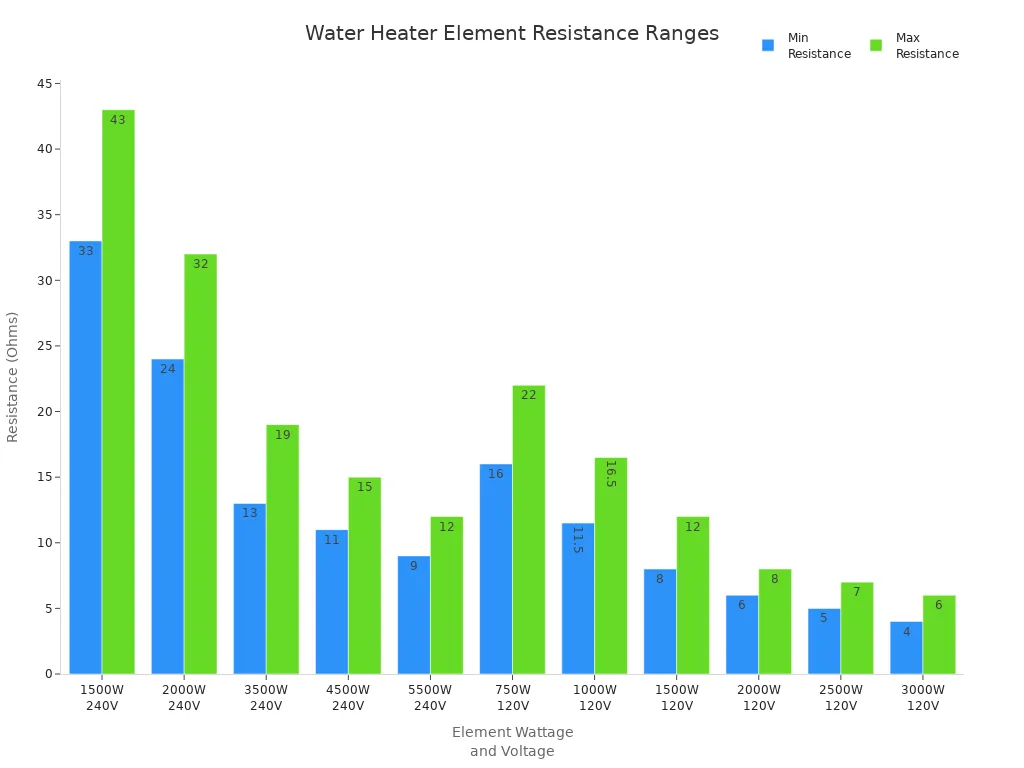
Nota: Si su lectura está fuera del rango esperado, ha identificado un elemento defectuoso.
Interpretación de los resultados de la prueba de los elementos calefactores
Lecturas de un elemento del calentador de agua en buen estado frente a uno defectuoso
Puede interpretar los resultados de su prueba utilizando estas pautas:
- Un elemento calefactor en buen estado mostrará una resistencia entre 10 y 30 ohmios, o dentro del rango indicado para su potencia y voltaje específicos.
- Un elemento defectuoso mostrará una lectura de cero, infinito o un valor muy fuera del rango normal.
- Si su multímetro no se mueve o no muestra ninguna lectura, el elemento está defectuoso.
🛠️ Alerta: Si encuentra un cortocircuito (el zumbador de prueba suena o la luz de prueba se enciende cuando conecta una sonda al soporte del elemento), no intente reemplazar el elemento usted mismo. Contacte a un profesional para realizar más reparaciones.
Qué hacer si el elemento está defectuoso
Si su prueba confirma un elemento defectuoso, debe reemplazarlo. Vuelva a conectar cualquier cable que haya desconectado, reemplace el aislamiento y asegure los paneles de cubierta metálicos antes de restaurar la alimentación. No encienda el calentador de agua nuevamente hasta que haya completado todas las reparaciones y se haya asegurado de que todo esté seguro.
Probar los elementos calefactores con un multímetro le da una respuesta clara sobre el estado del elemento de su calentador de agua. Este enfoque paso a paso le ayuda a evitar reemplazos innecesarios y mantiene su calentador de agua funcionando de manera eficiente.
Reemplazo de un elemento calentador de agua defectuoso
Cuando descubre un elemento defectuoso del calentador de agua, debe seguir un proceso preciso para garantizar un reemplazo seguro y exitoso. Esta sección le guía a través de la extracción del elemento calefactor viejo, la instalación del nuevo y el reinicio de su calentador de agua.
Retirar el elemento viejo del calentador de agua
Drenaje del tanque del calentador de agua
Antes de comenzar, debe drenar el tanque del calentador de agua. Este paso evita que el agua se derrame cuando retire el elemento calefactor. Siempre debe dejar que el agua se enfríe antes de drenar el tanque. Esta precaución reduce el riesgo de escaldaduras. Use un voltímetro o un comprobador de circuitos para confirmar que la alimentación está apagada, lo que lo protege de descargas eléctricas.
- Espere hasta que el agua dentro del tanque se sienta fría.
- Confirme que la alimentación esté apagada verificando los cables con un comprobador de circuitos.
- Conecte una manguera a la válvula de drenaje en la parte inferior del tanque.
- Dirija la manguera a un área de drenaje segura.
- Abra la válvula de drenaje y deje que el tanque se vacíe por completo.
Consejo: Abra un grifo de agua caliente en su hogar para ayudar a que el tanque se drene más rápido y libere cualquier presión de vacío.
Desenroscar y Retirar el Elemento
Una vez que el tanque esté vacío, puede retirar el elemento calefactor. Debe evitar dañar el tanque durante este proceso. Utilice los siguientes métodos para obtener los mejores resultados:
- Aplique aceite penetrante en la base del elemento y déjelo reposar durante la noche si el elemento se siente atascado.
- Use una llave adecuada para elementos calefactores para evitar dañar las roscas.
- Golpee suavemente alrededor de la base del elemento con un mazo de goma para romper cualquier sello de corrosión.
- Si el elemento permanece atascado, caliente ligeramente el metal circundante con una pistola de calor o un soplete para expandirlo.
- Use un dado de alta calidad y una barra de extensión larga para obtener palanca adicional.
Una extracción cuidadosa garantiza que no dañe el tanque ni los componentes circundantes.
Instalar el nuevo elemento del calentador de agua
Elegir el elemento de recambio adecuado
Seleccionar un reemplazo compatible es esencial para el rendimiento de su calentador de agua. Debe igualar las especificaciones de su unidad. Use la tabla a continuación para guiar su selección:
| Criterios | Descripción |
|---|---|
| Estilo de brida del elemento | Determine el estilo de brida (roscado, plano, universal, cabeza redonda) para garantizar la compatibilidad. |
| Voltaje/Vatiaje | Iguale el voltaje (120 V o 240 V) y la potencia (1000 a 6000 vatios) con las especificaciones del calentador. |
| Densidad de vatios | Considere la densidad de vatios para garantizar un calentamiento eficiente y la compatibilidad con el modelo del calentador de agua. |
Consulte el manual de su calentador de agua o la etiqueta en el tanque para obtener estos detalles antes de comprar un nuevo elemento calefactor.
Aseguramiento y sellado del nuevo elemento
Un sellado adecuado evita fugas y garantiza una fiabilidad a largo plazo. Siga estos pasos para asegurar el nuevo elemento calefactor:
- Coloque una junta o anillo tórico nuevo en la base del elemento calefactor. Nunca reutilice la junta vieja.
- Si su modelo utiliza conexiones roscadas, envuelva cinta de teflón alrededor de las roscas.
- Inserte el elemento calefactor en el tanque y apriételo en sentido horario con una llave para elementos calefactores. No apriete en exceso.
- Vuelva a conectar los cables a los terminales en sus posiciones originales. Asegure las conexiones con un destornillador.
- Inspeccione todas las conexiones y sellos antes de volver a llenar el tanque.
- Limpie la abertura del tanque con un trapo o cepillo antes de instalar el nuevo elemento calefactor.
Nota: Envolver cinta de teflón alrededor de las conexiones roscadas ayuda a prevenir fugas. Siempre verifique que no haya suciedad o residuos antes de la instalación.
Rellenado y reinicio del calentador de agua
Rellenado del tanque con agua
Después de instalar el nuevo elemento calefactor, debe rellenar el tanque. Siga estos pasos:
- Asegúrese de que la válvula de drenaje esté firmemente cerrada.
- Vuelva a abrir el suministro de agua fría para llenar el tanque.
- Abra un grifo de agua caliente para eliminar el aire atrapado del sistema.
Espere hasta que el agua fluya de manera constante desde el grifo antes de continuar.
Restauración de la corriente al calentador de agua
Una vez que el tanque esté lleno y todo el aire haya sido purgado, puede restaurar la alimentación al calentador de agua. Encienda el disyuntor o ajuste el termostato según sea necesario. Monitoree la unidad para detectar fugas y confirme que el agua se calienta correctamente.
⚡ Recordatorio de seguridad: Nunca restaure la alimentación al calentador de agua antes de que el tanque esté lleno. Hacer funcionar el elemento calefactor en seco puede causar daños inmediatos.
Siguiendo estos pasos, puede reemplazar el elemento de manera segura y eficiente. Protege su calentador de agua y garantiza agua caliente confiable para su hogar.
¿Qué sucede si el elemento del calentador de agua no es el problema?
A veces, reemplazar el elemento del calentador de agua no restaura el agua caliente. En estos casos, debe ampliar su proceso de solución de problemas a otros componentes. El termostato a menudo causa problemas de calentamiento cuando el elemento funciona correctamente. También debe considerar problemas con el suministro de energía, el cableado u otras partes internas.
Comprobación del termostato del calentador de agua
Cómo probar el termostato
Puede probar el termostato utilizando herramientas de diagnóstico estándar. Comience apagando la alimentación en el disyuntor. Retire las placas de cubierta metálicas para exponer los termostatos y elementos. Use un comprobador de voltaje sin contacto para confirmar que no fluye electricidad hacia la unidad. Este paso lo mantiene seguro.
A continuación, use un comprobador de continuidad Verificar el termostato. Desconecte los cables de los terminales del termostato. Coloque las puntas de prueba en los tornillos de los terminales. Si el comprobador no muestra continuidad, el termostato ha fallado. También debe verificar si hay cortocircuitos probando los tornillos contra el soporte de montaje.
Herramientas necesarias para esta tarea:
- destornillador 4 en 1
- Alicates de punta fina
- Comprobador de tensión sin contacto
- Probador de continuidad
Ajuste o reemplazo del termostato
Si encuentra que el termostato está desajustado, puede reajustarlo. Use un destornillador de punta plana para ajustar la configuración de temperatura. La mayoría de los calentadores de agua funcionan mejor a 120°F. Si el termostato no responde o no muestra continuidad, reemplácelo por uno nuevo que coincida con su modelo. Siempre vuelva a conectar los cables de forma segura y reinstale las placas de cubierta antes de restaurar la energía.
Cuándo llamar a un profesional para la reparación del calentador de agua
Señales de que necesitas ayuda
Algunos problemas requieren atención profesional. Debe comunicarse con un técnico certificado si nota alguno de los siguientes:
- Reparaciones frecuentes
- Facturas de energía en aumento
- Malos olores provenientes del calentador de agua
- Baja presión de agua
- Fugas persistentes alrededor del tanque
- Ruidos extraños durante el funcionamiento
- Agua oxidada o descolorida
- Suministro inconsistente de agua caliente
- El calentador de agua está cerca o ha superado su vida útil esperada
⚠️ Consejo: Si experimenta problemas eléctricos, como falta de voltaje en el tanque o conexiones de cableado defectuosas, no intente repararlas usted mismo. Estas situaciones presentan graves riesgos de seguridad.
Prevención de Futuros Problemas del Calentador de Agua
Puede reducir la necesidad de reparaciones siguiendo un programa de mantenimiento regular. Lave el tanque para eliminar sedimentos. Inspeccione los elementos calefactores y el termostato anualmente. Aborde los problemas menores a tiempo para evitar averías costosas. Si nota síntomas inusuales, actúe rápidamente para evitar daños mayores.
Un proceso de diagnóstico exhaustivo le ayuda a identificar la causa real de los problemas del calentador de agua. En caso de duda, confíe en la experiencia profesional para mantener su sistema seguro y eficiente.
Prevención de futuros problemas en elementos de calentador de agua
Mantenimiento regular de los elementos calefactores
Limpieza del tanque del calentador de agua
Puede extender la vida útil de sus elementos calefactores lavando el tanque regularmente. Los sedimentos y depósitos minerales se asientan en el fondo del tanque con el tiempo. Estos depósitos aíslan el elemento calefactor, causando que se sobrecaliente y falle prematuramente. Lavar el tanque cada 6 a 12 meses elimina esta acumulación y mantiene su sistema funcionando de manera eficiente. En áreas con agua dura, es posible que necesite lavar el tanque con más frecuencia. Abra la válvula de drenaje, conecte una manguera y deje que el agua fluya hasta que salga clara. Esta tarea simple ayuda a prevenir reparaciones costosas.
Consejo: Programe un lavado completo del tanque cada 12 meses para mantener un rendimiento óptimo.
Inspección anual de los elementos calefactores
Las inspecciones anuales le ayudarán a detectar problemas antes de que provoquen fallos inesperados. Debe revisar los elementos calefactores, inspeccionar el termostato y la varilla de ánodo cada año. Si su calentador de agua es antiguo o vive en un área con agua dura, revise la unidad cada seis meses. Busque señales de óxido, corrosión o fugas. Escuche ruidos extraños y observe si el suministro de agua caliente es inconsistente. Si nota alguno de estos problemas, atiéndalos de inmediato para evitar daños mayores.
Programa de inspección recomendado:
- Inspeccione anualmente si la calidad de su agua es buena.
- Inspeccione cada seis a nueve meses en áreas de agua dura.
- Inspeccione cada seis meses para unidades más antiguas.
- Inspeccione inmediatamente si ve fugas, óxido o escucha sonidos inusuales.
Nota: El mantenimiento regular, incluyendo inspecciones y lavados, puede ayudar a que su calentador de agua eléctrico de tanque dure hasta 15 años.
Reducción de la acumulación de minerales en su calentador de agua
Uso de un ablandador de agua
El agua dura causa acumulación de minerales dentro de su tanque y en los elementos calefactores. Instalar un ablandador de agua evita la formación de sarro y elimina la acumulación de sedimentos. Este dispositivo elimina el calcio y el magnesio de su suministro de agua, lo que ayuda a mantener la eficiencia de calefacción y extiende la vida útil de su calentador de agua. Notará menos reparaciones y un suministro de agua caliente más constante cuando use un ablandador de agua.
Limpieza del tanque del calentador de agua
La limpieza del tanque va más allá del lavado. También debe verificar la varilla de ánodo y reemplazarla si es necesario. La varilla de ánodo atrae minerales corrosivos, protegiendo el tanque y los elementos del óxido. Ajuste su termostato a 120 grados Fahrenheit para reducir la precipitación de minerales. Aísle su tanque y tuberías para minimizar la pérdida de calor y mejorar la eficiencia. Programe un mantenimiento anual con un profesional de plomería para una limpieza e inspección exhaustivas.
🛠️ Consejo profesional: Combine el lavado, el ablandamiento de agua y las inspecciones anuales para la mejor protección contra la acumulación de minerales y el fallo prematuro de los elementos.
Verificar el elemento del calentador de agua primero a menudo resuelve la mayoría de los problemas de calefacción rápidamente. Puede probar y reemplazar el elemento con herramientas básicas y pasos de seguridad. Muchos propietarios cometen errores al saltarse el mantenimiento regular o al diagnosticar mal el elemento. El servicio regular mantiene el elemento eficiente y extiende su vida útil.
- El mantenimiento regular garantiza un rendimiento óptimo y ahorro de energía.
- Inspeccionar el elemento y la varilla de ánodo previene la corrosión y reparaciones costosas.
- La detección temprana de problemas en el elemento conduce a un suministro constante de agua caliente y facturas más bajas.
PREGUNTAS FRECUENTES
¿Con qué frecuencia debe revisar el elemento de su calentador de agua?
Debe inspeccionar el elemento calefactor al menos una vez al año. Si vive en un área con agua dura, aumente la frecuencia a cada seis meses para prevenir la acumulación de minerales y garantizar un rendimiento confiable.
¿Qué herramientas necesitas para probar un elemento del calentador de agua?
Necesita un multímetro, un comprobador de voltaje sin contacto, destornilladores de punta plana y Phillips, guantes aislados y gafas de seguridad. Estas herramientas le ayudan a probar y reemplazar el elemento de forma segura.
¿Se puede reemplazar un elemento del calentador de agua sin drenar el tanque?
Debe vaciar el tanque antes de retirar el elemento calefactor. Este paso evita que el agua se filtre y reduce el riesgo de quemaduras o descargas eléctricas.
¿Qué lectura de resistencia indica un elemento de calentador de agua defectuoso?
Una lectura de cero, infinito o un valor fuera del rango esperado señala un elemento defectuoso. Consulte las especificaciones de su calentador de agua para conocer el rango de resistencia correcto.
¿Por qué sigue fallando el elemento de su calentador de agua?
La acumulación de minerales, los problemas eléctricos y la antigüedad causan fallos repetidos. El mantenimiento regular, incluyendo el lavado del tanque y el uso de un ablandador de agua, ayuda a prevenir estos problemas.
¿Es seguro probar uno mismo el elemento de un calentador de agua?
Puede probar el elemento de forma segura si apaga la energía, usa las herramientas adecuadas y usa equipo de protección. Si no está seguro, comuníquese con un técnico certificado.
¿Qué debe hacer si reemplazar el elemento no soluciona el problema?
Verifique el termostato y el cableado en busca de fallas. Si no puede identificar el problema, llame a un profesional para un diagnóstico y reparación adicionales.
Consejo: Siempre consulte el manual de su calentador de agua antes de comenzar cualquier reparación. Este paso asegura que siga las pautas del fabricante y mantenga la seguridad.