

If your water heater stops producing hot water, you often face a simple issue with the water heater element. You can quickly restore comfort by checking this component first. Many homeowners choose to replace a 電熱線 themselves, saving both time and money.
- Repairing a water heater element costs between $200 and $300.
- The heating element itself is about $20.
- Labor and materials from 発熱体メーカー or service providers can push costs up to $300.
金中電熱 supplies reliable 家電製品の加熱素子, making do-it-yourself repairs accessible.
Why the Water Heater Element Is Often the Problem
When your water heater stops working, you often find the 給湯器のエレメント at fault. You rely on heating elements to warm the water in your tank. If these components fail, your electric water heater cannot deliver hot water. Appliance repair experts report that heating elements experience more frequent failures than other water heater parts.
Common Reasons for Water Heater Element Failure
Mineral Buildup on Heating Elements
Mineral buildup presents a major challenge for heating elements. Hard water contains minerals that settle inside your water heater tank. Over time, these minerals form a layer of sediment around the element. This sediment insulates the heating element, causing it to overheat and eventually burn out. You may hear popping or crackling noises from the tank when sediment builds up.
Tip: Flushing your water heater tank regularly helps reduce mineral buildup and extends the life of your heating element.
Age and Wear of Water Heater Element
Heating elements do not last forever. Wear and tear from constant heating cycles weaken the element. Most water heater elements last between six and ten years. As the element ages, it loses efficiency and may fail to heat water properly. Scaling or corrosion also accelerates wear, especially in older units.
電気的問題と電力サージ
Electrical issues often damage heating elements. Power surges, faulty wiring, or loose connections can cause the element to short out. If your circuit breaker trips repeatedly, you may have an electrical problem affecting the water heater element. Mechanical damage from improper installation or maintenance can also lead to failure.
Signs Your Water Heater Element Needs Attention
No Hot Water at All
You notice cold water coming from your taps. This usually means the water heater element has failed completely. If both heating elements stop working, your water heater cannot produce hot water.
お湯が十分に温まらない
You may experience 給湯されない、または湯が高温すぎる or only lukewarm water. A failing heating element cannot reach the set temperature. Reduced hot water volume or water taking longer to heat also points to a struggling element.
ブレーカーが落ちた、またはヒューズが切れた
A tripped breaker or blown fuse signals an electrical issue with your water heater. Repeated tripping often indicates a deteriorating element or faulty wiring. You should inspect the water heater element if you notice this problem.
Note: Newer water heaters may display error codes when the element malfunctions. Always check your unit’s manual for troubleshooting tips.
Safety Steps Before Testing the Heating Elements
Before you begin any work on your water heater, you must take safety seriously. Water heaters operate with high voltage and hot water, which can pose significant risks if you do not follow proper procedures. You can avoid accidents by following these essential safety steps.
給湯器の電源を切る
回路ブレーカーの位置と切り替え
You should always power down your water heater before opening any panels or touching electrical components. Locate your home’s electrical panel and find the breaker labeled for your water heater. Flip the switch to the “off” position. This step prevents electrical shock and protects you from injury.
Double-Checking for Electrical Safety
After you power down your water heater at the breaker, confirm that no electricity flows to the unit. Use a non-contact voltage tester to check the wires inside the access panel. If the tester lights up or beeps, electricity remains present. Do not proceed until you verify the power is off. This extra check ensures your safety and prevents accidental shocks.
⚠️ 安全に関する注意喚起 Testing or replacing water heater elements without proper precautions can lead to serious risks, including:
- Carbon monoxide poisoning
- Explosions (rare but possible)
- Gas leaks
- Scalding
These dangers highlight the importance of correct installation, regular maintenance, and strict adherence to safety guidelines. Always take the time to power down your water heater and double-check for electrical safety.
Gathering Tools for Testing the Heating Elements
Essential Tools and Supplies
You need the right tools to test your water heater element safely and accurately. Gather the following items before you start:
- Multimeter (for measuring electrical resistance and voltage)
- Flathead and Phillips screwdrivers (for removing access panels)
- Non-contact voltage tester (for confirming power is off)
- Electrical tape (for securing wires if needed)
- Torch or flashlight (for better visibility)
These tools help you perform the job efficiently and reduce the risk of mistakes.
Safety Gear for Working on Water Heater
Personal protective equipment keeps you safe during the process. Wear insulated gloves to protect your hands from electrical shock. Use eye protection to shield your eyes from debris or accidental splashes. Good lighting ensures you see all components clearly and avoid mishaps.
ヒント Always read and understand the manufacturer’s instructions and safety warnings before you begin. Never attempt repairs if your water heater appears damaged or leaks. Hire a licensed professional for installation or major repairs, and schedule regular inspections to keep your system safe.
By following these steps and using the correct tools, you create a safe environment for testing and replacing your water heater element. Remember to power down your water heater every time you work on it.
給湯器エレメントへのアクセス

When you need to access the elements inside your water heater, you must follow a systematic approach. This process helps you avoid damage and ensures your safety. You will start by removing the access panel and then locate the heating elements inside the tank.
Removing the Access Panel on the Water Heater
Finding the Correct Panel
You will find the access panel on the side of your electric water heater. Most units have two panels—one for the upper heating element and one for the lower. Look for panels secured with screws. Use a screwdriver to remove these screws. Place them in a safe spot so you do not lose them. Once you remove the screws, gently lift the panel away from the tank. This step allows you to access the elements for inspection or testing.
Handling Insulation and Covers Safely
After you remove the panel, you will see insulation covering the heating element. You must handle this insulation with care. Follow these best practices to ensure safety:
- Make sure all covers remain secured to reduce the risk of fire and electric shock.
- Replace the plastic protector after you finish your work.
- Put the insulation back in place once you complete your inspection.
- Reinstall the upper heating element cover before restoring power.
Tip: Wear gloves when handling insulation to protect your skin from irritation. Always keep the workspace clean to avoid losing small parts.
Locating the Heating Elements Inside the Water Heater
上部および下部加熱エレメントの識別
タンク内部には2つの加熱エレメントがあります。 上部加熱エレメントは、まずタンク上部の水を加熱します。. Once the top reaches the desired temperature, the upper thermostat switches power to the 下部加熱エレメント. The lower heating element maintains the temperature of stored water after the tank fills.
以下の手順でエレメントを識別できます:
- 温水が必要な場合、まず上部加熱エレメントが作動します。.
- 上部が設定温度に達すると、サーモスタットが下部加熱エレメントを作動させます。.
- 下部加熱エレメントはタンク内の水を高温に保ちます。.
このプロセスにより、給湯器は効率的に温水を供給します。.
給湯器エレメントの見分け方
給湯器エレメントは金属フランジと電気端子で識別できます。エレメントはタンク内部に設置され、端子には配線が接続されています。エレメントが故障している場合、ミネラル堆積物や変色が見られることがあります。懐中電灯で該当部分を注意深く点検してください。必ず電源が切れていることを確認した後にのみ、エレメントにアクセスしてください。.
注記:エレメントに簡単にアクセスできない場合は、給湯器の取扱説明書を参照してください。一部のモデルは独自のパネルデザインや断熱材タイプを採用しています。.
これらの手順に従うことで、安全にエレメントにアクセスし、テストや交換の準備ができます。パネルや断熱材の慎重な取り扱いは、ご自身と給湯器の両方を保護します。.
マルチメーターによる加熱エレメントのテスト
When your water heater stops producing hot water, you need to check the heating elements. Testing the heating elements with a multimeter helps you identify a faulty element quickly and safely. This process ensures you do not replace parts unnecessarily and helps restore your hot water efficiently.
テスト用のマルチメーターのセットアップ
適切な抵抗設定の選択
マルチメーターを最低抵抗設定(通常Ω(オーム)表示)に設定する必要があります。この設定により、加熱エレメントの電気抵抗を正確に測定できます。ほとんどのデジタルマルチメーターには、ダイヤルまたはボタンで調整する機能があります。テスト開始前には常に設定を再確認してください。.
テストのための給湯器エレメントの準備
テストプロセスを開始する前に、安全性と正確性を確保するため以下の手順に従ってください:
- 主電気パネルで給湯器の回路ブレーカーを オフにします。.
- タンク内の水が冷めるのを待ちます。蛇口から温水を流し、ぬるま湯と感じられるまで続けます。.
- ドライバーを使用して給湯器側面の金属アクセスパネルを取り外します。.
- ゴム手袋と安全ゴーグルを装着します。パネル内の断熱材を取り除き、加熱エレメントを露出させます。.
- 加熱エレメントを確認します。プラスチックプレート付きの丸型または六角形の物体で、ネジで固定されています。.
- 加熱エレメントのネジを1本緩め、接続された配線を外します。この手順により、正確なテストのためにエレメントを絶縁状態にします。.
⚡ ヒント 配線に触れる前には、必ず非接触電圧テスターで電源が切れていることを確認してください。.
給湯器エレメントのテスト方法
加熱エレメントの抵抗測定
エレメントをテストするには、以下の手順に従います:
- マルチメーターの片方のプローブを加熱エレメントの緩めたネジに当てます。.
- もう片方のプローブを同じエレメントの残りのネジに当てます。.
- マルチメーターの表示値を確認します。.
上部および下部加熱エレメントの両方でこのプロセスを繰り返します。両方をテストすることで、焼損エレメントを見逃すことを防ぎます。.
抵抗値の意味
正常な加熱エレメントは通常、 10〜30オームの抵抗値. を示します。マルチメーターが非常に低い値、ゼロ、または無限大を表示する場合、エレメントが故障している可能性が高いです。正確な抵抗値は給湯器のワット数と電圧によって異なります。以下の表を参考に測定値を比較してください:
| 素子定格電力 | 抵抗範囲(オーム) |
|---|---|
| 1500ワット、240V | 33~43 |
| 2000ワット、240V | 24~32 |
| 3500ワット、240V | 13~19 |
| 4500ワット、240V | 11~15 |
| 5500ワット、240V | 9~12 |
| 750ワット、120V | 16~22 |
| 1000ワット、120V | 11.5~16.5 |
| 1500ワット、120V | 8~12 |
| 2000ワット、120V | 6~8 |
| 2500ワット、120V | 5~7 |
| 3000ワット、120V | 4~6 |
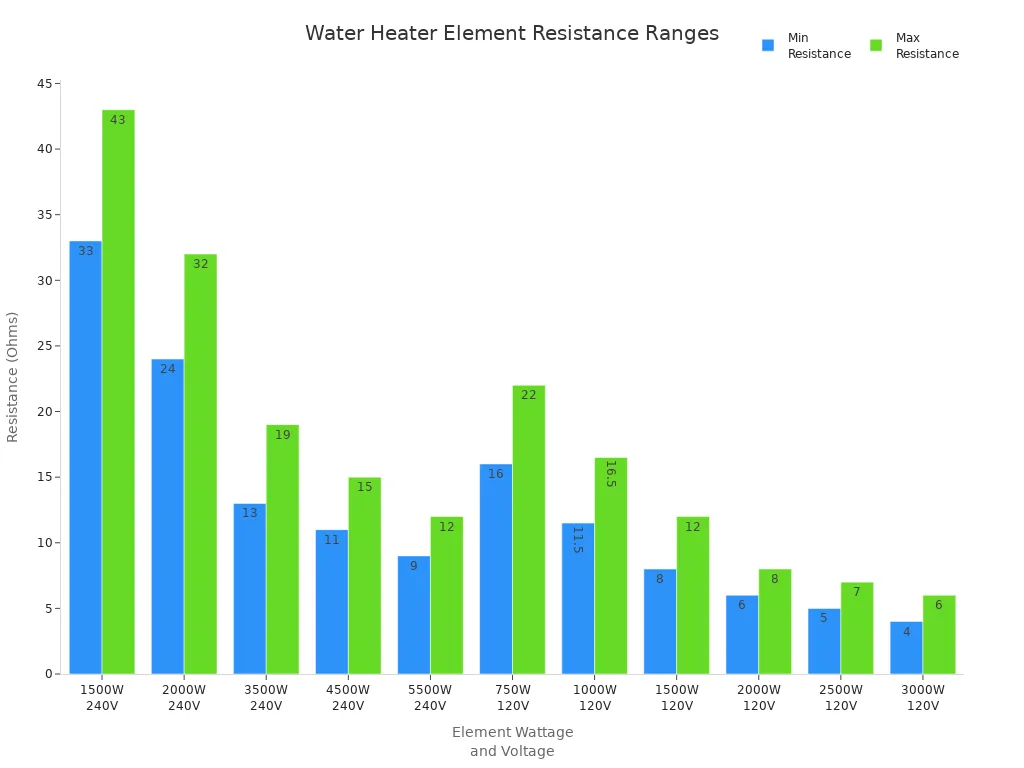
注記:測定値が予想範囲外の場合、故障エレメントを特定したことになります。.
加熱エレメントテスト結果の解釈
正常な給湯器エレメントと故障エレメントの測定値
以下のガイドラインに従ってテスト結果を解釈できます:
- 正常な加熱エレメントは、10~30オームの抵抗値、または特定のワット数・電圧に対応するリスト内の範囲内の値を示します。.
- A faulty element will show a reading of zero, infinity, or a value far outside the normal range.
- If your multimeter does not move or displays no reading, the element is defective.
🛠️ 警告だ: If you find a short circuit (the test buzzer sounds or the test light comes on when you connect a probe to the element bracket), do not attempt to replace the element yourself. Contact a professional for further repairs.
What to Do If the Element Is Bad
If your testing confirms a faulty element, you need to replace it. Reattach any wires you disconnected, replace the insulation, and secure the metal cover panels before restoring power. Do not turn the water heater back on until you have completed all repairs and ensured everything is safe.
Testing the heating elements with a multimeter gives you a clear answer about the condition of your water heater element. This step-by-step approach helps you avoid unnecessary replacements and keeps your water heater running efficiently.
故障した給湯器のエレメントの交換
When you discover a faulty water heater element, you need to follow a precise process to ensure a safe and successful replacement. This section guides you through removing the old heating element, installing the new one, and restarting your water heater.
古い給湯器のエレメントの取り外し
給湯器タンクの排水
Before you begin, you must drain the water heater tank. This step prevents water from spilling when you remove the heating element. You should always let the water run cool before draining the tank. This precaution reduces the risk of scalding. Use a volt meter or circuit tester to confirm the power is off, which protects you from electrical shock.
- Wait until the water inside the tank feels cool.
- Confirm the power is off by checking wires with a circuit tester.
- タンクの底にある排水バルブにホースを取り付けます。
- Direct the hose to a safe drainage area.
- 排水バルブを開き、タンクを完全に空にします。
Tip: Open a hot water faucet in your home to help the tank drain faster and release any vacuum pressure.
Unscrewing and Removing the Element
Once the tank is empty, you can remove the heating element. You want to avoid damaging the tank during this process. Use the following methods for best results:
- Apply penetrating oil to the base of the element and let it sit overnight if the element feels stuck.
- Use a proper heating element wrench to avoid stripping the threads.
- Tap gently around the element base with a rubber mallet to break any corrosion seals.
- If the element remains stuck, heat the surrounding metal slightly with a heat gun or torch to expand it.
- Use a high-quality socket and a long breaker-bar for extra leverage.
Careful removal ensures you do not harm the tank or surrounding components.
新しい給湯器エレメントの取り付け
適切な交換部品の選択
Selecting a compatible replacement is essential for your water heater’s performance. You need to match the specifications of your unit. Use the table below to guide your selection:
| 基準 | 説明 |
|---|---|
| Element Flange Style | Determine the flange style (Screw-In, Flat, Universal, Round Head) to ensure compatibility. |
| 電圧/ワット数 | Match the voltage (120v or 240v) and wattage (1000 to 6000 watts) to the specifications of the heater. |
| ワット密度 | Consider the watt density to ensure efficient heating and compatibility with the water heater model. |
Check your water heater’s manual or the label on the tank for these details before you purchase a new heating element.
Securing and Sealing the New Element
Proper sealing prevents leaks and ensures long-term reliability. Follow these steps to secure the new heating element:
- Place a new gasket or O-ring on the base of the heating element. Never reuse the old gasket.
- If your model uses threaded connections, wrap Teflon tape around the threads.
- Insert the heating element into the tank and tighten it clockwise with a heating element wrench. Do not over-tighten.
- Reconnect the wires to the terminals in their original positions. Secure the connections with a screwdriver.
- Inspect all connections and seals before refilling the tank.
- Clean the tank opening with a rag or brush before installing the new heating element.
Note: Wrapping Teflon tape around threaded connections helps prevent leaks. Always check for dirt or debris before installation.
給湯器の補充と再起動
タンクに水を補充する
After you install the new heating element, you need to refill the tank. Follow these steps:
- Ensure the drain valve is securely closed.
- Turn the cold water supply back on to fill the tank.
- Open a hot water faucet to eliminate trapped air from the system.
Wait until water flows steadily from the faucet before you proceed.
Restoring Power to the Water Heater
Once the tank is full and all air is purged, you can restore power to the water heater. Switch on the circuit breaker or adjust the thermostat as needed. Monitor the unit for leaks and confirm that the water heats properly.
⚡ Safety Reminder: Never restore power to the water heater before the tank is full. Running the heating element dry can cause immediate damage.
By following these steps, you can replace the element safely and efficiently. You protect your water heater and ensure reliable hot water for your home.
What If the Water Heater Element Isn’t the Issue?
Sometimes, replacing the water heater element does not restore hot water. In these cases, you need to expand your troubleshooting process to other components. The thermostat often causes heating problems when the element works correctly. You should also consider issues with the power supply, wiring, or other internal parts.
Checking the Water Heater Thermostat
サーモスタットのテスト方法
You can test the thermostat using standard diagnostic tools. Start by turning off the power at the circuit breaker. Remove the metal cover plates to expose the thermostats and elements. Use a non-contact voltage tester to confirm that no electricity flows to the unit. This step keeps you safe.
Next, use a continuity tester to check the thermostat. Disconnect the wires from the thermostat terminals. Place the tester probes on the terminal screws. If the tester does not show continuity, the thermostat has failed. You should also check for short circuits by testing the screws against the mounting bracket.
Tools you need for this task:
- 4-in-1 screwdriver
- ニードルノーズプライヤー
- 非接触電圧テスター
- Continuity tester
Adjusting or Replacing the Thermostat
If you find the thermostat out of adjustment, you can reset it. Use a flathead screwdriver to adjust the temperature setting. Most water heaters work best at 120°F. If the thermostat does not respond or shows no continuity, replace it with a new one that matches your model. Always reconnect the wires securely and reinstall the cover plates before restoring power.
給湯器の修理を専門業者に依頼するタイミング
専門家の助けが必要なサイン
Some problems require professional attention. You should contact a licensed technician if you notice any of the following:
- Frequent repairs
- Rising energy bills
- Bad smells from the water heater
- 水圧の低下
- Persistent leaks around the tank
- Strange noises during operation
- 錆びた水や変色した水
- 不安定な温水供給
- The water heater is near or past its expected lifespan
⚠️ ヒント If you experience electrical issues, such as no voltage at the tank or faulty wiring connections, do not attempt repairs yourself. These situations pose serious safety risks.
将来の給湯器の問題を防ぐ
You can reduce the need for repairs by following a regular maintenance schedule. Flush the tank to remove sediment. Inspect the heating elements and thermostat annually. Address minor issues early to prevent costly breakdowns. If you notice unusual symptoms, act quickly to avoid further damage.
A thorough troubleshooting process helps you identify the real cause of water heater problems. When in doubt, rely on professional expertise to keep your system safe and efficient.
Preventing Future Water Heater Element Problems
Regular Maintenance for Heating Elements
給湯器タンクの洗浄
You can extend the lifespan of your heating elements by flushing the tank regularly. Sediment and mineral deposits settle at the bottom of the tank over time. These deposits insulate the heating element, causing it to overheat and fail prematurely. Flushing the tank every 6 to 12 months removes this buildup and keeps your system running efficiently. In areas with hard water, you may need to flush the tank more often. Open the drain valve, attach a hose, and let the water flow until it runs clear. This simple task helps prevent costly repairs.
ヒント Schedule a complete tank flush every 12 months to maintain optimal performance.
Inspecting Heating Elements Annually
Annual inspections help you catch problems before they lead to unexpected failures. You should check the heating elements, thermostat, and anode rod each year. If your water heater is older or you live in an area with hard water, inspect the unit every six months. Look for signs of rust, corrosion, or leaks. Listen for strange noises and watch for inconsistent hot water supply. If you notice any of these issues, address them immediately to avoid further damage.
Recommended inspection schedule:
- Inspect annually if your water quality is good.
- Inspect every six to nine months in hard water areas.
- Inspect every six months for older units.
- Inspect immediately if you see leaks, rust, or hear unusual sounds.
Note: Regular maintenance, including inspections and flushing, can help your electric tank water heater last up to 15 years.
Reducing Mineral Buildup in Your Water Heater
軟水装置の使用
Hard water causes mineral buildup inside your tank and on the heating elements. Installing a water softener prevents scale from forming and eliminates sediment accumulation. This device removes calcium and magnesium from your water supply, which helps maintain heating efficiency and extends the life of your water heater. You will notice fewer repairs and more consistent hot water when you use a water softener.
Cleaning the Water Heater Tank
Cleaning the tank goes beyond flushing. You should also check the anode rod and replace it if needed. The anode rod attracts corrosive minerals, protecting the tank and elements from rust. Set your thermostat to 120 degrees Fahrenheit to reduce mineral precipitation. Insulate your tank and pipes to minimize heat loss and improve efficiency. Schedule annual maintenance with a plumbing professional for a thorough cleaning and inspection.
🛠️ Pro Tip: Combine flushing, water softening, and annual inspections for the best protection against mineral buildup and premature element failure.
Checking the water heater element first often solves most heating issues quickly. You can test and replace the element with basic tools and safety steps. Many homeowners make mistakes by skipping regular maintenance or misdiagnosing the element. Regular service keeps the element efficient and extends its lifespan.
- Regular maintenance ensures optimal performance and energy savings.
- Inspecting the element and anode rod prevents corrosion and costly repairs.
- Early detection of element problems leads to consistent hot water and lower bills.
よくあるご質問
How often should you check your water heater element?
You should inspect the heating element at least once a year. If you live in an area with hard water, increase the frequency to every six months to prevent mineral buildup and ensure reliable performance.
給湯器のエレメントをテストするにはどのようなツールが必要ですか?
You need a multimeter, non-contact voltage tester, flathead and Phillips screwdrivers, insulated gloves, and safety goggles. These tools help you test and replace the element safely.
タンクを排水せずに給湯器のエレメントを交換できますか?
You must drain the tank before removing the heating element. This step prevents water from leaking and reduces the risk of burns or electrical shock.
What resistance reading indicates a bad water heater element?
A reading of zero, infinity, or a value outside the expected range signals a faulty element. Refer to your water heater’s specifications for the correct resistance range.
硬水、堆積物の蓄積、および電源サージが繰り返しの故障を引き起こします。定期的なメンテナンス、タンクの洗浄、およびサージプロテクターの使用は、エレメントの寿命を延ばすのに役立ちます。
Mineral buildup, electrical issues, and age cause repeated failures. Regular maintenance, including flushing the tank and using a water softener, helps prevent these problems.
給湯器ヒーター素子の自己点検は安全ですか?
You can test the element safely if you turn off the power, use proper tools, and wear protective gear. If you feel unsure, contact a licensed technician.
要素を交換しても問題が解決しない場合はどうすべきですか?
Check the thermostat and wiring for faults. If you cannot identify the issue, call a professional for further diagnosis and repair.
Tip: Always consult your water heater’s manual before starting any repairs. This step ensures you follow manufacturer guidelines and maintain safety.

