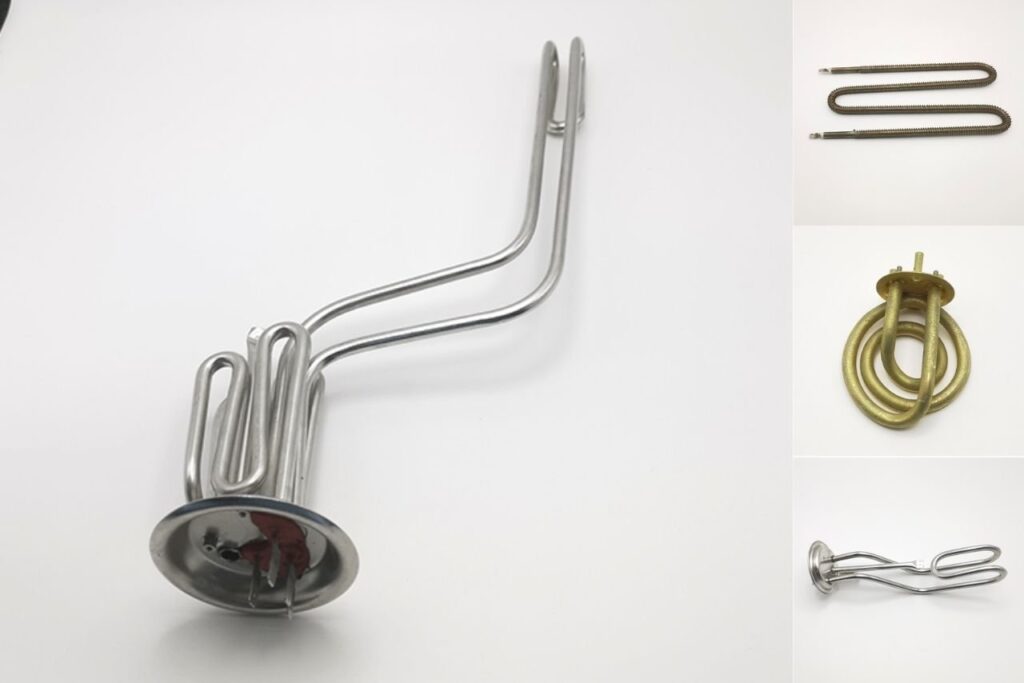
The chemical interaction between mineral-rich water and high-wattage heating surfaces is the primary cause of premature dishwasher failure globally.
As a specialized 発熱体メーカー with over 40 years of expertise, Camewould (Jin Zhong) has analyzed thousands of field failures in our CNAS-accredited laboratories. This technical guide outlines the professional strategies used to mitigate hard water damage, leveraging advanced material science and preventative maintenance to protect the core thermal components of your appliance.
Technical Guide Overview
I. The Mechanism of Mineral Scaling and Thermal Fatigue
Hard water contains elevated concentrations of dissolved calcium and magnesium ions. When the 加熱エレメント energizes, the water immediately adjacent to the sheath surface reaches boiling temperatures. This cause a localized decrease in solubility for carbonates, resulting in a layer of を形成します。このスケールは、利用可能な最も熱い表面、つまり加熱要素の金属シースに強固に付着します。層を重ねて、断熱バリアを形成するのです。この断熱材は、壊滅的な連鎖効果をもたらします: (Calcium Carbonate) adhering to the metal.
This scaling process is self-reinforcing. Because the scale layer is non-conductive, the heat generated by the ニッケルクロム(NiCr) wire remains trapped within the element. This increases the wattage density per square inch of the element s surface, leading to pitting corrosion. In extreme cases, the internal Magnesium Oxide (MgO) insulation expands due to the trapped heat, eventually causing the outer sheath to rupture.
II. Chemical and Mechanical Prevention Strategies
Effective prevention requires attacking the minerals before they can bond to the tubular heating element surface. Professionals recommend a multi-tiered approach to ensure the 5,000+ hour operational lifespan of high-quality components.
1. Ion-Exchange Water Softening
The most effective long-term solution is the installation of a whole-house or point-of-use water softener. These systems replace calcium and magnesium ions with sodium or potassium ions, which do not precipitate as scale at high temperatures. This preserves the thermal efficiency of the element at 98%.
2. Citric Acid Descaling Protocols
For existing scale, regular chemical descaling is mandatory. Citric acid or commercial descalers react with the calcium carbonate to form a soluble citrate that is easily flushed away. It is recommended to perform a descaling cycle every 30 to 60 days in regions where hard water exceeds 7 grains per gallon (GPG).
Water Hardness Impact on Element Lifespan
| Water Type | Grains Per Gallon (GPG) | Estimated Element Life | メンテナンス要件 |
|---|---|---|---|
| Soft Water | 0 C 3 | 8 C 12 Years | 年次点検 |
| Moderately Hard | 3 C 7 | 5 C 7 Years | Descaling Every 6 Months |
| 硬水 | 7 C 10 | 3 C 5 Years | Monthly Descaling |
| Very Hard | 10+ | < 2 Years | Water Softener Required |
III. Material Science: Incoloy 800 vs. Hard Water
At the 発熱体工場, we select sheath materials specifically for their resistance to chloride-induced stress corrosion cracking and pitting. While standard stainless steel (SS304) is common, Incoloy 800 offers superior performance in mineral-rich environments. The high nickel content provides a stable oxide layer that resists the chemical “drilling” effect of minerals at high surface temperatures.
Furthermore, our elements utilize high-purity, compressed Magnesium Oxide (MgO) insulation. This ensures that the heat generated by the NiCr coil is transferred to the sheath with minimal resistance, reducing the internal temperature of the wire and preventing the thermal expansion that leads to sheath rupture in hard water conditions.
IV. Specialized Die Casting for Corrosive Environments
For high-end appliances and industrial sanitizers, ダイカスト加熱ソリューション represent the peak of hard water defense. By encasing the tubular element within a die-cast aluminum or brass block, we create a primary physical shield.
- Reduced Surface Temp: The cast block has a larger surface area than a thin coil, reducing the localized surface temperature and slowing the rate of mineral precipitation.
- Mechanical Scouring Protection: The rigid cast structure is more resistant to the abrasive effects of high-velocity water containing particulate matter.
- Uniform Heat: Eliminates the “ring” of scale that often forms on traditional bake or dishwasher coils.
V. Expert FAQ on Hard Water Maintenance
Q1: Can I use vinegar instead of commercial descaler?
While vinegar (acetic acid) can dissolve light scale, it is less efficient than citric acid and requires much longer contact times. For professional-grade 加熱エレメント maintenance, citric acid is the preferred industrial standard due to its higher reactivity with calcium carbonate.
Q2: Why did my element “pop” even though the dishwasher was still washing well?
This is typical of thermal fatigue caused by scale. The element was likely working at 200% its design temperature because the heat couldn’t escape the scale layer. Eventually, the internal MgO insulation expanded so much that it physically split the metal sheath.
Q3: How many units does Camewould produce for global brands facing hard water issues?
With a monthly capacity of 3 million units, Camewould supplies elements to global leaders like Philips and Midea. Our elements are designed to meet VDE and UL standards, incorporating high-density MgO to withstand the extreme thermal stress caused by scaling in hard-water markets.
Q4: Does rinse aid help prevent hard water damage?
Indirectly, yes. Rinse aid reduces the surface tension of water, allowing it to “sheet” off the element faster during the dry cycle. This prevents large droplets of hard water from evaporating on the surface and leaving concentrated mineral rings.
Industrial Precision, Global Engineering
Suli Technology (Camewould) operates CNAS-accredited laboratories to ensure every 加熱エレメント survives the world’s harshest water conditions. Trust our 40 years of expertise to keep your appliances running.
References & Technical Data Sources:
- [1] Camewould Electrical Technology – Technical Manual for Mineral Scaling Prevention (2025). jinzho.com
- [2] Wikipedia – Limescale and Heat Exchanger Efficiency. en.wikipedia.org
- [3] IQS Directory – Corrosion Resistance in Industrial Tubular Heaters. iqsdirectory.com
- [4] Sears Home Services – Maintaining Dishwasher Components in Hard Water Areas. searshomeservices.com