Cluster Page ? ~2006 words ? Global ? 8 FAQs ? Multimeter-based diagnostics
Testing a GE dryer heating element with a multimeter can confirm whether the element is electrically continuous (likely usable) or open (failed). However, a good element reading does not guarantee heat in operation thermal fuses, thermostats, wiring hot spots, and restricted airflow can still stop heating.
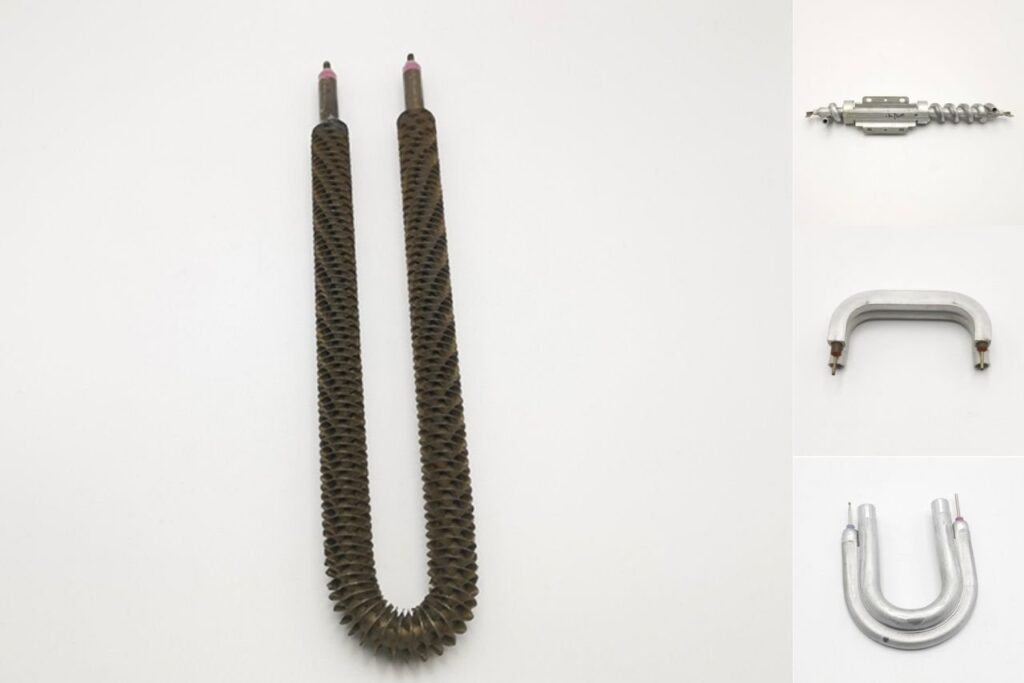
Engineering context: TUTCO explains a heating element is an assembly (conductive alloy + insulating framework + terminals) and that environment and operating conditions affect life and performance. https://tutco.com/conductive/heating-elements
- Symptoms that justify testing
- Tools and setup
- Safety checklist (must-do)
- Airflow check first (prevents wrong diagnosis)
- Accessing the element (common GE layouts)
- Multimeter tests: continuity, resistance, and short-to-chassis
- Interpreting results
- If the element tests good: what to test next
- FAQ (8)
- References & required internal links
| Symptom | What it often indicates | First quick check |
|---|---|---|
| Dryer tumbles, no heat | Open element, thermal fuse open, or missing 240V leg | Breaker status + exterior vent airflow |
| Heats then stops | Overheat condition or cycling/high-limit behavior | Vent restriction / lint buildup |
| Long dry times | Low airflow, partial heat, or control issues | Outdoor vent flap strength |
Table 1 Testing is most useful after airflow and power supply are considered.
- Multimeter (continuity + ohms)
- Nut driver / screwdriver set
- Needle-nose pliers (spade connectors)
- Vacuum and lint brush
- Touch probes together: continuity beep should sound.
- In ohms mode, probes together should read near 0 .
Tip: If your meter has auto-ranging, it will handle scale selection automatically.
- Unplug the dryer (or switch off the breaker for hardwired installations).
- Confirm the dryer cannot start (controls should be dead).
- Let the heater area cool.
- Wear gloves sheet metal edges can cut.
Safety principle example: Whirlpool s heating element replacement instructions warn against restoring power before the system is ready (their case: tank must be full to avoid dry fire burnout), and they emphasize tight wire connections. Different appliance, same habit patterns for safe heater work. Reference.
Dryer heaters are process air heaters: they must transfer heat into moving air. Restricted airflow causes overheating and safety cutoffs, and it can shorten element life. TUTCO s discussion of process air heaters and heater life highlights how operating conditions and heat transfer environment affect reliability. Reference.
- Verify strong airflow at the outside vent termination.
- Inspect and replace crushed/kinked flex duct.
- Clean lint buildup from the duct run end-to-end.
GE dryer designs vary. Many units provide rear access to the heater housing; others require front or lower access. Use the model number for exact panel locations. The diagnostic method below is the same regardless of access route.
- Disconnect vent hose.
- Remove the correct service panel.
- Locate heater housing and the two main element terminals.
- Photograph wiring before disconnecting.
Remove at least one wire from the element so you don t measure through the circuit.
Put one probe on each main terminal. A beep (or non-infinite resistance) generally indicates the element is not open. No beep / OL generally indicates an open element.
Switch the meter to ohms and measure across the same terminals. A working element typically reads a finite resistance value. The exact number varies by element design (alloy, length, gauge) and intended wattage.
Place one probe on an element terminal and the other on a clean metal part of the heater housing/cabinet. Repeat for the other terminal.
- Normal: no continuity / very high resistance to chassis.
- Bad: measurable continuity to chassis suggests a shorted element or damaged insulation/positioning.
| Finding | Likely meaning | Recommended next step |
|---|---|---|
| Open circuit across element (OL / no beep) | Heating element failed | Replace element; address airflow and terminals to prevent repeat burnout |
| Finite resistance across element | Element is electrically continuous | Test thermal fuse/high-limit/cycling thermostat; inspect terminals and power supply |
| Continuity from terminal to chassis | Short to housing | Do not operate; replace element and verify correct seating/insulation |
Table 2 The element can test good and the dryer can still have no heat due to safeties or power issues.
- Thermal fuse / thermal cut-off: usually should have continuity at room temperature; if open, correct airflow issues.
- High-limit thermostat: often closed at room temp (model-dependent); if open, investigate overheating cause.
- Terminal block and cord: overheating or loose connections can drop heater power.
- Vent restriction: can trigger cutoffs even with a good element.
Connection discipline: Whirlpool s heater steps explicitly state, Make sure all wire connections are tight. Loose connections can create hot spots and intermittent heating. Reference.
Usually yes, as long as the terminals are accessible and you disconnect at least one wire to isolate it for an accurate reading.
OL typically means open loop/open circuit. Across the element terminals, it usually indicates a broken coil (failed element).
It may have an open element, open thermal fuse, or missing heater power (one hot leg/breaker issue). Start with airflow and supply checks.
If the thermal fuse is open, it must be replaced for heat to return. But replacing it without fixing airflow restrictions often leads to repeat failure.
Restricted airflow and overheated terminals are the most common. TUTCO notes heater life is limited by oxidation, deformation, and cycling stress; overheating accelerates these. Reference.
It s a strong safety check. A shorted element can trip breakers or create unsafe conditions even if it still shows some continuity.
Replace the terminals. Burned or loose connectors can overheat and damage the new element or cause intermittent heating.
Match the exact model number and part geometry. Follow the same verify rating/specs mindset Whirlpool recommends for heater replacements (voltage/wattage) and ensure tight connections on reassembly. Source.
- TUTCO heater definition, types, and heater life factors: https://tutco.com/conductive/heating-elements
- Whirlpool Replace the Heating Element (verify correct element; tight connections; safe energizing): https://www.whirlpoolwaterheaters.com/support/help/element-was-out-of-range/24
- Hudson Reed spec-forward heater listing example (non-dryer): https://usa.hudsonreed.com/1000-plug-in-watt-electric-heating-element-76309
Disclaimer: This is general diagnostic guidance for electric GE dryers. Designs vary by model. Follow model-specific service documentation and electrical safety practices.