
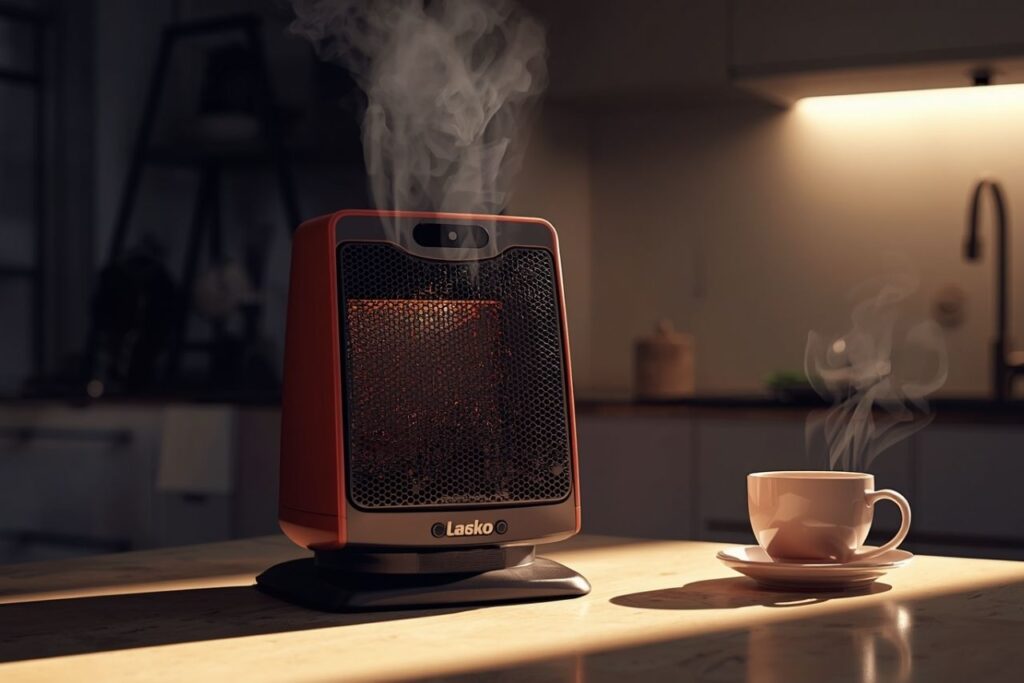
A ceramic space heater that “keeps shutting off” is most often responding to conditions that raise internal temperature or disrupt safe power delivery, not failing because the ceramic itself suddenly stopped working. The most common causes are restricted airflow (dust, lint, blocked intake), overheat protection doing its job, thermostat/sensor placement causing premature cycling, and electrical supply constraints such as overloaded circuits or poor connections. This article explains the technical reasons behind shutdown behavior and provides a safe, structured set of checks to reduce nuisance shutoffs without bypassing protection systems.
Related resources: Heating Element, Heating Element manufacturer, Heating Element Factory, Die Casting Heating Solutions.
Safety boundaries (what not to do)
The heater’s safety devices are there to prevent overheating and fire risk. Troubleshooting must never involve bypassing a tip-over switch, thermal cutoff, or internal fuse. If the heater repeatedly shuts off, the correct approach is to identify the trigger condition.
Immediate stop conditions
- Burning plastic smell, visible melting, smoke from the housing or cord
- Sparks/arcing, buzzing, or crackling sounds near controls or plug
- Power cord damage, loose plug, or hot-to-the-touch plug blades
- Breaker trips on multiple outlets (not just one circuit)
In these cases, continued operation is unsafe; the unit should be unplugged and evaluated by a qualified technician or replaced.
Why ceramic heaters shut off: the engineering view
Many ceramic heaters are built around a heating element assembly that includes both an electrically conductive path and an insulating/support framework. Engineering sources emphasize that a “heating element” is an assemblage of parts, not only the heating alloy. In airflow-exposed designs, conductive wire or traces rely on surrounding structures (often ceramic or mica) to remain electrically isolated while transferring heat to moving air.
When airflow falls or internal temperatures rise, the heater’s protection system interrupts power. From a reliability standpoint, this is expected behavior: keeping the element within a safe operating envelope reduces failure risk. Heater engineering discussions also highlight that environmental conditions and contaminants matter—dust and debris are not trivial; they change heat transfer and can push a heater into overtemperature.
Top causes ranked by frequency
1) Restricted airflow (dirty intake or blocked exhaust)
The most frequent reason a ceramic heater shuts off is insufficient airflow. Dust mats on the intake grill, pet hair, carpet fibers, or a heater placed too close to soft furnishings can reduce flow. Reduced flow raises element temperature faster and triggers thermal protection.
LSI keywords: overheat protection, thermal cutoff, air intake, dust buildup, fan heater airflow.
2) Heat trapping due to placement
Even a clean heater can overheat if it is placed against a wall, under a desk, near curtains, or in a corner where hot air recirculates back into the intake. This creates a “self-heating loop,” causing rapid shutdown.
3) Thermostat/sensor is reading a hot micro-zone
Ceramic heaters can cycle early when a thermostat sensor is exposed to direct hot discharge air, sunlight, or a localized draft that confuses control logic. In practice, the room may still feel cold while the sensor is already satisfied.
4) Electrical supply issues (circuit load, poor contact, or unstable power)
If a heater shares a circuit with other high-current devices, it may experience voltage drop or intermittent power interruptions. Loose plugs and worn outlets can also heat up and lead to intermittent shutdown behavior or breaker trips.
5) Genuine internal component failure
Less commonly, a control board, relay, thermal fuse, or wiring connection fails. This is not typically a DIY repair for portable heaters, because safe servicing depends on model-specific parts, insulation integrity, and reassembly controls.
10-minute diagnostic flow (no tools)
The steps below keep risk low and are intended to isolate the trigger condition without opening the unit.
Quick diagnostic checklist
- Unplug; allow a full cool-down period.
- Move to a clear, open area (no curtains, bedding, or tight corners).
- Confirm the outlet works with another device.
- Plug directly into wall outlet (avoid extension cords).
- Set heat mode high; set thermostat above room temperature.
- Observe whether shutdown happens at a predictable time (e.g., 30–120 seconds).
- Inspect intake/exhaust for dust mats and visible blockage.
- Test on a different circuit (ideally dedicated).
- Listen for fan changes (fan slowing can signal obstruction).
- Note any smell beyond mild dust burn-off.
Corrective actions that actually reduce shutdowns
Clean the intake and surrounding environment
If dust is visible on the grill, airflow is already compromised. Cleaning should be dry: vacuum the intake/exhaust and use a soft brush. Avoid spraying liquids into the heater. The goal is restoring design airflow so the element temperature remains stable.
Reposition to prevent recirculation
Place the heater where discharge air does not loop back into the intake. Avoid corners, tight alcoves, and soft surfaces that block flow. This single change resolves a large portion of repeated shutoffs.
Reduce competing electrical loads
If the heater shares a circuit with other loads, run it alone or use a different circuit. If shutdowns occur only on one outlet, the issue may be the circuit or outlet integrity rather than the heater.
Do not “force operation” after an overheat trip
If a heater overheats, repeated immediate restarts can worsen stress on components. The correct response is cool-down, then fix airflow/placement. This parallels a broader safety principle found in element-servicing procedures in other appliances: do not energize a heating element under unsafe conditions.
Context example: why sequence and safe conditions matter
In water-heater servicing guidance, the element is not powered until the tank is completely full, specifically to avoid element burnout (“dry fire”). Portable heaters are different appliances, but the safety principle is the same: power is applied only when the heat-transfer condition is safe (adequate airflow for a space heater; full water coverage for an immersion element).
Data charts: symptom patterns and decision logic
Chart 1: Shutdown timing pattern vs likely cause
| Observed pattern | Most probable cause | Best confirming check |
|---|---|---|
| Shuts off within 30–120 seconds | Rapid internal temperature rise (airflow blocked / heat recirculation) | Clean grill; reposition to open area; retest |
| Runs 10–30 minutes then shuts off | Thermostat reaches setpoint; or gradual overheat from mild restriction | Increase setpoint; check airflow and room drafts |
| Random shutoffs with flicker | Electrical supply interruption (outlet/circuit/connection) | Test different circuit; inspect plug fit (without disassembly) |
| Shuts off and breaker trips | Overcurrent or electrical fault | Stop use; test other devices on circuit; service/replace |
Chart 2: Symptom-to-action decision table
| Symptom | Primary risk | Recommended action |
|---|---|---|
| Heater shuts off, restarts after cool-down | Overtemperature cycling | Restore airflow; reposition; clean grills; avoid recirculation |
| Fan runs but no heat output | Control or heating circuit issue | Confirm thermostat setting; test different circuit; service if persistent |
| Strong electrical odor | Potential insulation/wiring damage | Unplug immediately; do not reuse; service/replace |
| Outlet/plug becomes hot | Contact resistance / fire risk | Stop use; do not continue on that outlet; electrician inspection recommended |
Chart 3: Heating element formats (why “ceramic” can mean different things)
| Format | Typical construction signal | Where it is commonly used (examples) |
|---|---|---|
| Airflow-exposed supported/suspended elements | Conductive alloy held by ceramic/mica insulators | Fan heaters, process air heaters |
| Embedded/sheathed tubular elements | Coil inside insulating media with an outer sheath | Ovens, water heaters, liquid heating equipment |
| Film/printed heaters on substrates | Resistive traces on ceramic/PET substrates | Compact appliance modules, precision heating zones |
| Die-cast integrated thermal modules | Heating element integrated with metal die-casting for heat transfer and strength | Appliance thermal modules, specialized assemblies |
FAQ
Is it normal for a ceramic heater to shut off and then come back on?
Cycling can be normal when a thermostat is maintaining a setpoint. However, frequent shutoffs at short intervals often indicate airflow restriction, heat recirculation, or sensor placement issues.
What is the most common reason a ceramic heater shuts off after a minute?
A shutdown within 30–120 seconds strongly suggests an overtemperature condition caused by blocked intake/exhaust or placement that traps heat. Cleaning and repositioning typically resolves this pattern.
Can dust alone cause a heater to shut off?
Yes. Dust changes heat transfer and can restrict airflow, causing higher internal temperatures and triggering thermal protection. This aligns with engineering discussions that emphasize environmental contaminants as a real driver of heater behavior and longevity.
Why does the heater shut off in one room but not another?
The room may have different airflow conditions (tight corners, drafts, recirculation) or different electrical conditions (shared circuits, outlet quality). Testing the heater in an open area on a dedicated outlet is the fastest way to isolate the variable.
Should the heater be opened to “check the ceramic element”?
Opening a portable heater is generally not recommended without manufacturer guidance. The heating element is an assembly that includes conductive and insulating components; improper reassembly can compromise safety clearances and protection functions.
When should the heater be replaced instead of further troubleshooting?
Replacement is the prudent choice when there are signs of electrical fault (arcing, melting smell, hot plug/cord), repeated breaker trips across outlets, or persistent overheat shutdown after cleaning and correct placement.
Closing summary
Repeated shutoffs in a ceramic space heater are usually protective responses to heat-transfer problems—most often airflow restriction or heat recirculation— rather than an isolated “ceramic element failure.” The highest-value fixes are restoring clean airflow, correcting placement, and ensuring a stable electrical supply. If any electrical fault indicators appear, the unit should be removed from service immediately.
Sources used and outbound links
Heating-element definitions, framework classifications (suspended/embedded/supported), alloy capability notes, watt density context, and environment/contaminant considerations:
https://tutco.com/conductive/heating-elements
Manufacturer context for heating element families (tubes/plates/films), control integration themes, and die-cast thermal modules:
https://jinzho.com/
https://jinzho.com/product-category/heating-element/
https://jinzho.com/product-category/die-casting-heating-solutions/
Safety-process example emphasizing correct energization conditions for heating elements (used here as an analogy for airflow-dependent safe operation):
https://www.whirlpoolwaterheaters.com/support/help/element-was-out-of-range/24
Product-context example showing how wattage and safety approvals appear on a heating element listing (not a space heater, used for specification context only):
https://usa.hudsonreed.com/1000-plug-in-watt-electric-heating-element-76309
Disclosure: The article’s diagnostic logic and wording are original; the sources above were used to ground definitions, engineering terminology, and cited specification examples.

