Al considerar el costo de reemplazar un Elemento calefactor elemento calefactor en su horno, se enfrenta a un amplio rango de precios. Si opta por un enfoque de bricolaje, normalmente paga entre $10 y $50 por las piezas de Fabricantes de elementos calefactores como Calefacción eléctrica Jinzhong. Los servicios profesionales de reparación de hornos suelen cobrar entre $150 y $400, con tarifas de mano de obra entre $50 y $200 por hora.
| Componente de costo | Costo de Reemplazo por Bricolaje | Costo de Reemplazo Profesional |
|---|---|---|
| Piezas (elemento calefactor) | $10 a $50 | $10 a $50 |
| Trabajo | $0 | $50 a $200 por hora |
| Costo Total Estimado | $10 a $50 | $150 a $400 |
Comprender el costo de reparación del horno le ayuda a tomar decisiones informadas sobre elementos calefactores de electrodomésticos. la reparación. Varios factores influyen en la factura final de reparación:
- El tipo y modelo del horno afectan la complejidad de la instalación.
- La marca y la disponibilidad de las piezas son importantes, especialmente para modelos de lujo o discontinuados.
Se observa que la mayoría de los propietarios prefieren contratar profesionales para la reparación del horno, pero conocer estos factores de costo le permite planificar con anticipación.
Costo para Reemplazar un Elemento Calefactor en un Horno

Rango de Costo Típico de Reparación de Horno
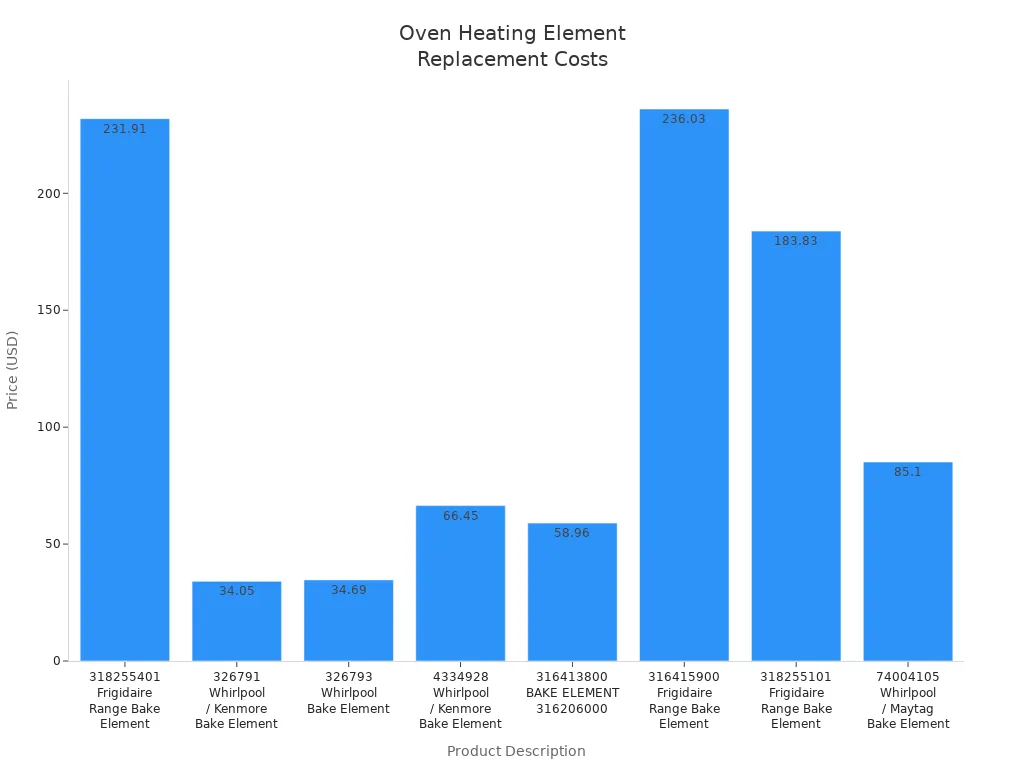
Notará un amplio rango en el costo para reemplazar un elemento calefactor en un horno. Los precios dependen de la marca, el modelo y su ubicación. Por ejemplo, un elemento calefactor básico para marcas comunes de hornos suele costar entre $25 y $85. Algunos modelos especializados o de gama alta, como ciertos elementos Frigidaire o Whirlpool, pueden superar los $200. La siguiente tabla muestra el rango de precios para varios modelos populares:
| Descripción del Producto | Precio |
|---|---|
| 318255401 Elemento de Horneado para Cocina Frigidaire | $231.91 |
| 326791 Elemento de Horneado Whirlpool / Kenmore | $34.05 |
| 326793 Elemento de Horneado Whirlpool | $34.69 |
| 4334928 Elemento de Horneado Whirlpool / Kenmore | $66.45 |
| 316413800 ELEMENTO DE HORNEADO 316206000 | $58.96 |
| 316415900 Elemento de Horneado para Cocina Frigidaire | $236.03 |
| 318255101 Elemento de Horneado para Cocina Frigidaire | $183.83 |
| 74004105 Elemento de Horneado Whirlpool / Maytag | $85.10 |
Su ubicación también afecta el costo de reparación del horno. En áreas urbanas, a menudo se paga más debido a una mayor demanda y costos de vida. En áreas rurales, podría encontrar tarifas más bajas, pero las empresas pueden cobrar un adicional por desplazamiento—a veces $2 por cada milla fuera de su área de servicio.
Piezas vs. Mano de Obra: Desglosando el Costo de Reemplazo
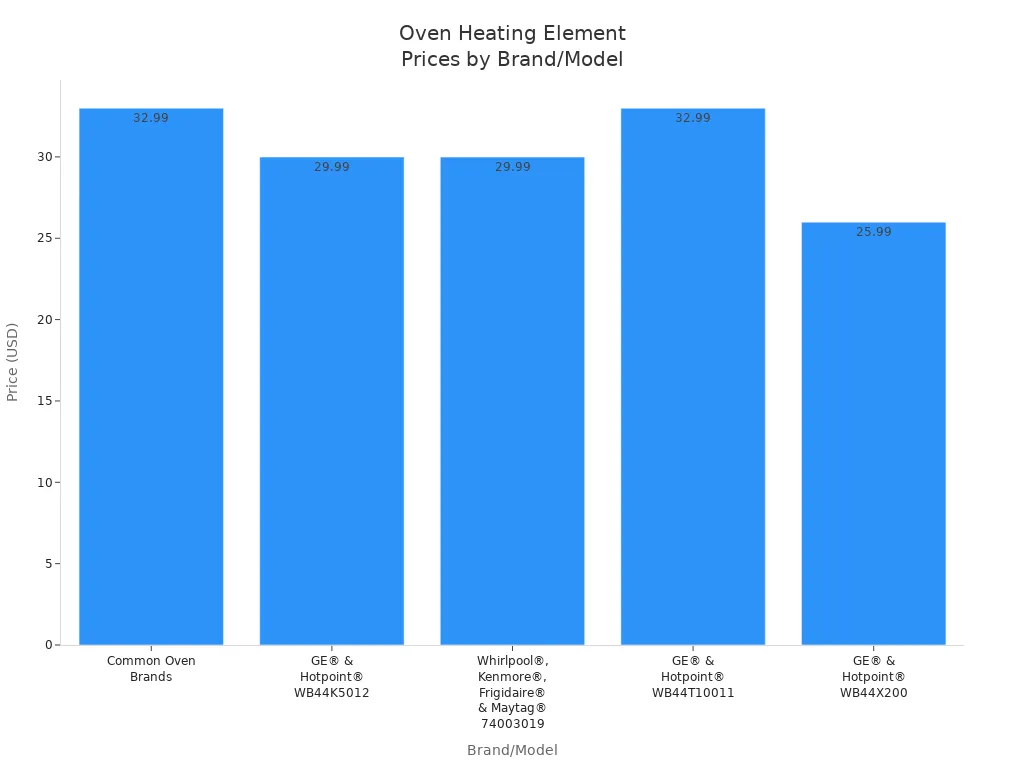
Al observar el costo total para reemplazar un elemento calefactor, debe considerar tanto las piezas como la mano de obra. El precio de la pieza de repuesto varía según la marca y el modelo. Por ejemplo, un elemento calefactor GE® & Hotpoint® WB44K5012 cuesta aproximadamente $29.99, mientras que un elemento Whirlpool®, Kenmore® o Frigidaire® puede oscilar entre $25.99 y $32.99.
| Marca/Modelo | Precio |
|---|---|
| Marcas Comunes de Hornos | $32.99 |
| GE® & Hotpoint® WB44K5012 | $29.99 |
| Whirlpool®, Kenmore®, Frigidaire® & Maytag® 74003019 | $29.99 |
| GE® & Hotpoint® WB44T10011 | $32.99 |
| GE® & Hotpoint® WB44X200 | $25.99 |
Los cargos por mano de obra constituyen una parte significativa del costo total de reparación del horno. La mayoría de los profesionales cobran entre $50 y $100 por mano de obra. En algunos casos, las tarifas de mano de obra pueden alcanzar los $200 por hora, especialmente para reparaciones complejas o hornos de gama alta. Si vive lejos de un proveedor de servicios, también puede pagar tarifas adicionales por kilometraje.
Costo de Reparación de Horno por Bricolaje vs. Servicio Profesional
Puede ahorrar dinero reemplazando usted mismo el elemento calefactor. El costo por bricolaje para reemplazar un elemento calefactor suele oscilar entre $10 y $85, dependiendo de la pieza que necesite. Los servicios profesionales de reparación de hornos generalmente cobran entre $125 y $350, lo que incluye tanto piezas como mano de obra.
| Tipo de reparación | Elemento de reemplazo |
|---|---|
| Bricolaje (Solo Piezas) | $10 – $75 |
| Elemento Calefactor para Bricolaje | $25 – $85 |
| Reparación profesional | $125 – $350 |
Consejo: Puede ahorrar una cantidad significativa eligiendo la ruta del bricolaje, pero debe sopesar los riesgos y los costos ocultos.
Los costos ocultos comunes con la reparación de horno por bricolaje incluyen:
- Riesgo de descarga eléctrica o incendio si maneja incorrectamente electrodomésticos de alto voltaje..
- Diagnóstico erróneo, que puede conducir a reparaciones innecesarias o incorrectas.
- Anulación de la garantía del fabricante, haciéndolo responsable de reparaciones futuras.
- Lesiones físicas por manipular piezas pesadas o complejas del horno.
- Aumento de costos si causa más daños durante la reparación.
Debe considerar su nivel de habilidad, seguridad y estado de la garantía antes de decidir entre el bricolaje y el servicio profesional. Si no se siente seguro, contratar a un profesional puede ayudarle a evitar errores costosos y garantizar una reparación segura y confiable.
¿Qué Influencia el Costo de Reparación del Horno?
Tipo de Horno y Elemento Calefactor
Cuando planifica una sustitución de la resistencia del horno, reparación, debe considerar el tipo de horno que posee. El diseño y la tecnología detrás de cada modelo de horno afectan directamente la complejidad y el precio de las reparaciones.
Costo de Reparación de Horno Eléctrico vs. a Gas
You will find that electric ovens usually offer a more straightforward repair process. The components inside an electric oven are less complex, which means you pay less for labor and parts.
- Electric oven repairs typically range from $100 to $250.
- Replacing a heating element in an electric oven usually costs between $150 and $400, often on the lower end compared to gas ovens.
- Gas ovens have more intricate systems and safety requirements. You may face higher repair costs because technicians must handle gas lines and additional safety checks.
Note: The cost of replacing a heating element in electric ovens tends to be lower than in gas ovens, especially for advanced models.
Wall Oven vs. Range Cost to Replace
The style of your oven also plays a role in the overall expense. Wall ovens and range ovens differ in installation and accessibility.
- For electric ovens, repair costs typically range from $100 to $250.
- Gas ovens can have repair costs that may reach up to $600, especially if the repair involves more than just the heating element.
- The cost of replacing heating elements varies by brand and model, with standard parts costing between $25 and $77, while premium parts can exceed $200.
If you own a wall oven, you may pay more for labor because technicians need extra time to access and remove the unit. Range ovens, which combine a cooktop and oven, often allow easier access for repairs.
Brand and Model Impact on Oven Repair
The brand and model of your oven can significantly influence the repair process.
- Luxury appliance brands like Sub-Zero, Viking, Thermador, Miele, and Wolf have higher repair costs due to proprietary parts.
- These brands use unique components that are not interchangeable with generic parts.
- Specialized repair services are required for these brands because their parts are custom-engineered for specific functions.
If you own a premium oven, you should expect higher prices for both parts and labor. Standard brands often use universal heating elements, which lowers the replacement cost.
Heating Element Price Differences
Heating element prices vary widely across oven models.
- The average cost of a heating element for a residential oven ranges from $20 to $100 or more.
- Basic replacement elements for standard ovens are generally on the lower end of the price range.
- High-end or specialized oven elements tend to be more expensive.
- The type of heating element (bake, broil, convection, etc.) also influences the price.
You should check the specifications of your oven before purchasing a replacement part. If you need a specialty element, you may pay a premium.
Tip: Always verify the compatibility of the heating element with your oven model to avoid unnecessary expenses.
Labor Fees and Service Charges for Oven Repair
When you schedule an oven repair, labor fees and service charges make up a significant part of your total bill. Most repair companies charge a flat service fee just to diagnose the problem. This fee usually ranges from $50 to $100. If you decide to move forward with the repair, the company often applies this fee toward your final invoice.
You will notice that labor fees depend on the complexity of the job and the technician’s experience. Simple oven repairs, such as a reemplazo exitoso del elemento calefactor del horno., usually take less than an hour. For these jobs, you might pay between $50 and $100 for labor. More complicated repairs, especially those involving high-end ovens or hard-to-reach parts, can push labor costs up to $200 per hour.
Your location also plays a big role in how much you pay for labor. In urban areas, you often see higher labor rates because of increased demand and higher living expenses. In rural regions, labor fees may be lower, but you could face extra charges if the technician needs to travel a long distance to reach your home.
Consejo: Always ask for a detailed breakdown of labor and service charges before you agree to any oven repair. This helps you avoid unexpected expenses and gives you a clear picture of what you are paying for.
Location and Part Availability
Where you live affects both the speed and the price of your oven repair. In cities, you have access to more repair services and parts suppliers. This competition can help keep prices reasonable and reduce wait times for parts.
If you live in a remote or rural area, you may face higher costs for oven repair. Technicians often charge travel fees when they must drive long distances to reach your home. These fees can add up quickly, especially if your location is far from the nearest service provider. Sometimes, companies charge by the mile, which increases your total bill.
Part availability also impacts your repair experience. In remote areas, local suppliers may not stock the specific oven parts you need. When this happens, technicians must order parts from distant warehouses. This process can increase both the cost and the time required for your repair. You might wait several days for the right part to arrive, which can be frustrating if you rely on your oven for daily cooking.
Note: Limited access to parts and repair services in rural locations often leads to higher overall costs and longer repair times for homeowners.
If you want to keep your oven running smoothly, consider these factors when planning for a replacement or repair. Understanding how location and part availability influence your repair cost helps you make better decisions and avoid surprises.
DIY Oven Repair vs. Hiring a Professional
Pros and Cons of DIY Oven Repair
Cost Savings and Risks
When you consider replacing a heating element in your oven yourself, you gain several advantages. You save money on labor fees, and you control the timing of your repair. You may also feel a sense of accomplishment when you complete the task on your own.
- Cost savings on labor
- Flexibility to schedule the repair at your convenience
- Satisfaction from completing the oven replacement yourself
However, you must weigh these benefits against the risks. Working with electrical appliances exposes you to safety hazards, such as electric shock or burns. If you install the wrong part or make a mistake, you could damage your oven or void its warranty. You may also face additional costs if you need to correct errors later.
- Safety risks, including electric shock and burns
- Potential for mistakes, such as installing the wrong heating element or damaging the oven
- Warranty concerns, since DIY repairs may void manufacturer coverage
Tip: If you can identify wires, own basic tools, and follow schematics, you may feel comfortable attempting a DIY oven repair. For integrated smart ovens, gas hybrids, or hardwired units, you should call a professional.
Safety and Skill Requirements
You must assess your skill level before starting a DIY oven replacement. Basic repairs require you to disconnect power, handle tools safely, and follow instructions closely. If you lack experience with electrical systems, you risk injury or further damage to your oven. Safety should always be your top priority.
Pros and Cons of Professional Oven Repair
Expertise, Warranty, and Convenience
Hiring a professional for oven repair offers several advantages. Technicians have the training and experience to handle electrical appliances safely. They ensure correct installation and can diagnose underlying issues that you might overlook. Many professional repairs include warranties or guarantees, which protect you from unexpected costs.
Home oven warranty coverage often goes beyond what your stove manufacturer’s warranty is willing to cover. The latter generally has a much shorter duration and doesn’t apply to wear and tear damage.
| Warranty Type | Detalles de Cobertura |
|---|---|
| Appliance Warranties | Cover unexpected repairs, accidental damage, and malfunctions. |
| ShieldGold | Covers up to $2,000 for each covered appliance. |
| ShieldPlatinum | Covers up to $4,000 for each covered appliance and includes replacement if needed. |
- Home warranties can cover ovens, ranges, and cooktops, providing protection against unexpected repair costs.
- Manufacturer warranties typically have limited duration and may not cover wear and tear.
You gain peace of mind knowing your oven is in expert hands, and you avoid the risks associated with DIY repairs.
Higher Oven Repair Cost
Professional oven repair usually costs more than a DIY approach. You pay for the technician’s expertise, travel, and service fees. While you invest more upfront, you reduce the risk of mistakes and benefit from warranty coverage.
Note: You should weigh the higher cost against the convenience, safety, and long-term protection offered by professional oven repair.
Step-by-Step Guide: How to Replace an Oven Heating Element
Safety Precautions for Oven Repair
Disconnecting Power and Using Protective Gear
You must prioritize safety before starting any oven repair. Always turn off the electrical breaker that powers your oven. Unplug the appliance from the outlet to eliminate the risk of electric shock. Wait until the oven has cooled down completely. This step prevents burns and ensures a safe working environment. Inspect the oven’s interior and remove any obstacles that could interfere with your work. Gather all necessary tools and wear protective gloves and safety goggles. Clear the area around the oven so you have enough space to move and work efficiently.
Consejo: Never attempt heating element replacement while the oven is plugged in or hot. Safety gear protects you from accidental injuries.
Tools and Materials Needed for Oven Repair
You need the right tools and materials to complete an sustitución de la resistencia del horno. Prepare the following items before you begin:
- Destornillador de estrella
- Destornillador plano (si es necesario)
- Alicates de punta fina
- Nut driver
- Multimeter (optional, for continuity testing)
- Replacement oven heating element (available from suppliers such as PRS Parts Inc.)
- guantes de trabajo
A multimeter helps you test the old heating element for continuity. This step confirms whether the part needs replacement. Work gloves protect your hands from sharp edges and electrical components.
Extracción del elemento calefactor antiguo
Follow these steps to remove the old heating element from your oven:
- Disconnect power by unplugging the oven or turning off the circuit breaker.
- Remove the metal cover plate inside the oven to expose the heating element terminals.
- Carefully disconnect the wires by pulling off the terminal connectors. Note their positions for reinstallation.
- Unscrew any mounting screws holding the heating element in place.
- Lift out the old heating element and set it aside.
You must match the new heating element with the old one to ensure compatibility. Align the prongs and secure the new part in place. Reconnect the wires firmly and replace the cover plate. Restore power to the oven and test its performance. If the oven heats up properly, you have completed the heating element replacement successfully.
Nota: Always check the manufacturer’s instructions for your specific oven model. Some ovens may have unique steps or require additional tools.
Instalación del nuevo elemento calefactor
You have removed the old heating element and prepared your tools. Now, you can install the new part in your oven. Follow these best practices to ensure a safe and effective installation:
- Take the new heating element out of its packaging. Inspect it for any visible damage before proceeding.
- Place the element inside your oven, aligning it with the mounting holes.
- Attach the wires to the new heating element. Wiggle the spade connectors onto the terminals until they fit snugly.
- Move the element into the correct position within the oven cavity.
- Secure the element using the original screws or clips. Tighten them to prevent movement during operation.
- Double-check all connections. Make sure the wires are firmly attached and the element sits flush against the oven wall.
Consejo: Always match the new heating element to the old one before installation. This step helps you avoid compatibility issues and ensures proper function.
You should avoid touching the element with bare hands. Oils from your skin can cause hot spots and reduce the lifespan of the part. Use gloves for this step. Once you finish, you can move on to restoring power and testing the oven.
Testing the Oven After Repair
After you install the new heating element, you need to verify that your oven works correctly. Proper testing ensures safety and confirms that the repair succeeded. Here is a step-by-step process to test new oven heating element:
- Restore power to the oven by plugging it in or switching the circuit breaker back on.
- Set the oven to bake at a high temperature, such as 350°F.
- Observe the new heating element. It should glow red within a few minutes, indicating it heats up properly.
- Check the oven’s interior for even heat distribution. You can use an oven thermometer for more accurate results.
- If the element does not glow or the oven fails to heat, turn off the power immediately. Recheck the wiring connections. If problems persist, consult a professional technician.
Nota: For an extra layer of assurance, you can use a multimeter to test the heating element’s continuity. Place the probes on the terminals. A reading between 0 and 50 ohms means the element functions as expected.
You have now completed the installation and testing process. Your oven should operate efficiently with the new heating element in place.
Signs You Need Oven Repair or Replacement
Common Symptoms of a Failing Heating Element
You rely on your oven for daily cooking, so recognizing early signs of trouble helps you avoid bigger issues. A failing heating element often shows clear symptoms. If you notice any of these problems, you should inspect your oven before the situation worsens.
- Calentamiento desigual: Food may come out undercooked in some spots and burned in others.
- Complete failure to heat: The oven stays cold even after you set the temperature.
- Strange noises: Buzzing or popping sounds can signal electrical faults.
- Burning smells: Overheated elements sometimes produce a strong odor.
- Visible damage: Cracks, breaks, or discoloration on the element indicate wear.
If you see visible damage or smell burning, turn off your oven immediately. Continuing to use a damaged heating element can lead to further complications or safety hazards.
You might also notice longer preheat times or inconsistent baking results. These issues often point to heating element failure. Regularly checking your oven for these symptoms ensures you catch problems early and avoid costly repairs.
When Oven Repair Isn’t Enough
Sometimes, repairing your oven does not make financial sense. You should weigh the cost of repair against the price of a new appliance. For example, if you own a low-end range and face a repair bill of $212, replacing the oven may be more practical, especially if a new model costs around $800. On the other hand, if you have a premium oven that originally cost $1,250 or more, investing in a $212 repair often extends its life for many years.
Consider these factors when deciding between repair and replacement:
- Age of the oven: Older ovens may develop frequent issues, making replacement a better long-term solution.
- Repair costs: If the cost to fix your oven approaches half the price of a new one, replacement usually offers better value.
- Model quality: Expensive or high-end ovens often justify repair costs, while budget models may not.
- Frequency of breakdowns: Repeated repairs signal that your oven is nearing the end of its useful life.
Tip: Always compare the total repair cost, including labor and parts, with the price of a new oven. This approach helps you make a smart, cost-effective decision.
If you find yourself scheduling frequent repairs or dealing with persistent heating element failure, replacing the oven may save you money and frustration in the long run.
Tips to Lower Your Oven Repair Cost
Finding Affordable Heating Elements
You can reduce expenses by shopping smart when you need a new oven heating element. Start by checking online appliance parts retailers, which often offer competitive prices compared to local stores. Compare prices across several websites before making a purchase. Many manufacturers and third-party suppliers provide genuine parts at lower rates if you search for deals or clearance items.
You should also consider generic or universal heating elements if your oven model supports them. These alternatives usually cost less than brand-specific parts and still deliver reliable performance. Always verify compatibility with your oven before buying. If you have an older oven, look for refurbished or surplus parts from reputable sellers. This approach can help you find a quality replacement at a fraction of the original price.
Tip: Keep your oven’s model number handy. This information ensures you select the correct part and avoid unnecessary returns.
Using Discounts and Coupons for Oven Repair
You can take advantage of discounts and coupons to lower your oven repair expenses. Many service providers offer special deals for new customers, seniors, or those installing multiple appliances. Mentioning these offers when booking your appointment can lead to significant savings.
Here is a summary of common discounts available:
| Discount Type | Importe | Conditions |
|---|---|---|
| New Customer Discount | $30 OFF | Mention this coupon when booking. |
| Senior Citizens Discount | $40 OFF | Mention this coupon when booking. |
| Installation of 2 or More Appliances | $50 OFF | Mention this coupon when booking. |
You should always ask about current promotions before scheduling your oven repair. Some companies exclude service call fees from discounts, so clarify the terms in advance. Saving even a small amount on each repair helps you manage your household budget more effectively.
Knowing When to Call a Professional
You may want to handle minor oven issues yourself, but certain situations require expert attention. Calling a professional ensures your safety and protects your investment. Consider these factors when deciding to seek help:
- La seguridad ante todo: Ovens can present risks like gas leaks or electrical shocks. Professionals have the training to manage these hazards.
- Knowledge of specialized parts: Technicians understand complex oven systems and can diagnose problems accurately.
- Gas and electrical safety: Professionals possess the expertise to work with both gas and electric ovens safely.
- Maintaining manufacturer warranties: Professional repairs help keep your warranty valid, which safeguards your oven’s value.
- Long-term reliability: Technicians can implement preventive measures to reduce future breakdowns.
Note: If you feel uncertain about any aspect of oven repair, prioritize your safety and call a qualified technician.
Oven Repair Cost Summary and Key Takeaways
Recap of Main Cost Points
You have seen that the cost to replace a heating element in your oven can vary widely. The price depends on several factors, such as the type of oven, the brand, and your location. If you choose a do-it-yourself approach, you often pay only for the part, which usually ranges from $10 to $85. When you hire a professional, you pay for both parts and labor, which can bring your total to $150 or more. Some high-end models or hard-to-find parts may push the cost to replace even higher.
Here is a quick summary of what affects your oven repair cost:
- Type of oven (electric or gas)
- Brand and model (standard or luxury)
- Labor fees and service charges
- Location and part availability
Recuerde: La mano de obra suele constituir la mayor parte de su factura. Siempre debe solicitar un presupuesto detallado antes de aceptar cualquier reparación.
También debe considerar la antigüedad y el estado de su horno. Si su electrodoméstico es viejo o tiene problemas frecuentes, invertir en un horno nuevo puede ahorrarle dinero a largo plazo.
Consejo final para propietarios de viviendas
You should always weigh your options before deciding how to handle an sustitución de la resistencia del horno. If you have basic skills and feel comfortable working with electrical appliances, you can save money by doing the job yourself. Make sure you follow all safety precautions and use the correct replacement part for your oven.
Si se siente inseguro o si su horno tiene un diseño complejo, contratar a un profesional es sensato. Obtendrá tranquilidad y protegerá su inversión. Los profesionales también pueden detectar otros problemas que usted podría pasar por alto.
Para mantener sus costos bajos, compare precios de repuestos y pregunte por descuentos o cupones al reservar el servicio. Tenga a mano el número de modelo de su horno para asegurarse de comprar la pieza correcta. El mantenimiento regular y la atención inmediata a los problemas le ayudan a evitar facturas de reparación mayores en el futuro.
Consejo: Siempre priorice la seguridad. Si alguna vez se siente inseguro, llame a un técnico calificado para la reparación de su horno.
Al comprender el costo real de reemplazar un elemento calefactor y saber cuándo buscar ayuda, toma decisiones inteligentes que mantienen su horno funcionando eficientemente y su presupuesto doméstico bajo control.
Ahora comprende el costo real de reemplazar un elemento calefactor en su horno. Tómese el tiempo para comparar las opciones de reparación DIY y profesional antes de decidir. Siempre ponga la seguridad primero y considere sus habilidades, la complejidad del trabajo y el valor a largo plazo de su electrodoméstico. Una planificación cuidadosa le ayuda a tomar la mejor decisión para su hogar.
PREGUNTAS FRECUENTES
¿Cómo saber si el elemento calefactor de su horno necesita reemplazo?
Puede notar cocción desigual, tiempos de precalentamiento más largos o daños visibles en el elemento. Si su horno no calienta o ve chispas, es probable que necesite un nuevo elemento calefactor.
¿Puede sustituir usted mismo la resistencia de un horno?
Sí, puede reemplazarlo usted mismo si se siente cómodo trabajando con electrodomésticos. Siempre desconecte la alimentación eléctrica antes de comenzar. Si se siente inseguro, contrate a un profesional por seguridad.
¿Cuánto tiempo toma reemplazar un elemento calefactor?
La mayoría de los reemplazos toman de 30 a 60 minutos. El proceso implica retirar el elemento viejo, instalar el nuevo y probar el horno. Los modelos complejos pueden requerir más tiempo.
¿Son universales todos los elementos calefactores de horno?
No, los elementos calefactores no son universales. Debe hacer coincidir el repuesto con la marca y modelo de su horno. Siempre verifique la compatibilidad antes de comprar.
¿Qué herramientas necesita para reemplazar el elemento calefactor del horno?
Necesita un destornillador, alicates de punta fina y guantes de trabajo. Un multímetro ayuda a probar el elemento antiguo. Siempre siga las instrucciones del fabricante para su horno específico.
¿Anulará la garantía de su horno reemplazar el elemento calefactor?
Las reparaciones por cuenta propia pueden anular la garantía del fabricante. Revise los términos de su garantía antes de comenzar. Las reparaciones profesionales suelen mantener válida su garantía.
¿Cuánto cobra un profesional por sustituir la resistencia de un horno?
Puede esperar pagar entre 150 y 400 unidades monetarias por un reemplazo profesional. El precio incluye piezas, mano de obra y tarifas de servicio. Los hornos de gama alta pueden costar más.
¿Qué debe hacer si su horno aún no calienta después de reemplazar el elemento?
Verifique todas las conexiones y asegure una instalación correcta. Si el horno aún falla, puede haber fallado otro componente. Contacte a un técnico calificado para un diagnóstico más detallado.