
Un confiable elemento calefactor garantiza que su aire acondicionado brinde calidez y seguridad constantes, especialmente durante las olas de frío. Usted experimenta una mejor eficiencia energética y evita averías inesperadas en su sistema HVAC. Cuando descuida elementos calefactores de electrodomésticos, corre el riesgo de incendios y reparaciones costosas. Fabricantes de elementos calefactores como Calefacción eléctrica Jinzhong Componentes de diseño que mantienen su hogar cómodo durante todo el año.
Los elementos calefactores defectuosos pueden comprometer tanto la seguridad como el rendimiento. Priorice siempre la calidad y las revisiones periódicas.
Conceptos básicos del elemento calefactor en su unidad de aire acondicionado

¿Qué es un Elemento Calefactor?
Función básica explicada
Usted depende de un elemento calefactor para convertir la energía eléctrica en calor. Este componente se encuentra en el corazón de la capacidad de calefacción de su aire acondicionado. Cuando activa el modo de calefacción, el elemento calefactor calienta el aire antes de que circule por su hogar. Las bobinas calefactoras, que son un tipo común de elemento calefactor, utilizan resistencia para generar calor de manera rápida y eficiente. Usted se beneficia de un calor inmediato, especialmente cuando las temperaturas exteriores bajan.
Tipos de elementos calefactores en sistemas HVAC
Usted encuentra varios tipos de elementos calefactores en los sistemas HVAC modernos. Los más comunes incluyen:
- Las bobinas calefactoras: Estos alambres metálicos o tiras se calientan al pasar la electricidad a través de ellos. Los encuentra en hornos eléctricos y algunos sistemas de bomba de calor.
- Elementos calefactores cerámicos: Estos ofrecen durabilidad y rendimiento constante. Los ve en unidades avanzadas de calefacción y refrigeración.
- Elementos calefactores infrarrojos: Estos proporcionan calor dirigido y funcionan bien en espacios que necesitan ajustes rápidos de temperatura.
Cada tipo respalda la capacidad de calefacción de su sistema y garantiza que usted se mantenga cómodo durante los cambios estacionales.
Cómo los elementos calefactores apoyan la comodidad
Calefacción durante los meses más fríos
Usted depende de su elemento calefactor para mantener un ambiente interior cómodo cuando las temperaturas bajan. Estrategias efectivas de calefacción juegan un papel crucial en mantener su hogar acogedor durante las estaciones frías. El mantenimiento regular de su elemento calefactor garantiza un rendimiento y comodidad óptimos. Usted evita habitaciones frías y temperaturas desiguales al mantener su sistema en óptimas condiciones.
Consejo: Los sistemas de hogar inteligente pueden mejorar su control climático interior. Puede ajustar la configuración de calefacción y refrigeración de forma remota para máxima comodidad.
Calor suplementario en sistemas HVAC con bomba de calor
Usted se beneficia del calor suplementario cuando su bomba de calor tiene dificultades durante el frío extremo. El elemento calefactor se activa para apoyar su sistema HVAC, brindando calidez confiable incluso cuando las condiciones exteriores desafían su fuente de calefacción principal. Las bobinas calefactoras proporcionan el impulso adicional necesario para mantener temperaturas constantes. Usted experimenta menos puntos fríos y disfruta de un clima interior estable.
- Usted obtiene tranquilidad al saber que su elemento calefactor trabaja junto con su bomba de calor.
- Usted reduce el riesgo de tensión en el sistema y reparaciones costosas.
- Usted mantiene la comodidad independientemente de las fluctuaciones climáticas exteriores.
Un elemento calefactor confiable garantiza que su hogar siga siendo un refugio durante todo el año.
Por qué la confiabilidad es importante para su elemento calefactor
Comodidad constante en su sistema HVAC
Evitar puntos fríos
Usted espera que su hogar se sienta cómodo en cada habitación. Un elemento calefactor confiable garantiza que su sistema HVAC distribuya el calor de manera uniforme. Cuando el elemento calefactor funciona según lo diseñado, usted evita puntos fríos que hacen que ciertas áreas de su hogar sean incómodas. Usted nota la diferencia especialmente durante el invierno, cuando un componente defectuoso puede dejarlo tiritando en una habitación mientras otra se siente perfectamente bien.
Un rendimiento de calefacción constante significa que nunca tiene que abrigarse en interiores ni depender de calentadores portátiles para obtener calor adicional.
Mantener las temperaturas deseadas
Usted configura su termostato a una temperatura específica por una razón. Un elemento calefactor confiable ayuda a su sistema HVAC a mantener esa temperatura sin fluctuaciones frecuentes. Cuando el elemento calefactor opera de manera eficiente, su aire acondicionado puede cambiar entre los modos de calefacción y refrigeración sin problemas. Usted disfruta de un clima interior estable, que respalda su comodidad y bienestar durante todo el año.
Eficiencia energética y ahorro de costos
Prevenir el desperdicio de energía
Usted desea que su sistema HVAC utilice la energía de manera inteligente. Un elemento calefactor confiable juega un papel clave en la prevención del desperdicio de energía. Investigaciones recientes destacan varias formas en que la tecnología moderna mejora la eficiencia:
- La válvula TA Nano garantiza un flujo de agua preciso, lo que reduce el uso innecesario de energía.
- Las innovaciones en fluidos de transferencia de calor, como los nanofluidos, mejoran el rendimiento térmico y reducen el consumo total de energía.
- Los nuevos fluidos de calefacción y refrigeración pueden reducir el tamaño del sistema y las necesidades energéticas mientras mejoran la transferencia de calor.
Usted se beneficia de estos avances porque su sistema funciona de manera más eficiente, ahorrando tanto energía como dinero.
Reducción de las facturas de servicios públicos
Usted nota el impacto de un elemento calefactor bien mantenido en sus gastos mensuales. El mantenimiento regular previene reparaciones costosas y extiende la vida útil de su sistema HVAC. Cuando su sistema funciona de manera eficiente, puede ahorrar entre un 10 y un 15% en sus facturas de energía. También evita el gasto de un reemplazo prematuro, que puede afectar su presupuesto. Al invertir en cuidado rutinario, mantiene bajo control sus costos de calefacción y refrigeración.
Riesgos de seguridad de un elemento calefactor defectuoso
Riesgos de incendio
Usted debe considerar la seguridad al tratar con cualquier componente eléctrico. Un elemento calefactor defectuoso aumenta el riesgo de incendio en su hogar. Varios factores contribuyen a este peligro:
- Las conexiones eléctricas defectuosas pueden causar cables quemados e incluso incendios en el horno.
- Las líneas de combustible con fugas pueden exponer combustible inflamable a componentes calientes, creando un riesgo de incendio.
- El desorden alrededor de su sistema HVAC, especialmente materiales inflamables, aumenta el riesgo de ignición.
- Los motores sobrecalentados y la acumulación de suciedad pueden obstruir el flujo de aire, provocando sobrecalentamiento y posibles incendios.
Mantenga siempre al menos tres pies de espacio alrededor de su equipo HVAC para reducir el riesgo de incendio.
Problemas eléctricos
Usted enfrenta riesgos adicionales cuando su elemento calefactor funciona mal. Los problemas eléctricos pueden provocar cables quemados, chispas o incluso fallas en el sistema. El cableado defectuoso sigue siendo una de las principales causas de incendios en HVAC. La presión de gas baja o alta puede causar condensación o sobrecalentamiento, ambos amenazando su seguridad. La suciedad y la lubricación insuficiente también contribuyen a los peligros eléctricos al hacer que los componentes se sobrecalienten.
Usted protege su hogar y su familia asegurándose de que su elemento calefactor se mantenga en buen estado de funcionamiento. Las inspecciones regulares y las reparaciones oportunas le ayudan a evitar estos riesgos graves.
Problemas comunes causados por un elemento calefactor defectuoso
Signos de que la resistencia está fallando
Ruidos u olores extraños
Usted puede notar sonidos u olores extraños provenientes de su sistema HVAC cuando un elemento calefactor funciona mal. Estos síntomas a menudo indican problemas más profundos. Un elemento calefactor quemado puede producir un olor metálico o a quemado, lo que indica sobrecalentamiento o falla eléctrica. Ruidos inusuales, como zumbidos o clics, a menudo apuntan a componentes dañados o conexiones sueltas.
Consejo: Si detecta olores persistentes o sonidos extraños, apague su aire acondicionado y programe una inspección. Una acción rápida ayuda a prevenir daños mayores.
Los factores ambientales también juegan un papel. La alta humedad puede causar condensación y crecimiento de moho dentro de su sistema, lo que puede generar olores a humedad. La acumulación de polvo puede obstruir los filtros y los elementos calefactores, reduciendo el flujo de aire y la eficiencia. Usted debe gestionar la humedad y mantener su sistema limpio para evitar estos problemas.
Rendimiento de calefacción inconsistente
Usted espera que su sistema HVAC mantenga una temperatura constante. Cuando experimenta calefacción desigual o puntos fríos, puede tener un elemento calefactor defectuoso. Un rendimiento inconsistente a menudo significa que el elemento calefactor no puede distribuir el calor adecuadamente. Usted puede notar que algunas habitaciones se mantienen frías mientras que otras se calientan demasiado.
Los técnicos reportan varios síntomas comunes cuando fallan los elementos calefactores:
- Elemento encendedor de superficie caliente agrietado: Esta pieza es esencial para el encendido y generalmente necesita reemplazo cada 3-5 años.
- Interruptor de límite dañado: Este dispositivo de seguridad puede funcionar mal debido al sobrecalentamiento, impidiendo que su horno encienda.
| Síntoma | Explicación |
|---|---|
| Encendedor de superficie caliente agrietado | Impide que el horno encienda, con una duración típica de 3 a 5 años en condiciones normales de uso. |
| Interruptor de límite dañado | Interrumpe el encendido, a menudo causado por sobrecalentamiento debido a problemas de flujo de aire. |
Debe estar atento a estas señales y abordarlas de inmediato para evitar fallos mayores en el sistema.
Riesgos de Ignorar Problemas en los Elementos Calefactores
Averías del sistema en su sistema HVAC
Ignorar las fallas en los elementos calefactores puede provocar averías completas del sistema. Cuando descuida el mantenimiento rutinario, los problemas menores pueden escalar rápidamente. Por ejemplo, un encendedor agrietado o un interruptor de límite defectuoso pueden impedir que su acondicionador de aire arranque, dejándolo sin calefacción durante el clima frío.
Varios factores influyen en los costos de reparación y los riesgos de avería:
- Tipo y antigüedad del sistema: Los sistemas más antiguos a menudo requieren reparaciones costosas debido a la escasez de piezas.
- Complejidad de la reparación: Las soluciones simples cuestan menos, pero los problemas complejos requieren más mano de obra y tiempo.
- Piezas de repuesto: La marca y la disponibilidad afectan el gasto total.
Si retrasa las reparaciones, corre el riesgo de perder la comodidad y enfrentar llamadas de servicio de emergencia durante las temporadas pico.
Aumento de los Costos de Reparación
Se enfrenta a gastos más elevados cuando ignora los problemas del elemento calefactor. Las reparaciones de emergencia generalmente cuestan más que el mantenimiento programado. Los estudios de caso muestran que descuidar su sistema HVAC puede tener graves consecuencias financieras:
- Un propietario en Míchigan pagó $5,000 por un reemplazo de emergencia después de saltarse el mantenimiento durante cinco años.
- Una oficina corporativa en Nueva York experimentó un aumento del 20% en las facturas de energía y averías frecuentes debido al mantenimiento omitido, lo que resultó en pérdida de productividad y costos de reparación significativos.
Los sistemas descuidados a menudo pierden entre un 5 y un 15% de eficiencia, lo que aumenta sus facturas mensuales de servicios públicos. Puede evitar estos costos invirtiendo en puestas a punto regulares y abordando los problemas tan pronto como surjan.
Nota: Actúe con prontitud cuando note síntomas. El mantenimiento regular y las reparaciones rápidas le ayudan a evitar emergencias costosas y mantener su sistema funcionando sin problemas.
Cómo Identificar Problemas en los Elementos Calefactores de su Sistema HVAC
Pistas Visuales y de Rendimiento
Daños Físicos o Corrosión
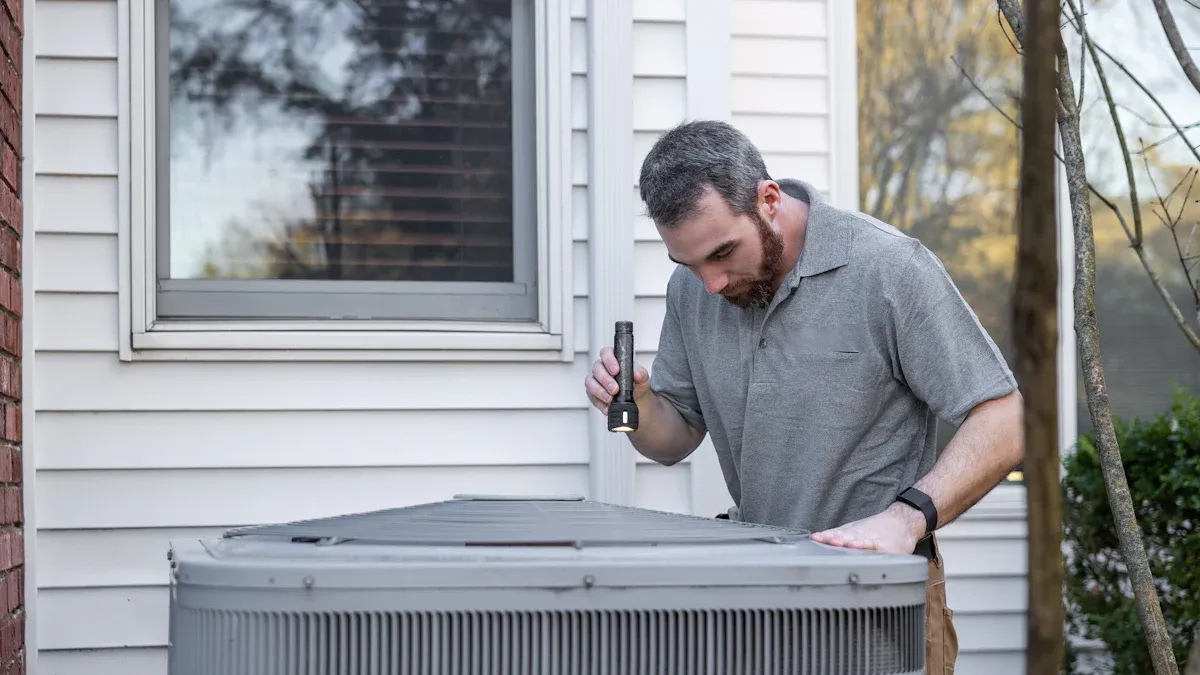
Puede detectar señales tempranas de problemas observando de cerca su elemento calefactor. Las inspecciones visuales regulares le ayudan a detectar problemas antes de que crezcan. Verifique la presencia de corrosión, óxido o cualquier desgaste visible en la superficie. Estas señales a menudo significan que el componente ha comenzado a deteriorarse. Si ve grietas, puntos quemados o decoloración, debe actuar de inmediato. La corrosión puede debilitar el metal y provocar fallos. Mantiene su acondicionador de aire funcionando sin problemas cuando aborda estos problemas a tiempo.
Disyuntores Disparados o Fusibles Fundidos
Puede notar que su sistema HVAC se apaga inesperadamente. Los disyuntores disparados o los fusibles fundidos a menudo apuntan a problemas eléctricos con el elemento calefactor. Cuando el elemento consume demasiada corriente, puede sobrecargar el circuito. Esta característica de seguridad protege su hogar de daños mayores. Si restablece el disyuntor y el problema regresa, probablemente tenga un problema más profundo. Debe evitar restablecimientos repetidos y llamar a un profesional para obtener ayuda. Ignorar estas señales puede provocar riesgos eléctricos más graves.
Consejo: Siempre apague la alimentación de su sistema HVAC antes de inspeccionar componentes eléctricos. La seguridad es lo primero.
Cuándo Probar o Inspeccionar su Elemento Calefactor
Revisiones Estacionales
Debería inspeccione su elemento calefactor al menos una vez al año. Los expertos recomiendan programar esta revisión antes del inicio de la temporada de calefacción. Esta rutina le ayuda a detectar problemas temprano y mantiene su sistema eficiente. Si usa su sistema HVAC con frecuencia o tiene una unidad más antigua, considere revisarlo cada seis meses. Las inspecciones regulares le ayudan a evitar averías repentinas y reparaciones costosas.
Después de Sobretensiones o Cortes de Energía
Debe prestar especial atención después de sobretensiones o cortes de energía. Los cambios repentinos en la electricidad pueden dañar partes sensibles de su sistema HVAC. Después de una sobretensión, pruebe el funcionamiento adecuado de su elemento calefactor. Busque cualquier signo de daño físico u olores inusuales. Si nota algo fuera de lo común, programe una inspección profesional. Una acción rápida protege su sistema y garantiza un funcionamiento seguro.
Formas fiables de identificar problemas en el elemento calefactor incluyen:
- Verifique la temperatura del aire que sale de su sistema. Si el aire se siente frío o cercano a la temperatura ambiente, es posible que su elemento calefactor no funcione correctamente.
- Busque daños visibles, como corrosión o desgaste, durante las inspecciones regulares.
Mantiene su hogar cómodo y seguro cuando se mantiene alerta a estas pistas.
Consejos de Mantenimiento para un Elemento Calefactor Fiable
Limpieza e inspección periódicas
Pasos de Mantenimiento por Cuenta Propia
Puede tomar varios pasos para mantener su elemento calefactor y sus bobinas calefactoras en óptimas condiciones. El mantenimiento rutinario ayuda a que su acondicionador de aire funcione de manera eficiente y reduce el riesgo de averías. Aquí hay algunas mejores prácticas que debe seguir:
- Limpie el interior del horno regularmente. Esto mejora el flujo de aire y evita el sobrecalentamiento.
- Lubrique las piezas móviles una vez al año. La lubricación reduce la fricción y prolonga la vida útil de sus componentes.
- Inspeccione los conductos en busca de fugas. Sellar las fugas mejora la eficiencia y mantiene su hogar cómodo.
- Cambie o limpie los filtros de aire cada mes. Los filtros limpios ayudan a mantener las bobinas HVAC y evitan la acumulación de polvo en las bobinas calefactoras.
Consejo: Siempre apague la alimentación de su sistema HVAC antes de comenzar cualquier tarea de limpieza o inspección.
Qué Dejar a los Profesionales
Algunas tareas de mantenimiento requieren conocimientos y herramientas especializados. Debe llamar a un profesional para estos servicios:
- Limpieza profunda de elementos calefactores e intercambiadores de calor. Los profesionales pueden detectar grietas u orificios que afectan la seguridad y la eficiencia.
- Inspecciones eléctricas. Los técnicos certificados pueden verificar de manera segura el cableado y las conexiones.
- Diagnósticos anuales del sistema. Los expertos utilizan equipos avanzados para probar el rendimiento e identificar problemas ocultos.
Protege su inversión y evita costosas reparaciones de calefacción al confiar estas tareas a profesionales capacitados.
Programación de Puestas a Punto del Sistema HVAC por Profesionales
Qué Esperar Durante una Visita de Servicio
Durante una puesta a punto profesional, los técnicos realizan una inspección y limpieza exhaustivas. Verifican el elemento calefactor, las bobinas de calefacción y todos los componentes principales. Puede esperar que:
- Limpien los elementos calefactores y el intercambiador de calor para evitar obstrucciones.
- Inspeccionen en busca de grietas, corrosión u otros signos de desgaste.
- Prueben los controles del sistema y los interruptores de seguridad.
- Lubriquen las partes móviles y verifiquen el flujo de aire.
Estos pasos garantizan que su sistema funcione de manera segura y eficiente. Las puestas a punto regulares pueden duplicar la vida operativa de su sistema de calefacción y reducir la necesidad de reparaciones de emergencia.
Frecuencia recomendada para el mantenimiento
Debe seguir un programa de mantenimiento constante para evitar fallos del elemento calefactor. Las pautas de la industria recomiendan:
- Programar un mantenimiento anual del HVAC para mantener su sistema eficiente todo el año.
- Completar tareas mensuales y trimestrales, como cambios de filtro e inspecciones visuales, para detectar problemas pequeños a tiempo.
- Mantenerse en el mantenimiento de rutina para evitar costos innecesarios y fallos del sistema.
Un programa de mantenimiento integral incluye monitoreo diario, cuidado preventivo mensual y servicio profesional estacional. Los sistemas bien mantenidos pueden durar más de cinco años adicionales que los descuidados.
Usted garantiza confort, seguridad y ahorro de costos cuando prioriza el mantenimiento.
Cuándo llamar a un profesional por problemas con los elementos calefactores
Señales de advertencia que requieren atención experta
Problemas persistentes de calefacción
Puede notar que su hogar nunca alcanza la temperatura que configuró, o que el calor se siente desigual de una habitación a otra. Si ajusta su termostato pero aún experimenta puntos fríos o flujo de aire débil, su elemento calefactor puede tener un problema más profundo. Cuando la solución básica de problemas no restaura la comodidad, debe llamar a un profesional. Los problemas persistentes a menudo señalan fallas internas que requieren herramientas y conocimientos especializados para reparar.
Si su sistema lucha por mantener el calor a pesar del mantenimiento regular, no se demore. La intervención profesional previene daños mayores y restaura el rendimiento confiable.
Preocupaciones Eléctricas o de Seguridad
Debe tratar los problemas eléctricos con precaución. Si ve chispas, huele olores a quemado o nota que su interruptor automático se dispara repetidamente, estas son señales de advertencia graves. Las fallas eléctricas en su elemento calefactor pueden representar riesgos de incendio o descarga eléctrica. Nunca debe intentar reparar el cableado o los componentes eléctricos usted mismo. Solo un técnico certificado puede diagnosticar y resolver estos problemas de manera segura.
| Señal de advertencia | Qué significa | Qué debe hacer |
|---|---|---|
| Olor a quemado | Posible sobrecalentamiento | Apague el sistema, llame a un profesional |
| Interruptor disparado | Sobrecarga eléctrica | No reinicie repetidamente |
| Chispas visibles | Fallo en el cableado | Busque ayuda inmediata |
Cómo elegir el técnico de HVAC adecuado
Credenciales a buscar
Desea un técnico que aporte experiencia y profesionalismo a cada trabajo. Busque estas calificaciones al seleccionar a alguien para reparar su elemento calefactor:
- Los contratistas licenciados demuestran que han completado educación o capacitación formal y siguen las regulaciones de la industria.
- Las certificaciones de organizaciones como NATE (Excelencia del Técnico Norteamericano) o RSES (Sociedad de Ingenieros de Servicio de Refrigeración) demuestran habilidades avanzadas y un compromiso con el aprendizaje continuo.
- La membresía en organizaciones profesionales indica adhesión a un código de ética y conocimiento de los últimos avances en sistemas HVAC.
Estas credenciales le dan confianza de que su técnico puede manejar reparaciones complejas de manera segura y eficiente.
Preguntas antes de contratar
Debe hacer preguntas claras antes de contratar a un técnico. Esto le ayuda a elegir a alguien que cumpla con sus necesidades y proteja su inversión.
- ¿Tiene experiencia con mi elemento calefactor o marca de sistema específica?
- ¿Puede proporcionar prueba de licencia y certificaciones?
- ¿Cuál es su proceso para diagnosticar y reparar problemas del elemento calefactor?
- ¿Ofrece garantía en las piezas y en la mano de obra?
- ¿Cómo se mantiene actualizado con las tecnologías HVAC actuales?
Un técnico calificado responderá sus preguntas abiertamente y proporcionará documentación cuando se le solicite. Esta transparencia garantiza que reciba un servicio de calidad y tranquilidad.
Actualizar su elemento calefactor para un mejor rendimiento
Beneficios de los elementos calefactores modernos en sistemas HVAC
Mejora de la eficiencia
Usted obtiene ventajas significativas cuando actualiza a bobinas de calefacción modernas en su aire acondicionado. Los nuevos elementos calefactores utilizan aislamiento avanzado y controles inteligentes para entregar calor con menos energía. Estas mejoras le ayudan a mantener su temperatura deseada mientras reducen el desperdicio de energía. Los sistemas modernos a menudo cuentan con certificación ENERGY STAR, lo que significa que consume menos energía y ve facturas de servicios más bajas. También contribuye a un esfuerzo global para reducir las emisiones de carbono al elegir soluciones HVAC ecológicas.
- Mejora de la eficiencia energética conduce a costos mensuales más bajos.
- Las bobinas de calefacción avanzadas mantienen temperaturas interiores consistentes.
- Una calidad de aire superior resulta de una mejor filtración y una operación más limpia.
| Característica | Elementos Calefactores Modernos | Modelos antiguos |
|---|---|---|
| Eficiencia energética | Uso de bombas de calor y aislamiento avanzado | Bobinas eléctricas con pérdida de energía |
| Gestión de la temperatura | Controles inteligentes para ajustes precisos | Controles manuales |
| Mantenimiento | Menos partes móviles, mantenimiento más fácil | Mantenimiento complejo requerido |
| Seguridad | Materiales duraderos, carcasas protectoras | Mayor riesgo de fallo |
| Ahorro de Costos | Costos operativos más bajos con el tiempo | Facturas de energía más altas |
Características de seguridad mejoradas
Protege su hogar y su familia al actualizar a bobinas calefactoras con características de seguridad mejoradas. Los elementos calefactores modernos de cerámica e híbridos resisten el choque térmico y la oxidación, lo que reduce el riesgo de fallos durante ciclos de calefacción repetidos. Las carcasas protectoras de acero inoxidable mantienen la integridad estructural incluso en condiciones extremas. Estas mejoras reducen la probabilidad de riesgos eléctricos y de incendio. Experimenta una mayor fiabilidad y menos averías, haciendo que su sistema HVAC sea más seguro y confiable.
Consejo: Los sistemas HVAC modernos a menudo incluyen tecnología de autodiagnóstico y monitoreo remoto. Puede detectar problemas temprano y programar reparaciones antes de que los problemas se vuelvan graves.
Qué Considerar Antes de Actualizar
Compatibilidad con su Unidad de Aire Acondicionado
Debe asegurarse de que cualquier nuevo elemento calefactor coincida con las especificaciones de su acondicionador de aire. El tamaño adecuado es esencial para un funcionamiento eficiente. Si instala una bobina calefactora demasiado grande o demasiado pequeña, corre el riesgo de pérdida de energía y calefacción desigual. Inspeccione sus conductos en busca de fugas o problemas de tamaño, ya que los conductos con fugas pueden desperdiciar hasta el 30% de su energía de calefacción y refrigeración. Evalúe la calidad de su aislamiento, ya que un aislamiento deficiente aumenta los costos y reduce la comodidad.
| Factor | Descripción |
|---|---|
| Eficiencia energética | Asegúrese de que el nuevo elemento calefactor cumpla con los estándares actuales. |
| Dimensionamiento Adecuado | Seleccione bobinas calefactoras del tamaño adecuado para su espacio. |
| Estado de los conductos | Verifique si hay fugas o problemas de tamaño que afecten el rendimiento. |
| Aislamiento | Evalúe el aislamiento para prevenir pérdidas de energía. |
| Termostatos inteligentes | Considere integrar controles inteligentes para una mayor eficiencia. |
| Sistemas de Zonificación | Explore opciones de zonificación para mejorar el confort en diferentes áreas. |
Los conductos con fugas pueden desperdiciar entre un 20% y un 30% de la energía de calefacción y refrigeración. Una inspección adecuada puede revelar si sus conductos de aire necesitan sellado o reemplazo.
Costo vs. Ahorro a Largo Plazo
Debe sopesar el costo inicial de actualizar las bobinas de calefacción frente al ahorro a largo plazo. La actualización de componentes específicos, como los elementos calefactores, puede costar entre 1.000 y 5.000 dólares. Los reemplazos completos del sistema pueden oscilar entre 5.000 y más de 30.000 dólares, dependiendo del tamaño de su hogar o edificio. Las actualizaciones energéticamente eficientes pueden reducir los gastos de calefacción y refrigeración hasta en un 30%, lo que podría ahorrarle 2.000 dólares anuales en edificios más pequeños y mucho más en los más grandes. El período de recuperación de estas actualizaciones puede ser de tan solo dos años, lo que las convierte en una decisión financiera inteligente.
- El costo promedio de actualizar un sistema HVAC oscila entre 5.000 y 12.500 dólares.
- Pueden surgir costos adicionales debido a las actualizaciones necesarias en los conductos o el aislamiento.
- Las bobinas de calefacción energéticamente eficientes ofrecen ahorros significativos con el tiempo.
Realiza una inversión inteligente cuando considera tanto la compatibilidad como los beneficios a largo plazo antes de actualizar su elemento calefactor.
Asegura confort, eficiencia y seguridad cuando invierte en un elemento calefactor confiable para su sistema HVAC. El mantenimiento regular no solo ahorra dinero sino que también prolonga la vida útil del sistema.
El cuidado proactivo previene problemas al detectar el desgaste a tiempo, permitiendo que su sistema dure más que las unidades descuidadas.
- Evita averías inesperadas mediante inspecciones de rutina.
- El mantenimiento programado reduce el tiempo de inactividad y mantiene las operaciones fluidas.
Las revisiones anuales ayudan a los técnicos a detectar problemas menores antes de que se conviertan en reparaciones costosas. Los componentes confiables aseguran que su hogar se mantenga cómodo durante todo el año.
PREGUNTAS FRECUENTES
¿Con qué frecuencia debe inspeccionar su elemento calefactor?
Debe inspeccionar su elemento calefactor al menos una vez al año. Programe esta revisión antes de que comience la temporada de calefacción. Las inspecciones regulares le ayudan a detectar problemas a tiempo y mantener su sistema HVAC funcionando de manera eficiente.
¿Cuáles son los signos más comunes de un elemento calefactor defectuoso?
Puede notar calefacción desigual, ruidos extraños u olores a quemado. Su sistema podría disparar los disyuntores o fundir fusibles. Estos signos sugieren que su elemento calefactor necesita atención..
¿Puede sustituir usted mismo un elemento calefactor?
No debe reemplazar un elemento calefactor usted mismo. Esta tarea requiere herramientas y conocimientos especializados. Siempre llame a un técnico de HVAC con licencia para un reemplazo seguro y adecuado.
¿Cuánto dura un elemento calefactor típico?
Un elemento calefactor suele durar de 5 a 10 años. La vida útil depende del uso, el mantenimiento y la calidad del sistema. El cuidado regular ayuda a extender su vida útil.
¿Un elemento calefactor defectuoso aumentará sus facturas de energía?
Sí. Un elemento calefactor defectuoso obliga a su sistema a trabajar más. Esto aumenta el consumo de energía y eleva sus facturas de servicios públicos. Las reparaciones oportunas le ayudan a ahorrar dinero.
¿Qué riesgos de seguridad conlleva un elemento calefactor en mal estado?
Un elemento calefactor en mal estado puede provocar incendios eléctricos, chispas o sobrecalentamiento. Corre el riesgo de sufrir daños a la propiedad y lesiones personales. Siempre aborde los problemas del elemento calefactor rápidamente.
¿Mejorar su elemento calefactor mejora el confort?
Mejorar su elemento calefactor mejora el control de temperatura y la eficiencia energética. Disfruta de un confort más constante y menores costos operativos.
¿Cuándo debe llamar a un profesional por problemas con el elemento calefactor?
Llame a un profesional si nota problemas de calefacción persistentes, problemas eléctricos o daños visibles. No ignore las señales de advertencia. La ayuda experta garantiza seguridad y un rendimiento confiable.

