Si su horno Kenmore no calienta, probablemente se enfrenta a un elemento calefactor defectuoso. elemento calefactor. Puede reemplazar los elementos calefactores usted mismo. Muchos propietarios de hornos encuentran este problema, especialmente en modelos más antiguos. elementos calefactores de electrodomésticos. No necesita depender de un técnico fabricantes de elementos calefactores o Calefacción eléctrica Jinzhong para una solución. Con herramientas básicas, puede reparar su horno Kenmore y restaurar su funcionamiento normal.
Inspeccione siempre el Elemento Calefactor cuando su horno no caliente, ya que esta pieza suele desgastarse primero.
Por Qué Su Horno Kenmore No Calienta
Razones Comunes por las que un Horno Deja de Calentar
Cuando su horno Kenmore no calienta, se enfrenta a varias causas posibles. La mayoría de los problemas de calentamiento provienen de fallos eléctricos o mecánicos. Puede encontrarse con un elemento calefactor defectuoso, un sensor de temperatura que funciona mal o un cableado dañado.. Problemas mecánicos como una puerta del horno desalineada o un burlete desgastado también pueden impedir un calentamiento adecuado.
Aquí hay un desglose de las causas más comunes basado en estadísticas de reparación de electrodomésticos:
| Causa | Porcentaje de Problemas de Calentamiento | Descripción y Síntomas |
|---|---|---|
| Elemento de Horno | 86% | Causa principal de fallo de calentamiento; daño por desgaste, acumulación de residuos, problemas eléctricos; los síntomas incluyen ausencia de calor, calentamiento desigual y elemento que no brilla. |
| Elemento de Asar del Horno | 13% | Causa secundaria; los filamentos de la bobina se debilitan o rompen; los síntomas incluyen fallo en la función de asar, precalentamiento lento y ausencia de calor. |
También debe considerar fallos eléctricos como problemas en la placa de control o cableado dañado.. Fallos mecánicos como un quemador sucio o una puerta del horno mal ajustada pueden contribuir a los problemas de calentamiento. La inspección y limpieza regulares ayudan a prevenir estos problemas.
Señales de que el Elemento Calefactor Necesita Reemplazo
Puede detectar señales de un elemento calefactor defectuoso observando síntomas visuales y funcionales. Busque grietas, ampollas o decoloración en el elemento.. Si el elemento no brilla en naranja intenso durante el funcionamiento, probablemente necesita reemplazo. Daños físicos como quemaduras, marcas de carbonización o roturas también indican un problema.
Las señales funcionales incluyen cocción desigual, tiempos de cocción más largos y alimentos que no se cocinan correctamente.. Puede notar aumentos inesperados en las facturas de electricidad si el elemento consume más energía debido a un mal funcionamiento. Si su horno no calienta o experimenta puntos fríos, el elemento calefactor puede ser el culpable.
Consejo: Inspeccione regularmente el elemento calefactor en busca de daños visibles y supervise el rendimiento de cocción para detectar señales tempranas de fallo.
Cómo confirmar que el elemento calefactor es el problema
Puede Confirme un elemento calefactor defectuoso usando un multímetro. Siga estos pasos:
- Desenchufe el horno y permita que se enfríe completamente.
- Retire el elemento calefactor desatornillando el panel y tirando suavemente del elemento para exponer sus terminales.
- Desconecte los cables de los terminales usando alicates de punta fina.
- Ajuste el multímetro a la configuración de ohmios más baja.
- Calibre el multímetro tocando las puntas de prueba juntas.
- Coloque el elemento sobre una superficie no conductora.
- Toque las puntas de prueba con los dos terminales.
- Lea el valor de resistencia:
- 0 a 50 ohmios significa que el elemento funciona.
- Por encima de 50 ohmios o una lectura infinita significa que el elemento está roto.
Si el elemento pasa la prueba de continuidad pero su horno Kenmore aún no calienta, debe verificar otros componentes como el sensor de temperatura o la placa de control. Puede ser necesario llamar a un profesional si la resolución de problemas no soluciona el problema.
Pasos de Seguridad Antes de Reemplazar el Elemento Calefactor
Herramientas y Piezas de Repuesto para el Horno Kenmore
Antes de comenzar cualquier reparación, reúna las herramientas y piezas de repuesto adecuadas. Necesita un destornillador múltiple, una llave de 5/8″, un destornillador de tuercas de 5/16″ y una llave de 3/4″.. Estas herramientas le ayudan a retirar y asegurar el elemento calefactor. Para la mayoría de los hornos Kenmore, los elementos calefactores OEM como WB44T10010, WB44T10011 o WCI 316075103 encajan bien. Estos elementos se encuentran en la parte inferior de su horno eléctrico y proporcionan el calor necesario para hornear. Siempre desconecte el electrodoméstico de todos los servicios públicos antes de comenzar. Este paso previene riesgos eléctricos y lo mantiene seguro mientras repara su horno.
| Categoría | Detalles |
|---|---|
| Piezas de Repuesto | Elementos calefactores OEM compatibles con hornos Kenmore, ej.: WB44T10010, WB44T10011, WCI 316075103 |
| Herramientas esenciales | Destornillador múltiple, llave de 5/8″, destornillador de tuercas de 5/16″, llave de 3/4″ |
| Precauciones de seguridad | Desconecte la alimentación antes de la instalación |
Consejo: Tenga WD-40 a mano si encuentra tornillos atascados durante el proceso.
Cómo Desconectar la Alimentación del Horno
Debe desconectar la alimentación de su horno Kenmore antes de comenzar cualquier reparación. Este paso lo protege de descargas eléctricas y previene lesiones accidentales. Siga estos pasos:
- Desenchufe el horno de la toma de corriente. Si no puede alcanzar el enchufe, apague el disyuntor que suministra energía al horno.
- Para hornos de gas, cierre también el suministro de gas.
- Espere hasta que el horno y el elemento calefactor se enfríen completamente antes de tocar cualquier pieza interna.
Estas acciones garantizan su seguridad y previenen riesgos eléctricos durante el proceso de reparación.
Consejos de Seguridad para Reparaciones de Hornos por Cuenta Propia
La seguridad siempre debe ser lo primero cuando repare su horno. Siga estos importantes consejos para protegerse a sí mismo y a su hogar:
- Desconecte la alimentación eléctrica antes de comenzar cualquier reparación para evitar descargas eléctricas.
- Use equipo de protección personal como gafas de seguridad, guantes aislantes y zapatos con suela de goma.
- Deje que el elemento calefactor se enfríe por completo antes de manipularlo para prevenir quemaduras.
- Mantenga su espacio de trabajo bien iluminado y organizado para evitar accidentes.
- Utilice las herramientas adecuadas para cada tarea a fin de evitar lesiones y daños a su horno.
- Siempre vuelva a conectar los cables de tierra para evitar descargas eléctricas.
- No intente reparar ni reemplazar piezas a menos que el fabricante lo recomiende.
- Si huele a gas, no opere interruptores eléctricos ni teléfonos.. Abandone el área y llame inmediatamente a su proveedor de gas o al departamento de bomberos.
Nota: Nunca use su horno para calentar una habitación. Esta práctica puede provocar intoxicación por monóxido de carbono y riesgos de incendio.
Siguiendo estos pasos de seguridad, podrá completar la reparación de su horno Kenmore con confianza y reducir el riesgo de lesiones o daños.
Guía paso a paso para reemplazar el elemento calefactor en un horno Kenmore
Acceso al elemento calefactor del horno
Extracción de las rejillas del horno y el panel inferior
Debe crear un espacio de trabajo despejado antes de comenzar el reemplazo del elemento calefactor. Comience apagando la alimentación eléctrica de su horno Kenmore. Desenchufe el electrodoméstico o desconecte el disyuntor. Aleje el horno de la pared si es necesario. Abra la puerta del horno por completo. Retire todas las rejillas del horno para exponer el elemento de horneado inferior y proporcionar espacio para sus manos y herramientas. Si su modelo incluye un panel inferior, desatorníllelo y extráigalo. Este paso le brinda acceso directo al elemento calefactor.
Consejo: Retirar la puerta del horno puede facilitar el proceso. Levante las bisagras después de abrir la puerta por completo y coloque la puerta a un lado.
Localización del elemento de horneado en su horno Kenmore
Encontrará el elemento de horneado inferior en la parte inferior de la cavidad del horno. Busque una bobina metálica fijada a la pared trasera. El elemento de horneado generalmente se encuentra detrás de un soporte de montaje y se asegura con tornillos. Tome nota de su orientación y posición. Esta observación le ayuda durante la instalación del nuevo elemento calefactor.
Extracción del elemento calefactor antiguo
Desatornillado y desconexión de cables
Comience por Usando gafas de seguridad y guantes. Desatornille los tornillos de montaje o las abrazaderas que sujetan el elemento de horneado inferior en su lugar. Guarde estos tornillos de forma segura para su reinstalación. Tire suavemente del elemento calefactor hacia usted aproximadamente tres pulgadas. Evite tirar directamente de los cables. Use alicates de punta fina o sus dedos para desconectar los conectores de espada metálicos de los terminales del elemento. Fotografíe o anote las conexiones de los cables antes de desconectarlos. Este paso asegura que vuelva a conectar los cables correctamente durante el reemplazo del elemento calefactor.
Manejo seguro del elemento antiguo
Sostenga los cables cerca de los terminales mientras afloja o aprieta los tornillos. Esta precaución evita doblar o dañar los cables. Deslice con cuidado el elemento calefactor antiguo fuera de sus soportes o abrazaderas. Evite que los cables se deslicen detrás de la pared del horno. Si encuentra tornillos atascados, aplique una pequeña cantidad de aceite penetrante y déjelo reposar. No use lubricantes inflamables a menos que los limpie a fondo. Retire el elemento antiguo y colóquelo a un lado para su eliminación.
Nota: Si se siente inseguro en algún momento, busque ayuda profesional para evitar dañar su horno Kenmore.
Instalación del nuevo elemento calefactor del horno
Conexión de los cables al elemento nuevo
Conecte los conectores de los cables a los terminales del nuevo elemento de horneado inferior. Asegúrese de que cada conector encaje firmemente. No apriete demasiado los tornillos, ya que esto puede dañar los terminales. Sostenga los cables mientras los conecta para evitar dobladuras. Verifique que los cables coincidan con la orientación que anotó anteriormente.
Fijación del nuevo elemento
Alinee el nuevo elemento calefactor con los orificios de montaje en la pared trasera del horno. Empuje los extremos del elemento a través de los orificios en la parte trasera. Vuelva a instalar los tornillos o abrazaderas de montaje para asegurar el elemento. Reemplace el panel inferior si su horno tiene uno. Deslice las rejillas del horno de nuevo a su posición. Si retiró la puerta del horno, enganche las bisagras en los pasadores de montaje y empuje los seguros de las bisagras hacia atrás. Restaure la alimentación eléctrica enchufando el horno o encendiendo el disyuntor. Deslice el electrodoméstico de nuevo a su lugar, asegurándose de que el soporte antivuelco esté acoplado.
Llamada de atención: Siempre verifique que el nuevo elemento calefactor esté firmemente asentado y no se tambalee. Un ajuste seguro garantiza un calentamiento adecuado y un funcionamiento seguro.
Ahora ha completado el proceso de reemplazo del elemento calefactor. Su horno Kenmore está listo para pruebas y uso regular.
Prueba del nuevo elemento calefactor del horno después de la instalación
Restauración de la alimentación eléctrica al horno Kenmore
Después de terminar de instalar el nuevo elemento calefactor, debe restaurar la alimentación eléctrica de su horno Kenmore. Siga estos pasos para garantizar un proceso seguro y efectivo:
- Confirme que ha vuelto a ensamblar el respaldo del horno y asegurado todos los tornillos.
- Enchufe el horno de nuevo en la toma de corriente. Si desconectó el disyuntor, vuelva a encenderlo.
- Empuje el horno suavemente a su posición original. Asegúrese de que el soporte antivuelco esté acoplado.
- Encienda el horno y seleccione la función de horneado. Observe el elemento en busca de signos de calentamiento, como brillo o calor.
- Para mayor precisión, coloque un termómetro de horno en el interior y monitoree la temperatura mientras el horno se calienta.
Consejo: Siempre verifique que haya vuelto a conectar todos los cables y reemplazado los paneles antes de restaurar la alimentación eléctrica. Este paso previene riesgos eléctricos y garantiza un funcionamiento adecuado.
Ejecución de un ciclo de horneado de prueba
Debe ejecutar un ciclo de horneado de prueba para verificar que el nuevo elemento calefactor funcione correctamente. Utilice la siguiente tabla para guiar sus verificaciones y resultados esperados:
| Paso/Verificación | Descripción/Resultado Esperado |
|---|---|
| Prueba de continuidad | Use un multímetro para confirmar que el elemento de horneado no esté en circuito abierto. |
| Medición de consumo de corriente | Durante el ciclo de horneado, el elemento de horneado debe consumir aproximadamente 10 amperios. |
| Resistencia del sensor de temperatura | Verifique la resistencia del sensor: ~1080 ohmios a 70°F, ~2875 ohmios a ~1000°F. |
| Observación del ciclo del elemento | El elemento de horneado se enciende y apaga para mantener la temperatura establecida. |
| Verificación de temperatura | Compare la lectura del termómetro del horno con la temperatura establecida en la pantalla del horno. |
| Inspección de conexiones | Inspeccione todas las conexiones para detectar holgura o daños. |
| Función de la placa de control | Confirme que la placa de control haga ciclar los elementos correctamente y alcance la temperatura establecida. |
Configure su horno a una temperatura de horneado estándar, como 350°F. Observe el elemento inferior mientras se enciende y apaga. Use un termómetro para comparar la temperatura real con la pantalla del horno. Si el horno alcanza y mantiene la temperatura establecida, la instalación fue exitosa.
Qué verificar durante la prueba
Durante la prueba del nuevo proceso del elemento calefactor del horno, debe observar varios factores clave:
- Confirme que el elemento de horneado brille y produzca un calentamiento uniforme.
- Use un multímetro para verificar la continuidad y asegurarse de que el elemento esté intacto.
- Mida el consumo de corriente; espere aproximadamente 10 amperios para el elemento de horneado.
- Verifique la resistencia del sensor de temperatura a temperatura ambiente y durante el calentamiento.
- Observe el patrón de ciclo tanto del elemento de horneado como del de asado. El elemento de horneado debe ciclar para mantener la temperatura, mientras que el elemento de asado puede ciclar brevemente durante el precalentamiento.
- Compare la lectura del termómetro del horno con la temperatura configurada. Las lecturas deben coincidir estrechamente.
- Inspeccione todas las conexiones eléctricas para detectar holgura o daños.
- Si el horno no alcanza la temperatura configurada, considere un problema en la placa de control.
Nota: Si nota alguna irregularidad, como que el horno no calienta o lecturas de temperatura inexactas, es posible que deba inspeccionar otros componentes o buscar asistencia profesional.
Siguiendo estos pasos, asegura que su El horno Kenmore funciona de manera segura y eficiente después de reemplazar el elemento calefactor. de aire.
Solución de problemas si su horno Kenmore aún no se calienta
Verifique nuevamente la instalación del elemento calefactor
Si su horno aún no se calienta después de reemplazar el elemento, debe verificar nuevamente su instalación. Siga estos pasos para asegurarse de que todo esté correcto:
- Desconecte la alimentación del horno antes de inspeccionar o probar cualquier cosa. La seguridad es lo primero.
- Examine las conexiones eléctricas y el arnés de cableado del horno. Busque daños visibles o conexiones sueltas.
- Use un multímetro para probar si la placa de control envía voltaje a los terminales del elemento calefactor.
- Inspeccione componentes relacionados, como el fusible térmico y el sensor de temperatura. Las fallas en estas piezas pueden interrumpir la alimentación del elemento.
- Reemplace cualquier pieza defectuosa que encuentre durante su inspección.
- Acceda a la placa de control tirando del horno hacia adelante, desconectándolo y retirando los tornillos que aseguran el panel de control trasero. Retire también los tornillos de la placa de control.
- Si encuentra una placa de control defectuosa, reemplácela. La mayoría de las placas de control son plug-and-play y tardan aproximadamente 20–25 minutos en instalarse.
Consejo: Siempre documente las posiciones de los cables antes de desconectar cualquier cosa. Este paso le ayuda a reconectar todo correctamente.
Otras piezas del horno que pueden causar problemas de calentamiento
Si su horno aún no calienta correctamente, otros componentes pueden estar fallando. Debe considerar estos culpables comunes:
- El sensor de temperatura del horno puede probar normal a temperatura ambiente, pero puede desviarse del rango a temperaturas más altas. Esta desviación puede causar problemas de calentamiento.
- La placa de control o sus relés pueden fallar. Si nota solo voltaje parcial llegando al elemento de horneado o ningún voltaje al elemento de asado superior, la placa de control puede ser el problema.
- Un relé de horneado defectuoso en la placa de control puede causar calentamiento lento y ruidos de clic desde el panel de control superior.
- El sensor de temperatura puede enviar señales incorrectas a la placa de control, lo que lleva a un ciclo inadecuado del elemento calefactor.
- Probar la resistencia del sensor del horno con un multímetro e inspeccionar la placa de control en busca de daños visibles puede ayudarle a diagnosticar estos problemas.
Es posible que deba reemplazar el sensor o la placa de control para resolver problemas de calentamiento que no involucren el elemento en sí.
Cuándo llamar a un profesional para reparar el horno
A veces, necesita ayuda experta. Llame a un profesional para la reparación del horno y la estufa si nota alguno de estos signos:
- Los alimentos no se cocinan correctamente, incluso cuando sigue tiempos y temperaturas correctos.
- Verás Cocción desigual o quemado en algunas áreas, lo que a menudo apunta a problemas con el elemento calefactor.
- El horno se precalienta lentamente o no alcanza la temperatura correcta, según lo verificado por un termómetro de horno.
- El horno se apaga inesperadamente durante el uso.
- Componentes como el termostato, los elementos calefactores, el sensor de temperatura, la placa de control o el motor de convección funcionan mal.
| Síntoma o señal | Causa(s) posible(s) |
|---|---|
| El horno no calienta o calienta mal | Cable de alimentación, enchufe, toma de corriente o interruptor de alimentación defectuosos |
| El horno se apaga inesperadamente | Termostato defectuoso |
| Cocción lenta o quema de alimentos | Termostato defectuoso |
| El horno no arranca si el temporizador no está configurado | Temporizador no configurado (error del usuario) |
| Cocción desigual | Falla del elemento calefactor |
| Panel de control/programas no funcionan | Falla de la placa de control |
| Falla del sensor de temperatura | Sensor quemado debido a calor prolongado intenso |
Nota: Si ha revisado todos los componentes y su horno Kenmore aún no se calienta, un profesional puede diagnosticar y reparar problemas eléctricos complejos o de la placa de control.
Consejos de Mantenimiento para Evitar que el Horno No Caliente Nuevamente
Limpieza e Inspección Regular del Elemento Calefactor
Usted mantiene el rendimiento óptimo del horno mediante la limpieza e inspección regular del elemento calefactor. La suciedad y los residuos de alimentos pueden acumularse en el elemento, causando mal funcionamiento del sensor y del encendedor. Siempre debe limpiar el interior del horno y los elementos calefactores cuando estén fríos. Limpiar los derrames tan pronto como ocurran evita la acumulación obstinada.
La siguiente tabla muestra con qué frecuencia debe limpiar e inspeccionar el elemento calefactor según el uso:
| Nivel de Uso | Frecuencia de Limpieza Recomendada |
|---|---|
| Uso frecuente (3-4 veces/semana) | Cada 3 meses |
| Uso moderado (1-2 veces/semana) | Cada 4 a 6 meses |
| Uso ligero (<1 vez/semana) | Cada 6 meses a 1 año |
Durante la limpieza, inspeccione el elemento calefactor en busca de grietas, deformaciones o decoloración. Evite productos químicos agresivos o materiales abrasivos para proteger el elemento. También debe verificar la configuración del horno para confirmar que utiliza el modo de horneado o asado correcto. Restablezca el interruptor automático si nota algún problema de energía.
Consejo: Programe un mantenimiento de rutina para asegurar que su horno Kenmore funcione correctamente y para prevenir fallos de calentamiento inesperados.
Detección de Signos Tempranos de Falla del Elemento del Horno
Puede prevenir el calentamiento desigual y reparaciones costosas detectando signos de advertencia temprana de falla del elemento. Esté atento a daños visibles como grietas, ampollas o marcas de quemaduras en el elemento de horneado. Si su horno no puede alcanzar o mantener la temperatura establecida, el elemento calefactor puede estar fallando. Resultados de cocción desiguales y tiempos de cocción prolongados también indican problemas.
En casos severos, puede notar chispas, humo o ruidos inusuales durante la operación. Si observa alguno de estos síntomas, reemplace el elemento calefactor de inmediato para mantener una operación segura y eficiente del horno.
- Daño visible en el elemento de horneado (grietas, ampollas, marcas de quemaduras)
- Incapacidad del horno para alcanzar o mantener la temperatura establecida
- Resultados de cocción desiguales
- Tiempos de cocción prolongados
- Chispas, humo o ruidos inusuales durante la operación
Cuándo Reemplazar Otras Piezas del Horno Kenmore
Debe considerar reemplazar otras piezas del horno si los problemas de calentamiento persisten después de instalar un elemento nuevo. Un sensor de temperatura defectuoso puede impedir que el horno caliente. Use un multímetro para verificar la continuidad del sensor. Inspeccione la placa de control electrónico en busca de códigos de error o daños visibles. Las conexiones de cableado sueltas entre la placa de control y los elementos calefactores también pueden causar problemas.
Reemplazar el sensor o la placa de control generalmente resuelve los problemas de calentamiento. Siempre desconecte la energía antes de probar o reemplazar cualquier pieza.
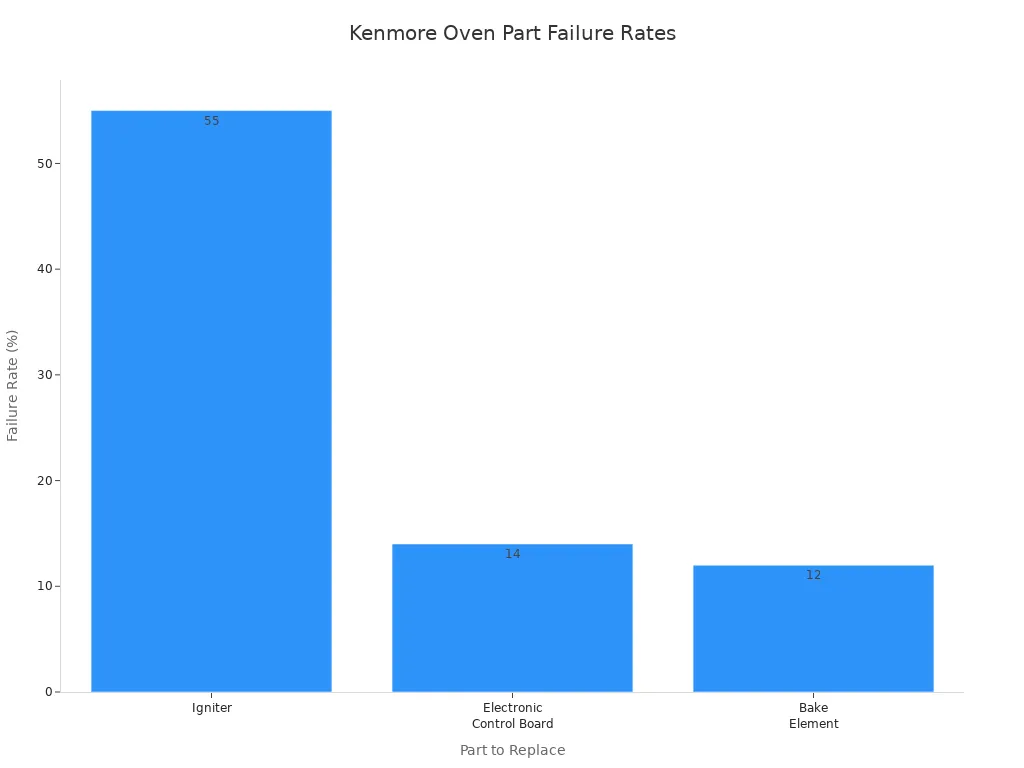
El siguiente cuadro compara las tasas de falla de las piezas comunes del horno Kenmore:
| Pieza a Reemplazar | Tasa/Frecuencia de Falla | Síntomas/Indicadores | Consejo de Reemplazo |
|---|---|---|---|
| Encendedor | 55% | Horno o quemador no enciende, chasquidos sin ignición, sin chispa visible, ignición retrasada | Reemplace cuando el encendedor falle al encender o muestre signos de mal funcionamiento |
| Placa de Control Electrónico | 14% | Sin energía o calentamiento, horno no se apaga, chasquidos u olor a quemado, fallas de comunicación | Reemplace después de que un diagnóstico profesional confirme el mal funcionamiento |
| Elemento de Horneado | 12% | Daño visible (grietas, ampollas), horno no alcanza/mantiene temperatura, chispas/humo | Reemplace si el elemento está dañado o no calienta correctamente |
Nota: Para hornos de convección, los sensores de temperatura y las placas de control defectuosas son causas comunes de falta de calor. Las pruebas de diagnóstico profesional le ayudan a evitar reemplazos de piezas innecesarios.
Costo y Tiempo para Reemplazar el Elemento Calefactor en un Horno Kenmore
Precio Promedio de Elementos Calefactores y Herramientas
Puede esperar pagar un precio razonable por un elemento calefactor de reemplazo para su horno Kenmore. La mayoría de los elementos compatibles cuestan alrededor de $30. Este precio se mantiene consistente entre las principales marcas, incluyendo Whirlpool, Frigidaire y Maytag. Si ya posee herramientas básicas, no enfrentará muchos gastos adicionales. Sin embargo, si necesita comprar herramientas, planifique un extra de $10 a $30. Estas herramientas también le servirán para futuras reparaciones del horno.
| Marca(s) Cubierta(s) | Precio Promedio (USD) |
|---|---|
| Whirlpool, Kenmore, Frigidaire, Maytag | Aproximadamente $30 |
Herramientas Esenciales para Reemplazo DIY:
- Destornilladores Phillips y planos
- Alicates
- guantes de trabajo
- Multímetro
Comprar herramientas es una inversión única. Puede usarlas para muchas reparaciones domésticas, reduciendo sus costos a largo plazo.
Cuánto Toma la Reparación DIY del Horno
Puede completar un reemplazo del elemento calefactor en menos de 30 minutos. El proceso involucra unos pocos pasos sencillos:
- Desconecte todas las fuentes de alimentación del horno.
- Retire las rejillas del horno y, si es necesario, la puerta para facilitar el acceso.
- Desatornille y desconecte el elemento calefactor defectuoso.
- Instale el nuevo elemento, reconectando todos los cables y asegurándolo en su lugar.
- Restaure la energía y pruebe el horno para confirmar un calentamiento adecuado.
La mayoría de las personas considera este reparación manejable, incluso con experiencia limitada. Ahorra tiempo al evitar programar y esperar a un técnico.
Comparación: Reparación de Horno por Uno Mismo vs. Profesional
Cuando decide reparar su horno usted mismo, ahorra tanto dinero como tiempo. Las reparaciones por cuenta propia para un elemento calefactor de horno Kenmore suelen costar entre 22 y 63 dólares en piezas. Usted dedica menos de 30 minutos a la tarea. En contraste, los servicios de reparación profesional cobran $150 a $450 por el mismo trabajo. Las tarifas de mano de obra oscilan entre 50€ y 125€ por hora, y puede que espere días para obtener una cita.
| Tipo de reparación | Estimación de Tiempo para Reparación por Uno Mismo | Rango de Costo para Reparación por Uno Mismo (Repuestos) | Rango de costos profesionales | Herramientas Requeridas | Notas sobre Riesgos y Beneficios |
|---|---|---|---|---|---|
| Elemento de Horno | ~15 minutos | 22€ a 63€ | ~$240 | destornillador Phillips | Reparación por uno mismo ahorra 180€ a 220€; rápido y simple; riesgo de comprar repuestos incorrectos o arruinar la reparación. |
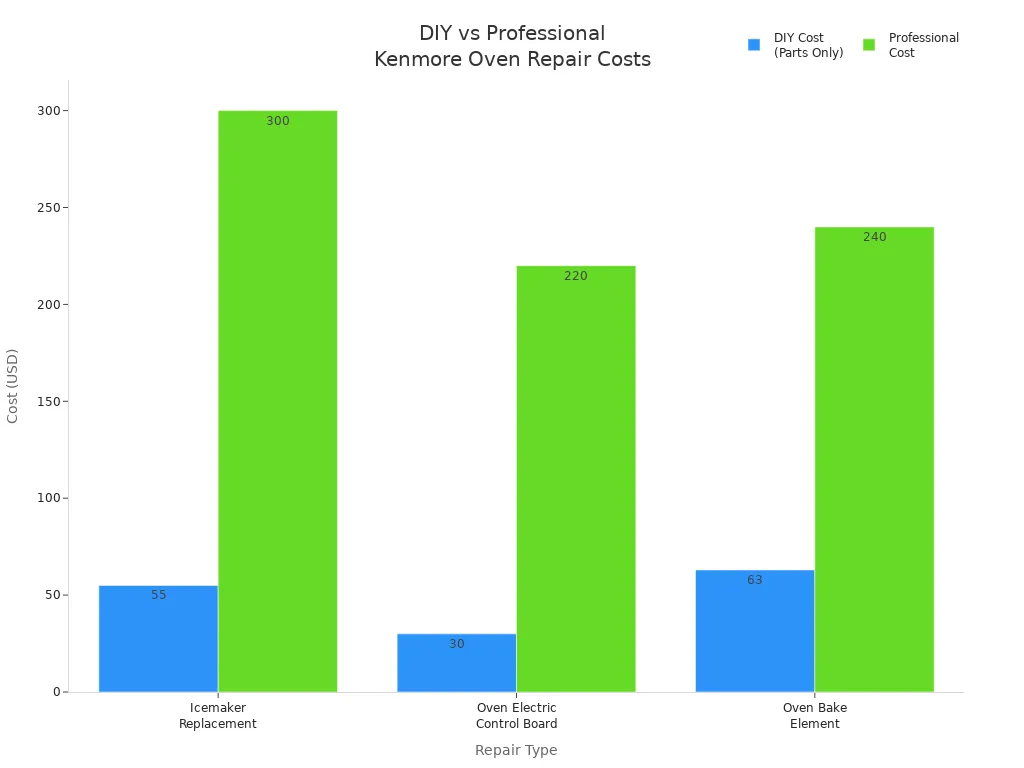
La reparación por uno mismo ofrece ahorros significativos y resultados rápidos para problemas simples del horno. Sin embargo, enfrenta riesgos como peligros de seguridad, instalación incorrecta o anulación de garantías. La reparación profesional cuesta más pero proporciona experiencia, seguridad y protección de la garantía.
A menudo puede reparar su horno Kenmore optando por reemplazar las piezas del elemento calefactor usted mismo. Con las herramientas adecuadas y siguiendo medidas de seguridad, restablecerá un calentamiento confiable y obtendrá resultados de cocción uniformes. Si su horno aún no calienta, problemas subyacentes como un tablero de control defectuoso o un termostato pueden ser la causa. Estos problemas ocurren más a menudo de lo que podría esperar.
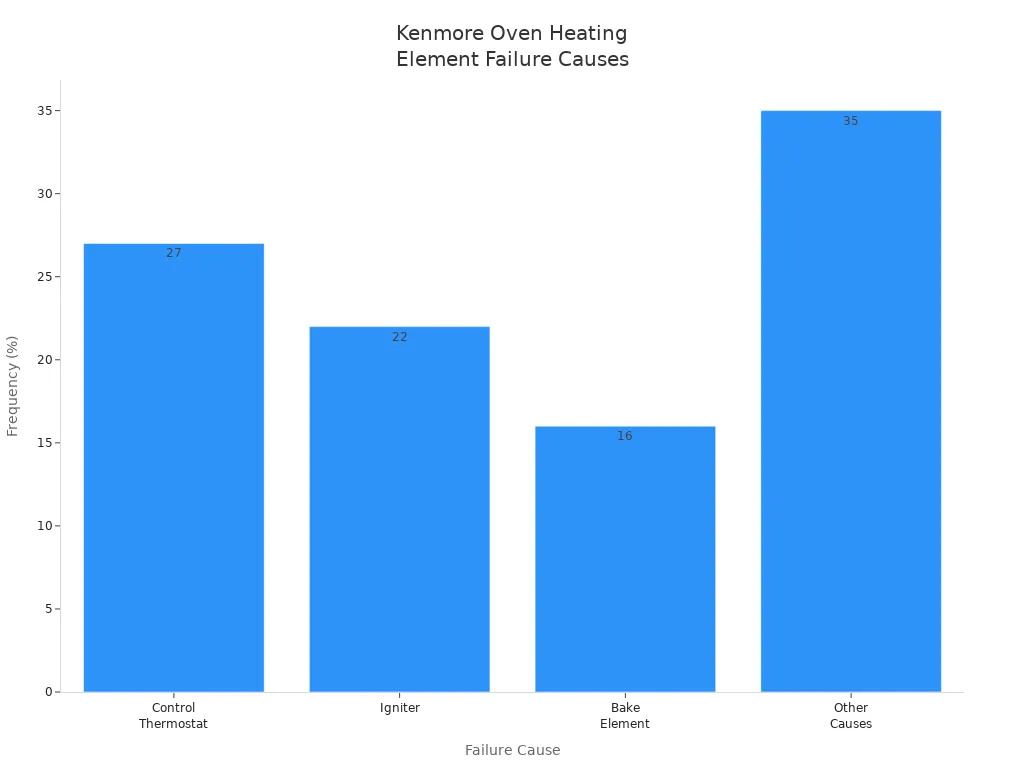
Cuando las reparaciones básicas no resuelven el problema, contacte a un profesional para un diagnóstico y reparación precisos.
PREGUNTAS FRECUENTES
¿Cómo sé si el elemento calefactor de mi horno Kenmore está malo?
Puede revisar si hay daños visibles, como grietas o ampollas. Si el elemento no brilla durante el uso o su horno no alcanza la temperatura establecida, es probable que necesite un reemplazo.
¿Puedo reiniciar mi horno Kenmore si deja de calentar?
Sí. Puede reiniciar su horno Kenmore desenchufándolo durante varios minutos o apagando el interruptor de circuito. Después de restaurar la energía, pruebe el horno. Si los problemas de calentamiento continúan, inspeccione el elemento o el tablero de control.
¿Qué herramientas necesito para reemplazar el elemento calefactor?
Necesita un destornillador Phillips, un destornillador de punta plana, alicates y guantes de trabajo. Un multímetro le ayuda a probar el elemento. Siempre desconecte la energía antes de comenzar cualquier reparación.
¿Cuánto tiempo toma reemplazar un elemento calefactor de horno Kenmore?
La mayoría de las personas completa el reemplazo en 20 a 30 minutos. El proceso implica retirar las rejillas, desconectar el elemento viejo, instalar el nuevo y probar el horno.
¿Es seguro reemplazar el elemento calefactor yo mismo?
Puede reemplazar el elemento de forma segura si sigue los pasos de seguridad. Siempre desconecte la energía, use guantes y utilice las herramientas adecuadas. Si no se siente seguro, contacte a un profesional.
¿Qué debo hacer si mi horno aún no calienta después de reemplazar el elemento?
Verifique nuevamente su instalación. Inspeccione el cableado, el sensor de temperatura y el tablero de control. Si no puede encontrar el problema, considere llamar a un profesional para un diagnóstico más profundo.
¿Con qué frecuencia debo inspeccionar o limpiar el elemento calefactor del horno?
Inspeccione y limpie el elemento calefactor cada tres a seis meses, dependiendo de la frecuencia con la que use su horno. El mantenimiento regular ayuda a prevenir futuros problemas de calentamiento.
Consejo: Programe revisiones rutinarias para detectar signos tempranos de desgaste o daño.