ケンモアオーブンが加熱しない場合、多くの場合、ヒーターエレメントの故障が原因です。 電熱線. ヒーターエレメントの交換はご自身で行うことができます。多くのオーブン所有者が、特に古い機種でこの問題に直面します。 家電製品の加熱素子. 解決のために専門家に頼る必要はありません。 発熱体メーカー または 金中電熱 基本的な工具があれば、ケンモアオーブンを修理し、正常な動作を回復させることができます。.
オーブンが加熱しない場合は、必ず最初にヒーターエレメントを点検してください。この部品は最も早く摩耗しやすいためです。.
ケンモアオーブンが加熱しない理由
オーブンが加熱しなくなる一般的な原因
ケンモアオーブンが加熱しない場合、いくつかの原因が考えられます。ほとんどの加熱不良は、電気的または機械的な故障に起因します。以下のような問題が発生する可能性があります。 ヒーターエレメントの故障、温度センサーの不具合、または配線の損傷. オーブンドアの位置ずれやドアガスケットの摩耗などの機械的な問題も、適切な加熱を妨げる可能性があります。.
以下は、家電修理の統計に基づく最も一般的な原因の内訳です。
| 原因 | 加熱不良の割合 | 説明と症状 |
|---|---|---|
| オーブン焼きエレメント | 86% | 加熱不良の主要原因。摩耗、 debris の蓄積、電気的問題による損傷。症状としては、熱が出ない、加熱ムラ、エレメントが光らないなど。. |
| オーブン焼きエレメント(上火) | 13% | 二次的な原因。コイルフィラメントが弱くなるか断線。症状としては、焼き機能の故障、予熱の遅延、熱が出ないなど。. |
また、以下のような電気的な故障も考慮する必要があります。 コントロール基板の問題や配線の損傷. バーナーの汚れやオーブンドアの調整不良などの機械的な故障も、加熱不良の原因となります。定期的な点検と清掃がこれらの問題を防ぐのに役立ちます。.
ヒーターエレメント交換が必要な兆候
視覚的および機能的な症状を観察することで、ヒーターエレメントの故障の兆候を見つけることができます。以下の点に注意してください。 エレメントのひび割れ、膨れ、変色. 運転中にエレメントが明るいオレンジ色に光らない場合、交換が必要な可能性があります。焼け跡、焦げ跡、断線などの物理的損傷も問題を示しています。.
機能的な兆候としては、 調理ムラ、調理時間の延長、食品が適切に調理されないこと. が挙げられます。エレメントの故障により消費電力が増加し、電気代が予想外に上がることに気づく場合もあります。オーブンが加熱しない、または庫内に冷たい部分がある場合、ヒーターエレメントが原因である可能性があります。.
ヒント ヒーターエレメントに目に見える損傷がないか定期的に点検し、調理性能を監視して、故障の初期兆候を早期に発見してください。.
発熱体が問題であることを確認する方法
あなたはできる マルチメーターを使用してヒーターエレメントの故障を確認します。. 以下の手順に従ってください。
- オーブンのプラグを抜き、完全に冷めるまで待ちます。.
- パネルのネジを外してヒーターエレメントを取り外し、エレメントを優しく引き出して端子を露出させます。.
- ラジオペンチを使用して、端子から配線を外します。.
- マルチメーターを最も低いオーム設定にします。.
- プローブ同士を接触させてマルチメーターを校正します。.
- エレメントを非導電性の表面に置きます。.
- プローブを2つの端子に接触させます。.
- 抵抗値を読み取ります。
- 0~50オームの場合、エレメントは正常に動作しています。.
- 50オーム以上、または無限大を示す場合、エレメントは断線しています。.
導通テストに合格したにもかかわらず、 ケンモアオーブン がまだ加熱しない場合は、温度センサーやコントロール基板などの他のコンポーネントを確認する必要があります。トラブルシューティングで問題が解決しない場合は、専門家に連絡する必要があるかもしれません。.
ヒーターエレメント交換前の安全手順
ケンモアオーブン用の工具と交換部品
修理を始める前に、適切な工具と交換部品を準備してください。必要なものは、 マルチドライバー、5/8インチレンチ、5/16インチナットドライバー、3/4インチレンチ. です。これらの工具は、ヒーターエレメントの取り外しと固定に役立ちます。ほとんどのケンモアオーブンには、, WB44T10010、WB44T10011、WCI 316075103 などの純正ヒーターエレメント が適合します。これらのエレメントは電気オーブンの底部にあり、ベーキングに必要な熱を提供します。作業を始める前に、必ずすべてのユーティリティからアプライアンスの接続を切断してください。この手順により、感電の危険を防ぎ、オーブン修理中の安全を確保します。.
| カテゴリー | 詳細 |
|---|---|
| 交換部品 | ケンモアオーブン対応の純正ヒーターエレメント(例:WB44T10010、WB44T10011、WCI 316075103) |
| 必須ツール | マルチドライバー、5/8インチレンチ、5/16インチナットドライバー、3/4インチレンチ |
| 安全予防措置 | 設置前に電源を切る |
ヒント:作業中に固着したネジを見つけた場合に備えて、WD-40を手元に用意しておいてください。.
オーブンの電源を切る方法
修理を始める前に、必ずケンモアオーブンの電源を切ってください。この手順は、感電から身を守り、偶発的な傷害を防ぎます。以下の手順に従ってください。
- オーブンのプラグを壁のコンセントから抜いてください。プラグに手が届かない場合は、オーブンに電力を供給している回路ブレーカーを切ってください。.
- ガスオーブンの場合は、ガス供給も止めてください。.
- 内部の部品に触れる前に、オーブンとヒーターエレメントが完全に冷めるまで待ってください。.
これらの措置により、修理中の安全が確保され、感電の危険が防止されます。.
DIYオーブン修理のための安全上のヒント
オーブンを修理する際は、常に安全を最優先にしてください。ご自身とご自宅を守るために、以下の重要なヒントに従ってください。
- 修理を始める前に、必ず電源を切ってください。 感電を避けるため。.
- 安全ゴーグル、絶縁手袋、ゴム底靴などの個人用保護具を着用すること。.
- 発熱体が完全に冷めるまで待つこと。 取り扱う前に、やけどを防ぐため。.
- 作業スペースを明るく整理整頓し、事故を防ぐこと。.
- 各作業に適切な工具を使用し、けがやオーブンの損傷を防ぐこと。.
- 感電を防ぐため、必ずアース線を再接続すること。.
- メーカーが推奨しない限り、部品の修理や交換を試みないこと。.
- ガス臭がする場合は、電気スイッチや電話を操作しないこと。. その場を離れ、直ちにガス供給業者または消防署に連絡すること。.
注記:オーブンを部屋の暖房に使用しないでください。この行為は一酸化炭素中毒や火災の危険を引き起こす可能性があります。.
これらの安全手順に従うことで、Kenmoreオーブンの修理を安全に完了し、けがや損傷のリスクを軽減できます。.
Kenmoreオーブンの発熱体交換のステップバイステップガイド
オーブン発熱体へのアクセス
オーブンラックと底部パネルの取り外し
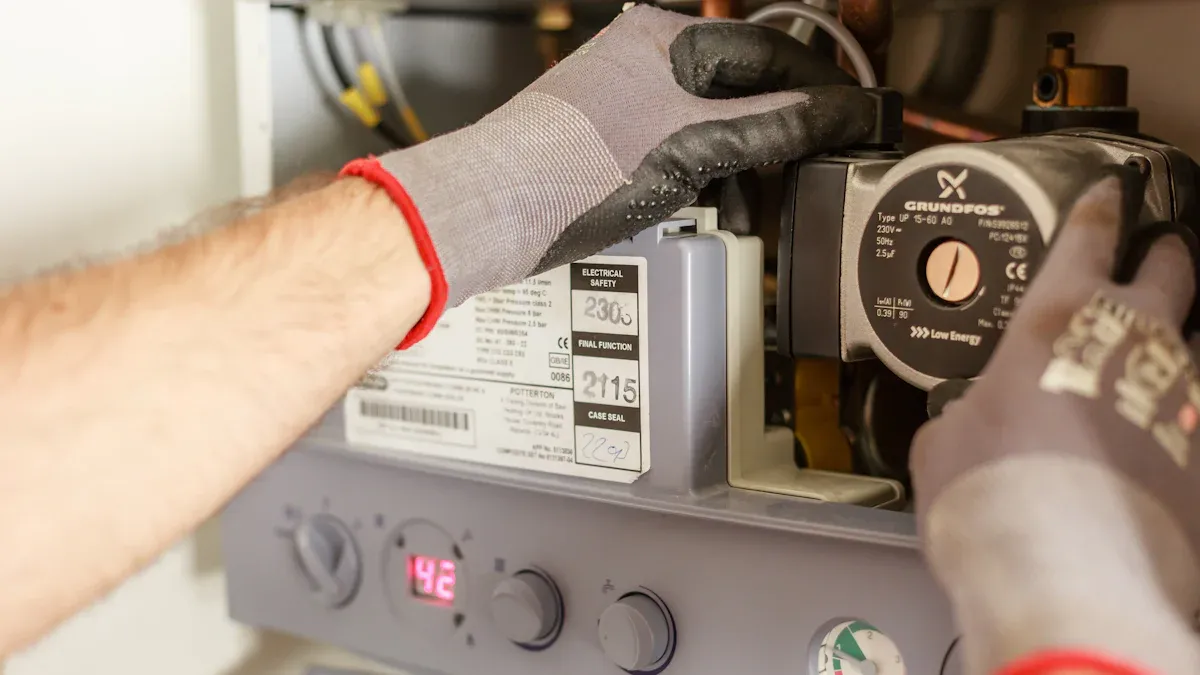
発熱体交換を始める前に、明確な作業スペースを確保する必要があります。まず、Kenmoreオーブンの電源を切ります。プラグを抜くか、回路ブレーカーをオフにしてください。必要に応じて、オーブンを壁から離します。オーブンドアを完全に開けます。. すべてのオーブンラックを取り外し、下部ベークエレメントを露出させます。 手や工具のためのスペースを確保します。モデルに底部パネルが含まれている場合は、ネジを外して持ち上げて取り出します。この手順により、発熱体に直接アクセスできます。.
ヒント:オーブンドアを取り外すと、作業が容易になります。ドアを完全に開けた後、ヒンジを持ち上げてドアを脇に置いてください。.
Kenmoreオーブンのベークエレメントの位置確認
下部ベークエレメントは、オーブンキャビティの底部にあります。背面壁に取り付けられた金属コイルを探してください。ベークエレメントは通常、取り付けブラケットの後ろにあり、ネジで固定されています。その向きと位置を確認してください。この観察は、新しい発熱体の取り付け時に役立ちます。.
古いヒーターエレメントの取り外し
ネジの取り外しと配線の切断
まず、 安全メガネと手袋を着用します。. 取り付けネジを外す 下部ベークエレメントを固定しているネジまたはクリップを取り外します。これらのネジは再取り付けのために安全に保管してください。優しく 発熱体を手前に約3インチ引き出します。. 配線を直接引っ張らないでください。ラジオペンチまたは指を使用して、金属製のスパッドコネクタをエレメント端子から外します。. 配線を外す前に、配線接続を写真に撮るかメモしてください。. この手順により、発熱体交換時に配線を正しく再接続できます。.
古いエレメントの安全な取り扱い
ネジを緩めたり締めたりする際は、端子付近の配線を支えてください。この注意により、配線の曲がりや損傷を防ぎます。古い発熱体をブラケットやクリップから慎重にスライドさせて取り出します。配線がオーブン壁の後ろに落ちないように注意してください。ネジが固着している場合は、, 少量の浸透油を塗る しばらく放置してください。完全に拭き取らない限り、引火性潤滑剤は使用しないでください。古いエレメントを取り外し、廃棄用に脇に置いてください。.
注記:どの時点でも不安を感じた場合は、Kenmoreオーブンの損傷を避けるため、専門家の助けを求めてください。.
新しいオーブン発熱体の取り付け
新しいエレメントへの配線接続
新しい下部ベークエレメントの端子にワイヤーコネクタを取り付けます。各コネクタがしっかりとフィットしていることを確認してください。ネジを締めすぎると端子が損傷する可能性があるため、注意してください。配線を支えながら接続し、曲がりを防ぎます。配線が先にメモした向きと一致していることを再確認してください。.
新エレメントの固定
新しい発熱体をオーブン背面壁の取り付け穴に合わせます。エレメントの端を背面の穴に押し込みます。取り付けネジまたはクリップを再取り付けしてエレメントを固定します。オーブンに底部パネルがある場合は、それを元に戻します。オーブンラックを元の位置にスライドさせます。オーブンドアを取り外した場合は、ヒンジを取り付けピンに引っ掛け、ヒンジロックを押し戻します。オーブンをコンセントに差し込むか、回路ブレーカーをオンにして電源を復旧します。アプライアンスを元の位置にスライドさせ、転倒防止ブラケットが係合していることを確認します。.
コールアウト:新しい発熱体がしっかりと固定され、ぐらつかないことを常に確認してください。しっかりとした取り付けにより、適切な加熱と安全な動作が保証されます。.
これで発熱体交換プロセスが完了しました。Kenmoreオーブンはテストと通常使用の準備が整いました。.
取り付け後の新しいオーブン発熱体のテスト
Kenmoreオーブンへの電源復旧
新しい発熱体の取り付けが完了したら、Kenmoreオーブンへの電源を復旧する必要があります。安全で効果的なプロセスを確保するために、以下の手順に従ってください:
- 次のことを確認してください: オーブンの背面を再組み立てし、 すべてのネジを固定したこと。.
- オーブンを電源コンセントに再び差し込みます。回路ブレーカーを切断した場合は、再びオンにします。.
- オーブンを元の位置に優しく押し込みます。転倒防止ブラケットが係合していることを確認します。.
- オーブンをオンにし、ベーク機能を選択します。エレメントが発熱している兆候(赤熱や暖かさなど)を観察します。.
- 精度を高めるために、オーブン温度計を内部に置き、オーブンが加熱する際の温度を監視します。.
ヒント:電源を復旧する前に、すべての配線を再接続し、パネルを元に戻したことを必ず再確認してください。この手順により、電気的危険を防ぎ、適切な動作を確保します。.
テストベークサイクルの実行
新しい発熱体が正しく動作することを確認するために、テストベークサイクルを実行する必要があります。以下の表を使用して、確認事項と期待される結果を確認してください:
| 手順/確認項目 | 説明/期待される結果 |
|---|---|
| 導通テスト | マルチメーターを使用して、ベークエレメントが断線していないことを確認します。. |
| 電流測定 | ベークサイクル中、ベークエレメントは約 10アンペア. |
| 温度センサー抵抗 | センサー抵抗を確認:70°Fで約1080オーム、約1000°Fで約2875オーム。. |
| エレメントのサイクル観察 | ベークエレメントは、設定温度を維持するためにオンとオフを繰り返します。. |
| 温度確認 | オーブン温度計の読み値を、オーブンディスプレイの設定温度と比較します。. |
| 接続の点検 | すべての接続部の緩みや損傷を点検すること。. |
| 制御基板の機能 | 制御基板がヒーターを正しくサイクルさせ、設定温度に達することを確認します。. |
オーブンを350°Fなどの標準的な焼成温度に設定します。下部ヒーターがオン・オフを繰り返す様子を観察します。温度計を使用して実際の温度とオーブンの表示温度を比較します。オーブンが設定温度に達し維持できれば、取り付けは成功です。.
テスト中に確認すべき項目
新しいオーブンヒーターのテストプロセスでは、以下の主要な要素を観察する必要があります:
- ベークヒーターが発光し、均一な加熱を生み出すことを確認します。.
- マルチメーターを使用して導通を確認し、ヒーターが健全であることを検証します。.
- 電流値を測定します。ベークヒーターは約10アンペアを想定します。.
- 温度センサーの抵抗値を室温時と加熱中に測定します。.
- ベークヒーターとブロイルヒーターの両方のサイクルパターンを観察します。ベークヒーターは温度維持のためにサイクルし、ブロイルヒーターは予熱中に短時間サイクルすることがあります。.
- オーブン温度計の表示と設定温度を比較します。表示値はほぼ一致する必要があります。.
- すべての電気接続部の緩みや損傷を点検します。.
- オーブンが設定温度に達しない場合は、制御基板の問題を考慮します。.
注記:加熱不能や温度表示の不正確さなどの異常に気付いた場合は、他の部品を点検するか、専門家の支援を求める必要があるかもしれません。.
これらの手順に従うことで、エレメント交換後の 加熱部品交換後、Kenmoreオーブンは安全かつ効率的に作動します。 をテストするためのもの。.
Kenmoreオーブンがまだ加熱しない場合のトラブルシューティング
ヒーター取り付けの再確認
ヒーター交換後もオーブンが加熱しない場合は、取り付けを再確認する必要があります。すべてが正しいことを確認するために以下の手順に従ってください:
- 点検やテストの前に、必ずオーブンの電源を切断してください。安全第一です。.
- オーブンの電気接続部とワイヤーハーネスを調べます。目視できる損傷や接続の緩みがないか確認します。.
- マルチメーターを使用して、制御基板がヒーター端子に電圧を送っているかテストします。.
- サーミスタヒューズや温度センサーなどの関連部品を点検します。これらの部品の不具合はヒーターへの電力供給を妨げる可能性があります。.
- 点検中に見つかった不良部品は交換してください。.
- オーブンを前方に引き出し、電源プラグを抜き、背面制御パネルを固定しているネジを外して制御基板にアクセスします。制御基板のネジも外します。.
- 不良な制御基板が見つかった場合は交換します。ほとんどの制御基板はプラグアンドプレイで、取り付けに約 20〜25分 かかります。.
ヒント:何かを外す前には、必ず配線の位置を記録してください。この手順はすべてを正しく再接続するのに役立ちます。.
加熱問題を引き起こす可能性のある他のオーブン部品
オーブンがまだ適切に加熱しない場合、他の部品に問題がある可能性があります。以下の一般的な原因を考慮する必要があります:
- オーブン温度センサーは室温では正常にテストされることがありますが、高温では範囲外にずれる可能性があります。このずれが加熱問題を引き起こすことがあります。.
- 制御基板またはそのリレーが故障している可能性があります。 ベークヒーターに部分的な電圧しか到達しない場合 または上部ブロイルヒーターに電圧が供給されない場合は、制御基板に問題があるかもしれません。.
- 制御基板上の不良なベークリレーは、 加熱の遅延や上部制御パネルからのカチカチ音 を引き起こす可能性があります。.
- 温度センサーが制御基板に誤った信号を送信すると、ヒーターの不適切なサイクルが発生します。.
- マルチメーターでオーブンセンサーの抵抗をテストし、制御基板の目視できる損傷を点検することで、これらの問題を診断できます。.
ヒーター自体に関係しない加熱問題を解決するには、センサーや制御基板の交換が必要になる場合があります。.
オーブン修理のプロを呼ぶとき
場合によっては専門家の助けが必要です。以下の兆候のいずれかに気付いた場合は、オーブンとレンジ修理の専門家に連絡してください:
- 正しい時間と温度を守っても、食品が適切に調理されない。.
- 分かりますか 一部の領域での調理むらや焦げ これはしばしばヒーターの問題を示しています。.
- オーブン温度計で確認したように、オーブンの予熱が遅い、または正しい温度に達しない。.
- 使用中にオーブンが突然停止する。.
- サーモスタット、ヒーター、温度センサー、制御基板、またはコンベクションモーターなどの部品が誤動作する。.
| 症状または兆候 | 考えられる原因 |
|---|---|
| オーブンが加熱しない、または加熱が不十分 | 不良な電源コード、プラグ、コンセント、または電源スイッチ |
| オーブンが突然停止する | サーモスタットの故障 |
| 調理が遅い、または食品が焦げる | 不良なサーモスタット |
| タイマーが設定されていないとオーブンが起動しない | タイマー未設定(ユーザーエラー) |
| 調理のむら | ヒーターの故障 |
| 制御パネル/プログラムが動作しない | 制御基板の故障 |
| 温度センサーの故障 | 長時間の高熱によるセンサーの焼損 |
注記:すべての部品を点検してもKenmoreオーブンがまだ加熱しない場合は、複雑な電気系統や制御基板の問題を専門家が診断・修理できます。.
オーブンの再加熱不良を防ぐためのメンテナンスのヒント
ヒーターの定期的な清掃と点検
定期的な清掃と点検により、最適なオーブンパフォーマンスを維持できます。 定期的なヒーターエレメントの清掃と点検. 汚れや食品の残りかすがエレメントに蓄積すると、センサーや点火装置の誤作動を引き起こす可能性があります。オーブン内部とヒーターエレメントは必ず冷えた状態で清掃してください。こぼれた際にすぐにスポット清掃を行うことで、頑固な汚れの蓄積を防ぎます。.
以下の表は、使用頻度に基づいたヒーターエレメントの推奨清掃・点検頻度を示しています:
| 使用頻度 | 推奨清掃頻度 |
|---|---|
| 頻繁な使用(週3~4回) | 3ヶ月ごと |
| 中程度の使用(週1~2回) | 4~6ヶ月ごと |
| 軽度の使用(週1回未満) | 6ヶ月~1年ごと |
清掃時には、, ヒーターエレメントにひび割れ、歪み、変色がないか点検してください. 。エレメントを保護するため、強力な化学薬品や研磨材の使用は避けてください。また、オーブンの設定を確認し、正しいベーキングまたはブロイルモードを使用していることを確認してください。電源に問題がある場合は、回路ブレーカーをリセットしてください。.
ヒント:定期的なメンテナンスをスケジュールすることで、Kenmoreオーブンが正常に機能し、予期しない加熱故障を防ぐことができます。.
オーブンエレメント故障の早期兆候の発見
エレメント故障の早期警告サインを発見することで、加熱ムラや高額な修理を防ぐことができます。ベークエレメントのひび割れ、水ぶくれ、焦げ跡などの目に見える損傷に注意してください。オーブンが設定温度に達しない、または維持できない場合、ヒーターエレメントが故障している可能性があります。調理のむらや調理時間の延長も問題を示しています。.
深刻な場合、作動中に火花、煙、異常音が発生することがあります。これらの症状のいずれかが観察された場合は、安全で効率的なオーブン運転を維持するため、直ちにヒーターエレメントを交換してください。.
- ベークエレメントの目に見える損傷 (ひび割れ、水ぶくれ、焦げ跡)
- オーブンが設定温度に達しない、または維持できない
- 調理のむら
- 調理時間の延長
- 作動中の火花、煙、異常音
その他のKenmoreオーブンパーツを交換する時期
新しいエレメントを設置した後も加熱問題が続く場合は、他のオーブンパーツの交換を検討してください。故障した温度センサーはオーブンの加熱を妨げる可能性があります。マルチメーターを使用して センサーの導通を確認してください. 。電子制御基板のエラーコードや目に見える損傷を点検してください。制御基板とヒーターエレメント間の配線接続が緩んでいることも問題を引き起こす可能性があります。.
センサーまたは制御基板を交換することで、通常は加熱問題が解決します。部品のテストや交換前には必ず電源を切断してください。.
以下のチャートは、 一般的なKenmoreオーブンパーツの故障率:
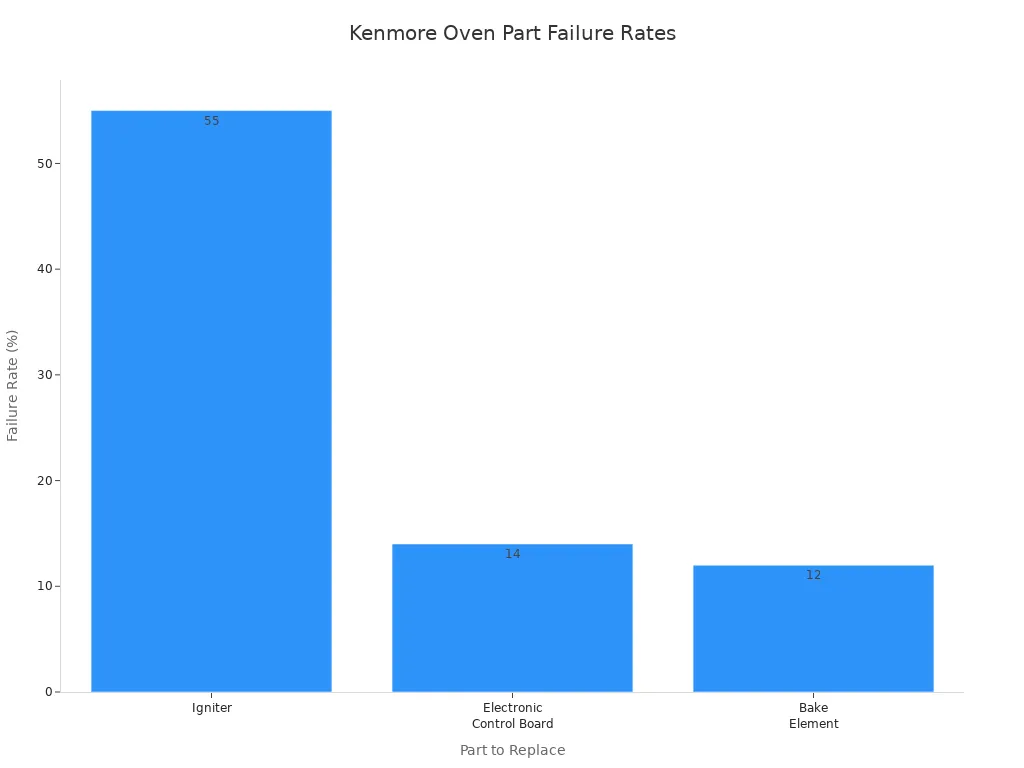
| 交換部品 | 故障率 / 頻度 | 症状 / 指標 | 交換アドバイス |
|---|---|---|---|
| イグナイター | 55% | オーブンまたはバーナーが点火しない、点火せずにカチカチ音がする、火花が見えない、点火が遅れる | 点火装置が点火しない、または誤作動の兆候を示す場合に交換 |
| 電子制御基板 | 14% | 電源または加熱がない、オーブンが切れない、カチカチ音や焦げ臭い、通信障害 | 専門家の診断で誤作動が確認された後に交換 |
| ベークエレメント | 12% | 目に見える損傷(ひび割れ、水ぶくれ)、オーブンが温度に達しない/維持できない、火花/煙 | エレメントが損傷している、または適切に加熱しない場合に交換 |
注:対流式オーブンの場合、故障した温度センサーと制御基板が加熱しない一般的な原因です。専門的な診断テストにより、不必要な部品交換を避けることができます。.
Kenmoreオーブンのヒーターエレメント交換にかかる費用と時間
ヒーターエレメントと工具の平均価格
Kenmoreオーブンの 交換用ヒーターエレメント. には、適正な価格が期待できます。互換性のあるほとんどのエレメントは約30米ドルです。. 。この価格は、Whirlpool、Frigidaire、Maytagなどの主要ブランド間で一貫しています。基本的な工具を既にお持ちの場合は、追加費用はほとんどかかりません。ただし、工具を購入する必要がある場合は、10~30米ドルの追加費用を見込んでください。これらの工具は将来のオーブン修理にも役立ちます。.
| 対象ブランド | 平均価格(米ドル) |
|---|---|
| Whirlpool、Kenmore、Frigidaire、Maytag | 約30米ドル |
DIY交換に必要な工具:
- プラスドライバーとマイナスドライバー
- ペンチ
- 作業用手袋
- マルチメーター
工具の購入は一度きりの投資です。多くの家庭修理に使用でき、長期的なコストを削減できます。.
DIYオーブン修理にかかる時間
ヒーターエレメントの交換は 30分未満. で完了できます。プロセスは以下の簡単な手順を含みます:
- オーブンへのすべての電源を切断します。.
- オーブンラックと、必要に応じてドアを取り外し、作業しやすくします。.
- 故障したヒーターエレメントのネジを外し、接続を解除します。.
- 新しいエレメントを設置し、すべての配線を再接続して所定の位置に固定します。.
- 電源を復旧させ、オーブンをテストして適切な加熱を確認してください。.
経験が限られていても、多くの方がこの修理を自分で行えます。技術者の手配や待ち時間を省くことで時間を節約できます。.
自分で修理する場合とプロに依頼する場合の比較
自分でオーブンを修理することを選択すれば、費用と時間の両方を節約できます。 KenmoreオーブンヒーターエレメントのDIY修理 部品代は通常$22から$63の範囲です。作業時間は30分未満です。一方、専門修理サービスでは $150~$450 の費用がかかります。人件費は1時間あたり$50~$125で、予約まで数日待たされる場合もあります。.
| 修理タイプ | DIYの所要時間目安 | DIY費用範囲(部品代) | プロの費用範囲 | 必要な工具 | リスクとメリットに関する注意点 |
|---|---|---|---|---|---|
| オーブン焼きエレメント | ~15分 | $22~$63 | ~$240 | プラスドライバー | DIYでは$180~$220を節約可能;迅速で簡単;部品を間違えたり修理を失敗するリスクあり。. |
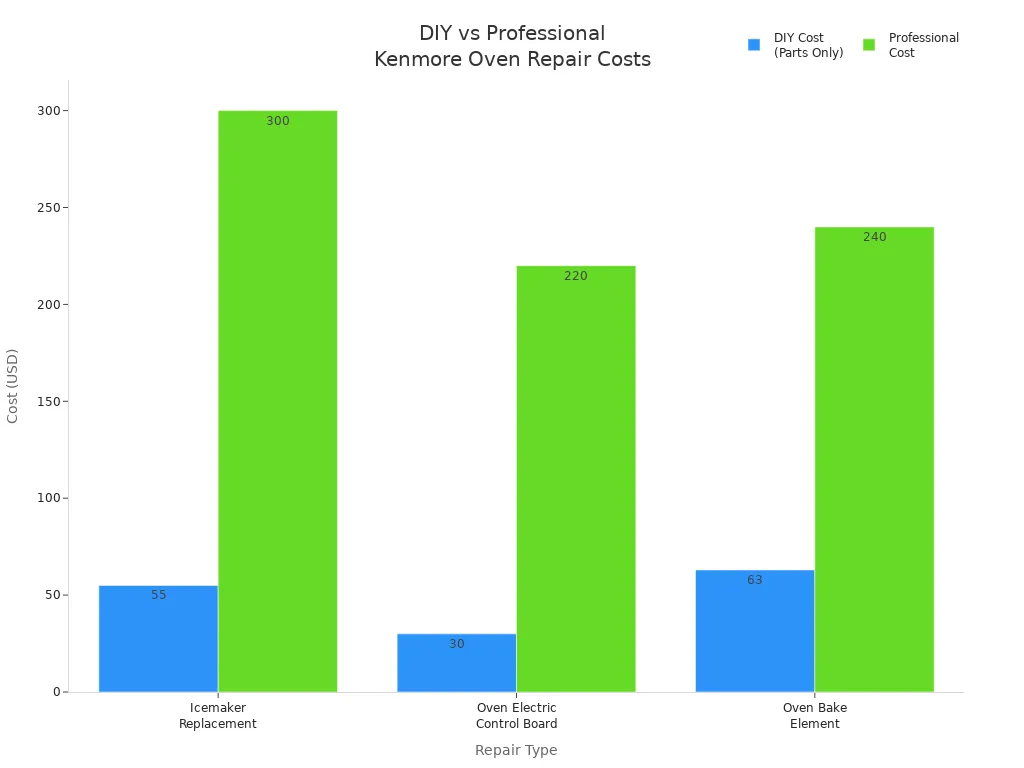
単純なオーブンの不具合であれば、DIY修理は大幅な節約と迅速な解決を提供します。 ただし、安全上の危険、誤った取り付け、保証の無効化などのリスクがあります。プロの修理は費用がかかりますが、専門知識、安全性、保証保護が得られます。.
多くの場合 キンモアオーブンの修理は、加熱素子部品を自身で交換する選択肢があります。適切な工具と安全手順を踏むことで、確実な加熱機能を回復し、安定した調理結果を得られます。オーブンの加熱不良が続く場合は、 heating element parts yourself. With the right tools and safety steps, you restore reliable heating and enjoy consistent cooking results. If your oven still fails to heat, underlying issues like a 故障した制御基板 やサーモスタットなど、根本的な問題が原因かもしれません。これらの問題は思った以上に頻繁に発生します。.
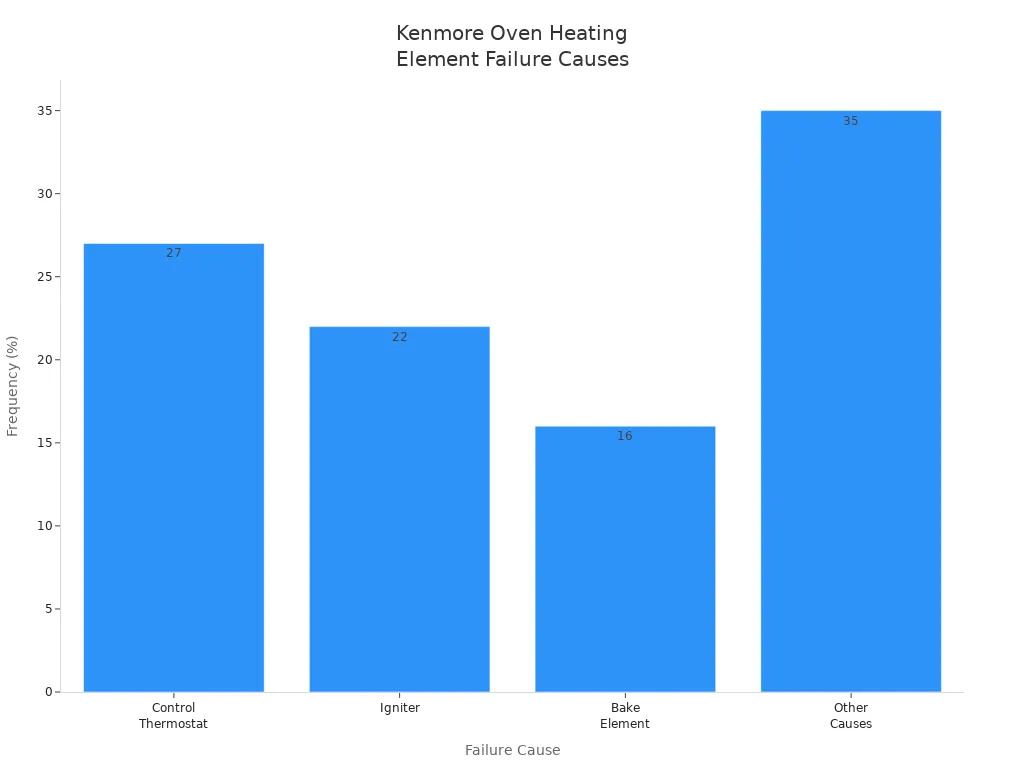
基本的な修理で問題が解決しない場合は、正確な診断と修理のためにプロに連絡してください。.
よくあるご質問
Kenmoreオーブンのヒーター素子が故障しているかどうかはどうやって判断しますか?
ひび割れや膨れなどの目視できる損傷を確認できます。使用中に素子が発光しない場合や、設定温度に達しない場合は交換が必要な可能性が高いです。.
Kenmoreオーブンが加熱しなくなった場合、リセットできますか?
はい。数分間電源プラグを抜くか、ブレーカーをオフにすることでリセットできます。電源を復旧させた後、オーブンをテストしてください。加熱問題が続く場合は、素子や制御基板を点検してください。.
ヒーター素子を交換するにはどのような工具が必要ですか?
プラスドライバー、マイナスドライバー、プライヤー、作業用手袋が必要です。マルチメーターがあれば素子のテストに役立ちます。修理を始める前には必ず電源を切断してください。.
Kenmoreオーブンのヒーター素子の交換にはどれくらい時間がかかりますか?
ほとんどの方が20~30分で交換を完了します。工程には、ラックの取り外し、古い素子の切断、新しい素子の取り付け、オーブンのテストが含まれます。.
ヒーター素子を自分で交換するのは安全ですか?
安全手順に従えば安全に交換できます。必ず電源を切断し、手袋を着用し、適切な工具を使用してください。不安がある場合はプロに連絡してください。.
素子を交換した後もオーブンが加熱しない場合はどうすればよいですか?
取り付けを再確認してください。配線、温度センサー、制御基板を点検してください。問題が見つからない場合は、プロに連絡して詳細な診断を依頼することを検討してください。.
オーブンのヒーター素子はどのくらいの頻度で点検または清掃すべきですか?
オーブンの使用頻度に応じて、3~6か月ごとにヒーター素子を点検・清掃してください。定期的なメンテナンスは将来の加熱問題を防ぐのに役立ちます。.
ヒント:定期的な点検をスケジュールして、摩耗や損傷の早期兆候を把握しましょう。.