


Puede mantener su elemento calefactor bañera de hidromasaje funcionando de manera eficiente con solo unos pocos hábitos sencillos. El uso excesivo de productos químicos para spa deja residuos que reducen el flujo de agua y provocan errores en el sistema.. Las causas comunes de fallo del calentador incluyen corrosión por una química del agua deficiente,, problemas mecánicos y sobrecalentamiento. Si supervisa el equilibrio del agua y programa un servicio de mantenimiento rutinario,, prolonga la vida útil de su elemento calefactor y otros componentes. elementos calefactores de electrodomésticos. Los expertos Fabricantes de elementos calefactores como Calefacción eléctrica Jinzhong recomiendan un cuidado proactivo para un rendimiento a largo plazo.
- Controle la química del agua mensualmente para prevenir la corrosión.
- Limpie los filtros para mantener un flujo de agua constante y reducir el estrés del calentador.
Revisiones periódicas de los filtros para la salud del calentador de la bañera de hidromasaje.

Por qué los filtros limpios protegen el elemento calefactor de su bañera de hidromasaje.
Prevención de problemas de flujo de agua.
Debe mantener los filtros de su bañera de hidromasaje limpios para garantizar un flujo de agua constante. Los filtros sucios atrapan contaminantes como suciedad, aceites, lociones y residuos.. Estas obstrucciones restringen la circulación y dificultan que el agua se mueva a través del sistema. Cuando el flujo de agua disminuye, su calentador de jacuzzi calentador no puede operar de manera eficiente. El flujo reducido puede incluso impedir que el calentador se encienda, dejándole con agua fría y un calentador de spa de bajo rendimiento.
Consejo: La limpieza regular elimina la acumulación de minerales y sarro,, que pueden depositarse en el elemento calefactor de la bañera de hidromasaje y reducir su eficiencia o provocar fallos.
Reducción del estrés en los componentes del calentador del spa.
Los filtros limpios no solo mantienen el agua en movimiento. También protegen el calentador del spa y otros componentes de una tensión innecesaria. Cuando los filtros se obstruyen, la bomba de circulación trabaja más y los calentadores deben funcionar más tiempo para alcanzar la temperatura deseada. Esta carga de trabajo adicional aumenta el consumo de energía y puede acortar la vida útil de su equipo. Al mantener los filtros limpios, ayuda a que el calentador de su bañera de hidromasaje transfiera calor de manera eficiente y reduce el riesgo de sobrecalentamiento o corrosión.
Mantener los filtros limpios favorece una química del agua adecuada, lo que protege aún más su elemento calefactor calentador de daños.
Cómo limpiar y reemplazar los filtros de la bañera de hidromasaje.
Limpieza de filtros paso a paso.
Siga estos pasos para mantener sus filtros en óptimas condiciones:
- Apague su bañera de hidromasaje antes de retirar el filtro..
- Saque el filtro e inspecciónelo en busca de grietas, pliegues deshilachados o decoloración.
- Enjuague el filtro con una manguera, separando los pliegues para eliminar los residuos atrapados.
- Remoje el filtro en un limpiador de filtros especializado para bañeras de hidromasaje durante al menos 15 minutos. Evite el uso de lejía o detergentes domésticos, ya que pueden dañar el filtro.
- Enjuague bien después del remojo para eliminar toda la solución limpiadora.
- Deje que el filtro se seque completamente antes de volver a instalarlo.
- Alterne con un segundo filtro si es posible, para tener siempre uno limpio listo.
Nota: Para agua dura, use una solución ácida diluida para eliminar los depósitos de calcio después de la limpieza.
Con qué frecuencia cambiar los filtros.
Los estándares de la industria recomiendan revisar y enjuagar los filtros de su bañera de hidromasaje cada 1 a 2 semanas.. Realice una limpieza química más profunda cada mes para eliminar aceites y depósitos. Inspeccione los filtros durante cada limpieza para detectar signos de desgaste, como pliegues doblados o colapsados, tapas de los extremos quebradizas u olores persistentes. Reemplace los filtros cada 6 a 12 meses, según el uso y las recomendaciones del fabricante.
- Semanalmente: Enjuague los filtros para eliminar residuos..
- Mensualmente: Limpieza profunda con un limpiador de filtros..
- Anualmente (o antes si es necesario): Reemplace los filtros para mantener un rendimiento óptimo.
El mantenimiento regular de los filtros garantiza que el calentador de su bañera de hidromasaje funcione de manera eficiente y prolonga la vida útil de su sistema de calefacción.
Equilibrio de la química del agua para prevenir problemas de falta de calefacción.
Cómo afecta el equilibrio del agua a su calentador de bañera de hidromasaje.
Una química del agua adecuada protege los componentes más sensibles de su bañera de hidromasaje. Debe mantener el pH y la alcalinidad dentro de los rangos recomendados para prevenir daños y garantizar una calefacción eficiente.
Prevención de la acumulación de sarro en el elemento calefactor de la bañera de hidromasaje.
Un pH o alcalinidad altos hacen que minerales como el calcio salgan de la solución y formen sarro. Este sarro recubre el elemento calefactor de la bañera de hidromasaje,, actuando como aislante. El calentador entonces trabaja más, lo que puede provocar sobrecalentamiento y eventual fallo. Puede evitar estos problemas manteniendo los siguientes parámetros del agua:
Consejo: Pruebe su agua al menos dos veces por semana. Ajuste el pH y la alcalinidad según sea necesario para prevenir el sarro y mantener su calentador funcionando de manera eficiente.
Evitando la corrosión en los sistemas de calentadores de spa.
Un pH o alcalinidad bajos crean agua ácida. El agua ácida corroe las piezas metálicas, incluido el elemento del calentador. La corrosión forma pequeños agujeros en el elemento, permitiendo que la electricidad se escape. Esto puede disparar los disyuntores o GFCI, resultando en una situación de falta de calefacción. También corre el riesgo de dañar otras superficies y equipos del spa.
Así es como una química del agua inadecuada puede causar problemas en el calentador:
1. Un pH o alcalinidad bajos provocan corrosión y cortocircuitos eléctricos..2. Un pH o alcalinidad altos causan acumulación de sarro y fallo del calentador.
Las pruebas y el equilibrio regulares del pH y la alcalinidad previenen tanto el sarro como la corrosión, protegiendo su inversión.
Uso de productos de limpieza para spa para elementos calefactores más limpios.
Los productos de limpieza para spa le ayudan a mantener un sistema de calefacción limpio y eficiente. Estos limpiadores eliminan biopelículas, residuos y sarro de las tuberías y chorros, lo que favorece el rendimiento del calentador.
Cuándo usar el enjuague para spa
Debe usar un producto de limpieza de líneas cada 3-4 meses, justo antes de drenar y rellenar su bañera de hidromasaje. Esta rutina elimina cualquier acumulación dentro de la tubería que pueda obstruir el flujo de agua o dañar el calentador. Hacer funcionar los chorros a diario ayuda a mantener la claridad, pero una limpieza profunda trimestral se dirige a los depósitos más persistentes.
- Drene y rellene su bañera de hidromasaje cada 3-4 meses.
- Limpie los chorros y las tuberías durante cada limpieza profunda.
- Utilice un producto de limpieza para spas antes de cambiar el agua.
Beneficios para la Longevidad del Calentador del Spa
La limpieza regular elimina sedimentos y sarro que pueden obstruir o dañar el calentador. Cuando combina esta práctica con una química del agua equilibrada y filtros limpios, maximiza la vida útil del calentador de su spa. Una tubería más limpia significa menos errores del sistema, mejor transferencia de calor y menor riesgo de reparaciones costosas.
Mantener su agua equilibrada y su tubería limpia garantiza que su bañera de hidromasaje permanezca cómoda, segura y energéticamente eficiente.
Inspección y Prueba del Elemento Calefactor de su Spa
Signos de Daño o Corrosión en el Calentador del Spa
Qué Buscar Durante la Inspección
Debe inspeccionar el calentador de su bañera de hidromasaje regularmente para detectar signos tempranos de desgaste o daño. Busque estos indicadores comunes:
- Carcasa exterior agrietada o derretida en el elemento calefactor
- Acumulación de sarro por agua dura o sistemas de agua salada
- Puntos de corrosión (pinholes) o corrosión visible en la vaina del elemento
- Depósitos blancos de calcio o decoloración en la superficie
- Signos de encendido en seco (dry fire), como áreas quemadas o deformadas
- Manchas de agua u óxido alrededor de las conexiones eléctricas
Consejo: Agua ácida con pH o alcalinidad bajos puede corroer el elemento calefactor, formando pequeños agujeros que permiten fugas de electricidad. Esto puede disparar los interruptores automáticos o causar cortocircuitos.
Problemas Comunes con los Elementos Calefactores de Spas
Puede enfrentar varios problemas que indican dificultades con su elemento calefactor de la bañera de hidromasaje,:
- Reducción de la producción de calor o ausencia total de calor
- Disparo de los interruptores GFCI o códigos de error en el panel de control
- Acumulación de sarro que aísla el elemento y reduce su eficiencia
- Cortocircuitos debido a la intrusión de agua por corrosión
- Fallo del calentador tras funcionar sin suficiente agua (encendido en seco)
- Disparos persistentes del interruptor automático tras rellenar o ajustar los productos químicos
Reconocer estos problemas a tiempo le ayuda a abordar las causas del fallo del calentador antes de que conduzcan a reparaciones costosas.
Cómo Probar el Calentador de su Spa para Verificar su Correcto Funcionamiento
Pasos Sencillos para la Prueba de Resistencia
Probar el elemento calefactor con un multímetro le da una imagen clara de su estado. Desconecte siempre toda la alimentación eléctrica antes de comenzar. Siga estos pasos:
- Apague la alimentación en el interruptor automático y confirme que el spa está apagado.
- Retire el panel de acceso para llegar a los terminales del calentador.
- Desconecte los cables de los terminales del calentador.
- Configure su multímetro en el rango de ohmios más bajo.
- Coloque una sonda en cada terminal del elemento calefactor.
- Lea el valor de resistencia mostrado.
Debería ver una lectura entre 9 y 12 ohmios para la mayoría de los elementos calefactores de spas. Si el medidor muestra resistencia infinita, el circuito está abierto y el elemento está defectuoso. Una lectura de cero o resistencia muy baja significa un cortocircuito.
Nota: También puede comprobar si hay cortocircuitos a tierra colocando una sonda en un terminal y la otra en la vaina metálica. Una lectura infinita significa que no hay cortocircuito; cualquier otro valor indica un problema.
Comprender los resultados de las pruebas
Compare sus lecturas con los puntos de referencia de la industria:
| Métrica de Rendimiento | Rango Aceptable / Descripción |
|---|---|
| Resistencia eléctrica | 9–12 ohmios |
| Continuidad | Buena continuidad (sin roturas en el circuito) |
| Consumo de Amperios a 240 V | 15–25 amperios |
Si sus resultados están fuera de estos rangos, necesita reemplazar el elemento calefactor. Lecturas consistentes dentro del rango aceptable significan que el calentador de su spa funciona correctamente. Pruebe su elemento calefactor regularmente para detectar problemas a tiempo y mantener un funcionamiento eficiente.
Cómo Abordar Rápidamente los Signos de Alerta y los Problemas de Falta de Calor
Signos de Alerta Comunes en el Elemento Calefactor del Spa
Temperatura del Agua Reducida
Puede notar que el agua de su spa no alcanza la temperatura configurada o se enfría más rápido de lo habitual. La reducción del calor suele indicar un problema con el calentador. Este síntoma puede deberse a acumulación de sarro, corrosión o fallos eléctricos. Si experimenta un calentamiento inconsistente, debe inspeccionar el elemento calefactor y buscar daños visibles o depósitos minerales.
Disparo del GFCI o Códigos de Error en el Calentador del Spa
El disparo frecuente del interruptor GFCI o los códigos de error en el panel de control del calentador indican problemas eléctricos. Estos problemas a menudo provienen de corrosión, cortocircuitos en el elemento calefactor o intrusión de agua. También podría escuchar sonidos inusuales como zumbidos, vibraciones o chirridos. Estos ruidos sugieren estrés mecánico o un fallo inminente. Daños físicos, incluyendo abultamiento o decoloración de la vaina del calentador, grietas o agujeros, también pueden desencadenar estas señales de advertencia.
Síntomas comunes de falla del calentador incluyen:
- Calentamiento insuficiente o ausencia de calor
- Disparo de disyuntores
- Daño visible en el elemento calefactor
- Sonidos inusuales (zumbidos, vibraciones, chirridos)
- Problemas de calidad del agua
- Facturas de energía en aumento
- Óxido o corrosión
- Olores a quemado o a electricidad
La corrosión por desequilibrios químicos sigue siendo una causa principal de estas fallas. El encendido en seco, que ocurre cuando el calentador opera sin suficiente flujo de agua, puede sobrecalentar rápidamente el elemento y provocar que la vaina se agriete o desarrolle agujeros.
Qué hacer cuando nota ausencia de calor u otros problemas
Acciones inmediatas para problemas del calentador del jacuzzi
Debe actuar rápidamente cuando note ausencia de calor u otros problemas del calentador. Comience confirmando que el suministro eléctrico sea estable y que el termostato esté configurado correctamente. Pruebe el elemento calefactor para detectar resistencia y cortocircuitos usando un multímetro. Si detecta una resistencia anormal o un cortocircuito a tierra, reemplace el elemento calefactor del jacuzzi de inmediato. Nunca use el jacuzzi hasta que resuelva el problema. Siempre apague la energía en el disyuntor y use dispositivos de bloqueo antes de probar o reparar para garantizar la seguridad.
Pasos recomendados:
- Verifique el suministro eléctrico y la configuración del termostato.
- Pruebe el elemento calefactor con un multímetro.
- Reemplace el elemento calefactor defectuoso si es necesario.
- Mantenga el jacuzzi apagado hasta que las reparaciones estén completas.
- Use procedimientos de seguridad adecuados durante la inspección y reparación.
La acción rápida evita daños mayores y reparaciones costosas. La inspección y el mantenimiento regulares le ayudan a detectar problemas a tiempo.
Cuándo reemplazar un calentador de jacuzzi o llamar a un profesional
Si encuentra daños físicos, fallas eléctricas persistentes o disparos repetidos del GFCI, debe reemplazar un calentador de jacuzzi. La corrosión severa, grietas o agujeros en la vaina del calentador significan que el elemento no puede operar de manera segura. Si no está seguro acerca de probar o reemplazar el calentador, contacte a un técnico calificado. El servicio profesional garantiza reparaciones seguras y efectivas, especialmente para problemas eléctricos o de plomería complejos.
Protege su inversión y mantiene una operación segura al responder rápidamente a las señales de advertencia y programar un mantenimiento regular.
Consejos de seguridad para el mantenimiento del calentador del jacuzzi
Apague la energía antes de inspeccionar el elemento calefactor del jacuzzi
Antes de comenzar cualquier mantenimiento en su calentador de jacuzzi, siempre debe desconectar la energía. Este paso lo protege de riesgos eléctricos graves. Nunca asuma que accionar el disyuntor es suficiente. Debe verificar que la energía esté realmente apagada usando un multímetro. Esta verificación adicional garantiza su seguridad y previene descargas accidentales.
Cómo desconectar la energía de manera segura
Puede seguir estos pasos para desconectar la energía de manera segura antes de trabajar en su calentador de jacuzzi:
- Apague el disyuntor principal que suministra electricidad a su jacuzzi.
- Use un multímetro para confirmar que no haya voltaje en los terminales del calentador.
- Mantenga su área de trabajo seca para evitar riesgos eléctricos relacionados con la humedad.
- Nunca omita dispositivos de seguridad como disyuntores GFCI o interruptores de límite alto. Estos componentes lo protegen de riesgos de descarga e incendio.
- Use herramientas aisladas diseñadas para trabajos eléctricos.
- Evite trabajar solo. Tener a otra persona cerca puede ayudar en caso de emergencia.
Consejo: No desconectar la energía adecuadamente puede resultar en lesiones graves o incluso la muerte. Siempre verifique dos veces que la energía esté apagada antes de tocar cualquier componente eléctrico.
Uso de herramientas adecuadas y equipo de seguridad para trabajos en el calentador del spa
Necesita las herramientas adecuadas y equipo de protección personal (EPP) para trabajar de manera segura en su calentador de spa. El equipo adecuado lo protege de salpicaduras químicas, riesgos eléctricos y lesiones accidentales.
Guantes, protección ocular y manipulación segura
Cuando manipule productos químicos para spa o realice mantenimiento del calentador, siempre debe usar guantes y protección ocular. Estos artículos previenen la irritación de la piel y protegen sus ojos de salpicaduras. También debe proporcionar una ventilación adecuada en su área de trabajo, especialmente al usar o almacenar productos químicos. Un buen flujo de aire reduce el riesgo de inhalar vapores nocivos.
Siga estas mejores prácticas para una manipulación segura:
- Use guantes resistentes a productos químicos y gafas de seguridad siempre que trabaje con productos químicos para spa o componentes del calentador.
- Almacene todos los productos químicos en sus envases originales con etiquetas claras. Esto evita fugas, corrosión y mezclas accidentales.
- Mantenga su área de trabajo bien ventilada para evitar riesgos para la salud por vapores.
- Inspeccione todas las conexiones eléctricas para asegurar una conexión a tierra adecuada y asegúrelas con conectores de plástico para evitar chispas.
- Use solo herramientas aisladas al trabajar en partes eléctricas.
- Mantenga una documentación completa de sus inspecciones y cualquier peligro de seguridad que encuentre.
Nota: Nunca omita las características de seguridad integradas ni intente reparaciones sin las herramientas y el EPP correctos. Estas precauciones protegen tanto a usted como a su jacuzzi de daños.
Siguiendo estos consejos de seguridad, reduce el riesgo de accidentes y asegura que el mantenimiento de su calentador de jacuzzi se realice sin problemas. Siempre priorice la seguridad, use el equipo adecuado y verifique dos veces que la energía esté apagada antes de comenzar cualquier trabajo.
Cómo reemplazar un elemento calefactor de spa
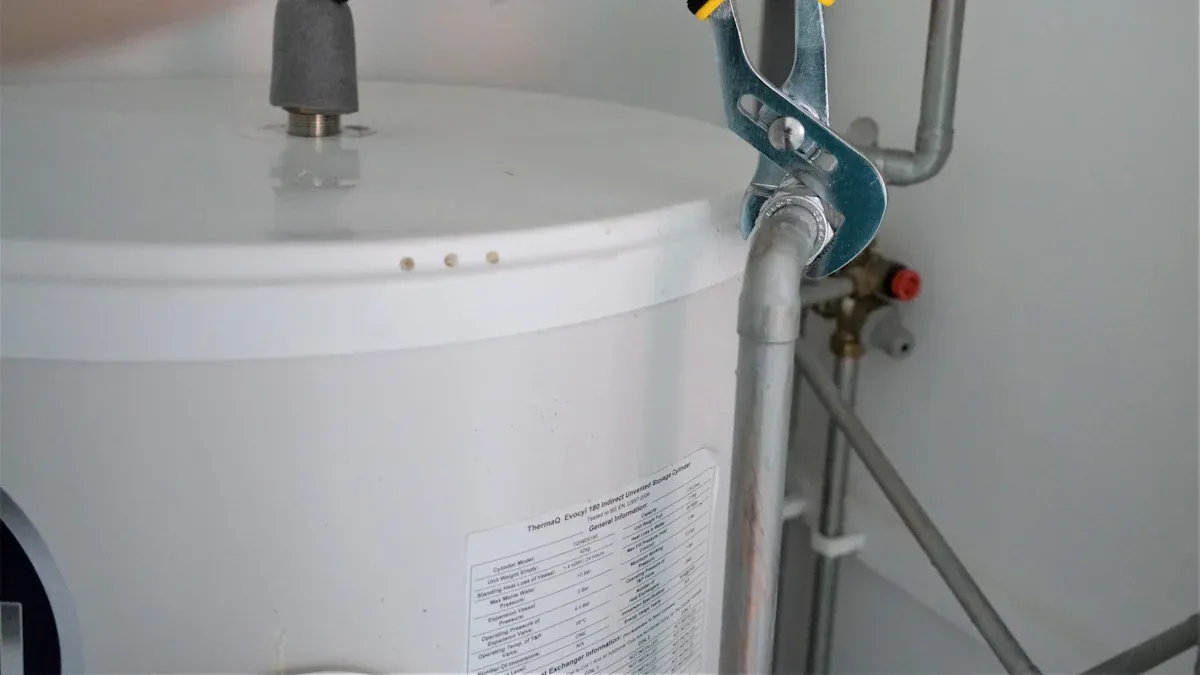
Cómo elegir el reemplazo correcto del elemento calefactor del jacuzzi
Coincidencia de clasificaciones de potencia y tamaños
Usted debe seleccione un elemento calefactor de reemplazo que coincida con los requisitos de potencia y las dimensiones físicas de su jacuzzi. Siempre verifique la clasificación en kilovatios de su conjunto calefactor actual. Una clasificación de kilovatios más alta calienta el agua más rápido y puede reducir los costos operativos, pero solo si su sistema eléctrico lo soporta. El nuevo elemento debe ajustarse al alojamiento y las conexiones existentes. Si elige el tamaño o la clasificación incorrectos, corre el riesgo de un calentamiento ineficiente o problemas eléctricos.
Consejo: Los elementos de titanio ofrecen una resistencia superior a la corrosión y durabilidad, especialmente en spas con agua salada o niveles altos de calcio.
Marcas de calentadores de spa compatibles
Debe confirmar la compatibilidad con la marca y modelo de su jacuzzi Antes de comprar un elemento nuevo. Los fabricantes diseñan elementos calefactores para marcas y modelos específicos. Usar una pieza incompatible puede causar problemas de instalación o anular su garantía. Siga siempre las pautas del fabricante y consulte el manual de su spa para obtener piezas de repuesto aprobadas.
- Asegúrese de que el reemplazo coincida con el voltaje y la potencia de su spa.
- Elija un tipo de elemento calefactor (como titanio) para una mayor durabilidad.
- Confirme que el elemento se ajuste a su conjunto calefactor y a la tubería.
- Verifique que la pieza nueva funcione con el sistema de control de su spa.
Guía paso a paso para reemplazar un calefactor de spa
Extracción del elemento calefactor antiguo
Puede Reemplace un elemento calefactor de spa en unas pocas horas si tiene conocimientos eléctricos básicos. Comience apagando la alimentación en el panel de interruptores. Verifique con un multímetro que no quede voltaje. Cierre las válvulas de agua y drene el spa por completo. Desconecte las líneas eléctricas del conjunto calefactor. Retire los paneles de acceso necesarios para llegar al calefactor.
Siga estos pasos para retirar el elemento viejo:
- Desatornille las tuercas de los terminales y desconecte los cables del calefactor.
- Afloje y retire las tuercas o pernos de montaje que sujetan el elemento en su lugar.
- Deslice con cuidado el elemento calefactor viejo, evitando dañar la carcasa.
- Inspeccione el área en busca de corrosión o residuos antes de instalar un elemento nuevo.
Nota: Si observa corrosión o desgaste significativos, considere reemplazar todo el conjunto calefactor para una mayor fiabilidad.
Instalación del nuevo elemento calefactor del spa
Comience la instalación de un elemento nuevo limpiando el área de montaje. Inserte el nuevo elemento calefactor en la carcasa, asegurándose de que se alinee con los orificios de montaje. Fíjelo con las tuercas o pernos proporcionados. Vuelva a conectar los cables a los terminales correctos y apriételos firmemente. Reemplace los paneles de acceso que retiró anteriormente.
Llene el spa con agua y verifique que no haya fugas alrededor del calefactor. Restaure la alimentación en el panel de interruptores y supervise el sistema mientras se calienta. Esté atento a códigos de error o ruidos inusuales. Si todo funciona correctamente, su spa debería alcanzar la temperatura deseada en unas pocas horas.
| Artículo | Coste (USD) | Notas sobre el tiempo y la frecuencia de reemplazo |
|---|---|---|
| Elemento calefactor (hágalo usted mismo) | $30 – $50 | El reemplazo puede ser realizado por aficionados con conocimientos; el tiempo requerido es de unas pocas horas |
| Calefactor completo del spa (tubo + elemento) | Alrededor de $120 | Recomendado para mayor fiabilidad, especialmente si hay corrosión presente |
| Instalación Profesional | $350 – $500 | Incluye diagnóstico e instalación; el tiempo suele ser de unas pocas horas |
| Frecuencia de Reemplazo | Cada 3 a 5 años | Los elementos duran de 5 a 10 años, pero puede ser necesario reemplazarlos antes |
Reemplazar el elemento calefactor usted mismo ahorra dinero, pero la instalación profesional garantiza seguridad y funcionamiento adecuado. Siga siempre los procedimientos de seguridad y las instrucciones del fabricante al reemplazar un calefactor de spa.
Siguiendo las pautas del fabricante para el cuidado del calefactor del spa
Por qué las instrucciones del fabricante son importantes para el elemento calefactor del spa
Protegiendo su garantía
Protege la garantía de su spa cuando sigue las instrucciones del fabricante. La mayoría de las marcas de spa requieren el uso de productos de limpieza y rutinas de mantenimiento aprobados. Si omite los pasos recomendados o usa productos químicos incorrectos, corre el riesgo de anular su garantía. Los fabricantes suelen especificar cómo limpiar, qué herramientas usar y qué productos son seguros para su sistema. Al seguir estas pautas, se asegura de que cualquier reparación o reemplazo permanezca cubierto.
Si alguna vez necesita presentar un reclamo de garantía, los registros de servicio que muestren que siguió el manual pueden facilitar el proceso.
Obteniendo los mejores resultados de su calefactor de spa
Las instrucciones del fabricante le ayudan a aprovechar al máximo su calefactor de spa. Encontrará cronogramas detallados para limpieza, análisis de agua e inspecciones en el manual. Estos pasos mantienen su sistema funcionando de manera eficiente y segura. Por ejemplo, el monitoreo diario de los niveles de agua previene el sobrecalentamiento de la bomba y le ayuda a detectar fugas temprano. La eliminación regular de acumulaciones con productos aprobados mantiene la eficiencia de calefacción y prolonga la vida útil de su equipo. Cuando usa las dosis recomendadas de desinfectante, evita la corrosión y protege todos los componentes.
Aquí hay algunas mejores prácticas que recomiendan los fabricantes:
- Retire cenizas o residuos de los calefactores con herramientas y limpiadores adecuados.
- Monitoree los niveles de agua todos los días para evitar daños en la bomba y el calefactor.
- Inspeccione la temperatura del agua con frecuencia para mantener el calefactor dentro de límites seguros.
- Use solo la cantidad sugerida de desinfectante para prevenir la corrosión.
- Siga las inspecciones y cronogramas de limpieza rutinarios para detectar problemas a tiempo.
Seguir estos pasos le ayuda a evitar reparaciones costosas y garantiza que los calefactores de su spa funcionen al máximo rendimiento.
Dónde encontrar el manual de su calefactor de spa
Recursos en línea para información sobre calefactores de spa
Puede acceder fácilmente a los manuales oficiales de calefactores de spa en línea. Marcas importantes como Hot Spring® Spas y Jacuzzi® ofrecen recursos completos en sus sitios web. Hot Spring® Spas organiza los manuales por colección, como Highlife®, Limelight® y Hot Spot®. También encontrará guías para sistemas de cuidado del agua y monitoreo inteligente. Estos sitios sirven como fuentes confiables para obtener información precisa y consejos de solución de problemas.
- Hot Spring® Spas ofrece manuales y guías descargables para todos sus modelos.
- Puede encontrar recursos adicionales para el cuidado del agua y actualizaciones del sistema.
- Los manuales están agrupados por colección para una navegación fácil.
Jacuzzi® también mantiene una página de recursos con manuales para diferentes tamaños y colecciones de spa. Puede acceder a guías de instalación, instrucciones de cuidado del agua e información sobre accesorios. Estos sitios oficiales garantizan que siempre tenga la documentación más reciente para su modelo específico.
- Jacuzzi® proporciona guías de usuario, manuales de instalación y recursos para el cuidado del agua.
- Los manuales cubren todas las colecciones y accesorios para una referencia fácil.
Contactando al soporte al cliente
Si no puede encontrar el manual en línea, debe contactar al soporte al cliente. La mayoría de los fabricantes ofrecen asistencia por teléfono, correo electrónico o chat en vivo. Los distribuidores locales también pueden ayudarle a localizar la documentación correcta o responder preguntas técnicas. Los equipos de soporte al cliente le guían a través de la solución de problemas, el mantenimiento y los reclamos de garantía. Tenga siempre a mano el número de modelo de su equipo para un servicio más rápido.
El acceso rápido a manuales oficiales y soporte garantiza que mantenga su bañera de hidromasaje correctamente y resuelva problemas sin demora.
Puede mantener su elemento calefactor de bañera de hidromasaje Funcionar eficientemente con algunos hábitos sencillos:
- Limpie y reemplace los filtros cada 6 a 12 meses para mantener el flujo de agua y reducir la tensión en el calentador.
- Equilibre la química del agua para prevenir la corrosión y la acumulación de sarro.
- Inspeccione regularmente los componentes de plomería y del calentador para detectar fugas o daños.
- Utilice una cubierta aislante y mantenga la temperatura adecuada del agua para ahorrar energía.
- Programe inspecciones profesionales para detectar problemas a tiempo.
El mantenimiento regular extiende la vida útil de su calentador a 5–10 años y ayuda a evitar reparaciones costosas. Siga siempre el manual de su calentador de spa para obtener los mejores resultados y un rendimiento duradero.
PREGUNTAS FRECUENTES
¿Con qué frecuencia debe limpiar el filtro de su bañera de hidromasaje?
Debe enjuagar el filtro de la bañera de hidromasaje cada 1–2 semanas. Realice una limpieza química profunda una vez al mes. Reemplace el filtro cada 6–12 meses para un mejor rendimiento.
¿Qué hace que un calentador de bañera de hidromasaje deje de funcionar?
Las causas comunes incluyen filtros sucios, desequilibrio químico del agua, acumulación de sarro, corrosión o fallas eléctricas. La inspección y el mantenimiento regulares ayudan a prevenir la mayoría de las fallas del calentador.
¿Puede reemplazar usted mismo el elemento calefactor de una bañera de hidromasaje?
Puede reemplazar el elemento calefactor si tiene conocimientos básicos de electricidad y sigue los procedimientos de seguridad. Desconecte siempre la alimentación eléctrica antes de comenzar. Si no se siente seguro, contacte a un profesional.
¿Por qué su bañera de hidromasaje dispara el interruptor GFCI?
Un GFCI disparado suele indicar un cortocircuito, intrusión de agua o corrosión en el elemento calefactor. Inspeccione el calentador y el cableado. Reemplace las piezas dañadas para restaurar el funcionamiento seguro.
¿Cómo saber si el elemento calefactor de su bañera de hidromasaje está dañado?
Las señales incluyen:
- Sin calor o temperatura reducida
- Interruptores disparados
- Códigos de error
- Corrosión visible o sarro en el elemento
Pruebe el elemento con un multímetro para confirmar.
¿Qué niveles de química del agua protegen el calentador de su bañera de hidromasaje?
Mantenga el pH entre 7.2 y 7.8. Mantenga la alcalinidad total entre 80 y 120 ppm. El agua equilibrada previene el sarro y la corrosión, extendiendo la vida útil del calentador.
¿Es seguro usar la bañera de hidromasaje si el calentador no funciona?
No debe usar la bañera de hidromasaje si el calentador está funcionando mal. El agua fría podría no sanitizarse correctamente. Las fallas eléctricas pueden representar riesgos de seguridad. Repare siempre los problemas del calentador antes de usarlo.

