- How a dryer heating element works (and what bad actually means)
- Common Samsung dryer no heat symptoms and root-cause map
- Safety and preparation checklist (tools, documentation, parts matching)
- Step-by-step replacement workflow (generic Samsung-style approach)
- Post-repair validation: airflow, temperature, and repeat-failure prevention
- Cost and quality factors: why some elements last longer than others
- Related heater technologies (tubes, plates, films, die-cast modules) for OEM context
- FAQ
- Cited sources and outbound links
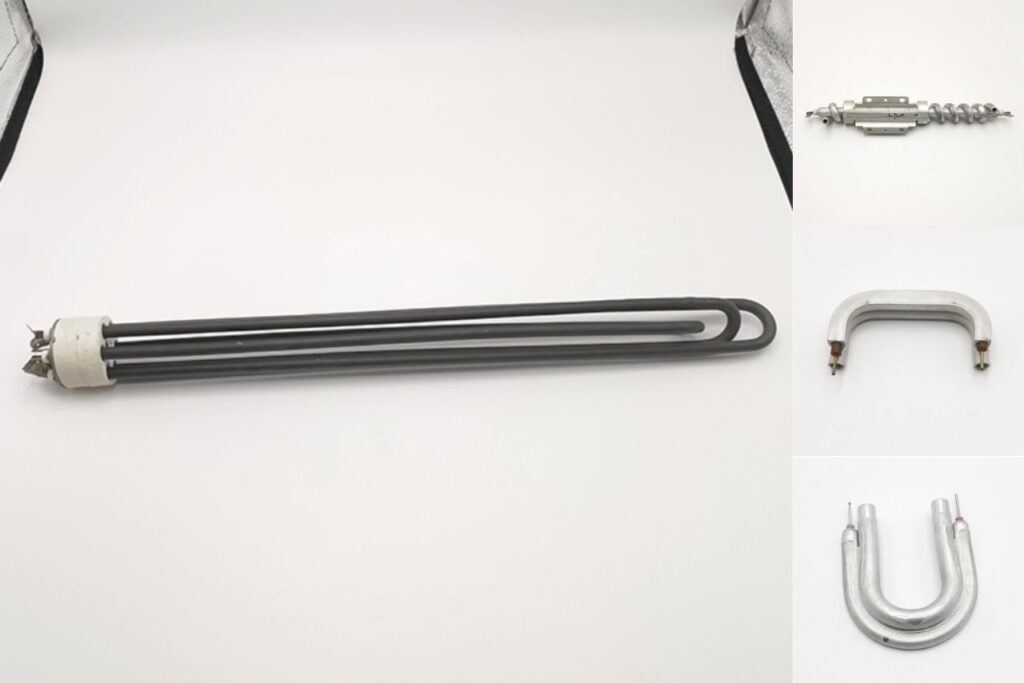
In technical terms, a Heizelement is the resistive part of an electrical heater where electrical energy is converted into heat (resistive/Joule heating). TUTCO emphasizes that a Heizelement is more than heating alloy alone : it is an assemblage that includes electrically conductive material and a framework of insulating material, plus connectors/terminations. That assembly view is useful for dryer repairs because failures can occur not only in the coil itself, but also at connections, insulators, and adjacent thermal protection components.
Source: TUTCO Heizelemente definition, materials, and integration frameworks: https://tutco.com/conductive/heating-elements
- Unterbrechung (coil breaks): dryer tumbles but produces no heat.
- Short to frame (insulation/mechanical damage): can trip protection or cause intermittent heat.
- Overheating stress from poor airflow: can deform, oxidize faster, or trigger thermal cutoffs repeatedly.
- Termination failure: loose or overheated terminals create resistance heating at the connector rather than in the element.
LSI keywords used naturally: no heat dryer, Thermosicherung, high-limit thermostat, airflow restriction, lint blockage, heating element continuity.
Samsung dryer designs vary by model (electric vs gas, front-load vs top-load, heater duct layout), but the diagnostic logic remains consistent: confirm whether the heater circuit is being interrupted by airflow/overheat protection or whether the element itself is electrically failed.
- Dryer heats initially, then stops and cycles cold.
- Drying time increases over weeks/months.
- Exterior vent weak, flapper barely opens.
LSI: vent cleaning, lint filter, duct restriction, overheating.
- Consistent no heat across cycles, with normal tumbling.
- Electrical checks show an open heater coil (no continuity).
- Visible break or deformation in the heating coil (if accessible).
- Disconnect power before opening panels; verify the unit is de-energized using appropriate methods.
- Do not work with wet floors or damp hands; keep the work area dry and well-lit.
- If there is evidence of burnt wiring, melted terminals, or repeated breaker trips, consider qualified service involvement.
- Driver set / socket set (panel screws vary by region and model)
- Needle-nose pliers (connectors)
- Multimeter (continuity/resistance checks)
- Vacuum and brush (lint removal)
- Match the heater assembly to the exact Samsung model number.
- If replacing a heater, assess nearby parts that fail due to the same root cause (thermal fuse, high-limit thermostat, wiring terminals).
- Correct the upstream cause especially restricted airflow to avoid repeat failures.
For broader component sourcing and manufacturing context, see: Heizelement, Hersteller von Heizelementen, Heizelement-Fabrik, Druckguss-Heizlösungen.
The exact panel order differs by Samsung model. The workflow below is written as a controlled process: document, access, test, replace, and verify. For model-specific disassembly, follow the manufacturer s service documentation for that exact unit.
- Confirm the dryer tumbles normally and that no heat is consistent.
- Check lint filter condition and verify the exhaust airflow at the exterior vent.
- If airflow is weak, prioritize vent cleaning before installing a new element (overheating can destroy replacements).
- Disconnect power.
- Remove the appropriate access panel(s) to reach the heater housing/duct.
- Photograph wiring before disconnecting any terminals.
- Inspect wire terminals for discoloration, looseness, or melted insulation.
- Remove lint buildup from the heater duct and blower area if accessible.
- Any signs of overheating should be treated as a root cause, not only a symptom.
A professional approach verifies the failure before parts are installed. If the element is open circuit, replacement is justified. If the element reads normal, the fault may be upstream (control, cutoffs, wiring, sensor logic).
TUTCO s material discussion explains why design and terminations matter: the element is a system of conductive and insulating components, and failures may occur at multiple points in that system. Source: https://tutco.com/conductive/heating-elements
- Remove the heater housing fasteners and withdraw the element assembly carefully.
- Install the correct replacement assembly for the model.
- Reconnect wiring exactly as documented; ensure tight, secure terminals.
- Reinstall panels and confirm no tools remain inside the cabinet.
- Restore power.
- Run a timed heat cycle and verify temperature rise and normal cycling behavior.
- Confirm strong exhaust airflow at the exterior vent.
- Confirm the exterior vent flap opens strongly during operation.
- Ensure the lint filter is clean and correctly seated.
- Inspect duct routing for kinks, crushed sections, or excessive length.
- Heat should cycle normally (not a brief heat then stop pattern).
- Abnormal odors or repeated shutdowns indicate overheating or electrical issues.
- Re-check terminal tightness if any arcing/heat damage is suspected.
Total cost is rarely minimized by choosing the cheapest part alone. TUTCO s discussion of the cost of quality highlights that field failures, rework time, and late deliveries can exceed the original purchase price. In dryers, a cheap replacement can become expensive if it fails early due to inferior materials, poor terminations, or because the underlying airflow restriction was not corrected.
Hudson Reed lists a plug-in 1000W electric heating element at $209.95 and discloses features such as IP67 ingress protection and UL approval. This is a different application (radiator/towel warmer), but it demonstrates how approvals and environmental protection features influence component pricing.
Quelle: https://usa.hudsonreed.com/1000-plug-in-watt-electric-heating-element-76309
While dryers most often rely on resistive heater assemblies, many appliances use different heater form factors. Jinzhong s category structure provides a clear view of heater families used across appliances useful for engineers, sourcing teams, and readers comparing heater solutions beyond dryers.
Jinzhong s home page describes 30+ years of experience, full-chain capability (design molds precision manufacturing), and multiple international certifications (ISO9001/14001/45001, VDE, UL, RoHS). For OEM buyers, those attributes can reduce the hidden costs described by TUTCO returns, rework, and field failures.
Quelle: https://jinzho.com/
How can it be confirmed that the heating element is the reason a Samsung dryer has no heat?
Confirmation requires separating symptom from cause: verify strong airflow and check heater circuit continuity and protective devices. A dryer can have no heat due to an open element, an open thermal fuse, or control-side issues; a weak vent can also cause overheating and cycling failures.
Is it acceptable to replace only the heating element without addressing airflow?
If airflow restriction caused overheating, replacing the element alone can lead to repeat failure. Post-repair airflow validation (lint/duct/vent) should be treated as a required step, not an optional optimization.
Why do replacement heating elements fail early in some appliances?
TUTCO notes that alloy properties and Spurenelementen can differ between suppliers and can materially affect performance and lifespan; the heater s environment also matters. In dryers, the environment is often the airflow path and temperature cycling conditions.
What information should be captured before ordering a replacement part?
Record the full model number, take photos of wiring and connectors, and document any error codes. This reduces misordered parts and wiring mistakes.
Is there a reliable way to compare heater component specifications across products?
Look for clear disclosure of ratings and safety marks. For example, Hudson Reed s 1000W plug-in element listing discloses IP67 and UL approval. Even when applications differ, transparent specification disclosure is a useful benchmark when evaluating parts.
- TUTCO heating element definition, materials, frameworks, and cost-of-quality discussion: https://tutco.com/conductive/heating-elements
- Hudson Reed documented price/spec disclosure example ($209.95, 1000W, IP67, UL Approved): https://usa.hudsonreed.com/1000-plug-in-watt-electric-heating-element-76309
- Whirlpool cited here for the general safety principle that energizing a heater before it is correctly in its working medium can cause immediate burnout (dry fire warning in their water-heater Element procedure): https://www.whirlpoolwaterheaters.com/support/help/element-was-out-of-range/24
- Jinzhong internal anchors and category navigation for heater families and manufacturer capability: https://jinzho.com/ | https://jinzho.com/product-category/heating-element/ | https://jinzho.com/about/ | https://jinzho.com/product-category/die-casting-heating-solutions/