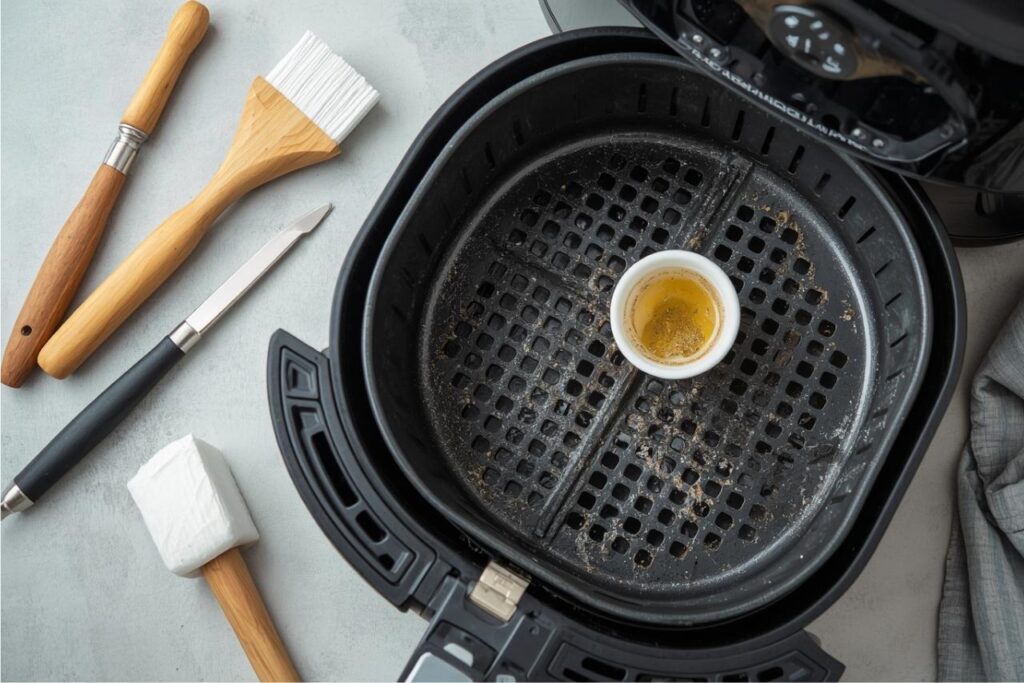
Cleaning an air fryer’s heating element is mostly about protecting the element’s structure while removing grease and carbon. A heating element isn’t “just a wire”—it’s an engineered component that includes electrically conductive material plus insulating/support parts and connections. That’s why harsh scraping, soaking, or flooding the cavity can turn a simple cleanup into a failure.
1) Before you start: safety and cooldown
Air fryers run on mains voltage. Cleaning is “hands-on” work near electrical connections and insulation materials—do not rely on the unit being “off” on the control panel.
- Unplug the air fryer from the outlet.
- Let it cool fully (element, basket, and ceiling area) so grease is less smeary and you avoid burns.
- Remove basket/tray and wash them separately (mild dish soap + non-abrasive sponge).
- Move the appliance to a well-lit counter and put down a towel to catch drips.
2) Tools and cleaners that are safe (and what to avoid)
| Use (safe options) | Avoid | Why |
|---|---|---|
| Mild dish soap + warm water | Oven cleaner / caustic sprays unless the manual explicitly allows it | Strong chemicals can attack coatings, insulation, and residues can burn/smoke later. |
| Soft microfiber cloth | Steel wool / abrasive pads | Abrasives can scratch protective coatings and create hot spots or corrosion points. |
| Soft toothbrush / small nylon brush | Metal scraper, knife, screwdriver | Prying can deform element geometry or damage insulating supports. |
| Damp (not dripping) sponge | Spraying water directly into the top cavity | Flooding can push moisture into electrical areas and insulation. |
Heating elements are assemblies: conductive material does the resistive heating, but it’s supported/insulated by other materials and connected by terminals/leads. Damaging the supports or letting water sit in the wrong place can cause performance and safety issues later.
3) Step-by-step: clean the heating element without damaging it
Step 1 — Dry removal first
- With the unit unplugged and cool, turn it so you can see the top cavity clearly.
- Use a dry microfiber cloth (or a soft brush) to remove loose crumbs and dry debris.
Step 2 — Degrease with controlled moisture
- Make a bowl of warm water with a small amount of dish soap.
- Dip a cloth/sponge, then wring it out until it’s only damp.
- Wipe the element and surrounding reflector/ceiling area gently. Work in small sections.
- For grooves or tight areas, use a soft toothbrush lightly—no prying.
Step 3 — Rinse wipe (no flooding)
- Use a second cloth dampened with clean water (well wrung out) to remove soap film.
- Follow with a dry cloth to remove moisture immediately.
Step 4 — Dry completely before powering
Do not plug the air fryer back in until the cavity is fully dry. If you’re unsure, leave it open to air-dry longer.
4) Tackling baked-on carbon and persistent odors
If you see dark, baked-on spots, treat them like carbonized grease, not “dirt.” The goal is to soften and lift, not grind.
- Warm damp compress: Hold a warm, damp (wrung-out) cloth against the spot for 30–60 seconds, then wipe.
- Repeat cycles: Several gentle passes are safer than one aggressive scrape.
- Check nearby surfaces: Odors often come from grease on the ceiling/air path, not just the element itself.
Different heating solutions (tubes, plates, films, or die-cast modules) exist because applications need different heat transfer and durability. Air fryers commonly expose the element to airflow, so residue on the element can smoke quickly and affect taste—cleanliness directly impacts performance.
5) When to stop cleaning and troubleshoot instead
Cleaning fixes smoke caused by residue. It does not fix electrical faults or damaged elements. Stop and diagnose if you see:
- Element looks warped, cracked, blistered, or has obvious burn-through.
- Unit trips a breaker / GFCI after cleaning and drying (possible moisture ingress or fault).
- Persistent burning smell even after thorough cleaning (could be wiring, insulation, or internal contamination).
FAQ
Can I use oven cleaner on an air fryer heating element?
It’s risky unless your specific model’s manual explicitly permits it. Caustic cleaners can damage coatings and leave residues that smoke or corrode parts. Mild dish soap with controlled moisture is the safer default.
Should I remove the heating element to clean it?
Typically no for consumer air fryers—disassembly increases the chance of damaging terminals, insulation, or supports. Clean in place with minimal moisture unless a qualified technician or the manufacturer’s service instructions say otherwise.
What’s the best brush?
A soft toothbrush or nylon detailing brush works well. Avoid metal bristles and abrasive pads that can scratch or deform the element.
Practical note: If your business involves sourcing or designing heating components beyond simple cleaning/maintenance, explore product-level options like Heating Element categories (tubes, plates, films) and integrated modules such as Die Casting Heating Solutions.