A menudo nota problemas con su calentador de agua cuando experimenta agua tibia o duchas calientes que terminan demasiado pronto. Otros signos, como silbidos extraños, ruidos de estallido o un aumento repentino en su factura de energía, también pueden indicar un elemento del calentador de agua que funciona mal. Cuando surjan estos problemas, debe probar el elemento calefactor de manera segura y precisa. Usando un multímetro, puede verificar la resistencia y determinar si debe reemplazar el elemento. Calefacción eléctrica Jinzhong y otros fabricantes de elementos calefactores ofrecen confiables elementos calefactores de electrodomésticos para su calentador de agua.
Los síntomas comunes de un elemento calefactor defectuoso incluyen:
- agua tibia
- Duchas calientes que se cortan antes de tiempo
- Silbidos o ruidos de estallido extraños
- Aumento inesperado en las facturas de energía
- Agua turbia o descolorida
- El disyuntor se dispara con frecuencia
Herramientas y seguridad para probar un elemento del calentador de agua

Antes de comenzar a probar, necesita las herramientas adecuadas y una comprensión clara de los procedimientos de seguridad. Trabajar con electricidad y agua puede ser peligroso. Debe tomar todas las precauciones para protegerse a sí mismo y a su hogar.
Herramientas necesarias para probar un elemento del calentador de agua
Multímetro
A multímetro digital es la herramienta más eficaz para probar un elemento calefactor. La usa para medir voltaje y resistencia. Configure el multímetro en Rx1k (resistencia por 1,000 ohmios) y conecte las puntas a los terminales de tornillo. Una lectura entre 10 y 16 ohmios generalmente significa que el elemento funciona correctamente.
Destornillador
Necesita un destornillador para retirar el panel de acceso y el aislamiento que cubre los terminales del elemento. Elija un destornillador que se ajuste a los tornillos de su calentador de agua.
Guantes y Gafas de Seguridad
Use siempre guantes aislados y gafas de seguridad. Estos lo protegen de descargas eléctricas y del contacto accidental con superficies calientes o afiladas.
Flash
Una linterna le ayuda a ver dentro del panel de acceso, especialmente en cuartos de servicio o sótanos con poca luz.
Consejo: Algunos profesionales también usan un comprobador de continuidad o un comprobador de voltaje sin contacto. Estas herramientas ayudan a confirmar si el elemento funciona y si los cables están energizados.
| Herramienta | Función |
|---|---|
| Multímetro Digital | Mide voltaje y resistencia |
| Probador de continuidad | Verifica si el elemento está funcionando |
| Comprobador de tensión sin contacto | Garantiza la seguridad al detectar cables energizados |
Pasos de seguridad antes de probar los elementos calefactores
Apagar la energía en el disyuntor
Siempre debe apagar la energía en el disyuntor antes de trabajar en su calentador de agua. Este paso evita descargas eléctricas y cumple con los requisitos del código eléctrico nacional. Localice el disyuntor correcto y apáguelo.
Confirmar que la energía está apagada
Los disyuntores pueden fallar o estar mal etiquetados. Use un comprobador de voltaje sin contacto para confirmar que no llegue energía a los terminales del elemento. Este paso adicional garantiza su seguridad antes de tocar cualquier cable.
Drenar el tanque si es necesario
Si planea retirar el elemento calefactor, drene el tanque primero. Esto evita fugas y reduce el riesgo de escaldaduras. Drenar también ayuda a evitar inundaciones y crecimiento de moho por fugas no detectadas.
Advertencia: No seguir los pasos de seguridad puede provocar incidentes graves:
- Riesgo de escaldaduras, fugas o explosiones si el calentador de agua funciona mal.
- Peligros de incendio por componentes eléctricos defectuosos.
- Inundaciones debido a fugas o fallas del tanque.
- Envenenamiento por monóxido de carbono por ventilación inadecuada o fugas de gas.
- Fallo de la válvula de alivio de presión que provoca explosiones.
- Crecimiento de moho por fugas no detectadas.
También debe verificar que su instalación cumpla con los estándares del código eléctrico nacional. Estos incluyen espacio dedicado en el panel de servicio eléctrico, espacios libres adecuados, accesibilidad al apagado de emergencia y cumplimiento con los códigos de construcción locales.
Cómo localizar los elementos del calentador de agua
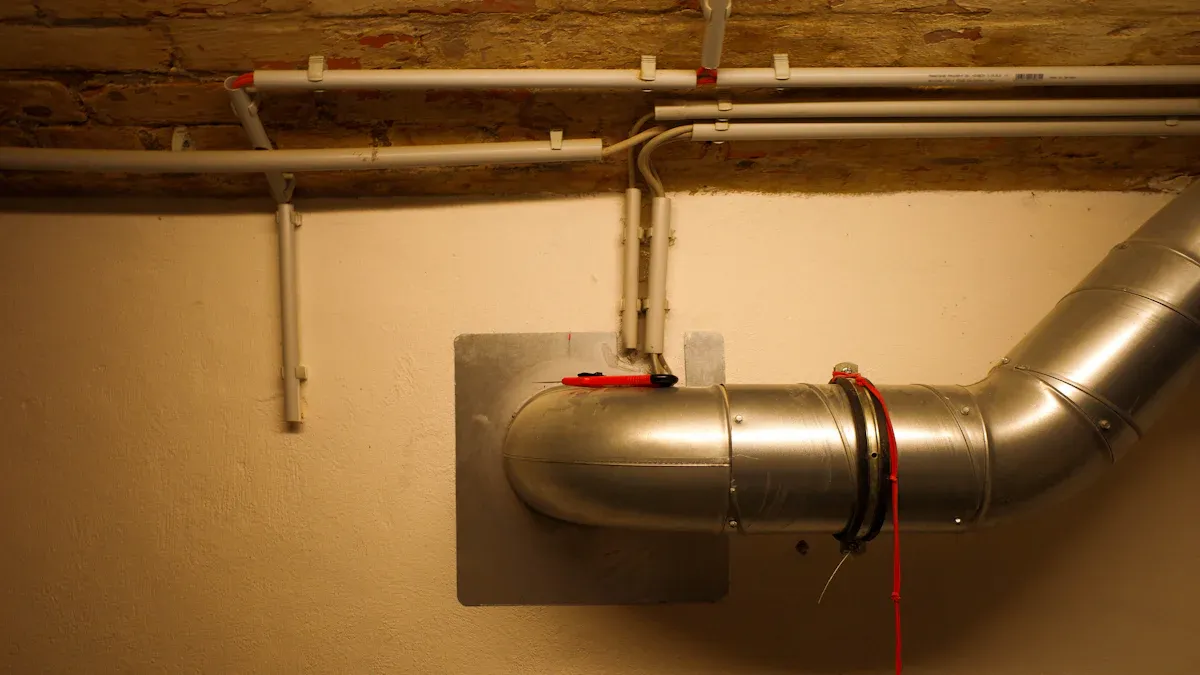
Localizar el elemento calefactor calefactores en su calentador de agua es un paso crucial antes de comenzar cualquier prueba o reparación. Debe identificar su tipo de calentador de agua y acceder al elemento de manera segura. Este proceso le ayuda a evitar errores y garantiza resultados precisos.
Identificar el tipo de calentador de agua
Primero debe determinar si tiene un calentador de agua eléctrico o un modelo a gas. El tipo calentador de agua afecta la forma en que accede y prueba los elementos calefactores.
Calentador de agua eléctrico vs. a gas
La mayoría de los calentadores de agua residenciales en los Estados Unidos se dividen en dos categorías. En 2021, el 52% de los calentadores de agua vendidos eran modelos a gas, mientras que el 48% eran modelos eléctricos. Los calentadores de agua eléctricos usan elementos calefactores dentro del tanque para calentar el agua. Los calentadores de agua a gas dependen de un quemador ubicado debajo del tanque. Si ve un cable eléctrico grueso que va hacia la parte superior o lateral de su unidad, probablemente tenga un calentador de agua eléctrico. Los modelos a gas cuentan con un tubo de ventilación y una línea de suministro de gas.
Consejo: Los calentadores de agua eléctricos generalmente tienen dos elementos calefactores: uno cerca de la parte superior y otro cerca de la parte inferior. Los calentadores de agua a gas no usan elementos calefactores internos, por lo que no puede probarlos de la misma manera.
Acceso al elemento calefactor
Una vez que sepa el tipo de calentador de agua, necesita acceder al elemento calefactor para inspeccionarlo y probarlo. Este paso requiere atención al detalle y las herramientas adecuadas.
Encontrar y retirar el panel de acceso
Encontrará el panel de acceso en el lateral de su calentador de agua eléctrico. El panel cubre los terminales del elemento y el aislamiento. Use un destornillador para retirar los tornillos que aseguran el panel. Coloque el panel y los tornillos en un lugar seguro. Levante el aislamiento para exponer los terminales del elemento. Una linterna puede ayudarle a ver dentro del compartimento, especialmente en áreas con poca luz.
Localizar los terminales del elemento
Después de retirar el panel de acceso y el aislamiento, verá los terminales del elemento. Estos terminales parecen dos tornillos con cables conectados. Debe desconectar los cables antes de probar. Siempre verifique si hay signos visibles de daño, como corrosión o marcas de quemaduras. Omitir una inspección visual puede hacer que pase por alto problemas evidentes.
Los propietarios a menudo enfrentan varios desafíos durante este proceso:
- No apagar la energía antes de probar puede provocar daños graves.
- Usar herramientas incorrectas, como comprobadores de continuidad básicos en lugar de un multímetro, puede dar resultados poco fiables.
- Omitir una inspección visual puede pasar por alto daños visibles en el elemento.
- Probar solo un elemento puede pasar por alto el problema principal si ambos elementos están presentes.
- Leer mal los valores del multímetro puede llevar a conclusiones incorrectas sobre el estado del elemento.
- Olvidar verificar el termostato puede resultar en un reemplazo innecesario del elemento.
Nota: Siempre debe seguir los pasos de seguridad y usar las herramientas correctas. Una preparación cuidadosa le ayuda a evitar errores y garantiza una reparación exitosa del calentador de agua.
Guía paso a paso para probar un elemento calentador de agua
Necesita un proceso confiable cuando testing a water heater element. Esta guía paso a paso para realizar pruebas le ayuda a evitar errores comunes al probar y garantiza resultados precisos. Puede seguir estos pasos para probar el elementos y confirmar si su calentador de agua está funcionando de manera eficiente.
Preparación para Probar los Elementos
Los fabricantes recomiendan varios pasos preparatorios antes de comenzar a probar un elemento de calentador de agua. Siempre debe seguir estas pautas para protegerse a sí mismo y a su equipo.
Desconectar los cables del elemento
Reunir las herramientas esenciales:
- Multímetro
- destornillador de punta plana
- destornillador Phillips
- guantes aislantes
- Protección ocular
- Flash
Apague el calentador de agua desconectando el interruptor automático del circuito. Debe asegurarse de que no fluya electricidad a la unidad.
Retire el panel de acceso de metal y el aislamiento para exponer los elementos calefactores.
Identificar el elemento del calentador de agua. Suele aparecer como una pieza redonda o hexagonal sujeta por dos tornillos.
Afloje un tornillo y desconecte el cable del elemento. Este paso aísla el elemento para una prueba precisa.
Siempre debe verificar dos veces que la energía esté apagada antes de tocar cualquier cable. Use un probador de voltaje para confirmar.
Configurar el multímetro en el ajuste de resistencia correcto
Configure su multímetro en el ajuste de ohmios más bajo, a menudo etiquetado como RX1K. Esta configuración le permite medir con precisión la resistencia del elemento calefactor. Toque las puntas de prueba juntas para verificar que el multímetro funcione. La aguja o la pantalla digital deberían mostrar actividad.
Cómo probar elementos calefactores con un multímetro
Ahora puede probar un elemento calefactor usando su multímetro. Este proceso le ayuda a determinar si el elemento funciona o necesita reemplazo.
Colocar las puntas de prueba en los terminales del elemento
- Retire los cables del elemento aflojando los tornillos.
- Coloque una punta de prueba en un terminal de tornillo y la otra punta en el terminal opuesto.
- Mantenga las puntas de prueba firmes para obtener una lectura clara.
Lectura del valor de resistencia
Lea la pantalla del multímetro. Un buen elemento de calentador de agua debe mostrar una resistencia entre 10 y 30 ohmios. El valor exacto depende de la potencia de cada elemento y del voltaje nominal. Puede usar la siguiente tabla para comparar sus resultados:
| Potencia (W) | Tensión (V) | Resistencia Típica (Ohmios) |
|---|---|---|
| 750 | 120 | ~19 |
| 1000 | 120 | ~14 |
| 1500 | 120 | ~10 |
| 2000 | 120 | ~7 |
| 2500 | 120 | ~6 |
| 3000 | 120 | ~5 |
| 1500 | 240 | ~38 |
| 2000 | 240 | ~28 |
| 3500 | 240 | ~16 |
| 4500 | 240 | ~13 |
| 5500 | 240 | ~10.5 |
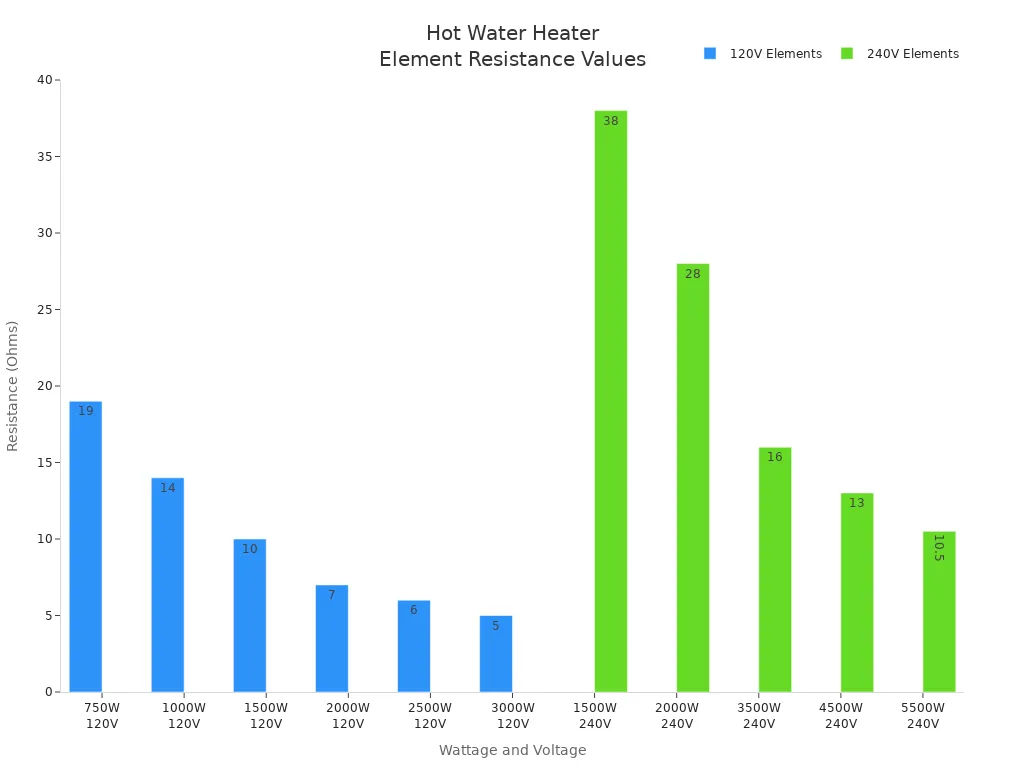
Si su lectura cae dentro del rango de resistencia típico, es probable que su elemento calefactor esté funcionando. Si ve resistencia cero o infinita, necesita reemplazar el elemento.
Consejo: Siempre compare su lectura con la potencia de cada elemento. Puede encontrar esta información en la etiqueta del calentador de agua o en el propio elemento.
Comprobación de Cortocircuitos en el Calentador de Agua
Los cortocircuitos pueden hacer que su calentador de agua caliente falle. Necesita probar la continuidad a tierra para descartar este problema.
Prueba entre el elemento y el tanque
- Asegúrese de que la energía esté apagada antes de comenzar la prueba. Use un probador de voltaje para verificar dos veces.
- Retire los cables del elemento.
- Sujete un terminal a una de las orejetas del elemento.
- Toque la otra punta de prueba a la brida metálica del elemento o al propio tanque.
- Repita la prueba para ambos terminales en ambos elementos calefactores.
Si el multímetro o el probador de continuidad muestra una luz encendida o cualquier lectura, el elemento está haciendo tierra. Necesita reemplazarlo.
Interpretación de la continuidad a tierra
Una luz apagada o ninguna lectura significa que no hay conexión a tierra. Su elemento no está en cortocircuito con el tanque. Si ve continuidad a tierra, el óxido o la corrosión pueden haber dañado el elemento. La acumulación de sedimentos también puede aislar el elemento calefactor inferior, provocando sobrecalentamiento y fallas. Estos problemas son causas comunes de cortocircuitos en los elementos del calentador de agua..
Nota: Puede evitar errores verificando siempre la continuidad a tierra después de probar la resistencia del elemento calefactor.. Este paso le ayuda a detectar problemas ocultos y previene fallas futuras.
Ahora sabe cómo probar los elementos calefactores e interpretar los resultados. Puede evitar errores comunes al realizar la prueba siguiendo cada paso cuidadosamente. Si encuentra un elemento defectuoso del calentador de agua, debe reemplazarlo de inmediato para restaurar el funcionamiento de su calentador de agua. rendimiento de su calentador de agua.
Cómo Interpretar los Resultados de las Pruebas para Elementos de Calentador de Agua Caliente
Cómo se Ven los Buenos Resultados de las Pruebas
Valores de resistencia típicos para elementos calefactores
Cuando termine de probar un elemento de calentador de agua, debe comparar sus lecturas de resistencia con los valores estándar. La mayoría de los elementos calefactores que funcionan correctamente muestran resistencia entre 10 y 30 ohmios. El valor exacto depende de la potencia de su elemento. Puede usar la siguiente tabla para verificar sus resultados:
| Tipo de elemento | Rango de resistencia (ohmios) |
|---|---|
| Elementos Generales | 10 – 30 |
| Elemento de 3,500 vatios | 15 – 16 |
| Elemento de 4,500 vatios | 12 – 13 |
| Elemento de 5,500 vatios | 10 – 11 |
Una lectura dentro de estos rangos significa que su elemento de calentador de agua eléctrico probablemente esté en buenas condiciones. Siempre debe hacer coincidir su lectura con la potencia indicada en su elemento o en la etiqueta del calentador de agua.
Señales de que el elemento funciona
Puede confirmar un elemento del calentador de agua en funcionamiento observando varias señales:
- El multímetro muestra un valor de resistencia dentro del rango esperado.
- Nota agua caliente constante cuando abre el grifo.
- El calentador de agua no dispara el interruptor automático del circuito.
- No ve agua oxidada o descolorida de su calentador de agua caliente.
Si ve estos resultados, sus elementos calefactores están funcionando según lo previsto.
Señales de un Elemento de Calentador de Agua Defectuoso
Lecturas de resistencia cero o infinita
Un elemento calefactor defectuoso a menudo muestra una lectura de resistencia de cero, uno o infinitos ohmios. Estos resultados indican un elemento quemado o una rotura en la bobina interna. Puede consultar esta tabla para una referencia rápida:
| Lectura de resistencia | Condición |
|---|---|
| 10 a 30 ohmios | El elemento funciona correctamente |
| 0 o 1 ohmios | El elemento está defectuoso |
Si su multímetro muestra resistencia cero o infinita, debe reemplazar el elemento del calentador de agua.
Continuidad a tierra
También debe verificar la continuidad entre el terminal del elemento y el tanque. Si su comprobador muestra continuidad, el elemento tiene un cortocircuito a tierra. Esta situación significa que el elemento ha fallado y podría hacer que el disyuntor se dispare. Debe reemplazar un elemento calefactor defectuoso de inmediato para restaurar la operación segura.
⚠️ Alerta: Nunca ignore un elemento defectuoso o con conexión a tierra. El uso continuo puede dañar su calentador de agua o crear riesgos de seguridad.
Qué hacer si los resultados de la prueba no son claros
Pasos para volver a probar
A veces, los resultados de su prueba pueden parecer confusos o inconsistentes. Debe seguir estos pasos para confirmar sus hallazgos:
- Verifique nuevamente que la energía esté apagada antes de volver a probar.
- Asegúrese de que todos los cables estén desconectados de los terminales del elemento.
- Limpie cualquier corrosión o residuo de los terminales.
- Configure su multímetro en la configuración de resistencia correcta.
- Pruebe tanto el elemento superior como el inferior si su calentador de agua tiene dos.
Si aún obtiene lecturas poco claras, repita el proceso con un multímetro diferente si está disponible.
Cuándo reemplazar el elemento
Debe reemplazar el elemento del calentador de agua si:
- La lectura de resistencia es cero, uno o infinita.
- El elemento muestra continuidad a tierra.
- Continúa experimentando problemas con el agua caliente después de probar y volver a probar.
Un elemento nuevo restaura el rendimiento de su calentador de agua y previene problemas adicionales. Si no está seguro acerca de algún paso, contacte a un profesional para obtener asistencia.
Solución de problemas si la prueba de un elemento del calentador de agua no muestra problemas
Si termina de probar un elemento del calentador de agua y los resultados no muestran problemas, aún podría experimentar problemas con el agua caliente. Debe continuar con la solución de problemas para diagnosticar el problema y restaurar su suministro de agua caliente. Varios otros componentes y condiciones pueden causar que su calentador de agua funcione mal, incluso cuando el elemento calefactor funciona como se espera.
Comprobación del termostato del calentador de agua
Un termostato defectuoso a menudo provoca temperaturas de agua inconsistentes o una falta total de agua caliente. Debe verificar el termostato del calentador de agua como parte de su proceso de solución de problemas del calentador de agua.
Cómo probar el termostato
Siga estos pasos para probar el termostato de manera segura y precisa:
- Apague la energía de su calentador de agua en el disyuntor.
- Retire el panel de acceso y aparte cuidadosamente el aislamiento para exponer el termostato.
- Desconecte los cables de alimentación de los terminales del termostato.
- Configure su multímetro digital en la configuración de continuidad.
- Toque las puntas de prueba del multímetro a los terminales del termostato.
- Observe la pantalla del medidor. Una lectura de cero significa que el termostato funciona correctamente. Si no ve voltaje o una lectura de uno, el termostato necesita reparación o reemplazo.
Asegúrese siempre de que la energía esté apagada antes de comenzar la prueba. Este paso lo protege de descargas eléctricas.
Problemas comunes del termostato
Puede encontrar varios problemas frecuentes del termostato durante la solución de problemas:
- Temperatura del agua irregular
- Agua demasiado caliente
- Agua demasiado fría
- Tiempos de recalentamiento prolongados
Si nota alguno de estos problemas, es posible que el termostato no esté señalando a los elementos calefactores que funcionen correctamente. Reemplazar un termostato defectuoso puede resolver muchos problemas de agua caliente.
Otros problemas comunes del calentador de agua
Si tanto el elemento calefactor como el termostato resultan funcionales, debe verificar el calentador de agua para detectar otros problemas comunes. Estos problemas pueden impedir que su calentador de agua funcione de manera eficiente.
Disyuntor disparado
Un disyuntor disparado o un fusible fundido puede detener el funcionamiento del elemento calefactor eléctrico. Verifique el disyuntor del calentador de agua en su panel eléctrico. Restablezca si es necesario. Si el disyuntor se dispara repetidamente, puede tener un problema de cableado o componente que requiera más solución de problemas.
Acumulación de sedimentos
Acumulación de sedimentos dentro del tanque puede aislar el agua del elemento calefactor. Esto reduce la eficiencia de calefacción y puede causar ruidos extraños o tiempos de recalentamiento más largos. Purgar el tanque regularmente ayuda a prevenir la acumulación de sedimentos y extiende la vida útil de su calentador de agua.
Cableado defectuoso
El cableado suelto o dañado puede interrumpir la alimentación a los elementos calefactores o al termostato. Inspeccione todos los cables visibles en busca de signos de desgaste, corrosión o conexiones sueltas. Apriete o reemplace cualquier cableado defectuoso para restaurar el funcionamiento adecuado.
Nota: Otros problemas no relacionados con el elemento incluyen olores desagradables provenientes del agua caliente, fugas por falla de la válvula de presión, e inconsistencias de temperatura debido a ajustes incorrectos del termostato. Abordar estos problemas puede mejorar el rendimiento de su calentador de agua.
Cuándo llamar a un profesional para problemas con el calentador de agua
Algunas tareas de solución de problemas del calentador de agua requieren experiencia profesional. Debe saber cuándo buscar ayuda para garantizar la seguridad y evitar errores costosos.
Señales de que necesita ayuda experta
- El calentador de agua es De 8 a 12 años de antigüedad y muestra signos de desgaste.
- Necesita reparaciones frecuentes o experimenta problemas recurrentes con el agua caliente.
- Sus facturas de energía aumentan sin explicación, lo que sugiere problemas de eficiencia.
- Escucha ruidos inusuales, como chasquidos o retumbos, que pueden indicar acumulación de sedimentos.
- Nota decoloración del agua u olores desagradables, que pueden ser señal de corrosión o crecimiento bacteriano.
- El calentador de agua presenta fugas o signos de daños por agua.
- Se siente incómodo o inseguro al realizar reparaciones eléctricas o de plomería.
Los técnicos profesionales pueden diagnosticar el problema, garantizar reparaciones seguras y ayudarle a decidir si es necesario reemplazar el equipo. El servicio experto también puede prolongar la vida útil de su calentador de agua y prevenir futuras averías.
Cómo reemplazar un elemento defectuoso del calentador de agua
Reemplazar un elemento defectuoso del calentador de agua restablece el suministro de agua caliente y mejora la eficiencia. Puede completar esta tarea con una preparación cuidadosa y atención al detalle. La vida útil promedio de un elemento de calentador de agua oscila entre 6 a 12 años. Factores como la calidad del agua, el mantenimiento y el uso pueden afectar la frecuencia con la que necesita reemplazar el elemento.
Extracción del elemento calefactor antiguo
Vaciado del tanque
Comience apagando la alimentación en el disyuntor. Confirme que la alimentación esté apagada utilizando un detector de voltaje sin contacto. A continuación, conecte una manguera de jardín a la válvula de drenaje en la parte inferior del tanque. Abra la válvula y permita que el agua drene hacia un desagüe de piso o al exterior. Este paso evita que el agua se derrame al retirar el elemento calefactor.
Desenroscando el elemento
Una vez que el tanque esté vacío, localice el elemento calefactor defectuoso. Use una llave para elementos o una llave de vaso grande para aflojar y desenroscar el elemento del tanque. Retire el elemento con cuidado para evitar dañar las roscas o la abertura del tanque. Esté atento a errores comunes durante la extracción e instalación:
- Configurar incorrectamente la válvula de alivio de presión puede crear una presión peligrosa dentro del tanque.
- El uso de materiales o conectores incorrectos puede provocar fugas.
- La soldadura irregular de las tuberías puede resultar en conexiones deficientes y daños por agua.
Instalar el nuevo elemento del calentador de agua
Ajuste y apriete del nuevo elemento
Antes de instalar el nuevo elemento, revise la junta para detectar daños y reemplácela si es necesario. Inserte el nuevo elemento calefactor en la abertura y apriételo manualmente. Use la llave para asegurar el elemento, pero evite apretar en exceso. Una instalación adecuada previene fugas y garantiza una buena conexión eléctrica.
Rellenando el tanque y restaurando la alimentación
Cierre la válvula de drenaje y retire la manguera. Abra un grifo de agua caliente en su hogar para permitir que el aire escape. Abra el suministro de agua fría para rellenar el tanque. Cuando el agua fluya de manera constante desde el grifo, ciérrelo. Solo entonces debe restaurar la alimentación en el disyuntor. Nunca encienda la alimentación antes de que el tanque esté lleno, ya que esto puede dañar el nuevo elemento.
Prueba de los elementos después del reemplazo
Confirmando la reparación
Después de la instalación, debe confirmar que el nuevo elemento funcione correctamente. Siga estas mejores prácticas para probar un elemento de calentador de agua:
- Retire las placas de cubierta y verifique que la alimentación esté apagada.
- Pruebe los cables que entran al calentador de agua para verificar el voltaje..
- Desconecte un cable del elemento y configure su multímetro en OHMIOS.
- Coloque una sonda de prueba en cada terminal del elemento calefactor.
- Una lectura de resistencia dentro del rango esperado confirma el funcionamiento adecuado.
- Verifique si hay cortocircuitos probando entre los tornillos del elemento y el soporte de montaje.
También debe comprobar el calentador de agua para detectar fugas y asegúrese de que la válvula de alivio de presión funcione correctamente. Un suministro constante de agua caliente y un funcionamiento estable indican una reparación exitosa.
Consejo: El mantenimiento regular y el reemplazo oportuno de los elementos calefactores defectuosos ayudan a prolongar la vida útil de su calentador de agua.
Prevención de problemas futuros en el calentador de agua
Mantenimiento regular para calentadores de agua
El mantenimiento rutinario le ayuda a evitar reparaciones costosas y prolongar la vida útil de su calentador de agua. Debe seguir un cronograma para mantener su sistema funcionando de manera eficiente. Los profesionales del servicio recomiendan varias tareas que puede realizar o coordinar con un plomero autorizado.
Purga del depósito
La acumulación de sedimentos dentro del tanque puede reducir la eficiencia de calefacción y causar ruidos extraños. Debe purgar el tanque cada seis meses para eliminar minerales y residuos. Este proceso evita que los sedimentos aíslen el elemento calefactor y ayuda a mantener un suministro constante de agua caliente. Conecte una manguera de jardín a la válvula de drenaje, abra la válvula y deje que el agua fluya hasta que salga clara. Siempre apague la alimentación antes de comenzar.
Inspección anual de los elementos calefactores
Debe inspeccionar los elementos calefactores al menos una vez al año. La inspección regular le permite detectar corrosión, desgaste o problemas eléctricos antes de que causen una falla. Durante su revisión anual, busque signos de óxido o depósitos minerales en el elemento del calentador de agua. Si nota daños, reemplace el elemento calefactor de inmediato. También puede probar el elemento con un multímetro para confirmar su funcionamiento adecuado.
Consejo: Programe una inspección profesional si no se siente seguro de realizar el mantenimiento usted mismo. Los plomeros autorizados tienen la experiencia para identificar problemas y recomendar soluciones.
Puede utilizar la siguiente tabla para organizar su programa de mantenimiento:
| Tarea | Frecuencia |
|---|---|
| Limpiar el tanque | Cada 6 meses |
| Inspeccionar y reemplazar la varilla de ánodo | Anualmente |
| Verificar la válvula de alivio de presión | Cada 6 meses |
| Inspeccionar los elementos calefactores (eléctricos) | Cada 6 meses |
| Reemplazar los elementos calefactores si es necesario | Según sea necesario |
Señales de advertencia tempranas de falla del elemento del calentador de agua
Reconocer las señales de advertencia tempranas le ayuda a abordar los problemas antes de que se conviertan en emergencias. Debe prestar atención a los cambios en el rendimiento de su calentador de agua y escuchar sonidos inusuales.
Agua caliente insuficiente
Si nota que su suministro de agua caliente se agota rápidamente o nunca alcanza la temperatura deseada, es posible que tenga un elemento del calentador de agua defectuoso. El agua caliente insuficiente suele indicar que el elemento calefactor no puede satisfacer la demanda.
Temperaturas del agua fluctuantes
Una temperatura del agua inconsistente puede indicar problemas con los elementos calefactores o el termostato. Podría experimentar cambios repentinos de agua caliente a fría durante el uso. Este síntoma suele aparecer antes de una falla completa del elemento.
ruidos extraños
Los sonidos de chasquido o retumbo provenientes de su calentador de agua sugieren acumulación de sedimentos en el tanque. Estos ruidos ocurren cuando los minerales se depositan alrededor del elemento calefactor e interfieren con la transferencia de calor. Los profesionales del servicio consideran estos sonidos una señal crítica de posible falla.
Nota: Las facturas de energía elevadas también pueden indicar ineficiencia en su calentador de agua. Si observa un aumento en los costos, verifique si hay problemas subyacentes con el elemento calefactor u otros componentes.
Puede mantener su calentador de agua siguiendo estos pasos y estando atento a los signos de advertencia temprana. Las pruebas e inspecciones regulares le ayudan a evitar averías inesperadas y garantizan un suministro confiable de agua caliente para su hogar.
Probar el elemento de su calentador de agua es un proceso sencillo cuando utiliza las herramientas adecuadas y sigue los pasos de seguridad. Si el elemento de su calentador de agua funciona, considere otras posibles causas antes de buscar ayuda profesional. El mantenimiento regular Mantiene su calentador de agua eficiente y confiable.
- Las inspecciones de rutina y los procedimientos de limpieza extienden la vida útil de su sistema.
- Abordar problemas menores a tiempo previene averías inesperadas.
- Un programa de mantenimiento regular le ayuda a evitar reparaciones costosas y duchas frías.
Si alguna vez no está seguro, contacte siempre a un técnico certificado.
PREGUNTAS FRECUENTES
¿Con qué frecuencia debes probar el elemento del calentador de agua?
Debe probar el elemento de su calentador de agua al menos una vez al año. Las pruebas regulares le ayudan a detectar problemas a tiempo y mantener un funcionamiento eficiente.
¿Se puede probar un elemento del calentador de agua sin un multímetro?
No puede probar con precisión un elemento de calentador de agua sin un multímetro. Un multímetro proporciona lecturas de resistencia precisas. La inspección visual por sí sola no confirma la funcionalidad.
¿Qué lectura de resistencia indica que un elemento del calentador de agua está defectuoso?
Una lectura de cero, uno u ohmios infinitos significa que el elemento está defectuoso. Debería ver un valor de resistencia entre 10 y 30 ohmios para la mayoría de los elementos.
¿Es necesario vaciar el tanque para probar el elemento?
No es necesario vaciar el tanque para probar el elemento. El vaciado solo es necesario si planea retirar o reemplazar el elemento.
¿Qué causa la falla de los elementos del calentador de agua?
Las causas comunes incluyen acumulación de minerales, corrosión, sobretensiones eléctricas y mala calidad del agua. El mantenimiento regular reduce el riesgo de fallas.
¿Es seguro reemplazar un elemento del calentador de agua usted mismo?
Puede reemplazar un elemento del calentador de agua si sigue todos los pasos de seguridad. Siempre apague la energía y confirme que esté apagada antes de comenzar. Si se siente inseguro, contacte a un profesional.
¿Por qué mi calentador de agua sigue disparando el disyuntor?
Un elemento defectuoso, problemas en el cableado o un cortocircuito pueden hacer que salte el interruptor automático. Debe probar el elemento e inspeccionar el cableado. Los problemas persistentes requieren ayuda profesional.