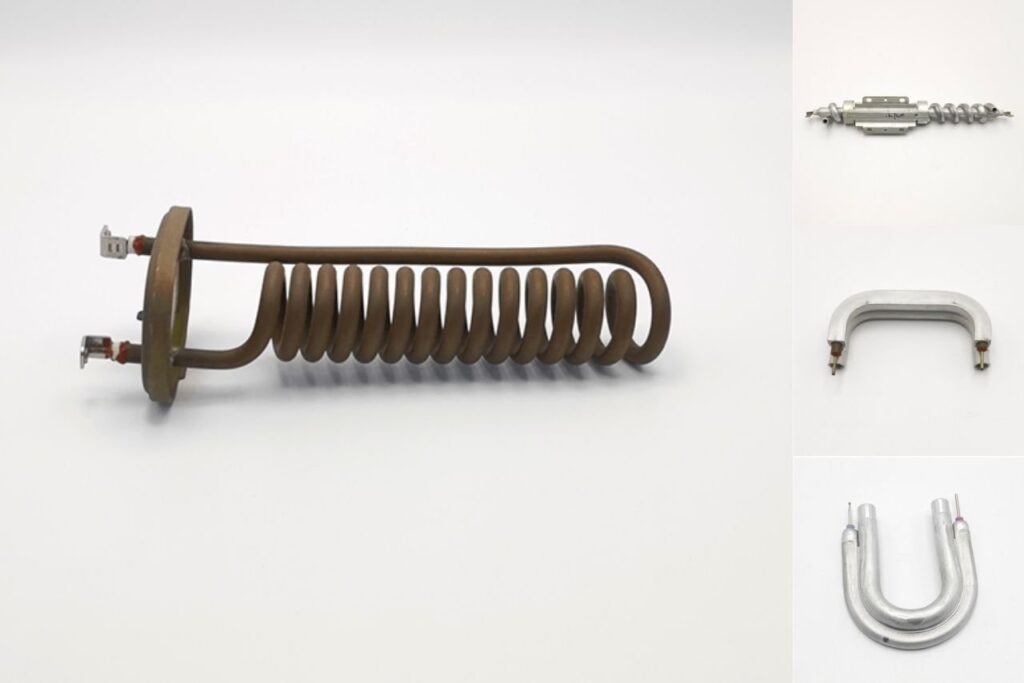
Ein Samsung-Trockner, der normal schleudert, aber keine Wärme erzeugt, deutet meist auf einen von zwei „Wächtern“ im Heizkreis hin: Heizelement Diese Anleitung hilft Ihnen, diese beiden Komponenten sicher und logisch zu unterscheiden, bevor Sie Ersatzteile kaufen.
- Schnelle Symptomhinweise (Heizelement vs. Thermostat)
- Sicherheit zuerst (kein „Trockenlauf“ des Heizelements)
- Wie ein Heizelement funktioniert (in einfachen Worten)
- Ein einfacher Diagnoseablauf, dem Sie folgen können
- Häufige Ausfallmuster von Heizelementen
- Häufige Ausfallmuster von Thermostaten / Thermosicherungen
- So wählen Sie das richtige Ersatzteil aus
- Wann Sie einen Techniker rufen sollten
- Wenn Sie Geräte entwickeln: Heizelementoptionen und Fertigung
- FAQ
- Der Trockner läuft normal, aber die Wärme ist schwach oder unterbrochen und wird mit der Zeit schlechter.
- Sie sehen eine sichtbar gebrochene Spule (falls Ihr Modell einen Blick durch das Heizgehäuse erlaubt).
- Das Gerät heizt kurz, hört dann auf zu heizen (eine Spule kann bei Hitze unterbrechen, wenn sie beschädigt ist).
- Plötzlich gar keine Wärme nach einem Überhitzungsereignis (eingeschränkter Abluftkanal, starke Flusenansammlung).
- Der Trockner überhitzt, hört dann auf zu heizen (eine Sicherung kann öffnen, um das Gerät zu schützen).
- Wärme kehrt erst nach langer Abkühlzeit zurück (Verhalten des Zyklusthermostats oder Luftstromproblem).
Eine der schnellsten Methoden, ein Heizelement zu zerstören, ist es unter falschen Betriebsbedingungen mit Strom zu versorgen. Schalten Sie den Strom erst ein, wenn das System bereit ist..In ihren Schritten zum Austausch des Heizelements warnen sie ausdrücklich davor, den Strom wieder einzuschalten, bevor der Tank voll ist – sonst kann das Element durchbrennen („Trockenlauf“). Whirlpool: Ersetzen des Heizelements.)
Für einen Trockner ist der „Bereitschaftszustand“ in erster Linie ein ausreichender Luftstrom. der Luftstrom. Das Heizen mit blockiertem Abluftkanal kann das Heizelementgehäuse überhitzen und Thermosicherungen auslösen (oder Komponenten beschädigen).
Ein Heizelement ist nicht nur „ein Draht, der heiß wird“. Es ist eine Baugruppe: eine elektrisch leitfähige Widerstandslegierung plus einen isolierenden Rahmen und sichere elektrische Anschlüsse. aufgehängt, gestützt oder eingebettet – beeinflusst die Wärmeübertragung und Haltbarkeit. TUTCO: Heizelemente.)
- Reinigen Sie den Flusensieb und prüfen Sie den Gebläsekanal, falls zugänglich.
- Überprüfen Sie den Abluftkanal zum Außenbereich auf Knicke, gequetschte flexible Leitungen oder starke Flusenansammlungen.
- Wenn der Luftstrom schlecht ist, beheben Sie dies zuerst – sonst können neue Teile erneut ausfallen.
Wenn Sie ein Multimeter haben und im sicheren Umgang damit geschult sind, ist die schnellste Unterscheidung: Ist das Heizelement elektrisch durchgängig? und Sind die Thermosicherungen geschlossen (durchgängig)?
Wenn Sie kein Messgerät haben: Ihre besten „Indikatoren ohne Messgerät“ sind sichtbare Spulenschäden (Heizelement) und „plötzliche Wärmelosigkeit nach Überhitzung“ (Thermosicherung).
Heizelemente sind Verschleißteile; Oxidation, Verformung und Änderungen des elektrischen Widerstands können schließlich zum Ausfall führen.
Ein Thermostat oder eine Thermosicherung kann den Stromkreis unterbrechen, um Überhitzung zu verhindern.
- Gebrochene Spule / Unterbrechung: der klassische Ausfall – keine Wärme, weil Strom nicht durch das Element fließen kann.
- Überhitztes Element durch schlechten Luftstrom: kann durchhängen, sich verformen oder Isolatoren beschädigen; kann bald ausfallen.
- Material-/Umgebungsfehlanpassung: TUTCO betont, dass Verunreinigungen und Betriebsbedingungen die Lebensdauer der Legierung beeinflussen; Überhitzung und falsche Wattdichte verkürzen die Lebensdauer.
- Thermosicherung nach Überhitzung ausgelöst: oft plötzliche Wärmelosigkeit.
- Probleme mit dem Zyklusthermostat: Wärme kann unregelmäßig sein (aber Luftstrom oder ein verstopfter Abluftkanal können dies imitieren).
- Ursache noch vorhanden: Wenn Sie eine Sicherung ersetzen, ohne den Luftstrom zu beheben, kann sie erneut ausfallen.
Für jeden Austausch eines Heizelements müssen Sie die elektrischen und mechanischen Anforderungen erfüllen. Spannung und Leistungsaufnahme;.
Wenn Sie Komponenten beschaffen oder Geräte bauen, bietet Jinzhong (JINZHONG) ein breites Heizungsportfolio in den Bereichen: Heizungsrohre, Heizplatte, Heizfolie, Druckguss-Heizlösungen.
Wenn Sie OEM/ODM-Arbeiten durchführen, betont die Homepage von Jinzhong ganzheitliche Fähigkeiten (Design → Formenentwicklung → Präzisionsfertigung) und All-in-one-Prozesse Jinzhong Elektroheizung.)
- Sie sind unsicher, wie Sie stromführende Schaltkreise sicher testen oder Messgeräteanzeigen interpretieren.
- Sicherung löst aus, Sie riechen Brandgeruch oder die Verkabelung zeigt Hitzeschäden.
- Wiederholte Ausfälle nach Teilersatz (deutet meist auf Luftstromblockade oder ein Steuerungs-/Stromversorgungsproblem hin).
TUTCO unterteilt Heizelemente nach Konstruktion und Integration (frei hängend/eingebettet/gestützt) und behandelt auch flexible Heizungen, Dickschicht-, Dünnschichtheizer und mehr – jeweils mit Kompromissen bei Wärmeübertragung, Haltbarkeit, Kosten und Steuerung. TUTCO: Heizelemente.)
Die katalogartigen Kategorien von Jinzhong entsprechen gut gängigen Geräteanforderungen:
- Heizrohre: beinhaltet Artikel wie „Boiler-Heizrohr“, „Bündelstabheizer“ und gerätespezifische Heizungen (Kaffeemaschine, Fritteuse, etc.).
- Heizplatten: Aluminium-/Edelstahl-Verbundplatten (z.B. Kaffeemaschinen-Heizplatte, Wasserkocher-Heizplatte).
- Heizfolien: Dickschicht- und Dünnschicht-Heizervarianten, einschließlich Keramiksubstrat-Dickschicht und gesputterte Dünnschichttypen.
- Druckguss-Heizlösungen: Druckguss-Aluminiumlegierungssubstrat + Dickschicht-Widerstandstechnik erscheint wiederholt in der Produktliste (Kaffeemaschinenteile, Boiler-Wärmetauscher, etc.).
Ja. Ein in Reihe mit der Heizung geschalteter Thermostat/Temperatursicherung kann den Stromkreis öffnen, sodass das Element selbst bei intaktem Zustand keine Spannung erhält.
Es kann intermittierend ausfallen (z.B. eine Wendel, die sich im heißen Zustand öffnet), oder intakt sein, während der Trockner aufgrund von Luftstrom-, Steuerungs- oder Stromversorgungsproblemen dennoch nicht heizt.
Oft ja. Eine Sicherung löst typischerweise aus, weil das System überhitzt ist – häufig aufgrund eingeschränkten Luftstroms (Flusen, gequetschter Abluftschlauch, lange Leitungswege).
- Heizelement (Kategorieübersicht)
- Hersteller von Heizelementen (Jinzhong Electric Heating Homepage)
- Heizelement-Fabrik (Über uns / Werkskontext)
- Druckguss-Heizlösungen