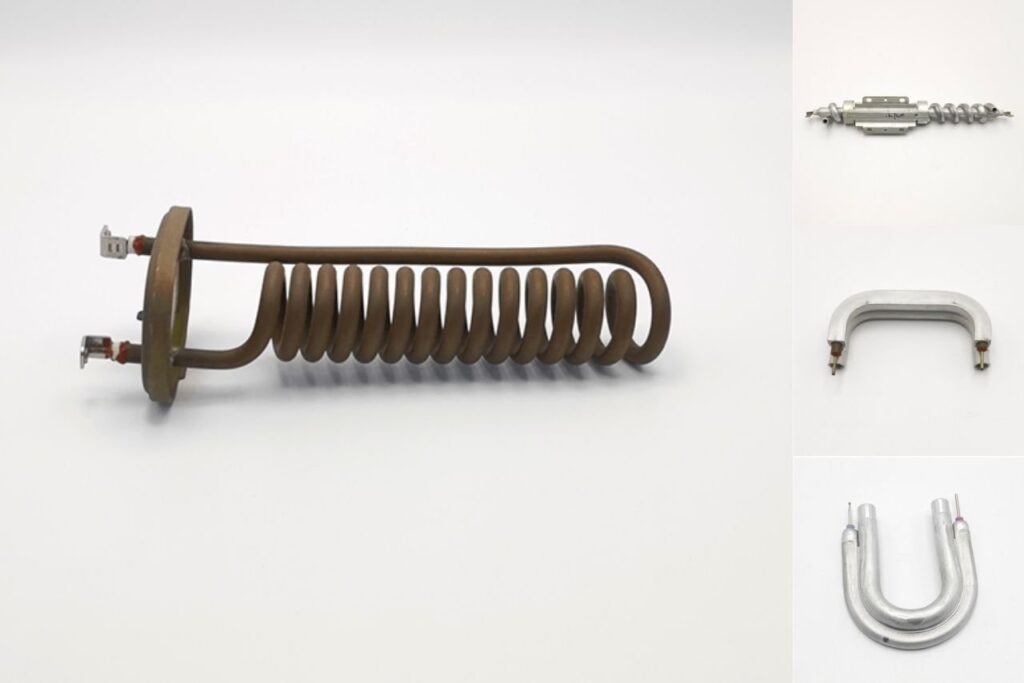
Un sèche-linge Samsung qui tourne normalement mais ne chauffe pas indique généralement l’un des deux « gardiens » du circuit de chauffage : Élément chauffant l’élément chauffant lui-même ou un thermostat/dispositif de sécurité thermique qui empêche l’alimentation de l’atteindre. Ce guide vous aide à distinguer les deux, en toute sécurité et de manière logique, avant d’acheter des pièces.
- Indices rapides des symptômes (élément vs thermostat)
- Sécurité avant tout (ne pas faire fonctionner un élément chauffant à sec)
- Comment fonctionne un élément chauffant (en termes simples)
- Un processus de diagnostic simple à suivre
- Schémas de défaillance courants de l’élément chauffant
- Schémas courants du thermostat / coupe-thermique
- Comment choisir la pièce de rechange appropriée
- Quand faire appel à un technicien
- Si vous concevez des appareils : options d’élément et fabrication
- FAQ
- Le sèche-linge fonctionne normalement, mais la chaleur est faible ou intermittente et s’aggrave avec le temps.
- Vous voyez une bobine visiblement cassée (si votre modèle permet un aperçu à travers le boîtier du chauffage).
- L’appareil chauffe brièvement, puis cesse de chauffer (une bobine peut s’ouvrir à chaud si elle est endommagée).
- Absence totale de chaleur, soudainement, après un événement de surchauffe (conduit obstrué, accumulation importante de peluches).
- Le sèche-linge surchauffe, puis cesse de chauffer (un dispositif de sécurité peut s’ouvrir pour protéger l’appareil).
- La chaleur ne revient qu’après un long refroidissement (comportement du thermostat cyclique ou problème de flux d’air).
L’un des moyens les plus rapides de détruire un élément chauffant est de l’alimenter sans les conditions de fonctionnement correctes. Le guide de Whirlpool pour les chauffe-eau est une bonne analogie : n’appliquez pas d’alimentation tant que le système n’est pas prêt. Dans leurs étapes de remplacement de l’élément chauffant, ils avertissent explicitement de ne pas rétablir l’alimentation tant que le réservoir n’est pas plein – sinon l’élément peut griller ( « dry fire » ). (Voir : Whirlpool : Remplacer l’élément chauffant.)
Pour un sèche-linge, la « condition de préparation » est principalement le flux d'air. Faire fonctionner la chaleur avec une ventilation obstruée peut surchauffer le boîtier de l’élément et déclencher les sécurités thermiques (ou endommager les composants).
Un élément chauffant n’est pas simplement « un fil qui chauffe ». C’est un ensemble : un alliage résistif électriquement conducteur, plus un cadre isolant et des terminaisons électriques sécurisées. TUTCO explique que le cœur est le chauffage par effet Joule : le courant traversant un alliage résistif convertit l’énergie électrique en chaleur. L’intégration physique de l’élément suspendu, supporté ou encastré affecte le transfert de chaleur et la durabilité. (Source : TUTCO : Éléments chauffants.)
- Nettoyez le filtre à peluches et vérifiez le chemin du ventilateur si accessible.
- Inspectez le conduit d’évacuation vers l’extérieur pour détecter des plis, des flexibles écrasés ou une accumulation importante de peluches.
- Si le flux d’air est insuffisant, corrigez-le d’abord – sinon les nouvelles pièces peuvent à nouveau tomber en panne.
Si vous possédez un multimètre et êtes formé à son utilisation en toute sécurité, la séparation la plus rapide est : L’élément chauffant est-il électriquement continu ? et Les dispositifs de sécurité thermique sont-ils fermés (continus) ?
Si vous n’avez pas de multimètre : vos meilleurs indicateurs « sans multimètre » sont les dommages visibles de la bobine (élément) et l’« absence soudaine de chaleur après surchauffe » (coupe-thermique). Mais un test au multimètre est le plus fiable.
Les éléments chauffants sont des composants consommables ; l’oxydation, la déformation et les changements de résistance électrique peuvent éventuellement entraîner une défaillance. TUTCO note que tous les éléments chauffants résistifs finissent par griller, et que le cyclage/la surchauffe accélère ce processus.
Un thermostat ou un coupe-thermique peut ouvrir le circuit pour éviter la surchauffe. Si le flux d’air était obstrué, cela est particulièrement courant.
- Bobine cassée / circuit ouvert : la panne classique – pas de chaleur car le courant ne peut pas traverser l’élément.
- Élément surchauffé en raison d’un mauvais flux d’air : peut s’affaisser, se déformer ou endommager les isolateurs ; peut tomber en panne peu après.
- Inadéquation matériau/environnement : TUTCO souligne que les contaminants et les conditions de fonctionnement affectent la durée de vie de l’alliage ; la surchauffe et une densité de puissance inappropriée réduisent la durée de vie.
- Coupe-thermique déclenché après surchauffe : souvent une absence soudaine de chaleur.
- Problèmes de thermostat cyclique : la chaleur peut être irrégulière (mais un flux d’air ou un conduit obstrué peut imiter cela).
- Cause sous-jacente toujours présente : si vous remplacez un dispositif de sécurité sans corriger le flux d’air, il peut à nouveau tomber en panne.
Pour tout remplacement d’élément chauffant, vous devez faire correspondre les exigences électriques et mécaniques. Le guide de Whirlpool pour les éléments de chauffe-eau insiste sur la vérification du remplacement en consultant la plaque signalétique de l’appareil pour à la tension et à la puissance;.
Si vous vous approvisionnez en composants ou construisez des appareils, Jinzhong (JINZHONG) propose un large portefeuille de chauffages couvrant : Tubes de chauffage, Plaque chauffante, Film chauffant, Solutions de chauffage pour la coulée sous pression.
Si vous effectuez des travaux OEM/ODM, la page d'accueil de Jinzhong met en avant des capacités de chaîne complète (conception → développement de moules → fabrication de précision) et des processus clés en main Chauffage électrique Jinzhong.)
- Vous n'êtes pas sûr de savoir comment tester en toute sécurité des circuits sous tension ou interpréter les lectures d'un multimètre.
- Le disjoncteur déclenche, vous sentez une odeur de brûlé ou le câblage semble endommagé par la chaleur.
- Pannes répétées après remplacement d'une pièce (indique généralement une restriction du flux d'air ou un problème de commande/alimentation).
TUTCO décompose les éléments chauffants par construction et intégration (suspendu/encastré/supporté) et couvre également les chauffages flexibles, les chauffages à film épais, à film mince, et plus – chacun présentant des compromis en transfert de chaleur, durabilité, coût et commandes. TUTCO : Éléments chauffants.)
Les catégories de style catalogue de Jinzhong correspondent bien aux besoins courants des appareils :
- Tubes chauffants : inclut des articles comme « Tube chauffant pour chaudière », « chauffage à faisceau de barres », et des chauffages pour appareils (machine à café, friteuse, etc.).
- Plaques chauffantes : plaques composites aluminium/inox (ex. : plaque chauffante pour machine à café, plaque chauffante pour bouilloire).
- Film chauffant : variantes de chauffage à film épais et film mince, incluant les types à film épais sur substrat céramique et à film mince par pulvérisation cathodique.
- Solutions de chauffage par moulage sous pression : la technologie substrat en alliage d'aluminium moulé sous pression + résistance à film épais apparaît à plusieurs reprises dans la liste de produits (pièces pour machine à café, échangeur de chaleur pour chaudière, etc.).
Oui. Un thermostat/couperet thermique en série avec le chauffage peut ouvrir le circuit, de sorte que l'élément ne reçoit jamais de courant même s'il est physiquement intact.
Il peut tomber en panne de manière intermittente (par exemple, une résistance qui s'ouvre à chaud), ou être intact mais le sèche-linge ne chauffe toujours pas à cause de problèmes de flux d'air, de commande ou d'alimentation.
Souvent, oui. Un couperet s'ouvre généralement parce que le système a surchauffé – fréquemment à cause d'un flux d'air restreint (peluches, conduit écrasé, conduits trop longs).
- Élément chauffant (vue d'ensemble des catégories)
- Fabricant d'éléments chauffants (page d'accueil de Jinzhong Electric Heating)
- Usine d'éléments chauffants (à propos / contexte usine)
- Solutions de chauffage pour la coulée sous pression