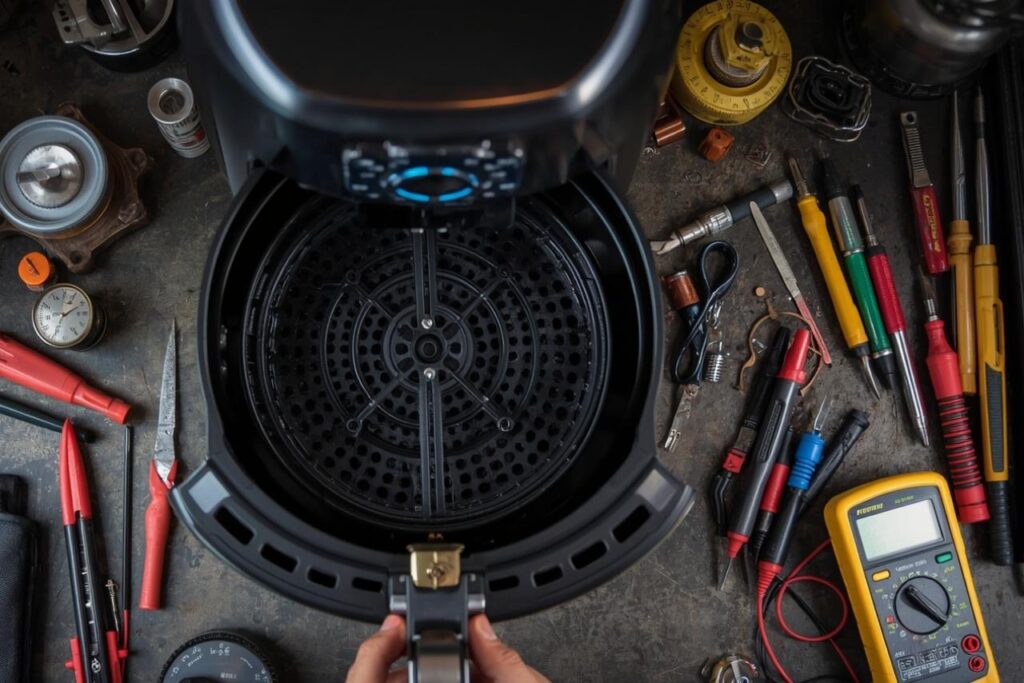
Preventative maintenance for an air fryer heating element is simple—but only if you treat the heating element as a designed assembly, not a “bare wire.” Heating elements combine electrically conductive material with insulating/support structures and electrical connections. When grease, carbon, or cleaning damage builds up, performance drops, smoke increases, and the risk of early failure goes up.
- 1) Why preventative maintenance matters (smoke, heat uniformity, lifespan)
- 2) A simple maintenance schedule you can actually follow
- 3) After-each-use habits (30 seconds)
- 4) Weekly/biweekly deep clean (safe method)
- 5) What NOT to do (the mistakes that shorten element life)
- 6) Early warning signs the element needs attention or replacement
1) Why preventative maintenance matters
Air fryers push hot air across the heating area. When grease aerosols and food vapor condense on the element and the ceiling, they form a thin film that can carbonize. That carbon layer becomes a “smoke generator,” can create hot spots, and makes the unit smell even when cooking neutral foods.
From an engineering perspective, heating performance is a system problem: the heater (conductive + insulating framework), the airflow, and the surfaces that receive heat. Keeping the heating area clean reduces unintended insulation (grease) and helps maintain stable heat transfer.
2) A simple maintenance schedule
| Frequency | What to do | Why it helps |
|---|---|---|
| After each use | Cool → wipe basket/tray; quick wipe the interior ceiling if you see splatter. | Prevents grease from baking into carbon (easier cleaning, less smoke). |
| Weekly / biweekly | Controlled-moisture cleaning of the heating area (no spraying). | Removes invisible film that causes odors and uneven heating. |
| Monthly | Inspect for deformation, dark “burn” patches, and residue in air path. | Catches issues early before performance drops or failures occur. |
Always unplug the air fryer before cleaning. Let it cool completely before touching the element area.
3) After-each-use habits (30 seconds)
- When cooking is done, leave the basket slightly open for a few minutes so steam doesn’t condense onto the ceiling/element area.
- Once cooled, remove basket/tray and wash with mild dish soap and a non-abrasive sponge.
- Quick visual check: if you see splatter on the ceiling near the heater, wipe it now (a damp, well-wrung microfiber cloth).
The goal isn’t “perfectly shiny.” The goal is preventing thin residue layers from repeatedly heating and turning into stubborn carbon.
4) Weekly/biweekly deep clean (safe method)
This method keeps water and chemicals under control—important because heating elements include conductive parts plus insulating and connection structures. Some heaters are “embedded” designs where the conductive wire is surrounded by insulating material (a concept often seen in sheathed heaters with magnesium oxide insulation), and moisture intrusion is never your friend.
Step-by-step
- Unplug and cool fully.
- Remove basket/tray and set aside.
- Dry wipe loose crumbs with a microfiber cloth.
- Make warm water + a small amount of mild dish soap.
- Dip a cloth, then wring until damp (not dripping). Wipe the ceiling/reflector and heater area gently.
- Use a soft toothbrush/nylon brush for corners—no scraping.
- Second pass with a clean damp cloth (water only) to remove soap film.
- Dry immediately with a clean cloth and air-dry the unit open before plugging back in.
Use a warm damp “compress” (hold a warm, damp cloth against the spot for 30–60 seconds), then wipe. Repeat gently instead of scraping.
5) What NOT to do
| Don’t do this | What can go wrong | Do this instead |
|---|---|---|
| Spray water/degreaser directly into the top cavity | Liquid can migrate into electrical connections/insulating areas and cause faults or corrosion. | Apply cleaner to a cloth first; keep it damp, not wet. |
| Scrape with a knife, screwdriver, or metal brush | Can deform element geometry, damage supports, or remove protective surface layers. | Soft brush + warm damp compress + repeated wipes. |
| Use abrasive pads (steel wool) | Scratches become residue “anchors” and can accelerate corrosion or hot spotting. | Non-abrasive sponge or microfiber only. |
| Reassemble and power on while moisture remains | Steam/smoke, odor, and potential electrical issues. | Dry thoroughly; leave open to air-dry if unsure. |
6) Early warning signs (maintenance vs replacement)
Preventative maintenance is for residue and airflow issues. Stop “just cleaning” and consider troubleshooting or replacement if you notice:
- Persistent smoke after thorough cleaning and full drying (could indicate internal residue or component damage).
- Uneven cooking that doesn’t improve after cleaning (air path obstruction or heater degradation).
- Visible deformation, cracks, blistered areas, or severe discoloration on the heating structure.
- Electrical symptoms (tripping, intermittent power) — do not keep testing; seek qualified service.
For readers sourcing heating solutions across appliances: heating technologies range from tubular-style designs (often described as metal sheaths with insulation and resistance wire) to surface heating plates, thin/thick film systems, and integrated modules like Die Casting Heating Solutions. If you’re comparing suppliers, start with the category overview at Heating Element and learn more about the organization behind it at Heating Element manufacturer and Heating Element Factory.