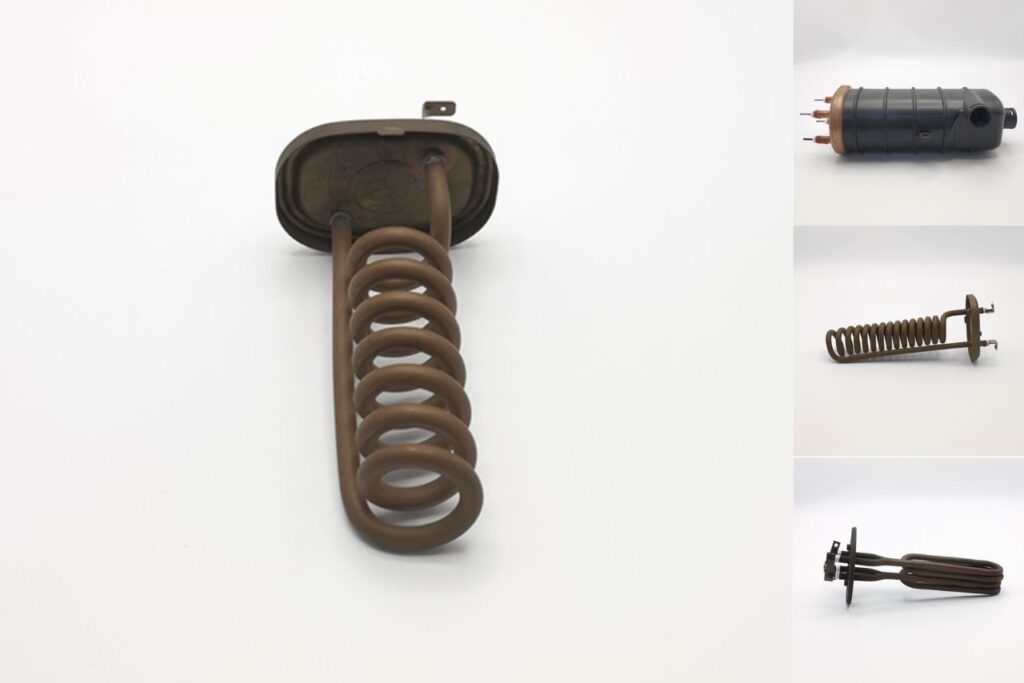
Electric water heater element replacement cost is best understood as a total ownership cost: the heating element itself, the gasket and small consumables, labor (DIY time or technician hours), and the avoidable rework risks especially dry firing, which can immediately destroy a newly installed upper element if power is restored before the tank is completely full and air is purged.
Article type: Cluster Page
Market: Global
Tone: Professional / Formal
Perspective: Third person
Focus: Cost analysis + decision guidance
Safety and cost note: Whirlpool s published replacement steps warn: do not restore electrical power until the tank is completely full and all air is removed; otherwise the upper element can burn out from dry fire. That single mistake often turns a one-time repair into a repeat parts-and-labor event.
Contents
- Cost overview: what people actually pay for
- Parts pricing: what can be evidenced from the provided sources
- Labor and time: why simple replacements vary widely
- Hidden costs: rework, downtime, and the cost of poor quality
- A practical cost model (worksheet) for homeowners and facility teams
- How element design and materials influence lifecycle cost
- Supplier and manufacturing context (for OEM/volume buyers)
- FAQ
- Sources cited and outbound links
Cost overview: what people actually pay for
In practice, replacement cost is rarely just the element price. A realistic analysis includes five buckets:
1) Parts and consumables
- Replacement water heater element (rated to the unit s voltage and wattage)
- Gasket (and sometimes a spare)
- Minor consumables (e.g., a drop of dishwashing liquid to lubricate gasket as recommended in Whirlpool s steps)
2) Labor and time
- DIY time (cool-down, draining, reinstall, refill, purge, leak check)
- Technician service time (including troubleshooting and return trips if needed)
3) Risk-adjusted rework
- Incorrect element selection (wrong voltage/wattage)
- Dry fire from powering on before full refill and air purge
- Leaks requiring drain-and-reseat
4) Downtime and inconvenience
- Loss of hot water availability
- Operational delays for rentals, hospitality, or facilities
Quick decision rule
If a household can follow manufacturer-style replacement steps precisely (especially refill and air purge), DIY can reduce labor cost.
If drainage is blocked by sediment, wiring is compromised, or leaks persist, technician labor often becomes the lower-risk, lower-total-cost option.
Parts pricing: what can be evidenced from the provided sources
Evidence-based price point from the provided material
Hudson Reed lists a 1000 Plug-In Watt Electric Heating Element at $209.95 (SKU: CHE1000W), described as a plug-in element for a radiator or towel warmer.
The listing includes: 1000W power, Made from ABS Plastic & Stainless Steel, IP67 ingress protection, and UL Approved, plus a 2-year warranty.
Important interpretation: This Hudson Reed product is not a typical electric tank immersion element. It is still useful in a cost analysis as a documented example of how safety approvals,
material selection, and ingress protection can affect heater component pricing.
What drives part cost (engineering reality)
TUTCO defines a heating element as an assembly of conductive and insulating materials designed for heating, not simply wire that gets hot.
From a purchasing viewpoint, cost is influenced by:
- Alloy selection and properties (e.g., Ni-Cr or Fe-Cr-Al families are common in many heaters)
- Insulation and framework design (embedded vs supported vs suspended concepts)
- Terminations and integration features that affect installation reliability
- Quality variability between suppliers due to trace elements (contaminants vs enhancements) described by TUTCO
Labor and time: why simple replacements vary widely
Whirlpool s replacement workflow shows why labor time varies: the job includes cool-down, draining, removal with a specific tool, thread cleaning, gasket handling, refill, air purge, leak check,
reassembly of insulation and covers, and only then restoring power.
Procedure checkpoints that change labor time
| Checkpoint | What can increase time | Cost implication |
|---|---|---|
| Cool-down before draining | Waiting 10+ minutes for water to run cool | Time cost (DIY) / billable time (service) |
| Draining the tank | Sediment clogs drain valve; slow drainage; poor access | Possible technician escalation per Whirlpool note |
| Element removal | Seized threads; limited clearance; incorrect tool | Higher labor risk; potential tank damage |
| Air purge | Skipping the three-minute full-stream purge | High risk of dry fire and repeat replacement cost |
| Leak resolution | Gasket pinched/damaged; dirty threads; re-seat required | Drain again + rework + potential extra gasket |
Whirlpool replacement steps:
https://www.whirlpoolwaterheaters.com/support/help/element-was-out-of-range/24
The most expensive mistakes tend to be the ones with high rework risk (notably air purge / dry-fire prevention), even if they feel quick.
Hidden costs: rework, downtime, and the cost of poor quality
Dry fire: the fastest way to double the bill
Whirlpool s notice is explicit: do not restore electrical power until the tank is completely full and all air is removed.
Whirlpool warns that applying power early can burn out the upper element (a dry fire event).
Their purge method includes removing the faucet aerator and running hot water full stream for THREE MINUTES.
Quality fallout costs (TUTCO perspective)
TUTCO highlights less obvious costs such as field failures, repeated installation time, and brand/reputation damage.
It also explains that similar resistance alloys can behave differently across suppliers due to trace elements (contaminants or enhancements),
and that environment contaminants can shorten heater life.
Downtime cost (often ignored)
For households, downtime is inconvenience. For rentals, hospitality, healthcare, and light industrial facilities, downtime becomes a real cost:
temporary remediation, guest impact, or operational disruption.
A cost analysis should treat downtime as a measurable outcome, not a footnote.
A practical cost model (worksheet) for homeowners and facility teams
Total replacement cost formula
A practical model:
Total Cost = Parts + Consumables + Labor + Downtime + (Probability of rework Cost of rework)
This structure matches TUTCO s less obvious costs framing (rework, install effort, quality) and Whirlpool s emphasis on avoiding dry fire and leak rework.
Cost worksheet table (copy/paste friendly)
| Cost line | Example inputs | Estimated amount |
|---|---|---|
| Element + gasket | Rated replacement (match data plate voltage/wattage) | _____ |
| Consumables | Small supplies (e.g., gasket lubricant per Whirlpool guidance) | _____ |
| Labor (DIY) | Hours value of time | _____ |
| Labor (service) | Call-out + hourly time + parts markup | _____ |
| Downtime | Temporary measures / disruption cost | _____ |
| Rework risk | Dry fire / leaks / wrong part (estimate probability) | _____ |
The DIY + rework scenario demonstrates why avoiding dry fire and sealing errors often has the biggest impact on total cost.
How element design and materials influence lifecycle cost
Lifecycle cost depends on environment and alloy fit
TUTCO explains that resistance heating elements eventually burn out, and that alloy behavior is sensitive to operating temperature, thermal cycling,
oxidation layer behavior, and environmental contaminants (e.g., chlorine, sulfur, etc.). For cost analysis, the practical implication is:
the cheapest part can become the most expensive if it fails early and triggers repeat service.
- Watt density and heat transfer conditions affect temperature stress and life
- Contaminants and humidity can accelerate degradation
- Supplier differences in trace elements can impact durability
LSI terms relevant to cost discussions
When comparing options, cost-focused buyers often encounter these LSI concepts: immersion heater, tubular heating element,
scale buildup, sediment, ground fault, thermostat, gasket seal,
and preventive maintenance. These terms describe mechanisms that influence rework probability and service frequency key inputs to total cost.
Supplier and manufacturing context (for OEM/volume buyers)
Why manufacturing capability shows up in cost analysis
For OEMs and volume buyers, cost is heavily influenced by stability of quality, certifications, and lead times.
Jinzhong describes itself as a leading electric heating element manufacturer in China with 30+ years experience, full-chain capabilities from product design and mold development to precision manufacturing,
and certification coverage such as ISO9001/ISO14001/ISO45001, VDE, UL, RoHS, and more. It also states scaled capacity (e.g., monthly output and automated production lines).
In procurement terms, these claims matter because quality and process control reduce the cost of quality events described by TUTCO (field failures, rework, and reputation damage).
- Heating Element manufacturer (company overview and capabilities)
- Heating Element Factory (factory context)
- Heating Element (product category; shows a broad range of element types)
- Die Casting Heating Solutions (integrated heating modules for appliance contexts)
Product family breadth as a risk-reduction lever
Jinzhong s site structure separates heater families such as tubes, plates, films, and die-cast solutions. From a lifecycle-cost standpoint,
broader capability can help match the right construction to the environment and duty cycle reducing premature failures and avoiding avoidable redesigns.
- Heating tubes and tubular-style parts appear in the category listings (e.g., Boiler Heating tube, Water Heating tube ).
- Heating plates appear as application-specific parts (kettles, coffee makers, dishwashers).
- Heating film products include thick film and thin film heater concepts.
- Die-cast heating solutions list components such as boiler heat exchangers and coffee-machine heater bodies.
FAQ
What is the biggest hidden cost in water heater element replacement?
Rework from installation errors is often the biggest hidden cost. Whirlpool specifically warns against restoring power before the tank is completely full and air is removed,
because the upper element can burn out from dry fire.
Why does element replacement sometimes take longer than expected?
Drainage and access are major drivers. Whirlpool notes that sediment can clog the drain valve and prevent proper draining. Seized threads and leak reseating can also add time.
How does heater design influence long-term cost?
TUTCO explains that alloy choice, insulation framework, and environmental contaminants affect longevity. Premature failures create repeat labor, downtime, and quality costs.
Long-term cost is minimized when material and design are matched to the operating environment.
Is a higher-priced heater component always better?
Not always. However, documented attributes such as approvals (e.g., UL), materials, and ingress protection (e.g., IP67) can justify higher component costs in certain environments.
The better question is whether the part reduces lifecycle cost by avoiding rework and premature failure.
What should be verified before buying a replacement element?
Whirlpool instructs confirming the correct replacement by referring to the water heater s data plate for voltage and wattage.
This verification reduces mismatch risk and protects the total cost of the repair.
Why do similar-looking elements fail at different rates?
TUTCO notes that alloys from different manufacturers may contain different trace elements (contaminants or enhancements) which can change properties and lifespan,
especially under challenging environmental conditions.
Sources cited and outbound links
- Whirlpool Water Heaters Replace the Heating Element steps and dry-fire warning: https://www.whirlpoolwaterheaters.com/support/help/element-was-out-of-range/24
- TUTCO Heating element definition, materials, and less-obvious cost considerations: https://tutco.com/conductive/heating-elements
- Hudson Reed Documented component price/spec example ($209.95, 1000W, IP67, UL Approved): https://usa.hudsonreed.com/1000-plug-in-watt-electric-heating-element-76309
- Jinzhong Electric Heating internal references for manufacturer capability and product category context: https://jinzho.com/, https://jinzho.com/product-category/heating-element/, https://jinzho.com/about/, https://jinzho.com/product-category/die-casting-heating-solutions/
Disclosure: This article uses only the provided reference content for factual claims (Whirlpool procedure warnings, TUTCO engineering discussion, Hudson Reed price/spec listing, and Jinzhong company/category descriptions).
Any scenario charts are qualitative visualizations created to clarify cost drivers and do not represent market-wide price surveys.