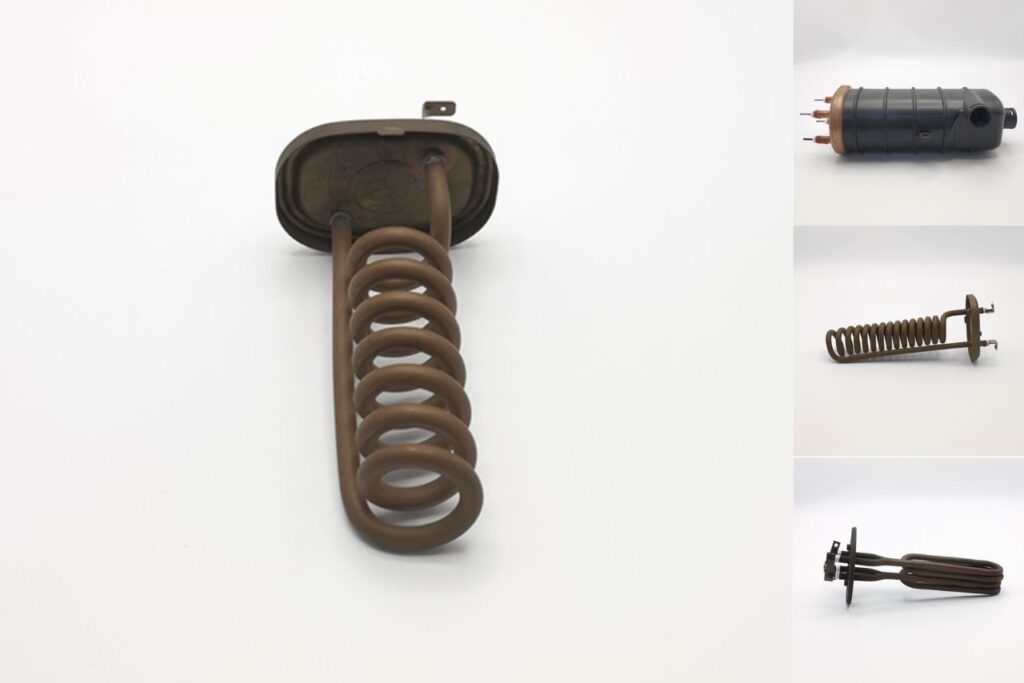
Élément de chauffe-eau électrique Le coût de remplacement se comprend mieux comme un coût total de possession : élément chauffant l’élément lui-même, le joint et les petits consommables, la main-d’œuvre (temps de bricolage ou heures du technicien), et les risques évitables de reprise, en particulier cuisson à sec, qui peuvent immédiatement détruire un élément supérieur nouvellement installé si l’alimentation est rétablie avant que le réservoir ne soit complètement rempli et l’air purgé.
Type d'article : Page de cluster
Marché : Mondial
Ton : Professionnel / Formel
Perspective : Troisième personne
Objectif : Analyse des coûts + aide à la décision
Note sur la sécurité et les coûts : Les étapes de remplacement publiées par Whirlpool avertissent : ne pas rétablir l’alimentation électrique tant que le réservoir n’est pas complètement rempli et que tout l’air n’est pas évacué ; sinon, l’élément supérieur peut griller à cause chauffage à sec. Cette seule erreur transforme souvent une réparation unique en un événement répété de pièces et de main-d’œuvre.
Contenu
- Aperçu des coûts : ce que les gens paient réellement
- Tarification des pièces : ce qui peut être démontré à partir des sources fournies
- Main-d’œuvre et temps : pourquoi les remplacements « simples » varient considérablement
- Coûts cachés : reprises, temps d’arrêt et coût de la mauvaise qualité
- Un modèle de coût pratique (feuille de travail) pour les propriétaires et les équipes d’entretien
- Comment la conception et les matériaux de l’élément influencent le coût du cycle de vie
- Contexte du fournisseur et de la fabrication (pour les acheteurs OEM/volume)
- FAQ
- Sources citées et liens externes
Aperçu des coûts : ce que les gens paient réellement
En pratique, le coût de remplacement est rarement uniquement l'élément prix. Une analyse réaliste comprend cinq catégories :
1) Pièces et consommables
- Remplacement élément de chauffe-eau (adapté à la tension et à la puissance de l’appareil)
- Joint (et parfois un de rechange)
- Petits consommables (par exemple, une goutte de liquide vaisselle pour lubrifier le joint comme recommandé dans les étapes de Whirlpool)
2) Main-d’œuvre et temps
- Temps de bricolage (refroidissement, vidange, réinstallation, remplissage, purge, vérification des fuites)
- Temps de service du technicien (y compris le dépannage et les déplacements supplémentaires si nécessaire)
3) Reprises ajustées au risque
- Sélection incorrecte de l’élément (mauvaise tension/puissance)
- Mise sous tension à sec due à la mise sous tension avant le remplissage complet et la purge d’air
- Fuites nécessitant une vidange et un repositionnement
4) Temps d’arrêt et inconvénients
- Perte de disponibilité de l’eau chaude
- Retards opérationnels pour les locations, l’hôtellerie ou les installations
Règle de décision rapide
Si un ménage peut suivre précisément les étapes de remplacement du fabricant (en particulier le remplissage et la purge d’air), le bricolage peut réduire le coût de la main-d’œuvre.
Tarification des pièces : ce qui peut être démontré à partir des sources fournies
Prix fondé sur des preuves à partir du matériel fourni
Hudson Reed répertorie un élément électrique enfichable de 1000 W Élément chauffant à $209.95 (SKU : CHE1000W), décrit comme un élément enfichable pour radiateur ou sèche-serviettes. 1000W puissance, « Fabriqué en plastique ABS et acier inoxydable », la protection contre les intrusions IP67 indice de protection, et Approuvé UL, plus une garantie de 2 ans.
Interprétation importante : Ce produit Hudson Reed n’est pas un élément d’immersion typique pour réservoir électrique. Il reste utile dans une analyse des coûts comme exemple documenté de la manière dont les approbations de sécurité,.
Ce qui détermine le coût des pièces (réalité technique)
TUTCO définit un élément chauffant comme un assemblage de matériaux conducteurs et isolants conçu pour le chauffage, et non simplement « un fil qui chauffe ».
- Sélection et propriétés de l’alliage (par exemple, les familles Ni-Cr ou Fe-Cr-Al sont courantes dans de nombreux chauffages)
- Conception de l’isolation et du cadre (concepts encastrés, supportés ou suspendus)
- Bornes et caractéristiques d’intégration affectant la fiabilité de l’installation
- Variabilité de la qualité entre les fournisseurs due à éléments traces (contaminants vs améliorations) décrite par TUTCO
Main-d’œuvre et temps : pourquoi les remplacements « simples » varient considérablement
Le flux de travail de remplacement de Whirlpool montre pourquoi le temps de main-d’œuvre varie : le travail comprend le refroidissement, la vidange, le retrait avec un outil spécifique, le nettoyage du filetage, la manipulation du joint, le remplissage, la purge d’air, la vérification des fuites,.
Points de contrôle de la procédure qui modifient le temps de main-d’œuvre
| Point de contrôle | Ce qui peut augmenter le temps | Implication en termes de coût |
|---|---|---|
| Refroidissement avant vidange | Attente de 10 minutes ou plus pour que l’eau refroidisse | Coût en temps (bricolage) / temps facturable (service) |
| Vidange du réservoir | Les sédiments obstruent la vanne de vidange ; vidange lente ; mauvais accès | Possible escalade vers un technicien selon la note de Whirlpool |
| Retrait de l’élément | Filetages grippés ; espace limité ; outil incorrect | Risque de main-d’œuvre plus élevé ; dommages potentiels au réservoir |
| Purge d'air | Sauter la purge à plein débit de trois minutes | Risque élevé de chauffage à sec et coût de remplacement répété |
| Résolution de fuite | Joint pincé/endommagé ; filets sales ; nécessite un repositionnement | Vidanger à nouveau + retouche + joint supplémentaire potentiel |
Étapes de remplacement Whirlpool :
https://www.whirlpoolwaterheaters.com/support/help/element-was-out-of-range/24
Les erreurs les plus coûteuses tendent à être celles à haut risque de retouche (notamment la purge d'air / prévention de la mise sous tension à sec), même si elles semblent rapides.
Coûts cachés : reprises, temps d’arrêt et coût de la mauvaise qualité
Mise sous tension à sec : le moyen le plus rapide de doubler la facture
L'avis de Whirlpool est explicite : ne rétablissez pas l'alimentation électrique avant que le réservoir ne soit complètement rempli et que tout l'air ne soit évacué. chauffage à sec événement). TROIS MINUTES.
Coûts des défauts qualité (perspective TUTCO)
TUTCO met en lumière des coûts moins évidents tels que les défaillances sur le terrain, le temps d'installation répété et les dommages à la marque/réputation. éléments traces (contaminants ou améliorations),.
Coût d'immobilisation (souvent ignoré)
Pour les ménages, l'immobilisation est une gêne. Pour les locations, l'hôtellerie, la santé et les installations industrielles légères, l'immobilisation devient un coût réel :.
Un modèle de coût pratique (feuille de travail) pour les propriétaires et les équipes d’entretien
Formule du coût total de remplacement
Un modèle pratique :
Coût total = Pièces + Consommables + Main-d'œuvre + Temps d'arrêt + (Probabilité de retravail * Coût du retravail)
Cette structure correspond au cadre des « coûts moins évidents » de TUTCO (retouche, effort d'installation, qualité) et à l'accent mis par Whirlpool sur l'évitement de la mise sous tension à sec et des retouches pour fuites.
Tableau de calcul des coûts (adapté au copier/coller)
| Ligne de coût | Exemples de saisies | Montant estimé |
|---|---|---|
| Élément + joint | Remplacement nominal (correspondance à la tension/puissance de la plaque signalétique) | _____ |
| Consommables | Petits fournitures (ex. : lubrifiant pour joint selon les instructions Whirlpool) | _____ |
| Main-d'œuvre (DIY) | Heures – valeur du temps | _____ |
| Main-d'œuvre (service) | Déplacement + temps horaire + majoration des pièces | _____ |
| Temps d'arrêt | Mesures temporaires / coût de perturbation | _____ |
| Risque de retouche | Mise sous tension à sec / fuites / pièce incorrecte (estimation de la probabilité) | _____ |
Le scénario « DIY + retouche » démontre pourquoi éviter la mise sous tension à sec et les erreurs d'étanchéité a souvent le plus grand impact sur le coût total.
Comment la conception et les matériaux de l’élément influencent le coût du cycle de vie
Le coût du cycle de vie dépend de l'environnement et de l'adéquation de l'alliage
TUTCO explique que les éléments chauffants à résistance finissent par griller, et que le comportement de l'alliage est sensible à la température de fonctionnement, aux cycles thermiques,.
- Densité de puissance et les conditions de transfert de chaleur affectent la contrainte thermique et la durée de vie
- Les contaminants et l'humidité peuvent accélérer la dégradation
- Les différences entre fournisseurs en matière de éléments traces peuvent impacter la durabilité
Termes LSI pertinents pour les discussions sur les coûts
Lors de la comparaison des options, les acheteurs axés sur les coûts rencontrent souvent ces concepts LSI : chauffe-eau immergé, élément chauffant tubulaire,
accumulation de tartre, sédiment, défaut de mise à la terre, thermostat, Joint d’étanchéité, maintenance préventive. Ces termes décrivent des mécanismes qui influencent la probabilité de reprise et la fréquence de maintenance, des intrants clés du coût total.
Contexte du fournisseur et de la fabrication (pour les acheteurs OEM/volume)
Pourquoi la capacité de fabrication apparaît dans l'analyse des coûts
Pour les équipementiers et les acheteurs en volume, le coût est fortement influencé par la stabilité de la qualité, les certifications et les délais de livraison.
- Fabricant d'éléments chauffants (présentation de l'entreprise et capacités)
- Usine d'éléments chauffants (contexte de l'usine)
- Élément chauffant (catégorie de produits ; montre une large gamme de types d'éléments)
- Solutions de chauffage pour la coulée sous pression (modules chauffants intégrés pour applications électroménagères)
L'étendue de la famille de produits comme levier de réduction des risques
La structure du site de Jinzhong sépare les familles de chauffage telles que les tubes, les plaques, les films et les solutions moulées sous pression. D'un point de vue du coût de cycle de vie,.
- Les tubes chauffants et les pièces de type tubulaire apparaissent dans les listes de catégories (par exemple, « Tube chauffant pour chaudière », « Tube chauffant pour chauffe-eau »).
- Les plaques chauffantes apparaissent comme des pièces spécifiques à l'application (bouilloires, machines à café, lave-vaisselle).
- Les produits de film chauffant incluent les concepts de chauffage à film épais et à film mince.
- Les solutions de chauffage moulées sous pression listent des composants tels que les échangeurs de chaleur de chaudière et les corps de chauffe pour machines à café.
FAQ
Quel est le plus grand coût caché dans élément de chauffe-eau le remplacement ?
La reprise due à des erreurs d'installation est souvent le plus grand coût caché. Whirlpool met spécifiquement en garde contre le rétablissement de l'alimentation avant que le réservoir ne soit complètement rempli et que l'air ne soit éliminé, chauffage à sec.
Pourquoi le remplacement d'un élément prend-il parfois plus de temps que prévu ?
La vidange et l'accès sont des facteurs majeurs. Whirlpool note que les sédiments peuvent obstruer la vanne de vidange et empêcher une vidange correcte. Les filetages grippés et le réajustement des joints peuvent également ajouter du temps.
Comment la conception du chauffe-eau influence-t-elle le coût à long terme ?
TUTCO explique que le choix de l'alliage, la structure d'isolation et les contaminants environnementaux affectent la longévité. Les défaillances prématurées créent des coûts de main-d'œuvre répétés, de temps d'arrêt et de qualité.
Un composant de chauffe-eau plus cher est-il toujours meilleur ?
Pas toujours. Cependant, des attributs documentés tels que les homologations (par exemple, UL), les matériaux et la protection contre la pénétration (par exemple, IP67) peuvent justifier des coûts de composants plus élevés dans certains environnements.
Que faut-il vérifier avant d'acheter un élément de remplacement ?
Whirlpool indique de confirmer le remplacement correct en se référant à la plaque signalétique du chauffe-eau la plaque signalétique du chauffe-eau . La sélection du calibre correct est la base d’un fonctionnement sûr et de performances stables. tension et puissance.
Pourquoi des éléments d'apparence similaire tombent-ils en panne à des rythmes différents ?
TUTCO note que les alliages de différents fabricants peuvent contenir différents éléments traces (contaminants ou améliorations) qui peuvent modifier les propriétés et la durée de vie,.
Sources citées et liens externes
- Whirlpool Chauffe-eau – Remplacement de l'élément chauffant : étapes et avertissement de mise à sec : https://www.whirlpoolwaterheaters.com/support/help/element-was-out-of-range/24
- TUTCO – Définition de l'élément chauffant, matériaux et considérations de coût moins évidentes : https://tutco.com/conductive/heating-elements
- Hudson Reed – Exemple documenté de prix/spécifications de composant ($209.95, 1000W, IP67, Approuvé UL) : https://usa.hudsonreed.com/1000-plug-in-watt-electric-heating-element-76309
- Jinzhong Electric Heating – Références internes pour la capacité du fabricant et le contexte de la catégorie de produits : https://jinzho.com/, https://jinzho.com/product-category/heating-element/, https://jinzho.com/about/, https://jinzho.com/product-category/die-casting-heating-solutions/
Les étapes de démontage spécifiques aux modèles Samsung ne sont pas délibérément affirmées ici car elles varient selon le modèle et n'ont pas été fournies dans les sources fournies. Cet article utilise uniquement le contenu de référence fourni pour les affirmations factuelles (avertissements de procédure Whirlpool, discussion technique TUTCO, liste de prix/spécifications Hudson Reed, et descriptions de l'entreprise/catégorie Jinzhong).