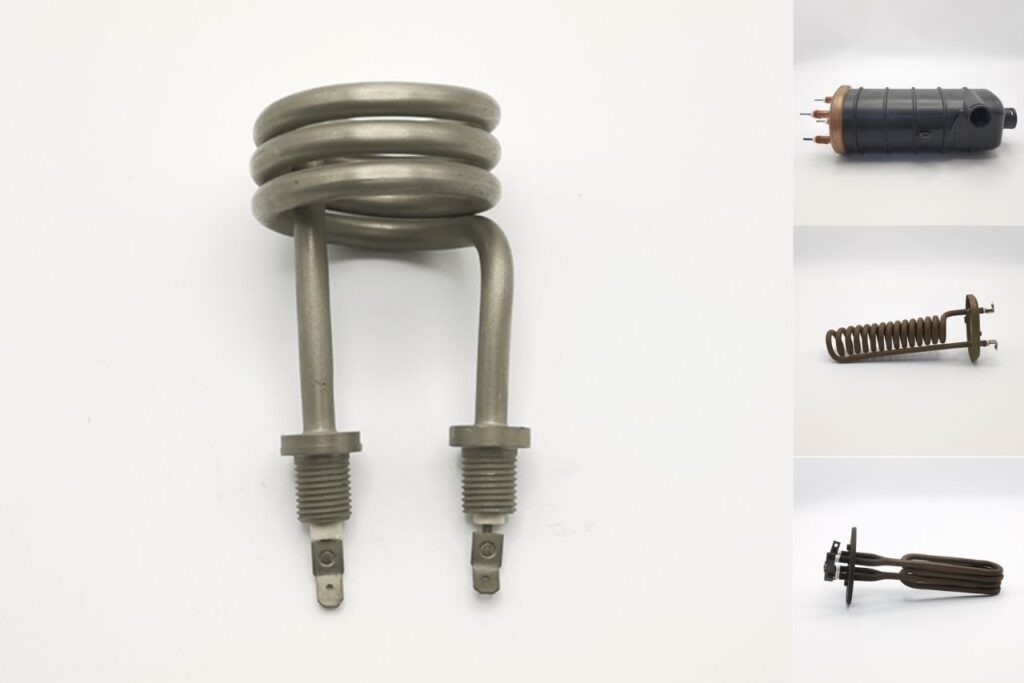
Kenmore electric dryers can often be repaired successfully by replacing the heating element, but the safest repairs treat the heater as a system: the correct element must match the appliance, wiring and terminals must be sound, and airflow must be restored so the new element is not overheated. This page focuses on safety-first replacement practices that reduce shock, fire, and repeat failure risk.
- Why heater replacement is a safety-critical job
- Safety tips technicians follow (non-negotiable)
- Preparation: identify model, correct part, and workspace
- Airflow safety: the hidden driver of overheating
- Safe replacement procedure (high-level steps)
- Post-repair safety checks and validation test
- ЧаВО (5)
- Ссылки и внешние ссылки
Heating elements convert electrical energy into heat through resistive (Joule) heating. Engineering references describe a heating element as an assembly of conductive material plus insulating/support framework and lead connectors not only a wire. If wiring is loose, if the coil contacts metal, or if airflow is restricted, temperatures can rise beyond design limits and cause insulation damage or fire hazards. (See: TUTCO heating element overview.)
This chart reflects practical safety hotspots seen in appliance service work (not a warranty dataset).
- Отключить питание: unplug the dryer or turn off the breaker.
- Verify power is off with a meter/tester before touching wiring.
- Do not work alone if the environment is risky (tight space, uncertain wiring).
- Do not bypass safety devices (thermal fuse/thermostats).
Whirlpool s published element replacement guidance (water heater context) includes an explicit Verify New Element step: confirm the replacement matches the unit s data plate voltage and wattage, and do not restore power until safe conditions are met. While a dryer is not a water heater, the same discipline applies: match the correct part and do not energize the heater until airflow and assembly are correct. Ссылка.
- Remove lint from the heater housing area and blower path before testing heat.
- Use a vacuum rather than compressed air (which can disperse lint into hidden cavities).
- Reinstall all covers and insulation before operation.
- Record the full Kenmore model number from the door frame label.
- Match the heating element assembly by model compatibility not by appearance alone.
- If buying parts for broader appliance programs, start from a structured category such as a Нагревательный элемент catalog to understand form factors and application constraints.
- Nut drivers/sockets, screwdrivers, needle-nose pliers
- Multimeter for continuity checks
- Рабочие перчатки (острые кромки листового металла)
- Phone/camera for wire routing photos (prevents miswiring)
A dryer element is designed to operate with airflow cooling. Restricted vents raise coil temperature, accelerate oxidation and deformation, and can open thermal protection. Engineering discussions of heater life emphasize that operating conditions and environment strongly affect longevity and safety. (Ссылка на TUTCO)
- Inspect and clean the vent path to the exterior termination.
- Confirm the exterior flap opens and exhaust flow is strong.
- Replace crushed or excessively long flexible ducting.
Kenmore dryers are built on multiple platforms; access may be rear-panel or front/lower service access depending on model. The steps below focus on safety-critical actions that apply across layouts.
- Power off and verified (unplug/breaker + meter check).
- Open the access panel and locate the heater housing.
- Photograph wiring and label connectors if needed.
- Inspect terminals: if spade connectors are discolored/loose, plan to replace them.
- Remove the element assembly carefully (avoid bending the heater housing or letting the coil contact metal).
- Vacuum lint around the heater housing and blower path.
- Install the new element, ensuring correct seating and clearance.
- Reconnect wires tightly and reassemble all covers/insulation.
- Reconnect venting before any heat test.
Loose connections can create localized heating; restricted airflow can overheat the element; wrong rating/fit can change operating behavior. Whirlpool s replacement guidance (other heater systems) explicitly emphasizes correct replacement verification and tight connections before restoring power. Ссылка.
- All covers installed and fastened
- Vent reconnected; exterior airflow verified
- No loose wires near moving parts
- No abnormal smell from terminals during first heat run
- Запустите цикл нагрева на 10–15 минут по таймеру.
- Confirm warm exhaust and stable operation.
- Check outdoor vent airflow (strong flow is expected).
- Stop and investigate immediately if overheating, smoke, or burning odor occurs.
| After-repair symptom | Most likely cause | Immediate safe response | Long-term fix |
|---|---|---|---|
| No heat, but tumbles | Open thermal fuse/thermostat, miswire, supply issue | Power off; re-check continuity and wiring photos | Replace failed safety device; correct airflow |
| Запах гари в задней части | Loose terminal / connector overheating | Stop cycle; power off; inspect connectors | Replace terminals/pigtails; ensure tight fit |
| Overheats quickly | Vent restriction or assembly airflow issue | Stop cycle; inspect vent | Clean/repair vent path; verify blower path |
Table 1 Common post-repair safety symptoms and what to do next.
It can be, if the individual can safely disconnect and verify power, follow model-specific procedures, and correct airflow issues. If there is uncertainty about electrical testing or wiring condition, a qualified technician is recommended.
Working on a live circuit (not verifying power is off) and running the dryer with restricted venting. Both increase shock and fire risk.
Usually because the overheating root cause remains commonly restricted airflow or lint accumulation. The fuse opening is often a symptom of the environment, not a random part failure.
Mismatch can change current and heating behavior. Whirlpool s published heater replacement steps include a specific instruction to verify voltage and wattage against the unit data plate before installing a new element. Ссылка.
No. For example, a plug-in radiator/towel warmer element lists specs like 1000W, IP67, UL approval, and materials (ABS + stainless steel) useful for that application, but not a dryer replacement part. Ссылка.
- TUTCO-Farnam definition of heating element assemblies, materials, and life considerations: https://tutco.com/conductive/heating-elements
- Whirlpool support (water heater element replacement) verify voltage/wattage; tight connections; warnings about energizing under unsafe conditions: https://www.whirlpoolwaterheaters.com/support/help/element-was-out-of-range/24
- Hudson Reed example heater specification page (1000W, IP67, UL Approved, materials, warranty): https://usa.hudsonreed.com/1000-plug-in-watt-electric-heating-element-76309
- Jinzhong (JINZHO) internal link anchors required for this cluster and product-family context: Нагревательный элемент, Производитель нагревательных элементов, Завод по производству нагревательных элементов, Решения по нагреву при литье под давлением
Originality note: This is original safety-focused content. Sources are referenced for definitions, safety principles, and published specification examples; source text is not reproduced.