
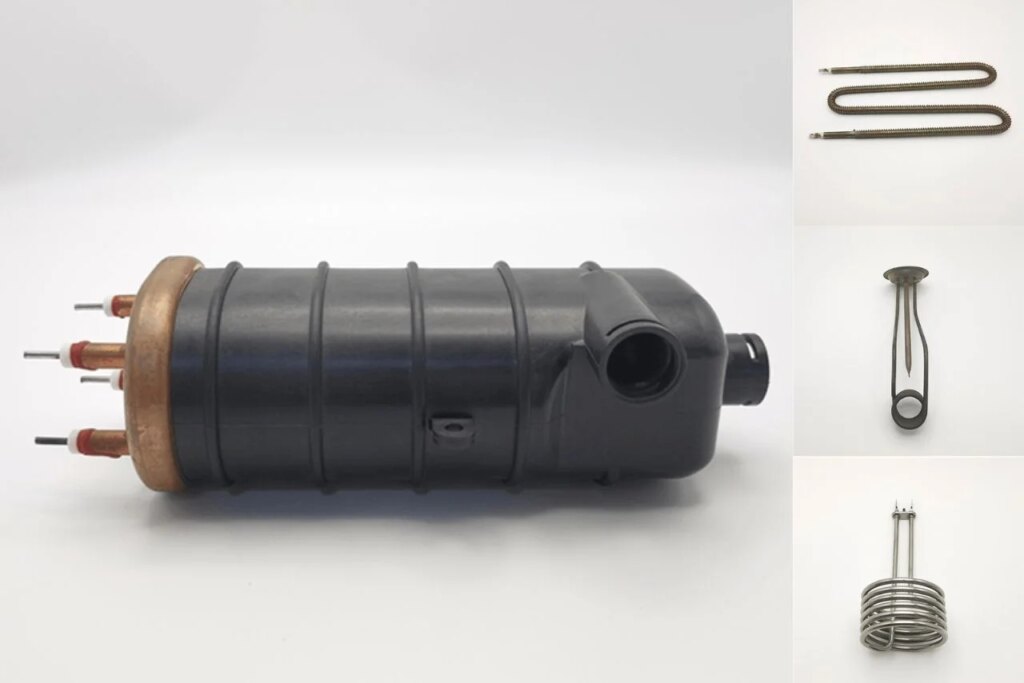
The absence of thermal energy in a dishwasher cycle compromises both hygiene and appliance safety.
While the spray arms may still rotate and water may still flow, a broken Нагревательный элемент removes the “Sanitize” and “Heated Dry” capabilities that are foundational to modern kitchen hygiene. Leveraging 40 years of industrial expertise from Camewould (Jin Zhong) a global leader and Производитель нагревательных элементов this technical analysis explores why operating a dishwasher with a failed thermal core is a risk to your health and your home’s electrical integrity.
Technical Guide Overview
I. Sanitization Failure: The Biological Risk
The most critical role of a dishwasher is the elimination of pathogens. Most global health standards require a final rinse temperature of at least 150 F (65 C) to achieve a 99.999% reduction in bacteria. When the tubular heating element is fractured or shows zero целостность цепи, the water temperature remains at the household’s ambient water heater setting, usually 120 F. This 30-degree difference is the gap between sanitized dishware and a breeding ground for bio-films and food-borne illnesses.
II. Detergent Activation and Grease Dissolution
Modern dishwasher detergents are engineered with enzymes that only activate at specific thermal thresholds. Without a functional Завод по производству нагревательных элементов-tested component, grease and fats remain in a solid or semi-solid state. This leads to:
- Fatty Residue: White, cloudy films on glassware.
- Pump Clogging: Solidified fats accumulating in the filtration system and drain pump.
- Odor Build-up: Unwashed food particles trapped in cold water residue causing foul smells.
Operational Comparison: Functional vs. Broken Element
| Особенность | Functional Element | Broken Element |
|---|---|---|
| Sanitization | Yes (150 F+) | No (Inlet Temp only) |
| Drying Performance | Bone Dry (Radiant Heat) | Wet/Damp dishes |
| Electrical Risk | None (ISO9001 Tested) | High (Potential Ground Fault) |
| Detergent Efficiency | Full Enzyme Activation | Poor (Grease Streaks) |
III. Electrical Hazards and Short Circuits
A “broken” element often means the outer Incoloy 800 or stainless steel sheath has developed pitting or cracks. When water enters these fractures, it contacts the Нихромовый (NiCr) resistive wire and the Magnesium Oxide (MgO) insulation. This creates a “leakage current” that can:
- Trip the GFCI: Constantly shutting down the kitchen circuit.
- Damage the Control Board: Excessive current draw through a shorted element can fry the relays on the main electronic controller.
- Electrical Arcing: Creating localized fires beneath the dishwasher tub.
IV. Engineering Specs: Identifying Thermal Fatigue
At Suli Technology (Camewould), our CNAS-accredited labs conduct rigorous stress tests to ensure our elements survive 5,000+ heating cycles. When a standard element fails, it is often due to mineral calcification which creates “hot spots.” In premium appliances, Решения по нагреву при литье под давлением are used to distribute heat more evenly, reducing the risk of the catastrophic fractures that occur in traditional exposed coils.
V. Expert Maintenance FAQ
Q1: Can I just turn off the “Heated Dry” and keep using it?
No. Even with the dry cycle off, the dishwasher still tries to energize the element during the wash and rinse phases to maintain temperature. If the element is physically broken, it remains an electrical hazard regardless of the setting.
Q2: How do I confirm the element is broken?
Use a digital multimeter. A healthy element should register between 10 and 30 . An “O.L” (Open Loop) reading confirms the internal coil is snapped and requires replacement from a reputable Производитель нагревательных элементов.
Q3: Will using it without heat damage the pump?
Indirectly, yes. Cold water allows grease to solidify and coat the pump impellers and filters. Over time, this increases the workload on the motor, leading to premature pump failure.
Q4: Are aftermarket elements safe for Whirlpool or Bosch units?
As long as the component meets VDE, UL, and ISO9001 standards (like those produced by Camewould), it is safe. We produce over 3 million units monthly for global brands, ensuring factory-level precision in every replacement.
Q5: Is it normal for my dishwasher to display an error code when the heater fails?
Yes. Most modern units (like Whirlpool’s 7-1 code) will detect that the water temperature is not rising as expected and will enter a “lockout” mode to prevent the cycle from continuing, specifically to avoid the grease build-up mentioned earlier.
Industrial Precision, Household Safety
Manufacturing 3 million units monthly with a 40-year legacy, Camewould is the expert in clean heat technology. Trust our engineering to keep your family safe and your dishes spotless.
References & Technical Citations:
- [1] Camewould Electrical Technology – Safety Guidelines for Submerged Heating Elements (2025). jinzho.com
- [2] Wikipedia – The Physics of Joule Heating and Electrical Continuity. en.wikipedia.org
- [3] IQS Directory – Troubleshooting Industrial and Domestic Heating Elements. iqsdirectory.com
- [4] Sears Home Services – Why Your Dishwasher Needs a Functional Heating Element. searshomeservices.com

