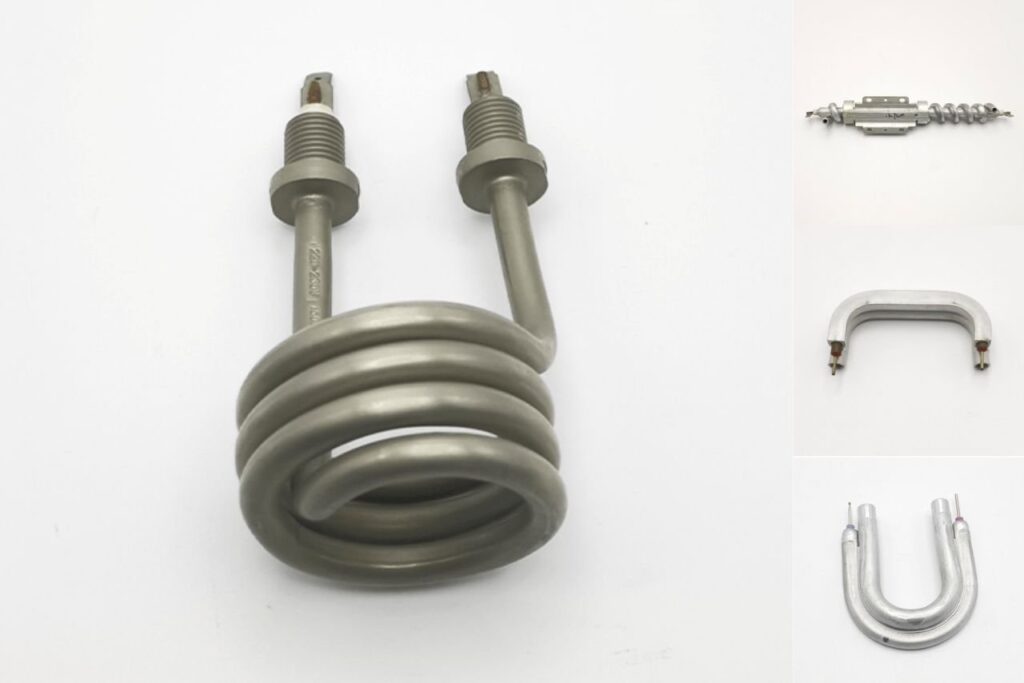
This guide explains a technician-style test sequence for a Kenmore electric dryer heating element using a multimeter. The goal is to confirm whether the element is open, shorted to the heater housing, or being prevented from heating by an open safety device or airflow restriction so repairs solve the root cause.
A Kenmore dryer can tumble normally and still produce no heat. In most cases, the cause is one of four categories: (1) the heating element is open, (2) the element is shorting to the heater housing, (3) a thermal fuse/thermostat has opened, or (4) airflow is restricted and overheating has triggered safety cutouts. The tests below isolate each category with minimal disassembly and clear pass/fail readings.
- Safety first (before any meter test)
- Tools needed
- What a heating element really is (why testing is more than checking a wire)
- Finding the heater housing on common Kenmore layouts
- Test 1 Element continuity (open coil check)
- Test 2 Short to ground (element to housing)
- Test 3 Safety chain continuity (thermal fuse/thermostats)
- Airflow verification (repeat failure driver)
- Interpretation table: what each result means
- FAQ (7)
- Ссылки и внешние ссылки
- Отключить питание: отключите сушилку от сети или выключите автомат в щитке.
- Verify power is off before touching any terminals.
- Allow the heater housing to cool if the dryer was recently running.
- Reinstall covers before any live test run.
If wiring insulation is melted or the breaker trips, a qualified technician should be used.
- Digital multimeter (ohms + continuity)
- Screwdrivers / nut drivers (model dependent)
- Needle-nose pliers (spade connectors)
- Vacuum + brush (lint removal)
- Phone/camera (document wire positions)
- Рабочие перчатки (острые кромки листового металла)
A heating element is not just a piece of resistance wire. TUTCO defines a heating element as a component composed of both electrically conductive and insulating material, designed to serve a heating purpose. That means terminals, supports/insulators, and the surrounding framework all matter and a mechanical failure (coil sagging) can cause an electrical failure (short to housing). Источник.
Kenmore dryer no heat, heating element continuity test, thermal fuse test, high-limit thermostat, короткое замыкание на корпус, vent clogged symptoms.
Kenmore dryers are produced across multiple platforms. Many electric units provide rear access to the heater housing; some require front/lower access. The heater housing is typically a metal canister/box in the airflow path near the blower and exhaust ducting.
This is a service heuristic. Confirm by tracing the airflow path and identifying the heater housing and attached thermostats/fuse.
- With power disconnected, access the heater housing.
- Photograph the wiring.
- Pull the two heater wires off the element terminals (grip the connector body, not the wire).
- Set the meter to resistance ( ).
- Measure across the two element terminals.
- OL / infinite resistance: the element is open (failed).
- Finite resistance: the coil is not broken; proceed to Test 2 and Test 3.
A good continuity reading does not prove safe operation. A coil can be shorting to the housing, or the safety chain may be open.
- Keep the element wires disconnected.
- Set the meter to continuity (beep) or low ohms.
- Touch one probe to bare metal on the heater housing.
- Touch the other probe to Terminal A. Repeat for Terminal B.
- No continuity: normal (no short to housing).
- Continuity / low ohms: element is shorted to ground replace element and inspect for coil rubbing or housing deformation.
Safety devices can open to prevent overheating. A dryer with restricted venting may overheat and open a thermal fuse or trip high-limit behavior. Testing these parts prevents wasted money on a heater that is not the problem.
- Identify the thermal fuse / thermal cut-off and thermostats (typically on blower or heater housing).
- Remove at least one wire from each device to avoid reading through the circuit.
- Check continuity across the device terminals.
- Closed/continuous: device is allowing current through.
- Open/no continuity: device is preventing heating; replace as appropriate and correct the underlying cause (often airflow).
Whirlpool s heating element replacement instructions (water heater context) emphasize verifying correct replacement ratings (voltage/wattage), ensuring tight wire connections, and not restoring power until safe conditions exist. This discipline is transferable to dryer service: verify correct parts and do not energize the heater with unsafe conditions (e.g., blocked airflow). Ссылка.
- Inspect and clean lint screen housing (not just the screen).
- Check vent hose for crushing, kinks, or excessive length.
- Confirm strong airflow at the exterior vent termination while running.
Airflow is the cooling mechanism for a dryer heater. Reduced airflow increases temperature cycling and accelerates failures.
| What the meter shows | Likely diagnosis | Next step | Root cause to consider |
|---|---|---|---|
| Element terminal-to-terminal reads OL | Heating element is open (failed) | Replace element assembly; inspect terminals and housing | Overheating, age, coil damage |
| Element reads finite ohms, but terminal-to-housing shows continuity | Element short to ground (unsafe) | Replace element; inspect for coil rubbing/housing deformation | Overheat + coil sag; installation damage |
| Element reads good; thermal fuse is open | Safety device opened | Fix airflow; replace fuse; verify operation | Vent restriction is the most common driver |
| Element + safeties read good; still no heat | Control issue / wiring / power supply problem | Verify supply and control outputs; inspect harness | Loose terminals, relay/timer, incomplete supply |
Table 1 This table prevents the common mistake of replacing a good element.
Yes. The motor circuit can run while the heater circuit is open due to a fuse, thermostat, wiring, or element fault.
No. A professional check also tests for a short to the heater housing (ground) and confirms the safety chain is closed.
It indicates unsafe contact (coil rubbing/sagging). The element should be replaced and the housing inspected for deformation.
Most often from overheating related to restricted airflow (lint buildup, crushed ducting, blocked vent termination).
Common causes are unresolved vent restriction, loose/burnt terminals, or incorrect fitment causing coil contact.
It is the conversion of electrical energy to heat when current flows through a resistance alloy. TUTCO describes this mechanism in its heating element overview. Ссылка.
Supplier catalogs illustrate how broad heating element can be (tubes, plates, films, integrated modules). For example, Jinzhong s product categories include Нагревательный элемент as well as integrated Решения по нагреву при литье под давлением.
- TUTCO-Farnam heating element definition, frameworks, materials, and life considerations: https://tutco.com/conductive/heating-elements
- Whirlpool support (water heater element replacement) rating verification and safe power restoration principles: https://www.whirlpoolwaterheaters.com/support/help/element-was-out-of-range/24
- Jinzhong catalog links referenced for required anchors: Производитель нагревательных элементов, Завод по производству нагревательных элементов, Нагревательный элемент, Решения по нагреву при литье под давлением
Originality note: This article is original troubleshooting guidance and does not copy source text. Sources are cited for definitions and transferable safety principles.
Disclaimer: Educational content only. Kenmore dryer designs vary by model. Follow model-specific service instructions and local electrical safety practices.