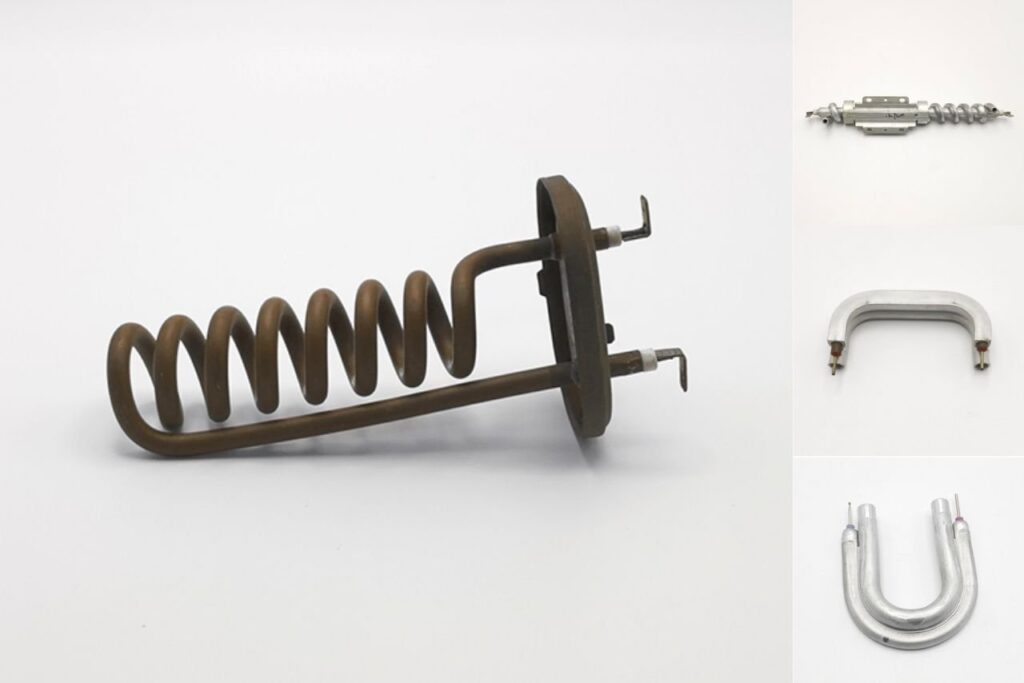
This cluster page shows how technicians confirm whether a Whirlpool electric dryer s нагревательный элемент is the true cause of no heat, and how to avoid the common trap of replacing the element when the actual fault is a thermal fuse, thermostat, wiring, or airflow restriction.
- Quick answer: the 3 tests that settle it
- Tools and safety prerequisites
- Where the element sits in the dryer heating system
- Test 1 Continuity across the element terminals
- Test 2 Short to ground (element to heater housing)
- Test 3 Confirm the safety chain (thermal fuse/thermostats)
- Airflow checks (why good elements keep failing)
- Interpreting results: decision table
- Common mistakes and how professionals avoid them
- If the element is bad: replacement principles
- ВОПРОСЫ И ОТВЕТЫ (8)
- Sources cited & outbound links
- Continuity: measure resistance across the element terminals (open circuit = failed element).
- Short to ground: check each element terminal to the heater housing (any continuity = unsafe short).
- Safety chain: test the thermal fuse and thermostats for continuity (an open safety device can stop heat even if the element is good).
Engineering context: a heating element is an assembly of conductive alloy plus insulating/support materials and terminals, designed for a specific purpose. Heating is produced by resistive (Joule) heating. Ссылка на TUTCO.
A dryer element can test good and the dryer can still have no heat due to an open safety device, a power supply issue, or airflow-related overheating. Conversely, replacing an element without restoring airflow can lead to repeat failures.
Parallel safety principle: Whirlpool s element replacement guidance (water heaters) stresses verifying correct replacement ratings (voltage/wattage) and not energizing the system under unsafe conditions (their example is dry fire ). Ссылка на Whirlpool.
- Disconnect power (unplug or switch off breaker) before opening panels or removing wires.
- If there is melted wiring, a burning smell, or repeated breaker trips, a qualified technician should be used.
- Digital multimeter (DMM) with resistance/continuity mode
- Nut drivers / screwdrivers (model dependent)
- Длинногубцы (для клеммных разъемов)
- Vacuum/brush for lint removal (airflow reliability)
In most electric dryers, the heating element sits in a heater housing and heats air as the blower pulls air through the drum and out the exhaust duct. The element is controlled and protected by a chain that typically includes a cycling thermostat and one-time thermal protection (thermal fuse / thermal cut-off). When any of those devices open, heat stops even if the element itself is electrically intact.
This chart is a practical diagnostic prioritization (not a warranty dataset). It reflects how professionals sequence checks: airflow + safeties first.
- Disconnect power.
- Access the heater housing (rear or front access depends on model).
- Photograph wiring to prevent reconnection errors.
- Remove the two element wires (spade connectors) from the element terminals.
- Set the meter to resistance ( ). Measure across the two element terminals.
- Open circuit / OL / infinite resistance: the element is broken and cannot heat.
- Finite resistance: the element is likely intact; proceed to the short-to-ground test and safety-chain test.
An element can show continuity and still be unsafe if it is shorting to the housing. That is why Test 2 matters. Heater design references note that the element is part of an assembly framework, insulators, terminals so mechanical damage can create unintended contact points. Источник.
- Keep the element wires disconnected.
- Set the meter to continuity or the lowest resistance range.
- Touch one probe to a clean, bare metal part of the heater housing (ground reference).
- Touch the other probe to Terminal A of the element; then repeat for Terminal B.
- No continuity / very high resistance: normal (no short to housing).
- Continuity / low resistance: the element is shorting to ground replace it and inspect the housing for rubbing points and deformation.
When Whirlpool dryers stop heating, it is often because a protection device opened to prevent unsafe temperature rise. This commonly happens with restricted airflow (lint, crushed duct, blocked exterior flap).
- Identify the thermal fuse / thermal cut-off and thermostats on the blower housing or heater housing (model dependent).
- With power disconnected, remove at least one wire from each device so the meter does not read through other components.
- Check continuity across the device terminals.
- Closed / continuous: device is currently allowing current through.
- Open / no continuity: device has opened replace as appropriate and correct airflow/root cause before running heat again.
Safety/workmanship principle borrowed from Whirlpool s heater replacement procedure: verify the replacement is correct for voltage/wattage, and make sure wire connections are tight before restoring power. Ссылка на Whirlpool.
- Clean lint filter and lint screen housing.
- Inspect vent hose for crushing or long runs.
- Check outdoor exhaust flow: it should be strong during operation.
Conceptual chart showing practical risk trend: less airflow generally means higher element temperature and more failures.
| Test result | What it indicates | What to do next (professional order) |
|---|---|---|
| Element reads open (OL) | Failed нагревательный элемент (broken coil) | Replace element; inspect heater housing for lint, coil rubbing; verify airflow before running heat |
| Element has resistance, but terminal-to-housing shows continuity | Element short to ground (unsafe) | Replace element; check for bent housing/supports causing contact; verify wiring condition |
| Element tests good; thermal fuse open | Overheat event or chronic airflow issue | Fix venting/airflow; replace fuse (and any specified kit parts); run supervised test cycle |
| Element tests good; safeties test good; still no heat | Possible power supply issue, control/timer/relay, wiring break | Verify supply and heater relay/control outputs; inspect harness and terminals; consider technician diagnosis |
Table 1 A decision map to prevent unnecessary element replacement.
If wires are left connected, the meter can read through other components and give a false impression that a part is good. Professionals remove at least one lead before testing continuity.
Airflow restriction is a repeat-failure driver. Lint cleaning and vent inspection are treated as part of the repair not optional maintenance.
Loose spade terminals create local heating and oxidation. If terminals are discolored or loose, they should be replaced, not reused.
Whirlpool s guidance in other heater contexts is explicit about verifying voltage and wattage against the data plate. The same principle applies: match the correct rating and fitment for the appliance.
- Correct mechanical fit (mounting, housing geometry)
- Correct electrical rating (voltage/wattage per model requirements)
- Correct terminal style and insulation layout
For organizations sourcing heater components beyond single repairs, Jinzhong positions itself as a Производитель нагревательных элементов with 30+ years of experience and multi-million monthly output, offering product families across tubes, plates, films, and integrated solutions. A broader view of available Нагревательный элемент categories can help teams align heater form factor with application constraints.
Factory information can also be referenced via Завод по производству нагревательных элементов. For compact, integrated heater assemblies used in appliances like coffee machines and kettles, see Решения по нагреву при литье под давлением.
Yes. A dryer can tumble even if the heater circuit is open (failed element, blown thermal fuse, open thermostat, or power supply issue affecting the heater).
No. Continuity only shows the coil is not broken. A professional test also checks for a short to the housing (ground fault) and verifies the safety chain.
Most commonly overheating due to restricted airflow lint buildup, crushed venting, blocked exterior termination, or a failing blower path.
The most common reasons are unresolved airflow restriction, coil rubbing/shorting due to misalignment, or heat-damaged terminals creating high-resistance hot spots.
It is the conversion of electrical energy into heat when current flows through a resistive alloy. TUTCO describes this as the fundamental mechanism of electric heaters. Ссылка.
Yes. Heater engineering references note that contaminants and operating conditions can shorten life; higher temperatures and cycling accelerate oxidation and wear. Ссылка.
No. Even though many heaters are 1000W or tubular, application requirements differ (fitment, safety approvals, ingress protection, intended environment). For example, a plug-in radiator/towel warmer element lists IP67 and UL approval useful specs, but not a dryer replacement part. Ссылка.
Replace the failed component, correct the root cause (especially airflow), reassemble with all covers installed, and run a supervised heat cycle to verify stable operation.
- TUTCO-Farnam heating element definition, materials, integration styles, heater life and environment considerations: https://tutco.com/conductive/heating-elements
- Whirlpool Water Heaters replacement workflow principles (verify correct voltage/wattage; ensure safe conditions before energizing; tight connections): https://www.whirlpoolwaterheaters.com/support/help/element-was-out-of-range/24
- Jinzhong Electric Heating manufacturer overview and product categories (internal linking for this content cluster): https://jinzho.com/, Нагревательный элемент, Завод по производству нагревательных элементов, Решения по нагреву при литье под давлением
- Hudson Reed example heater specification page (illustrates application-specific safety/spec requirements such as IP67 and UL approval): https://usa.hudsonreed.com/1000-plug-in-watt-electric-heating-element-76309
Attribution note: This article is original and does not reproduce source text. Sources are cited to support definitions (what a heating element is), engineering considerations (materials, environment, integration styles), safety principles (correct rating and safe energizing), and example specification fields.
Disclaimer: This content is for educational purposes. Specific dryer models differ. Follow the model s service documentation and local safety regulations.