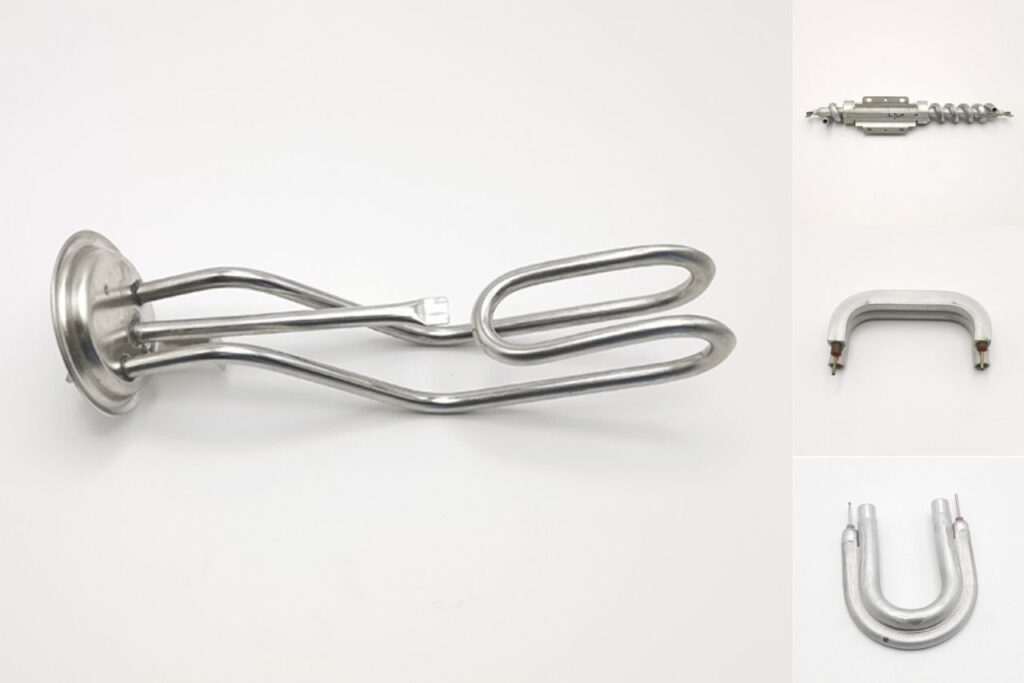
A Kenmore dryer 加熱素子の交換 is often a low-to-moderate cost repair compared with purchasing a new dryer, but the final bill depends on (1) whether the element is the only failed part, (2) whether overheating/airflow issues caused collateral damage (thermal fuse, thermostats, wiring), and (3) who performs the work (DIY vs technician). This page breaks down costs using a total-cost approach parts, labor, risk of repeat failure, and downtime.
The lowest-cost scenario is an open heating element with no other damage. Costs rise when overheating has opened a thermal fuse/cut-off, pushed thermostats out of range, or damaged terminals and wiring.
- Element assembly
- Thermal fuse / thermal cut-off (if open)
- Cycling / high-limit thermostat(s)
- Terminals or pigtail harness (if heat-discolored)
Kenmore dryer platforms vary: some allow easy rear access; others require more disassembly. Technician labor time can exceed parts cost, especially if diagnostics and airflow correction are included.
Restricted venting is one of the most common reasons heater circuits fail repeatedly. Low airflow raises heater temperature and can open safety devices. If the repair doesn t include vent inspection/cleaning, the probability of a second repair increases and total cost rises.
Heater engineering references emphasize that operating conditions (airflow, environment, watt density) strongly influence heater life. TUTCO notes heater life is impacted by oxidation, deformation, temperature cycling, and application conditions. TUTCO参照.
A service-economics prioritization: root-cause misses (airflow) often cost more than the part itself.
| Package | What s included | When it applies | Cost risk level |
|---|---|---|---|
| Best case | Element only + basic cleaning | Element open, no heat damage, airflow OK | 低い |
| Typical case | Element + thermal fuse/thermostat as needed + vent cleanup | Overheat event or long dry times reported | 中程度 |
| Worst case | Element + multiple safety parts + wiring/terminal repair + major vent remediation | Repeated failures, burnt connectors, poor airflow design constraints | 高い |
Table 1 These packages describe how scope expands and why invoices vary widely.
Repair TCO = Parts + Labor + (Probability of repeat failure Expected repeat repair cost) + Downtime costs.
The probability of repeat failure rises sharply when airflow restriction is not fixed, because the heating element is an engineered component whose life depends on operating conditions. 参考.
Whirlpool s heater replacement steps (water heater context) explicitly say to verify the new element using the data plate for voltage and wattage and to keep connections tight. The dryer context differs, but the principle is identical: correct rating/fit reduces premature failures and unnecessary returns. Whirlpool社参照.
- Repair estimate approaches ~50% of the cost of a comparable new dryer.
- Multiple major issues exist (motor, drum supports, control board, heater circuit).
- There is repeated overheating damage and venting cannot be improved.
- Downtime cost is high (large household; business laundry needs).
- The unit is otherwise mechanically healthy.
- The failure is isolated to the element or a single safety device.
- Airflow/venting issues can be corrected.
- The buyer can safely DIY or has affordable service access.
- Fix airflow first: clean the vent path end-to-end and confirm strong outdoor exhaust.
- Inspect terminals: replace heat-discolored spade connectors instead of reusing them.
- Verify correct replacement: match by model and rating; avoid close enough elements.
- Test after repair: run a supervised heated cycle and confirm stable cycling + airflow.
The term heating element spans many constructions: wire coil heaters, tubular heaters, thick/thin film heaters, heating plates, and more. This is why compatibility and application requirements matter.
Jinzhong s catalog illustrates this breadth under its 加熱エレメント category, including 加熱管 and other element families. For integrated modules used in appliances like coffee systems, their ダイカスト加熱ソリューション list multiple die-cast aluminum alloy + thick film resistor products (e.g., boiler heat exchangers, coffee machine heater parts).
Manufacturer positioning: Jinzhong describes itself as a 発熱体メーカー with 30+ years of experience and scaled capacity (site-stated multi-million units per month). Factory overview is available at 発熱体工場.
Hudson Reed s 1000W plug-in heating element listing shows how application-specific specs are disclosed: 1000W power, IP67 ingress protection, UL approval, ABS & stainless materials, and a 2-year warranty. This is not a dryer heater, but it demonstrates why heating element purchases must be matched to use-case. 参考.
Missed root causes especially restricted venting leading to repeat failures, plus collateral damage (burnt terminals, open thermal protection).
It is not recommended. Airflow is the dryer s cooling mechanism for the heater. Poor airflow raises heater temperature and can shorten element life or open thermal protection.
Yes. Whirlpool s element replacement guidance (water heater context) explicitly instructs verifying the new element using the data plate voltage and wattage. The principle applies to any resistive heating element: correct rating reduces mismatch failures. 参考.
When total repair cost approaches ~50% of replacement cost, when multiple major components are failing, or when repeated overheating damage suggests ongoing system issues that cannot be corrected.
- TUTCO-Farnam heating element definition, materials, integration, heater life factors: https://tutco.com/conductive/heating-elements
- Whirlpool support step guidance emphasizing correct element selection (voltage/wattage) and safe energizing: https://www.whirlpoolwaterheaters.com/support/help/element-was-out-of-range/24
- Hudson Reed example heater spec listing (1000W, IP67, UL, materials, warranty): https://usa.hudsonreed.com/1000-plug-in-watt-electric-heating-element-76309
- Jinzhong (JINZHO) internal links and catalog context: https://jinzho.com/, 加熱エレメント, ダイカスト加熱ソリューション
Originality note: This analysis is original and does not copy source text. Sources are used for definitions, safety principles, and specification examples.