
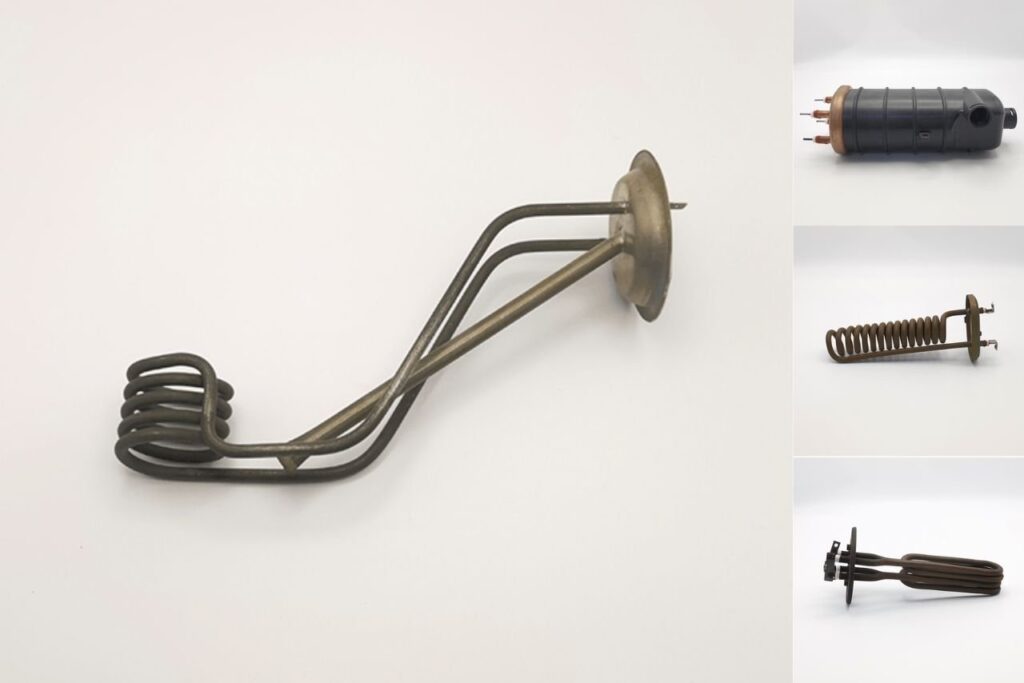
Kenmore dryer heat issues are best solved by tracing the heater circuit instead of swapping parts blindly: verify airflow, verify the heater safety chain (thermal fuse/high-limit thermostat), and only then confirm whether the heating element is open or shorted. This pillar guide explains the most common no heat scenarios, how to test them safely, and which fixes prevent repeat failures.
- Quick answer: what usually fails first
- How Kenmore dryer heating works (system view)
- Safety and do not energize early rules
- Symptom-to-cause map (fast triage)
- Diagnostic tests (multimeter workflow)
- Fixes that actually last (element, fuse, thermostats, airflow, wiring)
- Preventing repeat heater failures
- Selecting the correct heating element
- For product teams: heating element types and manufacturing options
- Preguntas Frecuentes (7)
- Referencias y enlaces externos
Not a warranty dataset this is a practical troubleshooting weighting based on common field patterns.
- Restore flujo de aire end-to-end (lint screen housing blower duct exterior vent).
- Test the safety chain: fusible térmico and thermostats.
- Test the heating element for open circuit and shorts.
- Repair wiring/terminals as needed; then validate with a controlled heat cycle.
A heating element is not just a wire that gets hot. Heater engineering sources define it as an assembly of electrically conductive material and insulating/support material with safe lead connectors, designed to serve a heating purpose. In airflow-heated appliances (like electric dryers), the heater is cooled by moving air, so element temperature and therefore life is strongly dependent on airflow. (TUTCO: Elementos Calefactores)
- Heating element assembly (resistive heater inside a housing)
- Safety devices: thermal fuse / thermal cut-off; high-limit thermostat; cycling thermostat
- Airflow system: blower, ducts, vent run, exterior termination
- Electrical supply and connections: proper voltage, tight terminals, intact wiring insulation
This guide targets common search intent around Kenmore dryer not heating, elemento calefactor de la secadora replacement, thermal fuse symptoms, Termostato de límite alto, dryer vent clogged, y no heat but tumbles.
Electric dryers operate at dangerous voltages and currents. If the technician is not trained to work on electrical appliances, a qualified professional should be used. Power must be disconnected and verified off before panels are removed or wires are handled.
Whirlpool s element replacement guidance for water heaters emphasizes verifying replacement voltage/wattage and warns not to restore power until safe operating conditions are met (they note the upper element will burn out if energized before the tank is completely full dry fire ). For a dryer, the equivalent unsafe condition is running heat with restricted airflow, which can overheat the element and open safety devices. (Whirlpool support reference)
- Disconnect power at outlet/breaker and confirm with a meter.
- Allow the appliance to cool before touching heater components.
- Do not bypass fuses/thermostats as a test. Replace failed protection and fix the root cause.
- Reinstall all covers and insulation before normal operation.
| Síntoma | Causas más probables | Fastest confirmation | Fix direction |
|---|---|---|---|
| No heat, drum tumbles | Thermal fuse open; element open; supply issue | Pruebas de continuidad; verificar suministro | Replace failed part; correct airflow if overheated |
| Heats then stops / trips safety | Vent restriction; high-limit opening | Outdoor exhaust check | Vent cleaning; inspect thermostats |
| Tiempos de secado prolongados | Restricted airflow (most common) | Airflow at exterior vent | Clean/shorten vent run; remove lint buildup |
| Burning smell near rear panel | Loose terminal / overheated connector | Visual inspection of spade terminals | Replace terminals/pigtail; tighten connections |
| Overheats quickly | Severe vent restriction; coil rubbing/short | Airflow + housing inspection | Clear airflow; ensure correct element seating |
Table 1 Triage map designed to reduce unnecessary part replacement.
- Airflow first: confirm strong exhaust outdoors; inspect vent hose for kinks/crushes.
- Thermal fuse: should read closed/continuous at room temperature.
- High-limit thermostat y termostato cíclico: test continuity as applicable.
- Elemento calefactor: test for continuity (open = failed) and check for shorts to housing if possible.
- Terminales/cableado: inspect for discoloration, looseness, melted insulation.
Heater performance depends on material properties and integration. TUTCO describes heater frameworks (suspended/embedded/supported) and notes that environment and operating conditions affect longevity. (Fuente)
When checking continuity, remove at least one wire from the component being tested so the meter does not read through alternate circuit paths.
- Match the correct element to the model number and rating.
- Ensure the coil does not touch the housing; misalignment can cause shorts/hot spots.
- Reinstall all insulation and covers to maintain safe airflow and reduce shock risk.
For component sourcing context: Elemento calefactor.
- If a fuse is open, replace it and restore airflow; otherwise the replacement may open again.
- Inspect venting, blower area, and lint screen housing for heavy lint.
- Clean the entire vent run to the outside termination.
- Replace crushed or excessively long flexible ducting.
- Confirm the exterior vent flap opens freely.
- Replace heat-discolored spade terminals; do not reuse loose connectors.
- Correct wire routing so insulation does not touch hot surfaces.
A service-informed prioritization chart for reliability work.
- Clean lint screen every load; deep-clean lint screen housing periodically.
- Inspect vent run seasonally (or more often in heavy use or long duct runs).
- After any heater repair, run a controlled heat test and verify outdoor exhaust strength.
A heating element is a designed assembly, not a generic commodity. TUTCO explains that the element includes conductive alloy plus insulating/support structure and lead connections, and that material properties and environment affect performance. (Fuente)
In other heater replacement instructions, Whirlpool explicitly states to verify the new element is correct by referencing the data plate for voltage and wattage; that selection discipline applies to dryer heaters as well. (Fuente)
A plug-in element designed for radiators/towel warmers lists specs like 1000W, protección contra ingreso IP67, y Aprobado por UL, and materials such as ABS + stainless steel. Those published specs are valuable for understanding how application-specific heater design is but such parts are not interchangeable with dryer heating elements. (Hudson Reed listing)
Appliance heating solutions extend well beyond dryer air heaters. Product teams often choose between tubular heaters, heating plates, thick film heaters, and integrated die-cast heating modules depending on heat transfer requirements and packaging constraints. Jinzhong s published catalog structure illustrates these families: Tubos de calefacción, Placa calefactora, Film calefactor, plus Soluciones de calefacción para fundición a presión y Caldera eléctrica.
Jinzhong describes itself as a Fabricante de elementos calefactores with 30+ years experience in the electric heating industry, full-chain capabilities (design, mold development, precision manufacturing), and scaled capacity (site references multi?million monthly output). It also lists multiple international certifications (e.g., ISO9001/14001/45001, VDE, UL, RoHS). These factors are typically evaluated by procurement teams because they affect delivery stability and quality control.
Factory context link requirement: Fábrica de resistencias.
The heater circuit can be open while the motor circuit still runs. Common causes include an open thermal fuse/high-limit thermostat, an open heating element, or a supply/connection fault.
Restricted airflow (lint buildup or vent restriction) is a frequent root cause. It reduces drying efficiency and can cause overheating that opens safety devices.
Many dryer thermal fuses are one-time devices and must be replaced when open. The underlying cause (typically overheating from airflow restriction) should be corrected.
Common reasons include unresolved vent restriction, loose terminals causing localized heating, coil rubbing/shorting, or using an incorrect element rating/fit.
It is an assembly of electrically conductive material and insulating/support material with terminals designed for a specific application. TUTCO highlights that design and material choices determine performance, life, and safety. (Fuente)
Yes. In air-heating appliances, airflow governs element temperature and protects components. Poor airflow is a common driver of repeated thermal cut-offs and heater damage.
If electrical testing is unfamiliar, if wiring is burned, if the breaker trips, or if repeated failures occur after repairs, professional service is recommended.
- TUTCO-Farnam (definitions, heater types, materials, environment and longevity considerations): https://tutco.com/conductive/heating-elements
- Whirlpool support (replacement discipline: verify voltage/wattage; tight connections; do not energize under unsafe conditions): https://www.whirlpoolwaterheaters.com/support/help/element-was-out-of-range/24
- Jinzhong product categories and manufacturer positioning (capabilities, certifications, capacity claims): https://jinzho.com/, Elemento calefactor, Fábrica de resistencias, Soluciones de calefacción para fundición a presión
- Hudson Reed (example heater product specs used only to illustrate application-specific documentation): https://usa.hudsonreed.com/1000-plug-in-watt-electric-heating-element-76309
Citation note: This pillar page is an original synthesis written for troubleshooting and repair decision-making. It does not reproduce source text; it references sources for definitions, safety principles, and published specifications.
Disclaimer: This content is educational. Kenmore dryer platforms vary by model and manufacturing era. Always follow the model-specific service manual and local electrical safety requirements.

