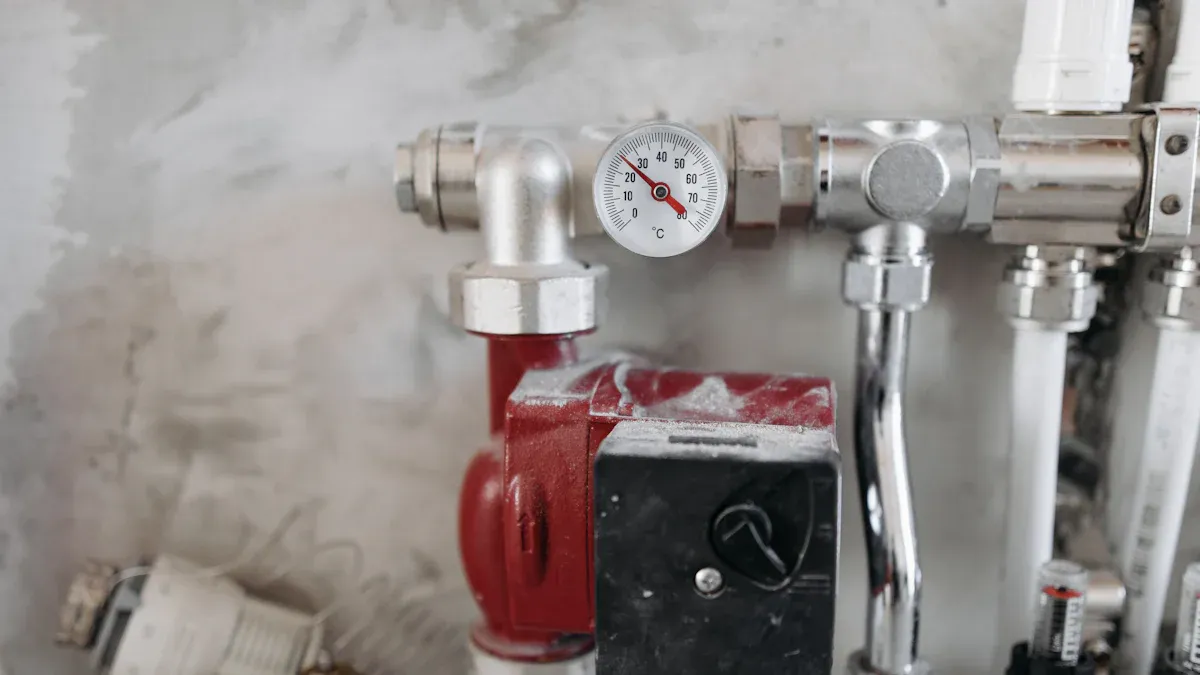
Usted depende de su calentador de agua para su comodidad diaria, pero la válvula de alivio lo protege de peligros ocultos. Este dispositivo esencial evita que la presión y la temperatura excesivas provoquen una falla catastrófica en su elementos calefactores de electrodomésticos. La Comisión de Seguridad de Productos del Consumidor de EE. UU. registró más de 100 incidentes relacionados con calentadores de agua en 2022, muchos de ellos con explosiones donde las válvulas de alivio de presión defectuosas desempeñaron un papel. Aunque no todos los incidentes están directamente vinculados a la Elemento calefactor o Calefacción eléctrica Jinzhong, nunca debe ignorar este componente de seguridad. Fabricantes de elementos calefactores diseñan estas válvulas para mantener su hogar y su familia seguros.
Comprensión de la Válvula de Alivio de Presión del Calentador de Agua
Función de la Válvula de Alivio de Temperatura y Presión
Cómo Controla la Presión
Usted depende de su calentador de agua para suministrar agua caliente de manera segura. La válvula de alivio de presión actúa como un salvaguarda contra la acumulación peligrosa de presión dentro del tanque. Cuando el agua se calienta, se expande y aumenta la presión dentro del sistema. Si la presión supera el límite seguro, la válvula de alivio de temperatura y presión se abre automáticamente. Esta acción libera agua a través de un tubo de descarga, reduciendo la presión y evitando daños o explosiones. El diseño de la válvula garantiza que su calentador de agua funcione dentro del rango de presión recomendado por el fabricante, típicamente alrededor de 150 psi.
Los estándares de la industria, como los códigos ASME y el Código Residencial Internacional, requieren la instalación y operación adecuadas de las válvulas de alivio de presión. Estos códigos especifican que la tubería de descarga debe terminar con un espacio de aire y permanecer visible para los ocupantes. Debe asegurarse de que la tubería de descarga coincida con el diámetro de salida de la válvula y permanezca libre de obstrucciones. Estos requisitos le ayudan a evitar condiciones peligrosas y mantener un entorno seguro.
Cómo Gestiona la Temperatura
La válvula de alivio de temperatura y presión también monitorea la temperatura dentro del tanque de su calentador de agua. Si la temperatura del agua supera el umbral seguro, generalmente establecido en 210°F, la válvula se abre para liberar agua caliente. Este proceso evita el sobrecalentamiento, que puede dañar el tanque o causar lesiones por escaldadura. La válvula sirve como respaldo si el termostato o los controles de temperatura fallan. Usted obtiene tranquilidad al saber que la válvula T&P se activará automáticamente para proteger su hogar y su familia.
Consejo: Revise regularmente la válvula T&P en busca de signos de desgaste o mal funcionamiento. Una válvula defectuosa puede comprometer las características de seguridad de su calentador de agua.
Dónde Encontrar la Válvula de Alivio de Presión del Calentador de Agua
Ubicaciones Típicas en los Calentadores de Agua
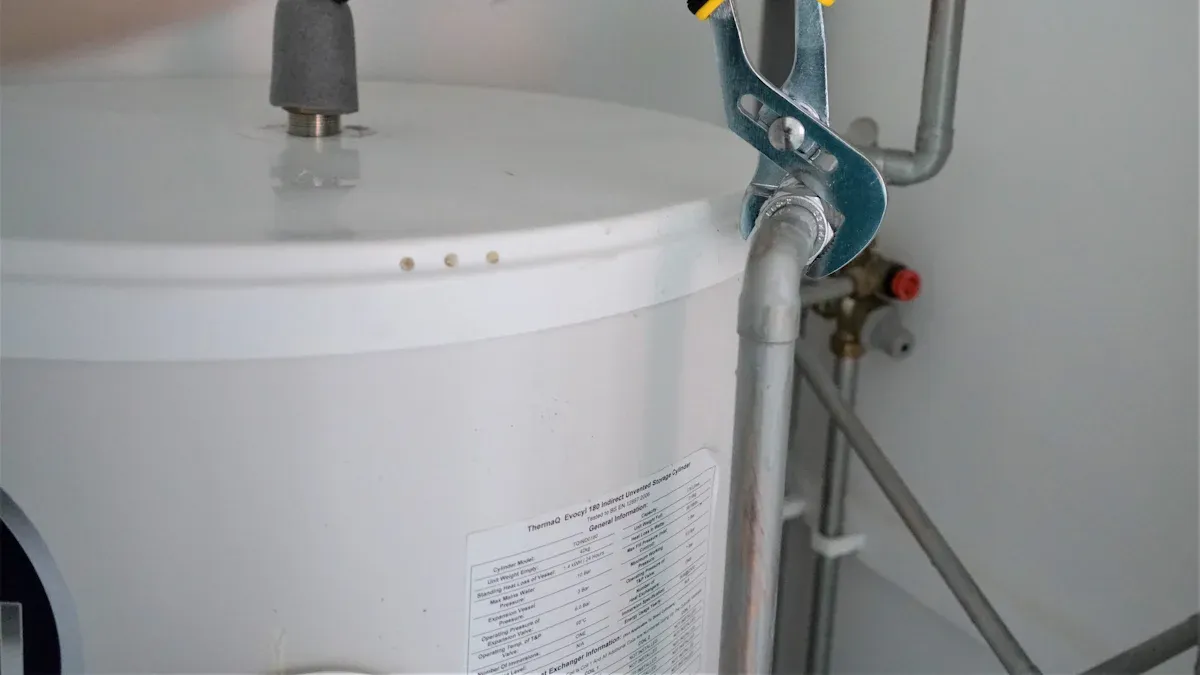
Puede localizar la válvula de alivio de presión del calentador de agua cerca de la parte superior o en el lateral del tanque. Los fabricantes colocan la válvula en estas áreas para garantizar un monitoreo efectivo de la presión y la temperatura. La válvula se conecta a una tubería de descarga que dirige el agua caliente de manera segura lejos del tanque si la válvula se activa. Esta configuración es estándar en la mayoría de los calentadores de agua residenciales, lo que le permite inspeccionar y mantener la válvula fácilmente.
Aspecto de la válvula
Identificar la válvula de alivio de presión es sencillo si sabe qué buscar. Aquí están las principales características visuales:
- La válvula se encuentra en o cerca de la parte superior del calentador de agua.
- Verá una etiqueta que muestra la presión de operación (comúnmente 150 psi) y la clasificación de temperatura (comúnmente 210°F).
- La válvula cuenta con una salida de descarga, generalmente de 3/4″ NPT, para conectar la tubería de descarga.
- Una palanca o manija de prueba está presente y debe permanecer sin obstrucciones.
- La longitud de extensión del sensor varía, típicamente entre 3″ y 9″, dependiendo del tamaño del calentador.
- El tubo de descarga coincide con el diámetro de salida de la válvula para un funcionamiento seguro.
- La válvula está marcada con sus clasificaciones de presión y temperatura establecidas.
- El aislamiento no debe cubrir la válvula, y no debe instalarse a través de codos o acoplamientos.
Puede usar esta lista de verificación para confirmar que su válvula T&P cumple con los estándares de seguridad y permanece accesible para pruebas regulares.
Nota: Nunca bloquee ni manipule la válvula de alivio de presión o su tubería de descarga. Hacerlo puede crear condiciones peligrosas y violar los códigos de plomería.
Cómo Funciona la Válvula de Descarga del Calentador de Agua
Cómo se Acumulan la Presión y la Temperatura
Causas de Alta Presión
Es posible que no se dé cuenta de cuántos factores pueden causar alta presión dentro de su calentador de agua. Varios problemas comunes pueden provocar aumentos peligrosos de presión:
- Las configuraciones de temperatura elevadas hacen que el agua se expanda, aumentando la presión dentro del tanque.
- Termostatos, elementos calefactores o cableado defectuosos crean niveles de presión inseguros.
- La falta de un tanque de expansión en sistemas de plomería cerrados impide la absorción segura de la expansión térmica.
- La acumulación de sedimentos restringe el flujo de agua, resultando en fluctuaciones de presión.
- Las válvulas de alivio de presión defectuosas no liberan el exceso de presión según lo diseñado.
- La corrosión dentro del tanque, incluida la falla de la varilla de ánodo, conduce a la acumulación de minerales y picos de presión.
- La alta presión del agua entrante de la ciudad puede abrumar su sistema.
- La cal del agua dura recubre los elementos calefactores, reduciendo la eficiencia y contribuyendo a problemas de presión.
Consejo: Revise regularmente su calentador de agua en busca de signos de acumulación de sedimentos o minerales. Este simple paso ayuda a prevenir problemas de presión antes de que comiencen.
Causas de Alta Temperatura
La alta temperatura dentro de su calentador de agua también puede crear condiciones peligrosas. Debe estar atento a estas causas comunes:
- Termostatos defectuosos o inexactos no logran regular la temperatura del agua.
- Elementos calefactores defectuosos en calentadores de agua eléctricos causan calentamiento inconsistente.
- La acumulación de sedimentos actúa como aislante, haciendo que el calentamiento sea desigual y provocando oscilaciones de temperatura.
- Las configuraciones de temperatura altas por encima de los niveles recomendados aumentan la presión y el riesgo.
- Componentes defectuosos, como válvulas y interruptores de límite, no logran controlar la temperatura.
- La acumulación de minerales del agua dura provoca un calentamiento más rápido y un aumento de presión.
- Acumulación de vapor y aire dentro del tanque debido a intercambiadores de calor obstruidos.
- Conexiones eléctricas defectuosas causan mal funcionamiento de los componentes de seguridad.
- Las fluctuaciones de la presión del agua externa afectan la estabilidad de la temperatura.
Nota: Ajustar la temperatura de su calentador de agua demasiado alta no solo desperdicia energía, sino que también aumenta el riesgo de peligrosos picos de presión y temperatura.
Cómo responde la válvula de alivio de presión del calentador de agua
Mecanismo de apertura automática
Su válvula de alivio de temperatura y presión utiliza un diseño mecánico preciso para proteger su hogar. Cuando la presión dentro de su calentador de agua alcanza 150 psi o la temperatura sube a 210 °F, la válvula se abre automáticamente. Esta acción libera agua o vapor, reduciendo tanto la presión como la temperatura dentro del tanque. La válvula de alivio de presión funciona equilibrando la fuerza del fluido interno contra un resorte. Cuando la presión del fluido excede el punto de ajuste del resorte, la válvula se abre, proporcionando una ruta de menor resistencia para que el exceso de presión escape. Una vez que la presión cae por debajo del umbral seguro, la válvula se cierra nuevamente. Esta respuesta automática evita que su calentador de agua exceda sus límites de diseño y protege contra fallas catastróficas.
Palanca de prueba manual
Puede Pruebe la válvula T&P manualmente usando la palanca adjunta a la válvula. Levantar la palanca simula un evento de sobrepresión, haciendo que la válvula se abra y libere agua a través del tubo de descarga. Esta prueba confirma que la válvula de alivio de presión del calentador de agua se mueve libremente y sella correctamente cuando está cerrada. Si nota que la válvula se atasca o no se cierra, debe reemplazarla de inmediato. Las pruebas manuales regulares aseguran que su válvula de alivio de presión permanezca lista para responder a emergencias reales.
Alerta: Siempre tenga precaución al probar la válvula T&P. El agua caliente puede descargarse rápidamente, así que manténgase alejado de la salida y use guantes protectores.
Por qué la válvula es crítica para la seguridad
Prevención de explosiones del tanque
La válvula de alivio de temperatura y presión sirve como su principal defensa contra explosiones del calentador de agua. Si la válvula no se abre, la presión y la temperatura pueden acumularse a niveles peligrosos. En casos raros pero graves, esta acumulación provoca que el tanque se rompa o explote, enviando agua hirviendo y escombros por toda su casa. Incidentes documentados muestran que las válvulas de alivio de presión defectuosas han provocado daños a la propiedad y lesiones. Por ejemplo, una explosión de un calentador de agua en Iowa dañó 14 casas, destacando la importancia de una válvula T&P funcional. Señales de advertencia como fugas o válvulas constantemente abiertas indican presión excesiva y requieren atención inmediata.
Protegiendo su hogar y su familia
A Una válvula de alivio de presión del calentador de agua que funcione correctamente protege tanto su propiedad como a sus seres queridos. Al liberar el exceso de presión y temperatura, la válvula T&P previene condiciones inseguras que podrían provocar explosiones o daños graves por agua. La respuesta rápida de la válvula y su característica de cierre automático aseguran que su calentador de agua funcione de manera segura en todo momento. La inspección y el mantenimiento rutinarios de la válvula de alivio de presión le ayudan a mantener un entorno seguro y evitar reparaciones costosas o lesiones.
Llamada: Nunca ignore las señales de una válvula de alivio de presión del calentador de agua defectuosa. Una acción rápida mantiene su hogar seguro y le brinda tranquilidad.
Problemas comunes con la válvula de alivio de temperatura y presión
Señales de una válvula de alivio de presión del calentador de agua defectuosa
Fugas o goteo de agua
Puede notar agua filtrándose o goteando de la válvula o del tubo de descarga. Este problema a menudo indica que la válvula de alivio de presión no puede sellar correctamente. Las fugas pueden resultar de presión excesiva que obliga a la válvula a abrirse con demasiada frecuencia o de acumulación de sedimentos que impide un sellado hermético. Goteo constante, incluso cuando su sistema opera en condiciones normales, generalmente significa que la válvula se ha vuelto defectuosa u obstruida. Si ve agua acumulándose alrededor de su calentador, debe abordar el problema de inmediato para evitar complicaciones adicionales.
Válvula atascada abierta o cerrada
Una válvula de alivio de presión que se atasca abierta o cerrada crea riesgos significativos. Cuando la válvula permanece abierta, el agua se escapará continuamente, lo que lleva a desperdicio de agua y posibles inundaciones. Si la válvula se atasca cerrada, no puede liberar el exceso de presión o temperatura. Este mal funcionamiento aumenta el riesgo de acumulación peligrosa de presión dentro de su tanque. Debe probar la válvula regularmente para asegurarse de que se mueva libremente y se cierre de manera segura después de cada uso.
Ruidos inusuales
Ruidos inusuales cerca de la válvula, como silbidos, chiflidos, traqueteos o estallidos, a menudo indican problemas de presión o acumulación de vapor. Estos sonidos sugieren que la válvula de alivio de presión del calentador de agua tiene dificultades para regular la presión o la temperatura. También puede escuchar estos ruidos si se han acumulado sedimentos o depósitos minerales dentro de la válvula. Ignorar estas señales de advertencia puede provocar problemas más graves, incluida la rotura del tanque.
Consejo: Si escucha ruidos persistentes o ve fugas, programe una inspección lo antes posible. La detección temprana ayuda a prevenir reparaciones costosas y mantiene su sistema seguro.
Causas de falla de la válvula de alivio de presión del calentador de agua
Edad y Desgaste
Con el tiempo, la válvula de alivio de presión experimenta desgaste. La mayoría de los fabricantes recomiendan reemplazar la válvula cada 3–5 años. Las válvulas envejecidas pueden corroerse, degradarse o perder su capacidad de abrirse y cerrarse correctamente. Si tiene un calentador de agua más antiguo, debe prestar mucha atención al estado de la válvula y reemplazarla como parte del mantenimiento rutinario.
Acumulación de minerales o sedimentos
Los depósitos minerales y sedimentos pueden acumularse dentro de su calentador de agua y en la propia válvula. El agua dura acelera este proceso, causando que la válvula se obstruya o se atasque. La acumulación de sedimentos impide que la válvula selle herméticamente, lo que provoca fugas o mal funcionamiento. Purgar regularmente su tanque y probar la válvula puede ayudar a reducir el riesgo de falla.
Instalación incorrecta
Una instalación incorrecta puede comprometer la función de la válvula de alivio de presión. Si el tubo de descarga no coincide con el diámetro de salida de la válvula o si la válvula se instala incorrectamente, es posible que no funcione según lo diseñado. Siempre debe seguir las pautas del fabricante y los códigos locales al instalar o reemplazar la válvula.
Riesgos de ignorar los problemas de la válvula de alivio de presión del calentador de agua
Daños por agua
Ignorar una válvula de alivio de presión defectuosa puede resultar en daños significativos por agua. Una válvula que no se abre puede causar que el tanque estalle, inundando su hogar y dañando pisos, paredes y pertenencias. Incluso las fugas menores pueden provocar crecimiento de moho y problemas estructurales con el tiempo.
Peligros para la seguridad
Una válvula de alivio de presión del calentador de agua que funciona mal representa un grave peligro de seguridad. Si la válvula no puede liberar el exceso de presión, su tanque podría explotar, causando lesiones o algo peor. Protege su hogar y su familia abordando los problemas de la válvula de inmediato y programando un mantenimiento regular.
Alerta: La inspección regular y el reemplazo oportuno de la válvula de alivio de presión son pasos esenciales para prevenir daños por agua y garantizar su seguridad.
Cómo probar su válvula de alivio de presión del calentador de agua

Pasos de seguridad antes de la prueba
Apagado de la Alimentación y el Agua
Antes de comenzar, siempre priorice la seguridad. Apague el suministro de energía a su calentador de agua. Para modelos eléctricos, desconecte el interruptor automático. Para calentadores de gas, coloque el control de gas en la posición “piloto”. Cierre la válvula de suministro de agua fría para evitar que entre nueva agua al tanque. Abra un grifo de agua caliente en su hogar para aliviar cualquier presión acumulada. Estos pasos le ayudan a evitar quemaduras accidentales o riesgos eléctricos.
Recolección de herramientas necesarias
Prepare las herramientas adecuadas y el equipo de protección antes de la prueba. Necesita:
- Un cubo o bandeja resistente para recoger el agua caliente del tubo de descarga.
- Protección ocular de seguridad para protegerse contra salpicaduras.
- Calzado protector para proteger sus pies del agua caliente.
- Un manómetro, si está disponible, para monitorear la presión del sistema.
- Una toalla o trapo para una limpieza rápida.
Consejo: Siempre verifique que la La tubería de descarga está instalada correctamente, fabricada con materiales aprobados y termina de manera segura. En un desagüe de piso o en el exterior. Nunca tape ni bloquee la tubería de descarga.
Guía paso a paso para probar la válvula de alivio de temperatura y presión
Cómo operar la válvula manualmente
Siga estos pasos para probar su válvula de alivio de temperatura y presión:
- Localice la válvula en la parte superior o lateral de su calentador de agua. Confirme que la tubería de descarga esté despejada y conduzca a un lugar seguro.
- Coloque su cubeta o bandeja debajo de la tubería de descarga para recoger el agua liberada.
- Colóquese a un lado, use su equipo de seguridad y levante suavemente la palanca de prueba de la válvula hasta un ángulo de 90 grados. Manténgala abierta durante aproximadamente cinco segundos.. Debería fluir agua caliente a través de la tubería de descarga.
- Suelte la palanca con cuidado, permitiendo que vuelva a su lugar con un chasquido.
Nota: Si nota fugas, goteos o daños visibles antes de la prueba, no continúe. Contacte a un plomero autorizado para una inspección..
Qué observar durante la prueba
Durante la prueba, observe lo siguiente:
- Escuche un sonido sibilante o observe la descarga de agua desde la tubería. Esto confirma que la válvula está liberando presión.
- Después de soltar la palanca, verifique que el flujo de agua se detenga rápidamente. Un breve goteo residual es normal.
- Inspeccione la válvula y la tubería en busca de fugas. La válvula debe cerrarse completamente y no continuar goteando.
Si la válvula no se abre, no se cierra o continúa goteando, puede estar defectuosa y requerir reemplazo.
Qué hacer si la válvula de alivio de presión del calentador de agua falla
Acciones de seguridad inmediatas
Si la válvula falla durante la prueba, actúe rápidamente:
- Apague el suministro de energía al calentador de agua..
- Cierre la válvula de suministro de agua fría.
- Abra un grifo de agua caliente para aliviar la presión del sistema.
- Coloque un cubo debajo de la tubería de descarga para recoger el agua restante.
Estos pasos le ayudan a prevenir una mayor acumulación de presión y reducir el riesgo de lesiones o daños por agua.
Cuándo llamar a un profesional
Debería Contacte a un plomero autorizado si nota algún mal funcionamiento,, fugas persistentes o si la válvula no funciona suavemente. Un profesional puede inspeccionar, reparar o reemplazar la válvula de manera segura. Nunca ignore una válvula de alivio de presión defectuosa, ya que protege su hogar de riesgos graves.
Alerta: La inspección rutinaria y la acción rápida mantienen su calentador de agua seguro y confiable. Siempre busque ayuda profesional si se siente inseguro acerca de algún paso.
Mantenimiento de la válvula de alivio de presión de su calentador de agua
Consejos de mantenimiento periódico
Con qué frecuencia revisar la válvula
Debe revisar la válvula de alivio de presión de su calentador de agua regularmente para asegurarse de que funcione según lo previsto. La mayoría de los expertos recomiendan probar la válvula al menos una vez cada 12 meses.. Algunos profesionales sugieren probarla cada seis meses, especialmente si vive en un área con agua dura o si su calentador de agua tiene un uso intensivo. Probar la válvula implica levantar la palanca para confirmar que se abre y cierra suavemente. Si la válvula no libera agua o no se sella correctamente, debe reemplazarla inmediatamente.. Las pruebas regulares le ayudan a detectar problemas temprano y mantienen su calentador de agua funcionando de manera segura.
Consejo: Marque su calendario para una revisión en primavera y otoño. Este hábito simple le ayuda a recordar probar la válvula dos veces al año..
Limpieza y prevención de acumulaciones
La acumulación de minerales y sedimentos puede causar un mal funcionamiento de la válvula de alivio de presión. Puede prevenir esto siguiendo algunos pasos clave de mantenimiento:
- Lave el tanque de su calentador de agua al menos una vez al año para eliminar sedimentos y minerales.
- Si tiene agua dura o usa su calentador de agua con frecuencia, aumente la frecuencia de lavado a cada 6–9 meses.
- Pruebe la válvula levantando su palanca durante cada sesión de mantenimiento. Esta acción ayuda a eliminar cualquier residuo que pueda haberse acumulado dentro de la válvula.
- Inspeccione la válvula en busca de signos de corrosión, fugas o desgaste.. Reemplace la válvula si nota algún daño.
- Mantenga una presión de agua adecuada en su hogar, idealmente entre 50–60 psi,, para reducir la tensión en la válvula.
Siguiendo estos pasos, ayuda a garantizar que la válvula permanezca libre de obstrucciones y continúe protegiendo su calentador de agua.
Manteniendo su calentador de agua seguro
Monitoreo de fugas y corrosión
Debe monitorear su calentador de agua y su válvula de alivio de presión en busca de fugas y corrosión. Revise el área alrededor de la válvula y la tubería de descarga para detectar cualquier signo de humedad u óxido. Incluso las fugas pequeñas pueden indicar un problema con el sello de la válvula o sus componentes internos. La corrosión debilita la válvula y puede provocar fallas. Si detecta alguna fuga u óxido, reemplace la válvula de inmediato para evitar problemas más graves.
Alerta: Nunca ignore una válvula con fugas o corroída. La acción rápida previene daños por agua y mantiene su sistema seguro.
Limpieza del tanque del calentador de agua
Lavar el tanque de su calentador de agua es una de las formas más efectivas de prevenir la acumulación de sedimentos. Los sedimentos pueden asentarse en el fondo del tanque y dentro de la válvula, reduciendo la eficiencia y aumentando el riesgo de mal funcionamiento. Para lavar el tanque, apague la energía y el suministro de agua fría, luego drene el agua a través de la válvula de drenaje hasta que salga clara. Debe realizar esta tarea al menos una vez al año. Si la calidad de su agua es deficiente, considere lavarlo cada seis meses.
El mantenimiento regular de su válvula de alivio de presión y del tanque del calentador de agua contribuye directamente a la seguridad y longevidad de su sistema. Al mantenerse proactivo, reduce el riesgo de acumulación peligrosa de presión, fugas y reparaciones costosas.
Cuándo y cómo reemplazar la válvula de alivio de presión del calentador de agua
Señales de que es momento de reemplazarla
Fugas o goteos persistentes
Debe prestar mucha atención a cualquier fuga o goteo persistente proveniente de su válvula de alivio de temperatura y presión. El goteo de agua suele indicar que la válvula no puede sellar correctamente. La descarga continua de agua señala que la válvula no regula la presión adecuadamente. Los cambios rápidos de presión o ruidos inusuales del tanque también indican un mal funcionamiento. Si observa estos problemas, debe considerar reemplazar la válvula. La inspección regular cada dos o tres años ayuda a detectar problemas a tiempo.
Daños visibles o corrosión
El daño físico o la corrosión en la válvula de alivio de temperatura y presión requieren acción inmediata. Grietas, abolladuras o deformidades debilitan la válvula y aumentan el riesgo de falla bajo presión. El óxido o la corrosión comprometen la integridad y el rendimiento de la válvula. Debe inspeccionar la válvula en busca de componentes desgastados, como sellos o resortes degradados. Si la válvula falla en las pruebas de presión o muestra signos de envejecimiento, es necesario reemplazarla. Ignorar estos indicadores puede provocar acumulación de presión, daños en el tanque o riesgos de seguridad.
Consejo: Utilice la siguiente tabla para identificar indicadores comunes que señalan la necesidad de reemplazo.
| Indicador | Descripción y motivo de reemplazo |
|---|---|
| Grietas o fracturas | Debilita la válvula, arriesgando falla bajo presión. |
| Abolladuras o deformidades | Impide el asentamiento adecuado, causando fugas o alivio de presión incorrecto. |
| Componentes desgastados | Reduce el rendimiento y la seguridad de la válvula. |
| Fugas frecuentes | Indica falla del sello, corrosión o cierre inadecuado. |
| Liberación de presión inconsistente | Señala desgaste interno o mal funcionamiento. |
| Antigüedad de la válvula | Se recomienda inspección y reemplazo cada 2-3 años. |
| Corrosión u óxido | Compromete la integridad de la válvula y aumenta el riesgo de fugas. |
| Fallo en pruebas de presión | Indica incapacidad para liberar presión de manera segura. |
Cómo elegir la válvula de alivio de temperatura y presión correcta
Compatibilidad de tamaño y tipo
Debe seleccionar una válvula de alivio de temperatura y presión que coincida con las especificaciones de su calentador de agua. Verifique el tamaño y tipo de conexión para garantizar compatibilidad con la tubería de entrada y descarga. La presión nominal de la válvula no debe exceder la presión máxima de trabajo permitida (MAWP) de su calentador de agua. Confirme que la presión de ajuste se alinee con los requisitos de su sistema. La capacidad de alivio de la válvula debe cumplir o superar la salida térmica del calentador, la cual puede encontrar en la placa de identificación. Siempre considere las temperaturas de operación y alivio al elegir los materiales de la válvula.
Dónde comprar un repuesto
Puede adquirir una válvula de alivio de temperatura y presión de repuesto en tiendas de suministros de plomería, centros de mejoras para el hogar o minoristas en línea. Busque válvulas que cumplan con estándares de la industria como ASME, CSA y códigos de plomería locales. Revise el código de construcción de su calentador de agua y consulte las pautas del fabricante antes de comprar. Si no está seguro de las especificaciones, solicite asesoramiento a un profesional.
Nota: Siempre siga los códigos y estándares locales al seleccionar e instalar una nueva válvula.
Reemplazo por cuenta propia vs. profesional
Pasos simples para el reemplazo por cuenta propia
Si decide reemplazar la válvula de alivio de temperatura y presión usted mismo, siga estos pasos:
- Apague la energía y el suministro de agua del calentador.
- Drene agua del tanque hasta que el nivel esté por debajo de la abertura de la válvula.
- Retire la válvula antigua usando una llave.
- Limpie las roscas y aplique sellador de tubería aprobado.
- Instale la nueva válvula, apretándola de forma segura.
- Vuelva a conectar la tubería de descarga y restablezca la energía y el agua.
Debe garantizar una instalación adecuada para evitar fugas y riesgos de seguridad. El reemplazo por cuenta propia ahorra costos de mano de obra y le da control sobre el tiempo y los materiales. Sin embargo, una instalación incorrecta puede generar peligros y reparaciones costosas.
Cuándo contratar a un plomero certificado
Debe contratar a un plomero certificado si carece de experiencia en plomería o se siente inseguro sobre el proceso. Los profesionales tienen la capacitación, herramientas y experiencia para garantizar una instalación segura y conforme al código. Mantienen la protección de la garantía y brindan tranquilidad. El reemplazo profesional evita problemas futuros y asegura que su válvula de alivio de temperatura y presión funcione de manera confiable.
| Aspecto | Ventajas del reemplazo por cuenta propia | Desventajas del reemplazo por cuenta propia | Ventajas del reemplazo profesional | Desventajas del reemplazo profesional |
|---|---|---|---|---|
| Costo | Ahorra costos de mano de obra | Riesgo de instalación incorrecta que conlleva peligros de seguridad y reparaciones costosas | Garantiza una instalación correcta, evitando costos futuros | Mayor costo de mano de obra y costo total |
| Control | Control total sobre el tiempo y los materiales | Consume tiempo y es físicamente exigente | Comodidad; no requiere esfuerzo físico | Retrasos en la programación |
| Habilidad y seguridad | Sensación de logro si se hace correctamente | Requiere habilidades de plomería/eléctricas; riesgo de violaciones de código y anulación de garantía | La experiencia garantiza seguridad, cumplimiento de código y protección de la garantía | Necesita encontrar un profesional de buena reputación |
| Garantía y Cumplimiento Normativo | N/A | Puede anular la garantía del fabricante; posibles infracciones del código | Mantiene la garantía y cumple con los códigos locales | N/A |
| Comodidad y Tranquilidad | N/A | N/A | Tranquilidad, cobertura de seguro y garantía profesional | N/A |
⚠️ Intentar reparaciones complejas sin experiencia puede provocar problemas mayores y riesgos de seguridad. Para componentes críticos como la válvula de alivio de temperatura y presión, la sustitución profesional es la opción más segura.
Prevención de futuros problemas en la válvula de alivio de presión del calentador de agua
Consejos de seguridad a largo plazo
Ajuste de la temperatura correcta del calentador de agua
Puede prevenir muchos problemas del calentador de agua ajustando la temperatura correcta. Mantenga su calentador de agua a o cerca de 120°F. Esta temperatura reduce el riesgo de sobrecalentamiento y quemaduras. También ayuda a que su válvula de alivio de presión dure más tiempo al minimizar el estrés innecesario en el sistema. Bajar la temperatura cuando se va de vacaciones ahorra energía y reduce el riesgo. Retire cualquier material combustible del área alrededor del calentador para reducir los peligros de incendio. Una ventilación adecuada y el aseguramiento del calentador, especialmente en zonas propensas a terremotos, protegen aún más su hogar.
Consejo: Use un termómetro para verificar la temperatura del agua caliente en el grifo. Ajuste el termostato si la lectura supera los 120 °F.
Programación de inspecciones anuales
Las inspecciones anuales desempeñan un papel clave en la prevención de problemas de la válvula. Programe a un fontanero con licencia para inspeccionar su válvula de alivio de temperatura y presión (T&P) cada año. Los profesionales prueban la válvula levantando la palanca para asegurarse de que se abre y sella correctamente. También verifican si hay fugas, corrosión y signos de mal funcionamiento. Reemplace la válvula cada 3 a 5 años o antes si nota algún problema. Durante el mantenimiento, los fontaneros purgan el tanque para eliminar sedimentos que pueden causar sobrecalentamiento y picos de presión. Instalar un tanque de expansión y monitorear la presión del agua con un manómetro puede reducir aún más la tensión en la válvula.
- Pruebe la válvula T&P cada 6 a 12 meses.
- Limpiar el tanque anualmente para prevenir la acumulación de sedimentos.
- Monitoree la presión del agua e instale un regulador si es necesario.
- Reemplace las válvulas desgastadas o corroídas de inmediato.
Nota: Las inspecciones regulares ayudan a detectar problemas a tiempo y mantener el cumplimiento de los códigos de seguridad.
Educación de su hogar
Lo que todos deben saber sobre la válvula
Cada miembro de su hogar debe comprender la importancia de la válvula de alivio de presión. Esta válvula evita la acumulación peligrosa de presión al liberar el exceso de presión o temperatura. Se abre automáticamente cuando es necesario, enviando agua caliente y vapor de manera segura a través de un tubo de descarga. Las pruebas regulares aseguran que la válvula funcione según lo diseñado. Las señales de problemas incluyen fugas, una válvula atascada abierta o cerrada, o la falta de liberación de presión. Si nota estos signos, llame a un fontanero profesional. No intente reemplazar la válvula usted mismo, ya que es un dispositivo de seguridad crítico.
- La válvula T&P es esencial para el funcionamiento seguro del calentador de agua.
- Debe abrirse y cerrarse libremente para evitar explosiones del tanque.
- Solo los profesionales deben reemplazar o reparar la válvula.
Pasos de emergencia en caso de fallo de la válvula
Si su válvula de alivio de presión falla, actúe rápidamente para proteger su hogar y su familia. Siga estos pasos:
- Use equipo de protección para evitar quemaduras por agua caliente.
- Apague el suministro de energía (gas o electricidad) y cierre la válvula de suministro de agua.
- Deje que el tanque se enfríe antes de manipularlo.
- Localice la válvula y levante con cuidado la palanca para liberar la presión.
- Si el agua continúa goteando o la válvula no libera agua, es necesario reemplazarla.
- Contacte a un fontanero con licencia para diagnóstico y reparación.
Alerta: Nunca intente reparaciones complejas sin las herramientas o la experiencia adecuadas. La acción rápida y la ayuda profesional garantizan su seguridad y evitan daños costosos.
Usted desempeña un papel clave en mantener su hogar seguro al mantener la válvula de alivio de presión de su calentador de agua. Las pruebas y el mantenimiento regulares le ayudan a evitar reparaciones costosas y situaciones peligrosas. Si nota algún problema, actúe rápidamente para prevenir daños. Las revisiones rutinarias le brindan tranquilidad y aseguran que su calentador de agua funcione de manera segura todos los días.
PREGUNTAS FRECUENTES
¿Con qué frecuencia debe probar la válvula de alivio de presión de su calentador de agua?
Debe probar la válvula al menos una vez al año. Las pruebas regulares le ayudan a detectar problemas a tiempo y garantizan que la válvula funcione cuando sea necesario.
¿Qué debe hacer si la válvula sigue goteando?
Las fugas persistentes significan que la válvula puede estar defectuosa o que hay exceso de presión. Reemplace la válvula o llame a un fontanero con licencia para inspeccionar su sistema.
¿Puede usted mismo reemplazar la válvula de alivio de presión?
Puede reemplazar la válvula si tiene habilidades básicas de fontanería. Siempre siga los pasos de seguridad. Si no está seguro, contrate a un fontanero con licencia para una instalación adecuada.
¿Por qué sale agua caliente durante la prueba?
El agua caliente sale porque la válvula libera presión y temperatura. Esto indica que la válvula funciona correctamente. Siempre tenga precaución y use equipo de protección durante la prueba.
¿Es normal que la válvula haga ruido?
Un silbido ocasional o un ruido breve durante el funcionamiento es normal. Los ruidos continuos o fuertes pueden indicar problemas de presión o acumulación de sedimentos. Programe una inspección si nota sonidos inusuales.
¿Qué sucede si se ignora una válvula de alivio de presión defectuosa?
Ignorar una válvula defectuosa puede provocar daños por agua, rotura del tanque o incluso explosiones. Protege su hogar y su familia al abordar los problemas de la válvula de inmediato.