La longevidad de su electrodoméstico es directamente proporcional a la integridad estructural de su núcleo calefactor.
Como componente térmico crítico, un Elemento calefactor opera bajo fluctuaciones extremas de temperatura que provocan expansión y contracción del metal. Basándose en los conocimientos de fabricación de Camewould (Jin Zhong) un líder global Fabricante de elementos calefactores con más de 40 años de experiencia, esta guía proporciona un protocolo de mantenimiento de nivel profesional para prevenir la oxidación, la pérdida de energía y el fallo prematuro de componentes.
Hoja de Ruta de Mantenimiento
Protocolos Seguros de Limpieza para Elementos Tubulares
La grasa acumulada y las partículas de alimentos carbonizados no solo generan humo; crean gradientes térmicos localizados. Cuando una parte del elemento está aislada por residuos, los Fábrica de resistencias ingenieros advierten que el alambre de nicromo interno puede sobrecalentarse en ese punto específico, provocando un catastrófico “quemado”.”
El Método de Limpieza en 3 Pasos
- Desenergización y Enfriamiento: Asegúrese de que el horno esté desenchufado. Nunca limpie un elemento que esté incluso ligeramente tibio, ya que el enfriamiento rápido por los agentes de limpieza puede causar choque térmico y microfracturas en la vaina metálica.
- Eliminación de Residuos Secos: Use un cepillo de cerdas suaves de nylon para barrer suavemente la ceniza suelta. Para restos carbonizados difíciles, se puede utilizar un raspador de plástico . Nunca use lana de acero ni raspadores metálicos, ya que pueden dejar fragmentos conductores que provoquen arcos eléctricos.
- Limpieza de Superficie: Use una solución de agua tibia y una gota de jabón para platos. Limpie el Elemento calefactor con un paño de microfibra húmedo. Enjuague con un segundo paño humedecido solo con agua para asegurar que no queden residuos jabonosos, que podrían generar humo durante el próximo uso.
Técnicas Profesionales de Inspección Visual
Una rutina de mantenimiento proactivo incluye una revisión visual mensual de la superficie del elemento. Los elementos de alta calidad de un Fabricante de elementos calefactores certificado, como Camewould, utilizan Incoloy 800 acero inoxidable de alto grado para resistir la oxidación, pero los factores ambientales aún pueden pasar factura.
Qué buscar:
- Picaduras: Pequeños “cráteres” oscuros en la vaina. Esto indica que el metal se está adelgazando y que una brecha hacia el Óxido de Magnesio (MgO) aislamiento es inminente.
- Ampollas: Burbujas en la superficie metálica. Esto sugiere una falla del aislamiento interno, lo que provoca que el cable resistivo caliente la vaina directamente.
- Decoloración del Terminal: Ennegrecimiento en los puntos donde el elemento se conecta a los cables de la estufa. Esto es señal de una conexión floja y potencial arcos eléctricos.
Tabla de Diagnóstico de Salud del Elemento
| Observación | Significado Técnico | Acción requerida |
|---|---|---|
| Gris/Negro Opaco Uniforme | Capa de Oxidación Saludable | Ninguno – Funcionamiento Normal |
| Residuo Blanco Calcáreo | Fuga de Aislamiento de MgO | Reemplazo Inmediato |
| “Puntos Calientes” Rojo Brillante” | Desplazamiento de la Bobina Interna | Reemplazo Inmediato |
Mantenimiento de Fundición a Presión y Soluciones Especializadas
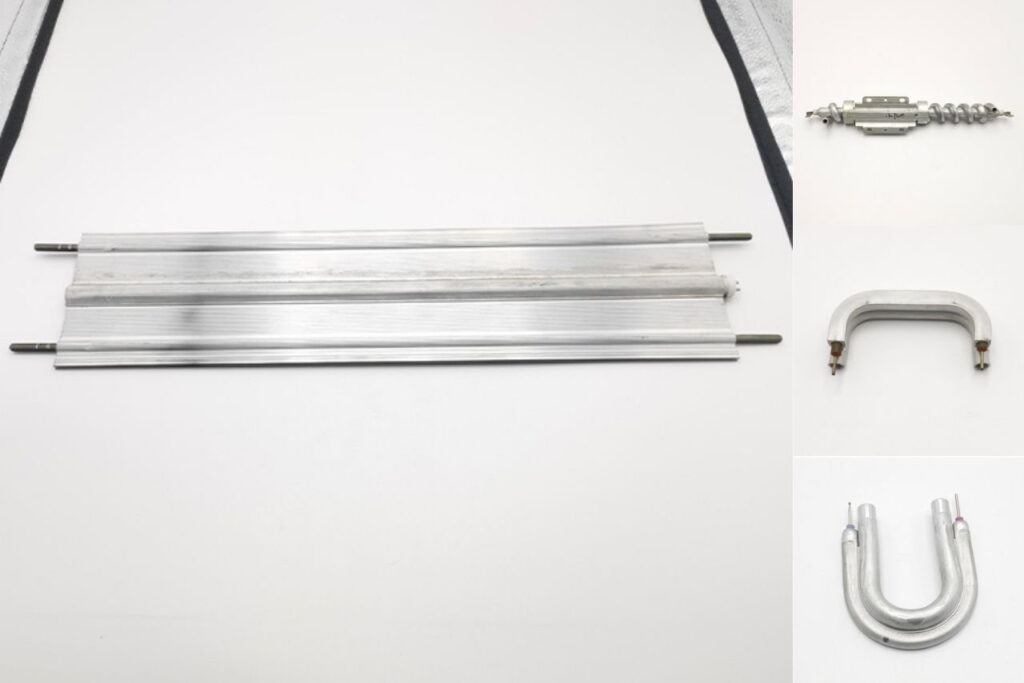
Los electrodomésticos modernos de alta gama a menudo utilizan Soluciones de calefacción para fundición a presión. En estos sistemas, el elemento calefactor está encapsulado en aluminio u otra aleación. El mantenimiento aquí difiere:
- Evitar Impactos: El metal fundido puede agrietarse si se golpea con utensilios de cocina pesados.
- Uniformidad Térmica: Debido a que el disipador de calor es metálico, evite usar papel de aluminio en el piso del horno, ya que esto puede atrapar el calor y deformar el conjunto de fundición a presión.
- Control de Humedad: Asegúrese de que los sellos alrededor de la placa de fundición a presión estén intactos para evitar que el líquido llegue a los terminales eléctricos debajo.
Medidas Preventivas para la Longevidad Industrial
En , nuestros elementos se someten a pruebas rigurosas en laboratorios acreditados por CNAS para garantizar que superen el umbral operativo de 3,000 horas, proporcionando un costo total de propiedad mucho menor con el tiempo en comparación con alternativas genéricas., nuestro laboratorio acreditado por CNAS prueba los elementos bajo condiciones de envejecimiento acelerado. Para imitar estos resultados en su cocina:
- Minimizar los Ciclos de Autolimpieza: El calor extremo (hasta 900 °F) de los ciclos de autolimpieza es la principal causa de estrés en los elementos. Si es posible, limpie manualmente.
- Asegurar Almacenamiento Seco: Si la estufa está en un ambiente de alta humedad o en una casa de vacaciones, enciéndala una vez al mes para “eliminar” cualquier humedad que pueda haber sido absorbida por el aislamiento de MgO.
- Estabilidad de tensión: Las fluctuaciones en la alimentación pueden dañar el alambre de NiCr. El uso de elementos que cumplan con las normas ISO9001 y VDE garantiza que el componente tenga la tolerancia necesaria para las variaciones estándar de la red eléctrica.
Preguntas frecuentes sobre mantenimiento experto
P1: ¿Puedo usar limpiador comercial para hornos en mi elemento calefactor??
No. La mayoría de los limpiadores comerciales contienen hidróxido de sodio (lejía), que es altamente corrosivo para el acero inoxidable y las aleaciones de Incoloy utilizadas en un Elemento calefactor. Si debe usar un limpiador en las paredes del horno, cubra el elemento con envoltura de plástico o papel de aluminio (retirado antes de usar) para evitar el contacto.
P2: ¿Por qué mi elemento huele a quemado después de limpiarlo?
Esto generalmente se debe a residuos microscópicos de jabón o humedad restante. Asegúrese de que el elemento esté completamente seco y límpielo con un paño humedecido solo con agua antes de volver a encender el horno. El olor debería disiparse en 10 minutos.
P3: ¿Cómo sé si el aislamiento interno (MgO) está fallando?
Una señal reveladora es si el GFCI (Interruptor de circuito por falla a tierra) de su cocina se dispara cuando el horno se enciende. Esto indica que la corriente se está “filtrando” a través del aislamiento hacia la cubierta exterior, una clara señal de que el mantenimiento ha fallado y se requiere reemplazo.
P4: ¿Los elementos de “horneado oculto” son más fáciles de mantener?
Visualmente, sí, porque están protegidos bajo el piso del horno. Sin embargo, aún requieren períodos de “quemado” para eliminar la humedad. Si nota tiempos de precalentamiento lentos, el elemento oculto puede haber fallado sin señales visuales, lo que requiere una prueba con multímetro.
Precisión global en cada componente
Suministrando 3 millones de unidades al mes a las marcas líderes del mundo, Camewould es el experto en tecnología de calor limpio. Confíe en nuestros 40 años de ingeniería para mantener su vida más cálida.
Referencias y Fuentes de Datos Técnicos:
- [1] Camewould Electrical Technology – Estándares de mantenimiento para tubos y placas calefactores (2025). jinzho.com
- [2] Wikipedia – Ciencia de materiales del aislamiento de MgO y bobinas de NiCr. en.wikipedia.org
- [3] IQS Directory – Mejores prácticas para la longevidad de componentes de calefacción industrial. iqsdirectory.com
- [4] Sears Home Services – Guía completa para el cuidado de componentes de hornos. searshomeservices.com