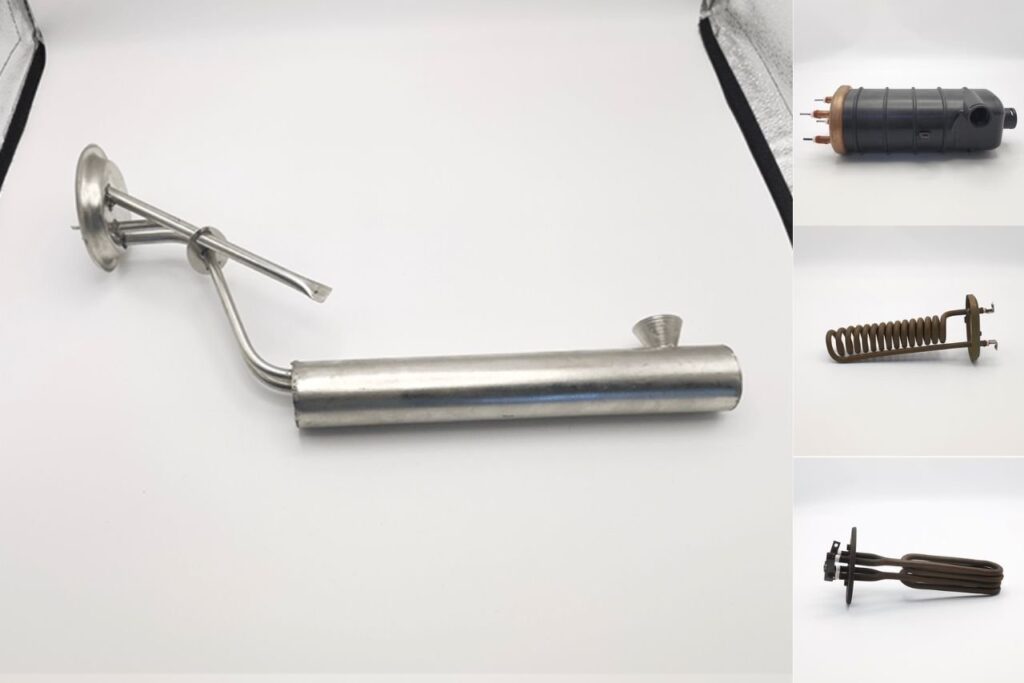
Rapid resolution of dishwasher heating failures is essential for maintaining kitchen hygiene and preventing bacterial growth on damp dishware.
As a critical thermal component, the Heizelement must operate at peak efficiency to reach sanitization temperatures. Drawing on the 40-year industrial heritage of Camewould (Jin Zhong) a global leader and premier Hersteller von Heizelementen this guide provides a high-speed diagnostic and repair protocol to restore your appliance’s functionality with professional precision.
Rapid Fix Directory
Rapid Triage: Is the Element Truly Broken?
Before disassembling the appliance, perform a visual and operational triage. Dishwasher heating issues are often misdiagnosed; sometimes the Heizelement is fine, but the system is being prevented from energizing it.
Operational Checkpoints:
- High-Limit Thermostat Reset: Many modern dishwashers have a thermal trip switch on the bottom of the tub. If the dishwasher was run without water, this fuse may have “popped.” Some are resettable with a button, while others require replacement.
- Control Board Calibration: If the dishwasher displays an error code (like ‘1-1’ or ‘7-1’ on certain models), the control board has detected a heating fault and may have “locked out” the heater circuit. A system reset can sometimes restore function.
- Visual Pitting: If you see blistering or white chalky spots on the element sheath, the Magnesium Oxide (MgO) insulation is likely compromised. This requires an immediate replacement from a certified Heizelement-Fabrik.
5-Minute Multimeter Diagnostic
The only definitive way to test a **tubular heating element** is through an electrical resistance test. This verifies that the internal Nickel-Chrom (NiCr) wire is still intact.
How to Test for Continuity:
- Disconnect Power: Ensure the circuit breaker is off.
- Access Terminals: Remove the lower kickplate panel. The element terminals are usually at the rear, secured by plastic nuts.
- Measure Ohms: Set your multimeter to the lowest Ohms ( ) setting. Place the probes on each terminal.
Resistance Reference Table
| Multimeter-Messwert | Diagnostic Result | Aktion |
|---|---|---|
| 15 C 30 | Normal Operation | Check Control Board/Fuse |
| Infinite (O.L) | Internal Break | Replace Element |
| 0 C 2 | Short Circuit | Replace Element Immediately |
Fast-Track Replacement Procedure
If the element is failed, follow this streamlined replacement strategy to minimize downtime. Ensure you have sourced an OEM-quality replacement from a reputable Heizelement Hersteller.
Step 1: Drain and Tilt
Sponge out any remaining water from the tub. Lay the dishwasher on its back (lay a towel down first). This provides direct access to the mounting nuts.
Step 2: Unthread and Extract
Pull the wire connectors off the terminals. Use a wrench to unscrew the plastic mounting nuts. From inside the tub, lift the element out of its support clips and pull it through the holes.
Step 3: Seal and Secure
Insert the new element. Critical: Ensure the rubber gaskets are properly seated on the Heizelement before tightening the nuts. Over-tightening can crack the plastic nuts, while under-tightening will cause leaks.
Material Engineering: Why Quality Prevents Failure
Dishwasher elements fail primarily due to chemical corrosion und mineral scaling. At Suli Technology (Camewould), we engineer our elements to withstand these industrial-level stressors.
- Incoloy 800 Sheath: Unlike standard stainless steel, Incoloy offers superior resistance to the pitting caused by chlorine and high-alkalinity detergents.
- Die Casting Integration: In premium appliances, Druckguss-Heizlösungen are used to distribute heat more evenly, preventing the “hot spots” that lead to sheath rupture.
- CNAS Testing: Our elements are tested for insulation resistance at 1500V, ensuring they never leak current into the wash water, even after 5,000 cycles.
Expert Troubleshooting FAQ
Q1: Why does my new heating element smell like it’s burning?
This is standard for high-quality elements. A protective factory coating is “burned off” during the first few heating cycles. The odor should disappear after two full washes.
Q2: Can I use a universal element for my Bosch or Whirlpool dishwasher?
It is highly discouraged. Dishwasher elements have specific shapes to avoid interference with the spray arms. A universal part might impede mechanical action or fail to seal properly against the tub floor.
Q3: How can I prevent my new element from failing early?
Use a water softener if you have hard water. Calcium buildup is the #1 killer of Heizelemente. Additionally, avoid using “extra heat” cycles unless necessary, as this reduces the thermal stress on the NiCr coil.
Precision Heating for Global Households
Manufacturing 3 million units monthly with a focus on ISO9001 and VDE standards, Camewould is the engineering heart of the world’s leading appliance brands.
References & Technical Data:
- 1. Camewould (Jin Zhong) Industrial Component Standards (2025). jinzho.com
- 2. Wikipedia – Resistive Heating and MgO Insulation Properties. en.wikipedia.org
- 3. IQS Directory – Tubular Heating Element Design Principles. iqsdirectory.com
- 4. Sears Home Services – Troubleshooting Dishwasher Heating Failures. searshomeservices.com