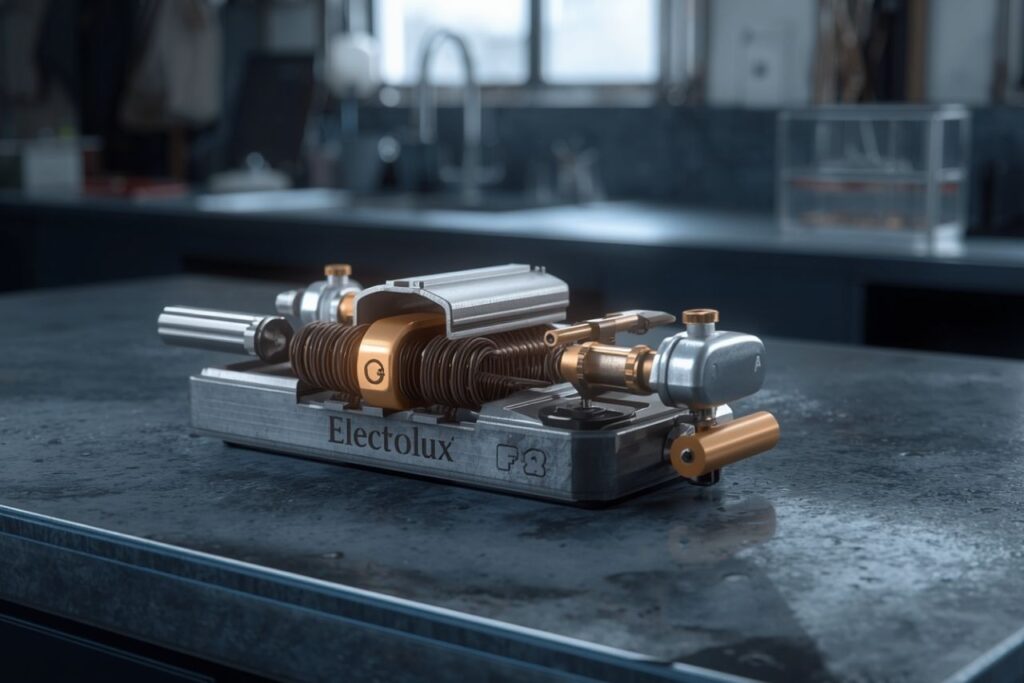
A dryer’s heating element typically fails at predictable “weak points”: the resistive conductor (coil or trace) opens from thermal fatigue, electrical connections loosen and overheat, or the element assembly is forced outside its safe heat-transfer conditions by restricted airflow. In many Electrolux-style electric dryers, the most actionable root causes are lint restriction, poor ventilation, and cycling stress that accelerates oxidation and deformation of resistive alloys. This page maps the most common failure points, the symptoms that distinguish them, and the prevention steps that meaningfully extend element life.
Related resources: Heating Element, Heating Element manufacturer, Heating Element Factory, Die Casting Heating Solutions.
- How dryer heating elements fail (component-level view)
- Common failure points (ranked) and what causes them
- Symptom patterns and what they usually mean
- Safe diagnostic checks (before replacing parts)
- Prevention: extending element life in real homes
- Data tables & charts
- FAQ (3 questions)
- Sources used and outbound links
How dryer heating elements fail (component-level view)
A heating element is not “just a wire.” Engineering guidance describes it as a component composed of electrically conductive material plus insulating and structural elements, with terminals that connect it safely to the circuit. The electrically conductive core performs resistive (Joule) heating, while the surrounding framework positions the conductor and controls safe clearance, heat transfer, and mechanical stability.
LSI keywords: resistive heating, nichrome / Ni-Cr alloys, Fe-Cr-Al alloys, thermal expansion, oxidation layer, watt density.
Why dryers are hard on elements
Dryer elements run in a predominantly convective environment (moving air). If airflow drops, the element temperature can rise rapidly, increasing oxidation, deformation, and the likelihood of an open circuit. This matches the broader heater-design principle that element performance depends on heat transfer conditions—not only on the alloy itself.
Common failure points (ranked) and what causes them
1) Coil “hot spot” burnout (open circuit in the resistive conductor)
The most common hard failure is an open circuit where the resistive conductor thins or fractures after repeated high-temperature cycles. Contributing drivers include high watt density at local bends, element sag or contact, and extended run time at elevated temperature due to poor venting.
2) Terminal and connector overheating
Loose or oxidized spade terminals create higher electrical resistance at the connection, which generates localized heat at the connector rather than across the designed resistive path. Symptoms often include discoloration at terminals, intermittent heat, or a burnt electrical odor at the heater housing.
3) Airflow-driven overtemperature (lint restriction, crushed/long ducting, blocked exterior hood)
When a dryer cannot move enough air, the element’s convective cooling collapses. The element still receives electrical power but cannot reject heat effectively, leading to accelerated oxidation and early failure. This is a frequent “root cause” even when the observed failure is a broken coil.
4) Mechanical deformation and contact with supports/shrouds
Heating alloys expand when hot. If the element support system allows sagging, the coil can touch metal surfaces or distort into abnormal geometry, changing local heat distribution and causing hot spots.
5) External control and safety devices misbehavior (secondary cause)
Thermostats, thermal fuses, and control boards can fail; however, they more often protect the system from unsafe temperatures rather than cause element damage. If the element has failed repeatedly, it is usually because operating conditions are pushing the system beyond design intent.
Symptom patterns and what they usually mean
Often points to an element/connection issue
- Runs but no heat; drum turns normally
- Intermittent heat correlated with vibration
- Burn marks near heater terminals
Often points to airflow restriction
- Clothes take much longer to dry
- Cabinet feels hotter than normal
- Exterior vent hood has weak airflow
Safe diagnostic checks (before replacing parts)
Dryers are high-current appliances. Any disassembly should follow the manufacturer’s safety documentation. At a minimum, the appliance should be de-energized (unplugged or breaker off) before inspection. If a technician is replacing a heating element, the overarching safety theme is to verify correct part match and safe reassembly.
Safety principle (cross-appliance example)
Service guidance for water-heater elements emphasizes verifying correct replacement wattage/voltage and not energizing a heating element under unsafe conditions (e.g., applying power before the tank is full can “dry fire” an element). While a dryer is a different system, the comparable lesson is that element replacement must include verifying correct electrical specifications and restoring safe heat-transfer conditions (airflow) before returning to service.
Non-invasive checks that identify the true root cause
| Check | What it reveals | Why it matters for element life |
|---|---|---|
| Exterior vent airflow (strong vs weak) | Whether the system is moving enough air | Low airflow raises element temperature and accelerates oxidation |
| Lint screen and housing cleanliness | Restriction at the first choke point | Restores convective cooling; reduces hot spots |
| Duct length/condition (kinks, crushing) | Pressure drop and backpressure sources | Sustained high element temperature shortens life |
| Cycle behavior (short cycling vs steady) | Control response and heat demand | Rapid cycling increases thermal fatigue and expansion stress |
Prevention: extending element life in real homes
For most households, preventing repeat heating element failures is less about “upgrading” the element and more about controlling the operating environment. Engineering discussions of heater longevity emphasize oxidation behavior, thermal expansion mismatches, and the role of temperature cycling. Those mechanisms are strongly influenced by airflow and load.
High-impact prevention actions
| Action | Primary mechanism | Expected benefit |
|---|---|---|
| Improve ventilation path (short, smooth duct; clear hood) | Lower element operating temperature | Reduced oxidation and fewer hot-spot failures |
| Routine lint removal (screen + housing) | Restores convective heat transfer | Less thermal stress; fewer thermal trips |
| Avoid chronic overload (very dense loads) | Reduces cycle time and high-temp exposure | Lower cumulative thermal fatigue |
| Inspect terminals during service | Reduces contact resistance heating | Prevents connector charring and intermittent faults |
Data tables & charts
Chart 1: Failure-point to symptom map
| Failure point | Common symptom | Most likely root cause |
|---|---|---|
| Coil open (burnout) | No heat; drum runs | Airflow restriction, high-temperature cycling, hot spots |
| Terminal overheating | Intermittent heat; burnt smell; discoloration | Loose connector, oxidation at terminals, vibration |
| Element deformation/contact | Repeated element failures; localized scorching | Support sag, thermal expansion stress, misalignment |
| Thermal protection opening | Heat stops, may resume later | Overtemperature event due to restricted air or blocked exhaust |
Chart 2: “Element” constructions (why materials and integration matter)
| Construction family | Core idea | Relevance to dryers |
|---|---|---|
| Wire elements supported/suspended | Conductive wire positioned by ceramic/mica supports; heat transfer by convection/radiation | Similar heat-transfer dependence: airflow is critical for stable temperature |
| Embedded/sheathed (e.g., MgO-packed) | Conductor embedded in insulating, thermally conductive material; heat transfer by conduction | Less typical for dryers, but highlights why “dry fire” and poor heat transfer destroy elements |
| Integrated thermal modules | Element integrated with structural metal for transfer/strength | Useful conceptually for appliance heating assemblies; improves transfer and mechanical stability |
Specification context (not a dryer part)
A plug-in electric heating element sold for radiators/towel warmers lists power rating (1000W), materials (ABS and stainless steel), ingress protection (IP67), and safety approval (UL). Dryer elements similarly depend on correct electrical rating and safe integration, even if the packaging and form factor differ.
FAQ
Does replacing the heating element fix drying time problems?
Not reliably. If the root cause is restricted airflow, a new element may heat initially but will often fail early or produce poor drying performance. Ventilation checks should be treated as part of the repair, not optional add-ons.
Why does a dryer heating element fail repeatedly within a year?
Repeat failures strongly suggest the element is operating too hot due to airflow restriction, excessive cycling, or connection overheating. Addressing the ventilation path and inspecting terminals typically delivers more benefit than changing brands of elements.
Is it safe to keep running the dryer if it heats “sometimes”?
Intermittent heat can indicate overheating connections or a protection device opening under unsafe temperature. Continued operation can worsen damage and increase risk. The unit should be inspected and corrected before further use.
Closing summary
The most common Electrolux-style dryer heating element failure points are coil hot-spot burnout, overheated terminals, and airflow-driven overtemperature that accelerates oxidation and deformation. A durable repair targets the underlying heat-transfer environment—especially lint and vent restriction—alongside correct part matching and safe electrical connections.
Sources used and outbound links
Heating-element definitions, alloys, framework classifications (suspended/embedded/supported), environmental/contaminant considerations, and longevity mechanisms:
https://tutco.com/conductive/heating-elements
Manufacturer context for heating element families and integration themes:
https://jinzho.com/
https://jinzho.com/product-category/heating-element/
https://jinzho.com/product-category/heating-element/heating-tubes/
https://jinzho.com/product-category/heating-element/heating-plate/
https://jinzho.com/product-category/heating-element/heating-film/
https://jinzho.com/product-category/die-casting-heating-solutions/
https://jinzho.com/product-category/electric-heater-parts/electric-boiler-heater/
Safety-process example emphasizing correct part verification and safe energization conditions:
https://www.whirlpoolwaterheaters.com/support/help/element-was-out-of-range/24
Specification-context example (power rating, materials, IP rating, UL approval):
https://usa.hudsonreed.com/1000-plug-in-watt-electric-heating-element-76309
Disclosure: This article’s structure, diagnostics, and wording are original. The links above were used to ground terminology (heating-element construction, alloys, and heat-transfer dependence), provide manufacturer product-family context, and supply a representative specification example.