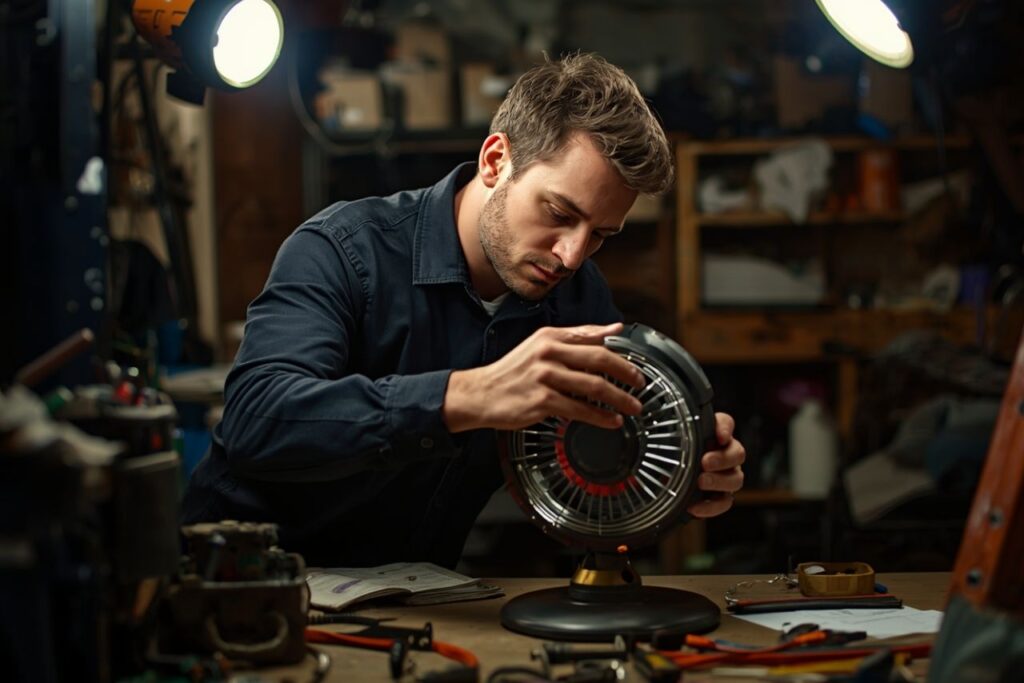
Replacing a failed ceramic heating element in a space heater is rarely a “simple parts swap.” A heating element is an engineered assembly that combines electrically conductive material with an electrically insulating framework and connectors, and the replacement must match both the heater’s electrical rating and the mechanical integration. This guide outlines a safe decision process: when replacement is appropriate, how to identify element style, what must match, and when professional service is the safer choice.
Heating Element | Heating Element manufacturer | Heating Element Factory | Die Casting Heating Solutions
- First decision: replace the element or replace the heater?
- What “ceramic heating element” can mean in space heaters
- Failure symptoms and quick checks
- Safety protocol before opening the heater
- Matching the replacement: what must be identical
- A practical replacement workflow (high level)
- Post-replacement validation and burn-in
- FAQ
- References and outbound links
First decision: replace the element or replace the heater?
For most consumer space heaters, replacing the entire unit is often safer and more economical than replacing internal parts. The reason is not only cost—it is risk. If the failure involves wiring, thermal protection devices, or control boards, installing a new element does not restore system safety.
| Scenario | Typical risk level | Recommended action |
|---|---|---|
| Element visibly cracked/burnt, rest of heater appears intact | Medium | Replace only if the heater is designed for service and the correct element is available. |
| Burning smell with wiring discoloration, melted insulation, or arcing marks | High | Do not repair; replace heater or seek qualified service. |
| Unit trips protection / shuts off repeatedly | Medium–High | Airflow restriction or sensor issue possible; clean/inspect; avoid element swap until root cause is identified. |
| Old heater with unknown parts availability | Medium | Replace heater (parts mismatch risk is high). |
Space heaters are high-power appliances. If the product is not explicitly designed to be serviced by end users, replacement is the safer default.
What “ceramic heating element” can mean in space heaters
In technical heater design, the “element” is the combination of conductive material plus insulating framework and connectors. Ceramics often appear because they can be strong electrical insulators at high temperature. In space heaters, “ceramic” typically points to one of the following:
Ceramic-supported resistance wire (supported or suspended)
A resistance wire alloy can be held by ceramic or mica supports. In this design family, heat transfers largely by convection and radiation. Engineering literature often describes the element’s integration as suspended, supported, or embedded depending on contact with the framework.
PTC ceramic modules (self-limiting behavior)
Some heaters use PTC element packages designed to increase electrical resistance as temperature rises, which helps limit peak temperature. While this behavior can support safer design, the heater still relies on correct airflow and proper thermal protection.
Printed thick-film or thin-film heaters on ceramic substrates
Ceramic substrates can carry printed resistive patterns (thick film) or deposited thin films. This approach is common in compact thermal modules and appliance components where controlled heat distribution is required.
ceramic heater core, PTC heating element, resistance wire alloy, thermal cutoff, overheat protection, watt density, insulating framework, airflow dependency.
Failure symptoms and quick checks
A broken ceramic element does not always present as a clean “no heat” failure. It may appear as erratic cycling, unusual odors, or intermittent shutdowns. The table below separates common symptoms from likely causes.
| Symptom | Likely cause | Element replacement helps? |
|---|---|---|
| No heat, fan runs | Open circuit element or failed thermal cutoff | Sometimes; confirm with testing and correct part matching. |
| Shuts off quickly | Airflow blockage, sensor placement issue, overheating | Not necessarily; fix airflow/root cause first. |
| Hot smell / smoke | Dust accumulation or electrical overheating | Only after safe cleaning/inspection; do not ignore wiring signs. |
| Visible crack in ceramic | Thermal shock, impact damage, aging | Possibly, if element is serviceable and replacement matches. |
Safety protocol before opening the heater
Before any disassembly, the heater must be treated as an electrical appliance with stored heat and sharp internal edges. A conservative safety workflow mirrors professional service logic: cool the unit, isolate power, and verify the correct replacement specification before reinstalling.
If the heater uses a sealed module, shows melted wiring, or has unclear ratings, element replacement should not proceed. The safer outcome is replacing the heater or using qualified service.
Matching the replacement: what must be identical
The biggest technical mistake is treating ceramic elements as “universal.” They are not. Correct matching includes both electrical and mechanical requirements.
Electrical match
- Voltage rating must match the heater’s rating label.
- Wattage must match (or be within manufacturer-approved tolerance).
- Connector type and lead configuration must match (terminals, plug style, insulation).
Mechanical and thermal match
- Element geometry (length, mounting points, clearances).
- Insulator interfaces (ceramic supports, channels, clamps).
- Airflow path (an element that blocks airflow can overheat rapidly).
Heating elements are designed products, not generic materials. Alloy choice, insulation framework, and terminal design are engineered together to balance reliability, performance, cost, and safety. Element construction is often described as suspended, supported, or embedded depending on framework contact.
A practical replacement workflow (high level)
The sequence below is intentionally high level. It aligns with service principles commonly used in other heating-element replacements: isolate power, verify correct part specifications, remove the failed component with proper tooling, restore wiring integrity, and reassemble with all protective covers installed.
Step 1: Document the heater’s rating and layout
- Photograph the rating label (voltage/wattage) and the wiring layout before disconnecting anything.
- Record model identifiers to reduce part mismatch risk.
Step 2: Open the unit and inspect for non-element faults
- Look for brittle, darkened, or melted insulation on wires.
- Check for dust mats blocking fan intake/exhaust (a common overheat trigger).
- Inspect thermal protection parts (thermal cutoff / overheat sensor) for damage.
Step 3: Remove the failed element using appropriate tools
- Disconnect leads carefully; avoid pulling on wires.
- Remove fasteners/clips and lift the element without cracking adjacent ceramics.
Step 4: Install the correct replacement and restore connections
- Install using the original mounting method (clips, channels, brackets).
- Reconnect wires with secure, tight connections.
- Reinstall insulating barriers and protective covers.
Protective covers reduce shock and fire risk. If the unit requires open-casing to run, the repair is not complete.
Post-replacement validation and burn-in
After reassembly, validation should focus on controlled operation and abnormal behavior detection. The goal is to confirm stable heat, safe cycling, and normal airflow.
| Check | Pass condition | If it fails |
|---|---|---|
| Airflow | Unobstructed intake/exhaust; fan stable | Stop use; clean/repair airflow path; overheating risk. |
| Odor/smoke | No persistent burning odor; light dust burn-off only | Stop use; recheck wiring, dust buildup, and element seating. |
| Shutdown behavior | Normal thermostat cycling | Investigate overheating and protection devices; do not bypass safety. |
FAQ
Can a ceramic element be replaced with a different wattage to “get more heat”?
Not safely. Wattage changes alter internal temperatures, airflow requirements, and thermal protection behavior. The replacement should match the heater’s voltage and wattage specifications.
What is the most common reason a new element fails again quickly?
The most common root causes are unresolved airflow restriction (dust buildup), incorrect part matching, or degraded wiring/thermal protection. Element temperature and watt density can rise rapidly if airflow is reduced.
Is “ceramic heater” always a PTC heater?
No. “Ceramic” may refer to ceramic supports for resistance wire, ceramic substrates for printed heaters, or PTC ceramic modules. The element’s construction—supported, suspended, or embedded—changes heat transfer and serviceability.
Is it safer to buy an external plug-in heating element instead of repairing a space heater?
It depends on the application. Plug-in elements are often designed for specific hosts (e.g., radiators or towel warmers) and list features such as ingress protection and approvals. They are not drop-in replacements for space heater assemblies and should not be used as substitutes unless the system is designed for them.
When should a professional technician be used?
If there is any arcing evidence, melted wiring, repeated shutdowns, or unclear rating information, professional evaluation is warranted. In many consumer units, replacement of the entire heater is the most defensible safety choice.
In summary, replacing a ceramic element is feasible only when the heater is designed to be serviced and the replacement part matches voltage, wattage, and mechanical integration. The safest repairs prioritize system integrity: correct airflow, intact insulation, secure connections, and all protective covers installed.
References and outbound links
Heating element definition (conductive + insulating framework), suspended/supported/embedded classifications, alloy considerations,
environment/contaminants, and watt density concepts:
https://tutco.com/conductive/heating-elements
Safety-oriented step logic for heating element replacement (power isolation, spec verification, reassembly, and cautions),
used here as a methodological reference and adapted for space-heater context:
https://www.whirlpoolwaterheaters.com/support/help/element-was-out-of-range/24
Product-family context for heating elements (tubes/plates/films and manufacturing positioning):
https://jinzho.com/product-category/heating-element/
Example of a 1000W plug-in electric heating element specification listing (used as a contrasting application example):
https://usa.hudsonreed.com/1000-plug-in-watt-electric-heating-element-76309
Editorial note: This content does not replace the heater’s manual or local electrical safety requirements. If manufacturer instructions differ, follow the manual.