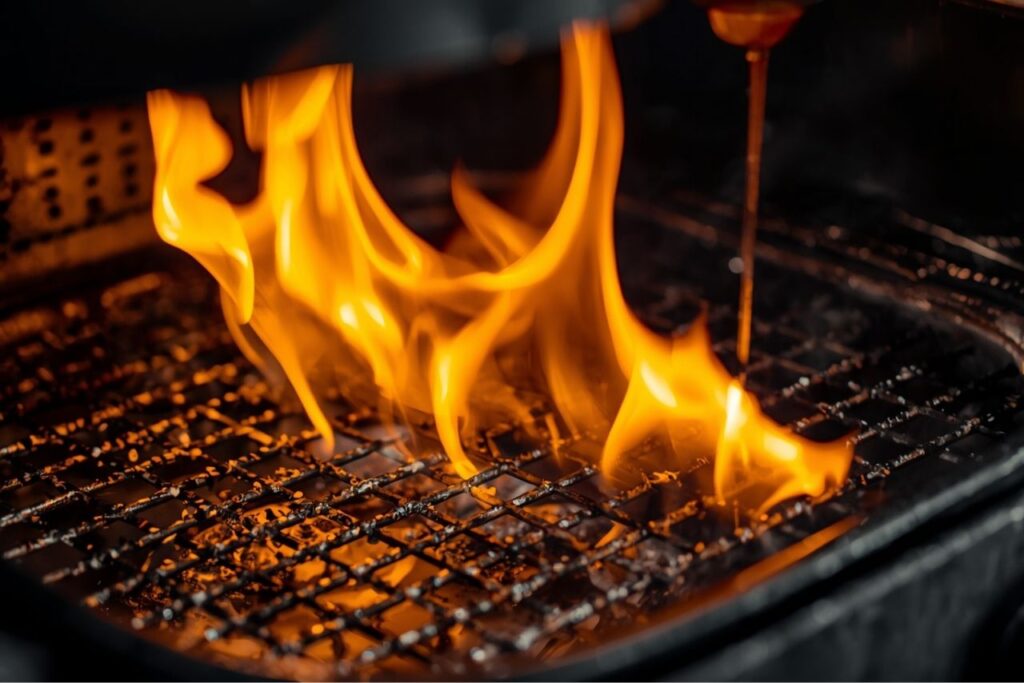
Yes—grease buildup on or near an air fryer heating element can become a fire hazard, especially when it accumulates into a thick, sticky film that repeatedly smokes, drips, or carbonizes. Even when it doesn’t ignite, it can create heavy smoke, bad odors, and stress the heater system over time.
Why grease near a heater is risky
Heating elements are designed to convert electrical energy to heat (resistive/Joule heating). In many appliances, the heat source is either exposed to airflow (open coil styles) or enclosed within a metal sheath/assembly (embedded or sheathed styles). In either case, surfaces near the heater can reach temperatures that easily smoke and carbonize cooking oils.
A heating element is an engineered component—conductive material plus insulating/support materials and connectors. When grease repeatedly burns on the heater area, you’re not just “making smoke”; you’re exposing a designed assembly to contaminants and heat cycles that can shorten life or create abnormal conditions.
Two ways grease increases hazard
| Mechanism | What happens | Why it’s a safety issue |
|---|---|---|
| Smoke and carbonization | Thin films bake into varnish; thicker deposits turn to carbon and can flake. | Carbonized residue can keep smoking, smell like burning, and create hot spots or uneven heating. |
| Drip ignition potential | Grease can drip or splatter onto the hottest zone or onto adjacent hot metal surfaces. | A concentrated drip on a very hot surface can flare, especially if airflow feeds oxygen. |
Heater design discussions often emphasize “environment”: contaminants (oils, cleaners, dust), airflow, and heat transfer conditions. In air fryers, airflow is strong by design—great for cooking, but it also means hot surfaces and oxygen are always present where grease deposits may be.
What “dangerous buildup” looks like
Not every tiny speck is a crisis. The risk rises when grease becomes persistent and thick.
- Smoke appears every cook, even with low-fat foods or preheat.
- Visible sticky film or dark varnish on the ceiling/guard around the heater.
- Grease droplets that don’t wipe off easily (baked-on deposits).
- Burning odor that lingers long after the unit cools.
- Any sign of dripping onto the heater zone during operation.
- A faint one-time odor on first use (manufacturing residue burn-off).
- Minor splatter after cooking very fatty foods that cleans off easily.
What to do if you see smoke or smell burning
- Turn the air fryer off and unplug it.
- Let it cool completely before inspecting (burn risk + grease is easier to smear when hot).
- Remove basket/tray and clean them thoroughly (they are often the grease source).
- Wipe the heater area with a damp (not dripping) cloth and mild dish soap solution; then wipe again with clean water and dry fully.
- After drying, do a short empty test run in a ventilated area. If smoke persists, stop using it and investigate further.
Many heater families (for example, tubular “heating tubes”) are described as metal sheaths with internal insulation (often magnesium oxide) and resistance wire. Even if an air fryer heater is not identical, the principle holds: keep cleaners and water from wicking into seams and electrical areas, and remove residues that could burn on the next heat cycle.
Prevention: cleaning and usage habits that reduce risk
Cleaning cadence (simple rule)
If you cook fatty foods frequently, treat the heater cavity wipe-down like a “weekly maintenance” task. Grease becomes hardest to remove after repeated heat cycles.
Best practices that reduce grease reaching the heater
- Don’t overcrowd: overcrowding can increase splatter and reduce airflow uniformity.
- Use drip control: when cooking very fatty items, use the correct tray/liner accessories recommended for your unit (avoid improvised liners that block airflow).
- Avoid heavy oil sprays that leave gummy residues on hot surfaces.
- Keep vents clear: blocked vents can raise internal temperatures and make deposits burn more aggressively.
When to stop using the air fryer
- You see sparks/arcing, or hear buzzing that wasn’t there before.
- Smoke is thick and immediate, or smells like burning plastic/insulation.
- Smoke continues after thorough cleaning and complete drying.
- Any electrical protection trips (breaker/GFCI), or the fan is not running properly.
If you’re comparing heater technologies across appliances: air fryers often use airflow-exposed heater arrangements (similar in principle to process air heating), while other products use sheathed tubes, plates, films, or integrated die-cast thermal modules. Each architecture has different heat transfer behavior and different “cleanability” tradeoffs—so always default to gentle, residue-free cleaning methods unless your specific manual says otherwise.