You often notice problems with your hot water heater when you experience ぬるま湯 or hot showers that end too soon. Other signs, such as strange hissing, popping noises, or a sudden spike in your energy bill, can also indicate a malfunctioning water heater element. When these issues arise, you need to test the 電熱線 safely and accurately. Using a multimeter, you can check resistance and determine if you should replace the element. 金中電熱 その他 発熱体メーカー offer reliable 家電製品の加熱素子 for your water heater.
Common symptoms of a faulty heating element include:
- ぬるま湯
- Hot showers cut short
- Strange hissing or popping sounds
- Unexpected increase in energy bills
- Cloudy or discolored water
- Circuit breaker frequently tripping
Tools and Safety for Testing a Water Heater Element

Before you begin testing, you need the right tools and a clear understanding of safety procedures. Working with electricity and water can be dangerous. You must take every precaution to protect yourself and your home.
Tools Needed for Testing a Water Heater Element
マルチメーター
A デジタルマルチメーター is the most effective tool for testing a heating element. You use it to measure voltage and resistance. Set the multimeter to Rx1k (resistance times 1,000 ohms) and connect the probes to the screw terminals. A reading between 10 and 16 ohms usually means the element works properly.
ドライバー
You need a screwdriver to remove the access panel and insulation covering the element terminals. Choose a screwdriver that fits the screws on your hot water heater.
Safety Gloves and Goggles
Always wear insulated gloves and safety goggles. These protect you from electrical shock and accidental contact with hot or sharp surfaces.
懐中電灯
A flashlight helps you see inside the access panel, especially in dimly lit utility rooms or basements.
ヒント Some professionals also use a continuity tester or a non-contact voltage tester. These tools help confirm if the element is functioning and if wires are live.
| 道具 | 機能 |
|---|---|
| デジタルマルチメーター | Measures voltage and resistance |
| 導通テスター | Checks if the element is functioning |
| 非接触電圧テスター | Ensures safety by detecting live wires |
Safety Steps Before You Test Heating Elements
ブレーカーでの電源遮断
You must always turn off the power at the circuit breaker before working on your water heater. This step prevents electrical shock and meets national electrical code requirements. Locate the correct breaker and switch it off.
Confirming Power Is Off
Breakers can fail or be mislabeled. Use a non-contact voltage tester to confirm that no power reaches the element terminals. This extra step ensures your safety before you touch any wires.
Draining the Tank If Necessary
If you plan to remove the heating element, drain the tank first. This prevents leaks and reduces the risk of scalding. Draining also helps you avoid flooding and mold growth from unnoticed leaks.
警告だ: Failing to follow safety steps can lead to serious incidents:
- Risk of scalding, leaks, or explosions if the water heater malfunctions.
- Fire hazards from faulty electrical components.
- Flooding due to leaks or tank failure.
- Carbon monoxide poisoning from improper venting or gas leaks.
- Pressure relief valve failure leading to explosions.
- Mold growth from unnoticed leaks.
You should also check that your installation meets national electrical code standards. These include dedicated electrical service panel space, proper clearances, emergency shutoff accessibility, and compliance with local building codes.
How to Locate Hot Water Heater Elements
Locating the heating elements in your water heater is a crucial step before you begin any testing or repairs. You need to identify your water heater type and access the element safely. This process helps you avoid mistakes and ensures accurate results.
Identifying Your Water Heater Type
You must first determine whether you have an electric water heater or a gas model. The type of water heater affects how you access and test the heating elements.
Electric vs. gas water heater
Most residential water heaters in the United States fall into two categories. In 2021, 52% of water heaters sold were gas models, while 48% were electric models. Electric water heaters use heating elements inside the tank to warm the water. Gas water heaters rely on a burner located beneath the tank. If you see a thick electrical cable running to the top or side of your unit, you likely have an electric water heater. Gas models feature a vent pipe and a gas supply line.
ヒント Electric water heaters usually have two heating elements—one near the top and one near the bottom. Gas water heaters do not use internal heating elements, so you cannot test them in the same way.
加熱要素へのアクセス
Once you know your water heater type, you need to access the heating element for inspection and testing. This step requires attention to detail and the right tools.
Finding and removing the access panel
You will find the access panel on the side of your electric water heater. The panel covers the element terminals and insulation. Use a screwdriver to remove the screws securing the panel. Set the panel and screws aside in a safe place. Lift away the insulation to expose the element terminals. A flashlight can help you see inside the compartment, especially in low-light areas.
Locating the element terminals
After you remove the access panel and insulation, you will see the element terminals. These terminals look like two screws with wires attached. You must disconnect the wires before testing. Always check for visible signs of damage, such as corrosion or burn marks. Skipping a visual inspection may cause you to miss obvious problems.
Homeowners often face several challenges during this process:
- Not turning off the power before testing can lead to serious harm.
- Using the wrong tools, such as basic continuity testers instead of a multimeter, can yield unreliable results.
- Skipping a visual inspection may overlook visible damage to the element.
- Testing only one element can miss the main issue if both elements are present.
- Misreading the multimeter values can lead to incorrect conclusions about the element’s condition.
- Forgetting to check the thermostat may result in unnecessary element replacement.
注: You should always follow safety steps and use the correct tools. Careful preparation helps you avoid mistakes and ensures a successful hot water heater repair.
温水ヒーター要素のテスト手順ガイド
You need a reliable process when testing a water heater element. This step-by-step guide to testing helps you avoid common mistakes when testing and ensures accurate results. You can follow these steps to test the elements and confirm if your hot water heater is working efficiently.
要素テストの準備
メーカーは、温水ヒーター要素のテストを開始する前にいくつかの準備手順を推奨しています。自身と機器を保護するため、常にこれらのガイドラインに従ってください。.
要素からの配線の切断
- マルチメーター
- マイナスドライバー
- プラスドライバー
- 絶縁手袋
- 目の保護
- 懐中電灯
回路ブレーカーをオフにして温水ヒーターの電源を切ります。ユニットに電気が流れていないことを必ず確認してください。.
金属製アクセスパネルと断熱材を取り外し、加熱要素を露出させます。.
温水ヒーター要素の特定. 通常、2本のネジで固定された丸型または六角形の部品として見えます。.
ネジを1本緩め、要素から配線を外します。この手順により、正確なテストのために要素を絶縁状態にします。.
配線に触れる前には、必ず電源が切れていることを再確認してください。電圧テスターを使用して確認します。.
マルチメーターを適切な抵抗測定モードに設定
マルチメーターを最低のオームレンジ(通常はRX1Kと表示)に設定します。, この設定により、加熱要素の抵抗を正確に測定できます。プローブ同士を接触させてマルチメーターが動作していることを確認します。針またはデジタル表示に反応が現れるはずです。.
マルチメーターで発熱体をテストする方法
これでマルチメーターを使用して加熱要素をテストできます。このプロセスにより、要素が機能しているか、交換が必要かを判断できます。.
プローブを要素端子に設置
- ネジを緩めて要素から配線を取り外します。.
- 一方のプローブを片方のネジ端子に、もう一方のプローブを反対側の端子に当てます。.
- 明確な測定値を得るため、プローブをしっかりと固定します。.
抵抗値の読み取り
マルチメーターの表示を読み取ります。. 正常な温水ヒーター要素は、10〜30オームの抵抗を示すはずです。. 正確な値は各要素のワット数と定格電圧によって異なります。以下の表を使用して結果を比較できます:
| ワット数 (W) | 電圧(V) | 典型的な抵抗値(オーム) |
|---|---|---|
| 750 | 120 | ~19 |
| 1000 | 120 | ~14 |
| 1500 | 120 | ~10 |
| 2000 | 120 | ~7 |
| 2500 | 120 | ~6 |
| 3000 | 120 | ~5 |
| 1500 | 240 | ~38 |
| 2000 | 240 | ~28 |
| 3500 | 240 | ~16 |
| 4500 | 240 | ~13 |
| 5500 | 240 | ~10.5 |
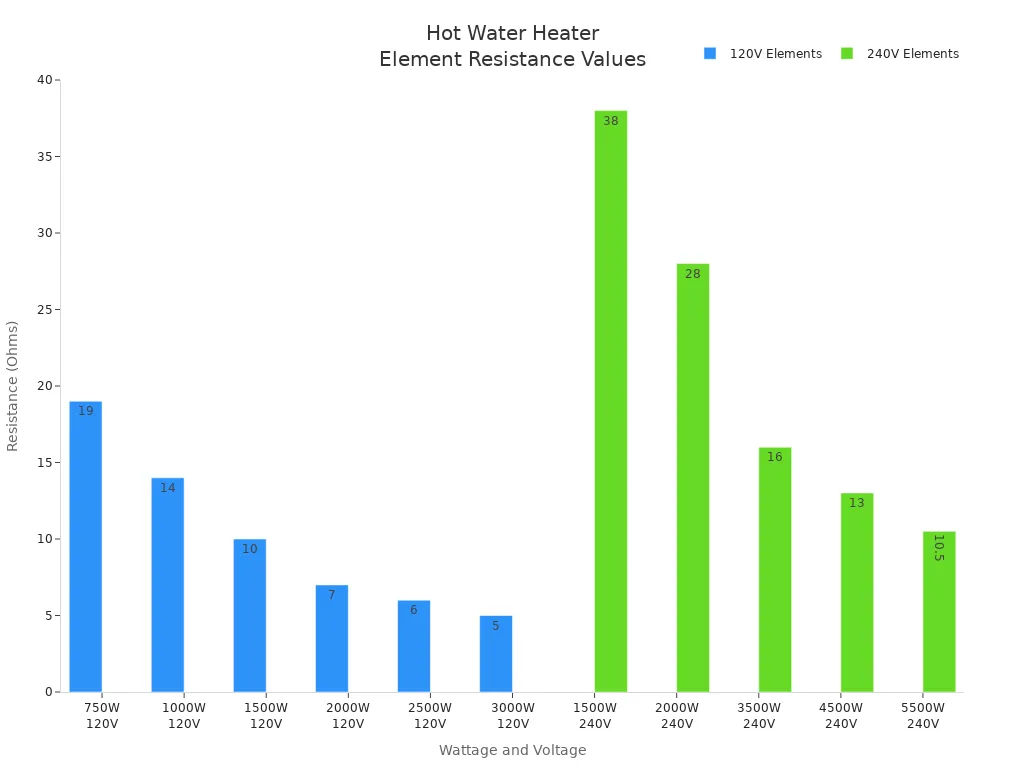
測定値が典型的な抵抗範囲内であれば、加熱要素はおそらく正常に動作しています。ゼロまたは無限大の抵抗が表示された場合は、要素を交換する必要があります。.
ヒント:測定値は常に各要素のワット数と比較してください。この情報は温水ヒーターのラベルまたは要素自体に記載されています。.
温水ヒーターの短絡チェック
短絡は温水ヒーターの故障を引き起こす可能性があります。この問題を除外するため、接地に対する導通テストを行う必要があります。.
要素とタンク間のテスト
- テスト開始前に必ず電源が切れていることを確認してください。. 電圧テスターを使用して再確認します。.
- 要素から配線を取り外します。.
- 一方の端子を要素のラグの一つにクランプします。.
- もう一方のリードを金属製の要素フランジまたはタンク自体に接触させます。.
- 両方の加熱要素の両端子に対してテストを繰り返します。.
マルチメーターまたは導通テスターが点灯または何らかの測定値を示した場合、要素は接地しています。交換が必要です。.
接地導通の解釈
点灯しない、または測定値がない場合は接地がありません。要素はタンクに短絡していません。接地に対する導通が確認された場合、, 錆または腐食が要素を損傷している可能性があります。. Sediment buildup can also insulate the lower heating element, causing overheating and failure. These issues are common causes of short circuits in water heater elements.
Note: You can avoid mistakes by always checking for continuity to ground after you test the heating element resistance. This step helps you catch hidden problems and prevents future failures.
You now know how to test heating elements and interpret the results. You can avoid common mistakes when testing by following each step carefully. If you find a faulty water heater element, you should replace it promptly to restore your hot water heater’s 性能を回復させるべきです。.
温水ヒーター要素のテスト結果の解釈方法
正常なテスト結果の特徴
加熱要素の典型的な抵抗値
温水ヒーター要素のテストが終了したら、測定した抵抗値を標準値と比較する必要があります。正常に機能するほとんどの加熱要素は、 10〜30オームの抵抗を示します。. 正確な値は要素のワット数によって異なります。以下の表を使用して結果を確認できます:
| 要素タイプ | 抵抗範囲(オーム) |
|---|---|
| 一般的な要素 | 10 – 30 |
| 3,500ワット要素 | 15 – 16 |
| 4,500ワット要素 | 12 – 13 |
| 5,500ワット要素 | 10 – 11 |
これらの範囲内の測定値は、電気温水ヒーター要素が良好な状態である可能性が高いことを意味します。測定値は、要素または温水ヒーターラベルに記載されているワット数と常に照合してください。.
要素が動作している兆候
You can confirm a working water heater element by observing several signs:
- マルチメーターが予想範囲内の抵抗値を表示する。.
- 蛇口を開けたときに安定した温水が出る。.
- 温水ヒーターが回路ブレーカーをトリップさせない。.
- 温水ヒーターから錆や変色した水が出ない。.
これらの結果が確認できれば、加熱要素は意図通りに機能しています。.
故障した温水ヒーター要素の兆候
Zero or infinite resistance readings
A faulty heating element often shows a resistance reading of zero, one, or infinite ohms. These results indicate a burned-out element or a break in the internal coil. You can refer to this table for quick reference:
| Resistance Reading | 状態 |
|---|---|
| 10 to 30 ohms | Element is functioning properly |
| 0 or 1 ohms | Element is faulty |
If your multimeter shows zero or infinite resistance, you need to replace the water heater element.
Continuity to ground
You should also check for continuity between the element terminal and the tank. If your tester shows continuity, the element has shorted to ground. This situation means the element has failed and could cause the circuit breaker to trip. You must replace a faulty heating element immediately to restore safe operation.
⚠️ 警告だ: Never ignore a faulty or grounded element. Continued use can damage your water heater or create safety hazards.
What to Do If Test Results Are Unclear
Retesting steps
Sometimes, your test results may seem confusing or inconsistent. You should follow these steps to confirm your findings:
- Double-check that the power is off before retesting.
- Ensure all wires are disconnected from the element terminals.
- Clean any corrosion or debris from the terminals.
- Set your multimeter to the correct resistance setting.
- Test both upper and lower elements if your hot water heater has two.
If you still get unclear readings, repeat the process with a different multimeter if available.
When to replace the element
You should replace the water heater element if:
- The resistance reading is zero, one, or infinite.
- The element shows continuity to ground.
- You continue to experience hot water issues after testing and retesting.
A new element restores your water heater’s performance and prevents further problems. If you feel unsure about any step, contact a professional for assistance.
Troubleshooting If Testing a Water Heater Element Shows No Problem
If you finish testing a water heater element and the results show no issues, you still might experience hot water problems. You need to continue troubleshooting to diagnose the problem and restore your hot water supply. Several other components and conditions can cause your hot water heater to malfunction, even when the heating element works as expected.
Checking the Water Heater Thermostat
A faulty thermostat often leads to inconsistent water temperatures or a complete lack of hot water. You should check the water heater thermostat as part of your water heater troubleshooting process.
How to test the thermostat
Follow these steps to test the thermostat safely and accurately:
- Turn off the power to your water heater at the circuit breaker.
- Remove the access panel and carefully move aside the insulation to expose the thermostat.
- Disconnect the power wires from the thermostat terminals.
- Set your digital multimeter to the continuity setting.
- Touch the multimeter probes to the thermostat terminals.
- Observe the meter display. A reading of zero means the thermostat functions correctly. If you see no voltage or a reading of one, the thermostat needs repair or replacement.
Always ensure the power is off before you begin testing. This step protects you from electrical shock.
Common thermostat issues
You may encounter several frequent thermostat problems during troubleshooting:
- 水温が一定しない
- Water that is too hot
- Water that is too cold
- Long reheat times
If you notice any of these issues, the thermostat may not signal the heating elements to operate correctly. Replacing a faulty thermostat can resolve many hot water issues.
Other Common Hot Water Heater Problems
If both the heating element and thermostat test as functional, you should check the water heater for other common problems. These issues can prevent your hot water heater from working efficiently.
Tripped circuit breaker
A tripped circuit breaker or blown fuse can stop the electric heating element from functioning. Check the water heater breaker in your electrical panel. Reset it if necessary. If the breaker trips repeatedly, you may have a wiring or component issue that requires further troubleshooting.
堆積物の蓄積
堆積物の蓄積 inside the tank can insulate the water from the heating element. This reduces heating efficiency and can cause strange noises or longer reheat times. Flushing the tank regularly helps prevent sediment accumulation and extends the life of your water heater.
配線不良
Loose or damaged wiring can interrupt power to the heating elements or thermostat. Inspect all visible wires for signs of wear, corrosion, or loose connections. Tighten or replace any faulty wiring to restore proper operation.
Note: Other non-element-related problems include foul odors from hot water, leaks from pressure valve failure, and temperature inconsistencies due to incorrect thermostat settings. Addressing these issues can improve your water heater’s performance.
When to Call a Professional for Water Heater Issues
Some water heater troubleshooting tasks require professional expertise. You should know when to seek help to ensure safety and avoid costly mistakes.
専門家の助けが必要な兆候
- The water heater is 8-12 years old and shows signs of wear.
- You need frequent repairs or experience recurring hot water issues.
- Your energy bills increase without explanation, suggesting efficiency problems.
- You hear unusual noises, such as popping or rumbling, which may indicate sediment buildup.
- You notice water discoloration or foul odors, which can signal corrosion or bacteria growth.
- The water heater leaks or shows signs of water damage.
- You feel uncomfortable or unsafe performing electrical or plumbing repairs.
Professional technicians can diagnose the problem, ensure safe repairs, and help you decide if replacement is necessary. Expert service can also extend the life of your hot water heater and prevent future breakdowns.
How to Replace a Faulty Hot Water Heater Element
Replacing a faulty water heater element restores your hot water supply and improves efficiency. You can complete this task with careful preparation and attention to detail. The average lifespan of a hot water heater element ranges from 10年以上. Factors such as water quality, maintenance, and usage can affect how often you need to replace the element.
古いヒーターエレメントの取り外し
タンクの排水
Start by turning off the power at the circuit breaker. Confirm the power is off using a noncontact voltage detector. Next, connect a garden hose to the drain valve at the bottom of the tank. Open the valve and allow the water to drain into a floor drain or outside. This step prevents water from spilling when you remove the heating element.
Unscrewing the element
Once the tank is empty, locate the faulty heating element. Use an element wrench or a large socket wrench to loosen and unscrew the element from the tank. Remove the element carefully to avoid damaging the threads or the tank opening. Watch for common mistakes during removal and installation:
- Incorrectly setting up the pressure relief valve can create dangerous pressure inside the tank.
- Using the wrong materials or connectors may cause leaks.
- Irregular soldering of pipes can result in poor connections and water damage.
新しい給湯器エレメントの取り付け
Fitting and tightening the new element
Before you install the new element, check the gasket for damage and replace it if needed. Insert the new heating element into the opening and hand-tighten it. Use the wrench to secure the element, but avoid over-tightening. Proper installation prevents leaks and ensures a good electrical connection.
Refilling the tank and restoring power
Close the drain valve and remove the hose. Open a hot water faucet in your home to allow air to escape. Turn on the cold water supply to refill the tank. When water flows steadily from the faucet, close it. Only then should you restore power at the breaker. Never turn on the power before the tank is full, as this can damage the new element.
Testing the Elements After Replacement
Confirming the fix
After installation, you need to confirm the new element works correctly. Follow these best practices for testing a water heater element:
- Remove the cover plates and verify the power is off.
- Test the wires leading into the water heater for voltage.
- Disconnect one wire from the element and set your multimeter to OHMS.
- Place a test probe on each terminal of the heating element.
- A resistance reading within the expected range confirms proper function.
- Check for short circuits by testing between the element screws and the mounting bracket.
をチェックする必要があります。 water heater for leaks and ensure the pressure relief valve operates correctly. Consistent hot water and stable operation indicate a successful repair.
Tip: Regular maintenance and prompt replacement of faulty heating elements help extend the life of your hot water heater.
Preventing Future Hot Water Heater Problems
Regular Maintenance for Water Heaters
Routine maintenance helps you avoid costly repairs and extend the life of your hot water heater. You should follow a schedule to keep your system running efficiently. Service professionals recommend several tasks that you can perform or arrange with a licensed plumber.
タンクの洗浄
Sediment buildup inside the tank can reduce heating efficiency and cause strange noises. You should flush the tank every six months to remove minerals and debris. This process prevents sediment from insulating the heating element and helps maintain consistent hot water. Attach a garden hose to the drain valve, open the valve, and let the water flow until it runs clear. Always turn off the power before you begin.
Inspecting heating elements annually
You need to inspect heating elements at least once a year. Regular inspection allows you to spot corrosion, wear, or electrical issues before they cause failure. During your annual check, look for signs of rust or mineral deposits on the water heater element. If you notice damage, replace the heating element promptly. You can also test the element using a multimeter to confirm proper operation.
Tip: Schedule a professional inspection if you feel unsure about performing maintenance yourself. Licensed plumbers have the expertise to identify problems and recommend solutions.
You can use the following table to organize your maintenance schedule:
| タスク | 頻度 |
|---|---|
| タンクの洗浄 | 6か月ごと |
| Inspect and replace the anode rod | 毎年 |
| Check the pressure relief valve | 6か月ごと |
| Inspect heating elements (electric) | 6か月ごと |
| Replace heating elements if needed | As necessary |
Early Warning Signs of Water Heater Element Failure
Recognizing early warning signs helps you address problems before they become emergencies. You should pay attention to changes in your water heater’s performance and listen for unusual sounds.
Inadequate hot water
If you notice that your hot water supply runs out quickly or never reaches the desired temperature, you may have a failing water heater element. Insufficient hot water often signals that the heating element cannot keep up with demand.
Fluctuating water temperatures
Inconsistent water temperature can indicate problems with the heating elements or thermostat. You might experience sudden changes from hot to cold water during use. This symptom often appears before complete element failure.
Strange noises
Popping or rumbling sounds from your water heater suggest sediment buildup in the tank. These noises occur when minerals settle around the heating element and interfere with heat transfer. Service professionals consider these sounds a critical sign of potential failure.
Note: Increased energy bills may also point to inefficiency in your water heater. If you see a spike in costs, check for underlying issues with the heating element or other components.
You can maintain your water heater by following these steps and watching for early warning signs. Regular testing and inspection help you avoid unexpected breakdowns and ensure reliable hot water for your home.
Testing your water heater element is a straightforward process when you use the right tools and follow safety steps. If your hot water heater element works, consider other possible causes before seeking professional help. 定期メンテナンス keeps your water heater efficient and reliable.
- Routine inspections and flushing procedures extend the lifespan of your system.
- Addressing minor issues early prevents unexpected breakdowns.
- 定期的なメンテナンススケジュールは、高額な修理費用や冷水シャワーを回避するのに役立ちます。.
不確かな場合は、必ず資格を持った技術者に連絡してください。.
よくあるご質問
給湯器のヒーター要素はどのくらいの頻度でテストすべきですか?
給湯器のヒーター要素は少なくとも年に1回テストすべきです。定期的なテストは問題を早期に発見し、効率的な運転を維持するのに役立ちます。.
マルチメーターなしで給湯器ヒーター素子を点検できますか?
マルチメーターなしでは給湯器のヒーター要素を正確にテストできません。マルチメーターは正確な抵抗値を提供します。外観検査だけでは機能を確認できません。.
どのような抵抗値が給湯器のヒーター要素の不良を示しますか?
ゼロ、1、または無限大オームの値は要素が不良であることを意味します。ほとんどの要素では10〜30オームの抵抗値が表示されるはずです。.
要素をテストするためにタンクの排水は必要ですか?
要素をテストするためにタンクを排水する必要はありません。排水は要素を取り外したり交換したりする場合にのみ必要です。.
給湯器のヒーター要素が故障する原因は何ですか?
一般的な原因には、ミネラル堆積、腐食、電源サージ、水質不良が含まれます。定期的なメンテナンスは故障リスクを軽減します。.
給湯器のエレメントを自分で交換しても安全ですか?
すべての安全手順に従えば、給湯器のヒーター要素を交換できます。作業開始前には必ず電源を切り、オフになっていることを確認してください。不安がある場合は専門家に連絡してください。.
私の給湯器はなぜブレーカーを何度も落とすのでしょうか?
不良要素、配線問題、または短絡がブレーカーのトリップを引き起こす可能性があります。要素をテストし、配線を点検すべきです。問題が続く場合は専門家の助けが必要です。.