There are few things more disruptive to a morning routine than a coffee machine that refuses to heat. You fill it with water and your favorite grounds, press the button, and… nothing but cold, sad water. When your brewer stops brewing hot coffee, one of the most common culprits is a failed 加熱エレメント. This component is the heart of your machine, responsible for turning cold water into the lifeblood of your morning.
While a repair might sound daunting, for the confident DIYer, diagnosing and replacing a コーヒーメーカー用ヒーター is an achievable and rewarding project. It can save you from the cost of a new machine and the waste of discarding an otherwise functional appliance. This guide will walk you through the process step-by-step, from diagnosis to replacement, empowering you to bring your beloved coffee maker back to life.
A CRUCIAL SAFETY WARNING: Before you begin, understand that this is not a beginner’s repair. You will be working with components that carry high-voltage electricity in close proximity to water. Safety is not optional—it is paramount.
- ALWAYS UNPLUG THE COFFEE MACHINE from the wall outlet before opening the casing or touching any internal components.
- ENSURE THE MACHINE IS COMPLETELY COOL. Heating elements and boilers can cause severe burns.
- EMPTY ALL WATER from the machine to prevent spills on electrical parts.
- If at any point you feel uncertain or uncomfortable, STOP and consult a professional appliance repair service. The risk of electric shock, water damage, or fire is real.
Understanding Your Coffee Machine’s Heating System
Coffee machines generally use one of two systems to heat water, and the replacement process will vary slightly depending on which type you have.
- Drip Coffee Makers: Most drip machines use a thermoblock or thermocoil system. Water is pumped from the reservoir through a metal block or tube that has a 電熱線 attached to or embedded in it. This allows for rapid, on-demand heating. The warming plate that keeps the carafe hot is a separate, lower-power 電熱線.
- Espresso Machines & Percolators: These machines typically use a boiler. This is a small tank where a volume of water is held and heated by an immersed element. The element screws directly into the boiler and is sealed with a gasket. This design allows the machine to maintain a stable temperature and, in the case of espresso machines, to generate steam pressure.
Regardless of the system, the diagnostic and replacement principles for the heating element itself are very similar.
Common Failure Modes of Heating Elements
| 故障モード | 説明 | Primary Cause | Diagnostic Sign |
|---|---|---|---|
| Open Circuit | The internal filament of the element breaks, interrupting the electrical path. | Age, material fatigue, manufacturing defect. | No continuity reading on a multimeter (OL). |
| Short to Ground | The internal filament makes contact with the outer metal sheath of the element. | Internal insulation failure, physical damage. | Continuity reading between an element terminal and its metal body. |
| Mineral Buildup (Scale) | A thick layer of limescale coats the element, acting as an insulator. | Use of hard water without proper descaling. | Slow heating, lukewarm water, element may test “good” but performs poorly. |
Essential Tools and Materials
Having the right tools on hand will make the job significantly easier and safer. You will likely need:
- マルチメーター: This is the most important diagnostic tool. You cannot safely or accurately diagnose a faulty element without one.
- Screwdriver Set: You’ll need various sizes of Phillips and flat-head screwdrivers. Some machines use security screws (like Torx or spanner heads), so a versatile set is best.
- Pliers: Needle-nose pliers are essential for disconnecting wires, and standard pliers can provide extra grip.
- Wrenches or Socket Set: For boiler-type elements, you will need a large wrench or socket to unscrew the element from the boiler.
- Wire Brush or Scouring Pad: To clean the boiler threads and sealing surface.
- Camera (Smartphone): Absolutely critical for taking photos of wiring and component placement before you take anything apart.
- Masking Tape & Marker: For labeling wires so you know exactly where they go during reassembly.
Materials:
- The correct replacement 加熱エレメント.
- A new heating element gasket or O-ring. Do not reuse the old one.
- Teflon tape or food-safe thread sealant (only if specified for your machine’s threads).
Step 1 – Diagnosing the Problem: Is It Really the Heating Element?
The main symptom of a failed element is that the machine fails to heat water. However, other components in the heating circuit, like the thermostat or thermal fuse, can cause the same symptom. A multimeter is the only way to be certain.
Testing with a Multimeter (The Continuity Test)
このテストは、加熱体内部の電気経路が正常か断線しているかを判定します。.
- **安全第一:** 電源プラグを抜き、機械を冷まし、内部の水を全て排水してください。.
- エレメントにアクセスする: 機械の底面または側面パネルを取り外し、加熱体の電気端子を露出させます。.
- **すべてを記録する:** いかなる配線も外す前に、異なる角度から数枚の鮮明な写真を撮影してください。マスキングテープを使用して配線にラベルを貼ります。これは再組み立てのための道しるべとなります。.
- **配線を外す:** 加熱体の2つの端子から、ワイヤーコネクタを慎重に引き外します。.
- **マルチメーターを設定する:** マルチメーターを導通テストモード(通常、音波やダイオードのような記号で表示)に設定します。そのモードがない場合は、最も低い抵抗(Ω)測定モードに設定してください。.
- **テストを実行する:** マルチメーターのプローブを、加熱体の2つの端子にそれぞれ接触させます。.
**結果の解釈:**
- 良い要素だ: マルチメーターがビープ音を鳴らすか、抵抗モードの場合は低い値(加熱体により通常9〜50Ω)を表示すれば、加熱体に **導通性** があり、問題の原因ではない可能性が高いことを意味します。.
- **不良な加熱体:** マルチメーターは音を出さず、表示部に「OL」(オープンループ)、「1」、または無限大の抵抗値が表示されます。これは内部コイルが断線しており、加熱体を交換する必要があることを意味します。.
**接地(アース)短絡のテスト**
これは同等に重要な安全テストです。通電中の内部コイルが加熱体の外側金属ケーシングに接触していないか(接触すると機械が通電する危険がある)を確認します。.
- マルチメーターは同じ設定のままにします。.
- **テストを実行する:** 一方のプローブを加熱体の端子の一つに、もう一方のプローブを加熱体の金属本体(ねじ込みフランジまたはシース自体)にしっかりと接触させます。もう一方の端子に対しても同様に繰り返します。.
**結果の解釈:**
- 良い要素だ: マルチメーターは「OL」または無限大の抵抗値を表示するはずです。これが望ましい状態です。電気がコイル内に安全に閉じ込められていることを意味します。.
- **不良な加熱体:** マルチメーターがビープ音を鳴らすか、何らかの抵抗値を表示した場合、加熱体は **接地(アース)短絡**. を起こしています。極めて危険であり、直ちに交換する必要があります。.
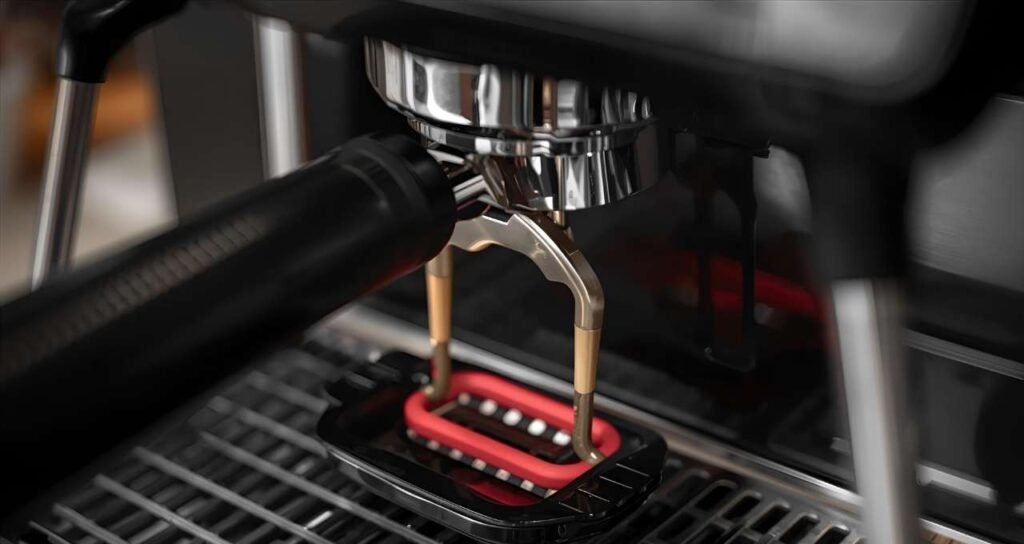
**コーヒーマシン加熱体の典型的な抵抗値**
| マシンタイプ | 電圧 | ワット数 | 予想抵抗値(オーム) |
|---|---|---|---|
| ドリップコーヒーメーカー | 120V | 900W | 16 Ω |
| 家庭用エスプレッソマシン | 120V | 1400W | ~10.3 Ω |
| 業務用エスプレッソマシン | 240V | 4000W | ~14.4 Ω |
| 注:これらは概算値です。抵抗(R)は R = V² / P で計算されます。必ず特定部品の仕様を確認してください。. |
**ステップ2 – 正しい交換部品の調達**
加熱体の不良を確認したら、正しい交換部品を見つける必要があります。ここでは推測は禁物です。交換部品は **必ず** 以下の点でオリジナルと一致しなければなりません:
- **電圧(V):** 通常、北米では110-120V、ヨーロッパ/その他の地域では220-240Vです。.
- **電力(W):** これは加熱出力を決定します。.
- **物理的なサイズと形状:** ボイラーまたはサーモブロック内に収まる必要があります。.
- **取り付けタイプとサイズ:** ねじ込みベースの直径とピッチは同一でなければなりません。.
古い加熱体のベースに印刷または刻印されている部品番号を探してください。この番号でオンライン検索が可能です。コーヒー機器専門店は優れた情報源です。 コーヒー中毒者 (カナダ)、, ステファノ・エスプレッソ・ケア (米国)、 クリスのコーヒー (米国)などのサイトには、マシンブランド別に整理された豊富な部品カタログがあり、必要な部品を見つけやすくなっています。.
**極めて重要なのは、**, **必ず新しい加熱体用ガスケットを購入することです。**. やStefano's Espresso Careなどの小売業者が、ガスケットを加熱体に同梱または推奨するのには理由があります。古いガスケットは圧縮されて硬く脆くなっており、再利用するとほぼ確実に水漏れを起こします。 グレート・インフュージョン **ステップ3 – 交換作業:詳細な手順**.
新しい部品を手にしたら、取り付け作業に入ります。
**準備**.
**安全の再確認:**
- 機械の電源プラグは抜かれ、冷めており、内部は空になっていることを再確認してください。 The machine is unplugged, cool, and empty.
- Set Up Your Workspace: Work on a clean, dry, well-lit surface with a towel underneath to catch any residual water.
Disassembly
- エレメントにアクセスする: Remove the necessary panels to get clear, unobstructed access to the heating element.
- Check Your Photos: Refer to the photos and labels you made earlier.
- **配線を外す:** Carefully disconnect the wires from the old element’s terminals.
古い要素の削除
- Loosen the Element: Using the correct size wrench or socket, turn the element’s base counter-clockwise to loosen it. It may be very tight due to mineral buildup and heat cycling. Apply steady, firm pressure. Brace the ボイラー内で加熱されると、化学の法則により、これらのミネラルは溶液から析出し、硬い結晶性の堆積物、すなわち with your other hand if possible to avoid twisting it.
- Extract the Element: Once loose, unscrew it the rest of the way by hand and carefully pull it out of the boiler.
- Clean the Sealing Surface: Remove the old gasket. Thoroughly clean the threads on the boiler and the surface where the new gasket will sit. A small wire brush or a non-scratch scouring pad works well. Any old debris or scale left here can cause a leak.
新しい要素のインストール
- Inspect the New Part: Confirm your new
コーヒーメーカー(https://jinzho.com/product-tag/coffee-machine-heating-element/) is the correct one and is undamaged. - Position the Gasket: Place the new gasket onto the new element. Ensure it is seated flat and evenly against the flange.
- Insert and Hand-Tighten: Carefully guide the new element into the boiler. Screw it in by hand until it is snug. This prevents cross-threading, which can ruin the boiler.
- Final Tightening: Use your wrench to tighten the element firmly. The goal is to compress the gasket enough to create a perfect seal. A common guideline is a quarter to a half-turn past hand-tight, but do not use excessive force. Overtightening can damage the element or the boiler.
再組み立てとテスト
- Reconnect Wires: Using your photos and labels as a guide, reconnect all wires to their proper terminals. Ensure the connections are snug and secure.
- CRITICAL LEAK TEST: Before putting the outer panels back on, place the machine upright and fill the boiler with water. Let it sit on a dry towel for at least 15-20 minutes. Meticulously inspect the area around the new element with a flashlight for any drips or moisture.
- Address Leaks: If you see a leak, drain the machine and tighten the element slightly more (e.g., an eighth of a turn). Then repeat the leak test. Do not proceed until it is perfectly dry.
- Final Assembly: Once you are 100% confident there are no leaks, reattach all the machine’s panels.
- Power On: Plug the machine in and turn it on. Stay with the machine and listen for normal heating sounds. Watch to ensure it heats up correctly and that the indicator light cycles off when it reaches temperature.
プロを呼ぶタイミング
This repair requires a degree of mechanical and electrical confidence. It’s better to call a professional if:
- You are not comfortable using a multimeter or working with electrical components.
- The heating element is riveted or soldered in place, as noted by the repair guide from HowStuffWorks.
- You cannot identify or source the correct replacement part.
- After replacement, the machine still leaks or doesn’t heat up.
- You see any signs of burning, melting, or charring on wires or plastic connectors.
結論
Successfully replacing a コーヒーマシンの加熱要素 is a project that can bring immense satisfaction and save a valued appliance from the landfill. The keys to success are a methodical approach, meticulous documentation with photos, and an unwavering commitment to safety. By using a multimeter for accurate diagnosis and sourcing high-quality parts from a reliable supplier or an established 電熱器メーカー(https://jinzho.com/about/), you can confidently tackle this repair. Your reward will be the triumphant return of that beautiful aroma of fresh, hot coffee filling your kitchen once more.
よくある質問(FAQ)
1. My machine turns on, but the water is only lukewarm. Is the heating element bad?
It’s a strong possibility, but not the only one. This symptom can be caused by a 不良発熱体 that has high resistance but isn’t completely broken, or it could be a faulty サーモスタット that is shutting the element off too early. A thick layer of mineral scale can also insulate the element, preventing it from efficiently transferring heat to the water. A resistance test with a multimeter is the best way to diagnose the element itself.
2. Do I have to replace the gasket when I replace the heating element?
Yes, absolutely. This is non-negotiable. The old gasket has been heat-cycled and compressed for years. It will be hard and brittle and will not create a reliable seal if reused. A new gasket is a very inexpensive part that prevents a potentially costly and damaging water leak.
3. I tested my 加熱 element and it has continuity. Why isn’t my coffee maker heating?
If the element itself is good, the break is elsewhere in the heating circuit. The next components to test (with the machine unplugged) are the サーモスタット そして thermal fuse (TCO). Like the element, these should also have continuity when cold. If either one shows an open circuit (“OL”), it has failed and needs to be replaced.
4. Can I use a heating element with a different wattage?
It is strongly recommended that you do not. A higher-wattage element will draw more current than the machine’s wiring and control board were designed for, creating a fire hazard. A lower-wattage element will heat the water too slowly or may never reach the optimal brewing temperature. Always replace components with parts that have the exact same voltage and wattage specifications as the original.
5. Where can I find the part number for my heating element?
The part number is typically stamped or etched onto the metal base (the hexagonal or round part that you put a wrench on). It may be faint, so clean the area and use a flashlight. If it’s unreadable, you will need to identify your machine’s exact model number and search for a replacement 加熱エレメント(https://jinzho.com/product-category/heating-element/) using that information on a specialty parts supplier’s website.
参考文献と情報源
- Repair procedures and component functions were cross-referenced with information from HowStuffWorks’ guide on small appliance repair. https://home.howstuffworks.com/how-to-repair-small-appliances3.htm
- Information on specific types of heating elements, gaskets, and their commercial availability was gathered by reviewing the product catalogs of specialty retailers, including Stefano’s Espresso Care, Chris’ Coffee, and Coffee Addicts.
- Visual confirmation of the repair process and tool usage was informed by DIY repair videos.
- Details on replacement parts for various home espresso machine models were reviewed at Great Infusions. https://greatinfusions.com/home-espresso-replacement-heating-elements/
- Manufacturing specifications and the variety of available heating element types were referenced from industry manufacturer JINZHO. https://jinzho.com/product-category/heating-element/