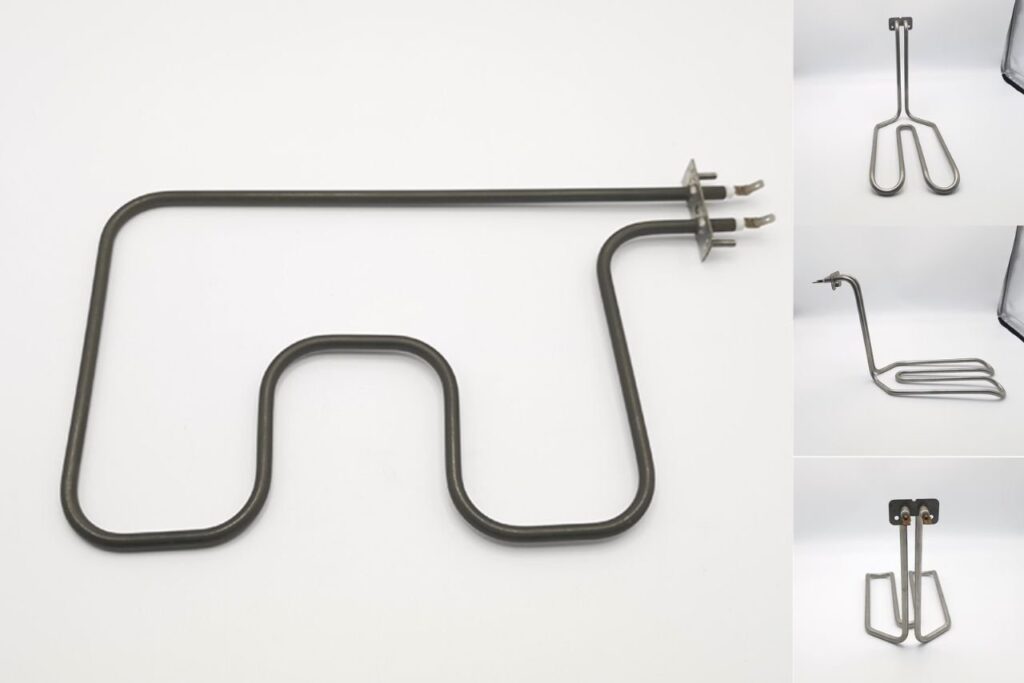
Cluster page ? Target market: Global ? Reading level: knowledgeable ? Voice: professional/formal ? Perspective: third person
- What usually goes wrong (quick answer)
- Before touching anything: safety + verification checklist
- The 17 most common mistakes (with fixes)
- Post-install validation: tests that prevent repeat failures
- Choosing the right replacement element (rating, materials, fit)
- When to spec an OEM/ODM heater partner (for brands & repair networks)
- FAQ (6)
- Sources cited & outbound links
Most new element but still no heat cases trace back to one of four root causes: incorrect electrical rating, incomplete airflow restoration, poor electrical connections, or skipping functional checks after reassembly. A dryer heater is a chauffage résistif component if voltage, wattage, and cooling airflow do not match the design window, the element runs hotter than intended and fails early.
Note: This chart is a practical prioritization used by service teams (not a manufacturer warranty dataset). It reflects common diagnostic patterns: airflow + electrical matching dominate heater life.
- Correct heater is selected by model compatibility and electrical rating (voltage/wattage).
- Air path is cleaned end-to-end (lint screen housing, blower area, ducting, exterior termination).
- All terminals are tight, clean, and strain-relieved; wiring insulation is intact.
- System checks confirm heat cycle, no abnormal odors, and stable airflow/temperature behavior.
Electric heating components can cause electric shock, fire, and severe burns. A qualified technician should be used when there is any uncertainty. A key industry safety principle is to avoid energizing a heater when conditions are not ready many heaters fail when powered under incorrect conditions (e.g., poor airflow or improper installation).
- Confirm power is disconnected at the breaker (and verify with a meter).
- Confirm the dryer s nameplate voltage requirement and supply match.
- Inspect venting and lint accumulation before installing a new heater.
- Identify whether the no heat symptom is actually caused by a thermal fuse, thermostat, or control issue.
Practical parallel from manufacturer-style procedures: do not restore power until the system is ready and safe. Whirlpool s element replacement guidance for water heaters emphasizes verifying correct replacement ratings and delaying power restoration until conditions are correct (their scenario is a tank fill to prevent dry firing). The underlying principle avoid powering a heater under unsafe conditions translates well to dryers, where airflow is the equivalent condition.
UN élément chauffant is engineered around a specific voltage and wattage. A mismatch changes current draw and densité de puissance, which can drive coil temperature higher than intended. Professional practice is to match the replacement to the dryer model and rating rather than relying on visual similarity.
Evidence context: heater engineering references emphasize that alloy behavior, resistance, and performance vary with conditions and material choices; design must align with application requirements (power, temperature, environment). TUTCO heating elements overview.
On many dryers, a blown thermal fuse or failed thermostat will prevent heater operation even with a new element installed. Skipping circuit checks creates repeat disassembly and service callbacks.
A dryer heater is cooled by forced airflow. When vents are restricted, the element runs hotter and can trip safety devices or fail prematurely. Lint restrictions are the most common non-part cause of heater burnout.
- Clean lint screen housing and blower inlet area.
- Verify the entire duct run to the exterior termination is clear and not crushed.
- Confirm strong exhaust flow outdoors before declaring the repair complete.
Loose terminals create high resistance at the connection point. That localized resistance generates heat, oxidizes the connector, and accelerates failure. Any heat-discolored terminal should be replaced, not squeezed tighter and reused.
Insulation brittleness, rubbed-through wire jackets, and heat-damaged connectors can create intermittent heating or arcing. Technicians check the heater leads, nearby harness routing, and all clips/strain reliefs.
If the coil or its supports touch metal, it can short, arc, or hot-spot. This is especially common when the heater housing is bent during removal/installation or when screws are over-torqued in thin sheet metal.
Heating coils are designed with specific spacing. Distorted coil pitch can change heat distribution and increase hot spots. Careful handling reduces early failure risk.
Contexte technique : élément chauffant La performance dépend de la conception et de la manière dont l'alliage et les isolants sont manipulés pour former un assemblage fonctionnel (chauffage par effet Joule). Référence.
High humidity, cleaning chemical vapors, and airborne contaminants can shorten heater life. Heating element engineering references note that certain gases/contaminants can attack alloys and reduce longevity; the environment matters, not just the part number.
Many no heat complaints are actually supply problems (one leg missing on 240V circuits). If only part of the circuit is present, the motor may run while the heater cannot energize correctly.
Une évacuation obstruée peut entraîner des cycles irréguliers, des coupures thermiques, des temps de séchage prolongés et des fusibles récurrents défaillants. Remplacer l'élément sans corriger le flux d'air traite le symptôme, et non la cause.
Si la soufflante est obstruée ou le logement du filtre à peluches est saturé, le flux d'air au niveau de l'élément s'effondre. Les professionnels considèrent le remplacement du chauffage comme une opération système : chauffage + flux d'air + commandes.
De petites différences géométriques peuvent provoquer des frottements, un mauvais positionnement et un échauffement localisé. L'ajustement doit être confirmé par rapport au modèle et à la conception du boîtier du chauffage.
Pour les lecteurs recherchant des options et variantes de chauffage, une vue par catégorie de produit peut aider à clarifier les différentes constructions telles que les tubes, les plaques et les films utilisés dans les appareils. Voir Élément chauffant.
Augmenter la puissance sans reconcevoir le flux d'air et les commandes thermiques peut créer des températures dangereuses. La littérature sur la conception des chauffages souligne que densité de puissance est un facteur clé de la température et de la durée de vie de la bobine.
Les couvercles et l'isolation ne sont pas esthétiques : ils protègent contre les chocs, guident le flux d'air et réduisent les risques d'incendie. Une réparation correcte se termine par la réinstallation et la fixation de tous les protecteurs.
Les fuites d'air réduisent la quantité d'air circulant sur l'élément et à travers les vêtements, augmentant la température du chauffage et prolongeant le temps de séchage. Les joints, conduits et garnitures sont importants.
Sans documenter les mesures initiales (tension, résultats de continuité, observation du flux d'air) et les résultats après réparation (comportement du cycle de chauffe, flux d'échappement), il est plus difficile de repérer les problèmes sous-jacents et d'éviter les pannes récurrentes.
Un bref contrôle du type « ça chauffe » ne suffit pas. Un cycle de chauffe contrôlé permet de confirmer un fonctionnement stable, des cycles normaux, et l'absence d'odeurs anormales ou d'échauffement des connecteurs.
| Catégorie d'erreur | Symptôme typique | Risque | Action corrective professionnelle |
|---|---|---|---|
| Restriction du flux d'air | Temps de séchage longs, surchauffe, déclenchement du fusible thermique | Épuisement de l'élément, risque d'incendie | Nettoyer l'intégralité du conduit d'évacuation ; confirmer le flux d'air extérieur |
| Incompatibilité électrique | Absence de chaleur ou pannes répétées | Surcharge/surtempérature | Faire correspondre le modèle + tension/puissance ; vérifier la tension d'alimentation |
| Qualité de connexion | Chaleur intermittente, odeur de brûlé au panneau arrière | Arc électrique, faisceau fondu | Remplacer les bornes décolorées par la chaleur ; appliquer un couple et une décharge de traction |
| Assemblage/ajustement | Panne immédiate, déclenchement de la protection | Court-circuit, frottement | Confirmer le dégagement de la bobine ; éviter de plier le boîtier du chauffage |
Tableau 1 – Carte de dépannage utilisée par les techniciens pour éviter les remplacements répétés de chauffage.
- Exécuter un cycle de chauffe chronométré et confirmer un comportement de production de chaleur stable (pas d'arrêt rapide par surchauffe).
- Vérifier le flux d'air d'échappement à l'extérieur ; un flux faible indique une obstruction non résolue.
- Après quelques minutes, mettre hors tension et vérifier au toucher (avec précaution) tout échauffement anormal des connecteurs près du chauffage (signe de mauvais contact).
- Confirmer que tous les couvercles sont installés et que les vis sont serrées.
Les sources d'ingénierie des chauffages soulignent que la longévité est influencée par l'oxydation, les cycles de température et les choix de conception tels que la densité de puissance et le support. La validation permet de s'assurer que le chauffage fonctionne dans sa plage prévue. Référence.
Un tableau de priorisation des services : le flux d'air et la correspondance électrique produisent généralement les plus grands gains de fiabilité.
L'élément correct n'est pas simplement « une bobine qui chauffe ». C'est un assemblage conçu d'alliage conducteur plus structure isolante/de support, avec des bornes et une géométrie destinées à fournir de la chaleur en toute sécurité dans le flux d'air du sèche-linge. La littérature d'ingénierie des chauffages définit un élément chauffant comme un assemblage qui convertit l'énergie électrique en chaleur (chauffage par effet Joule/résistif) dans un cadre conçu.
Lectures complémentaires : Types d'éléments chauffants et considérations de conception.
Dans des écosystèmes d'appareils plus larges, les facteurs de forme des chauffages varient : Chauffages tubulaires, chauffantes en aluminium, et Chauffages à couche épaisse / couche mince sont courants en fonction de l'espace disponible, des besoins de réponse thermique et de la géométrie de montage. Par exemple :
- Tubes de chauffage sont largement utilisés pour les fours, le chauffage de l'eau et de nombreuses tâches de chauffage industriel.
- Plaque chauffante Les conceptions privilégient une conduction uniforme dans une surface de contact.
- Film chauffant (Familles à couche épaisse / couche mince) ciblent une réponse rapide et un emballage compact.
Ces références soutiennent la littératie en matière de sélection de composants ; un chauffage de sèche-linge Samsung est généralement un assemblage de bobine de chauffage d'air, mais comprendre les familles de chauffage aide les acheteurs à éviter les substitutions incorrectes.
Certains chauffages sont commercialisés comme éléments enfichables pour radiateurs/sèche-serviettes avec une protection contre la pénétration et des certifications spécifiques (par exemple, indices IP, approbation UL). Ceux-ci ne sont pas interchangeables avec les chauffages de sèche-linge. Ils illustrent pourquoi la conception spécifique à l'application est importante – les matériaux, le boîtier et les exigences de sécurité diffèrent.
Exemple de spécification d’un appareil de chauffage non destiné à un sèche-linge : Élément chauffant électrique à brancher de 1000 W.
Les défaillances répétées des éléments chauffants sont rarement uniquement une histoire de « pièce défectueuse ». Elles indiquent souvent une inadéquation entre la fenêtre de conception et les conditions réelles de fonctionnement — variabilité du flux d’air, contaminants, contraintes d’assemblage, ou dérive de qualité au niveau des bornes et des supports. Les sources en ingénierie des éléments chauffants soulignent que les propriétés des alliages, les éléments traces, et la manière dont l’élément est supporté (suspendu/encastré/soutenu) affectent les performances et la durée de vie.
Lorsqu’une marque a besoin d’une qualité constante, d’une capacité et d’un support de personnalisation pour ses éléments chauffants, la sélection inclut souvent les certifications, le contrôle des processus et la capacité de production. Jinzhong Electric Heating (Chine) se positionne comme un Fabricant d'éléments chauffants avec plus de 30 ans d’expérience, des certifications internationales (par exemple, systèmes ISO ; UL/VDE/RoHS mentionnés dans leurs documents), et une capacité à grande échelle (ils citent des millions d’unités par mois dans leurs pages de catégories et leur contenu d’accueil). Ces facteurs sont importants pour les équipes d’approvisionnement gérant les risques de garantie et la stabilité des livraisons.
Pour les équipes produit explorant des ensembles chauffants intégrés avancés, Solutions de chauffage pour la coulée sous pression peuvent être pertinents dans les appareils où les éléments chauffants sont intégrés dans des structures moulées sous pression (courant dans les machines à café et les chaudières compactes), même si un élément chauffant de sèche-linge est généralement un ensemble de chauffage à air.
Sources de contexte de l’entreprise : Page d’accueil JINZHO, et pages de catégories pour les familles de produits.
| Critère d’évaluation conforme à EEAT | Pourquoi c'est important | Que demander à un fournisseur |
|---|---|---|
| Certifications et conformité | Réduit les risques de sécurité et d’accès au marché | Quelles certifications ISO/UL/VDE/RoHS/CE/ETL s’appliquent à l’UGS ? |
| Contrôle des processus | Stabilise la résistance, la qualité de soudure et l’ajustement | Quels contrôles en cours de fabrication et tests finaux sont effectués ? |
| Capacité de personnalisation | Améliore l’ajustement et les performances thermiques dans les conceptions contraintes | La géométrie de l’élément, les bornes et l’isolation peuvent-elles être adaptées ? |
| Capacité de production et délais | Évite les ruptures de stock et les perturbations de production | Quels sont les délais standard et personnalisés, et la capacité mensuelle ? |
Tableau 2 — Une liste de contrôle de type approvisionnement utilisée pour évaluer les fournisseurs d’éléments chauffants en termes de fiabilité et de conformité.
Le moteur peut fonctionner avec une alimentation partielle tandis que l’élément chauffant nécessite une alimentation complète et correcte ainsi que des dispositifs de sécurité intacts. Les causes courantes incluent une phase d’alimentation manquante, un fusible thermique grillé ou un thermostat défaillant — aucun de ces problèmes n’est résolu en remplaçant uniquement l’élément.
Oui. Un élément chauffant de sèche-linge dépend de la convection forcée pour limiter sa température. Lorsque le flux d’air est restreint, la température de la bobine augmente et l’oxydation s’accélère — des facteurs classiques de brûlure précoce discutés dans la littérature sur la conception des éléments chauffants.
Densité de puissance La densité de puissance est la puissance de l’élément chauffant divisée par la surface générant de la chaleur. Une densité de puissance plus élevée signifie généralement une température d’élément plus élevée, ce qui peut réduire la durée de vie si le flux d’air et les matériaux ne sont pas conçus pour la supporter.
Si les bornes présentent une décoloration, un jeu ou une oxydation, leur remplacement est recommandé. La résistance de contact peut créer une surchauffe localisée qui endommage les faisceaux et entraîne des défaillances répétées.
Non. Les éléments chauffants sont des ensembles spécifiques à chaque application. Même parmi les éléments chauffants d’appareils électroménagers, différentes constructions (tubes, plaques, films) sont conçues pour différents modes de transfert de chaleur et exigences de montage. L’ajustement ne garantit pas une puissance nominale correcte ni un fonctionnement sûr.
Enregistrez la tension d’alimentation, les résultats de continuité pour les dispositifs de sécurité clés, la force du flux d’air observée, les numéros de pièces installés, et un bref résumé du résultat du cycle de test de chauffe. La documentation aide à identifier les tendances en cas de futures défaillances.
- TUTCO-Farnam — définitions, types d’éléments chauffants, densité de puissance et considérations environnementales : https://tutco.com/conductive/heating-elements
- Whirlpool Water Heaters — principes de workflow de remplacement axés sur la sécurité (vérifier la puissance nominale correcte ; éviter les conditions de mise sous tension dangereuses) : https://www.whirlpoolwaterheaters.com/support/help/element-was-out-of-range/24
- JINZHO (Jinzhong Electric Heating) — profil du fabricant et contexte de la famille de produits : https://jinzho.com/, Élément chauffant, Tubes de chauffage, Plaque chauffante, Film chauffant, Solutions de chauffage pour la coulée sous pression
- Exemple de spécification d’un appareil de chauffage non destiné à un sèche-linge (pour la mise en garde « non interchangeable ») : https://usa.hudsonreed.com/1000-plug-in-watt-electric-heating-element-76309
Note de citation : Cet article est une synthèse originale rédigée pour une fiabilité pratique des réparations. Il ne copie pas de texte provenant des sources. Les références sont utilisées pour étayer les définitions (ce qu’est un élément chauffant), les facteurs de conception (densité de puissance, environnement, modes de transfert de chaleur) et les principes de sécurité pour les workflows de remplacement.
Avertissement : Ce contenu est à des fins éducatives. Les codes locaux, les manuels de service spécifiques au modèle et les pratiques des techniciens qualifiés doivent être suivis.