- Fast answer: how to tell the heating element is actually bad
- Symptom patterns that mimic a bad heater (airflow and safety cutoffs)
- Step-by-step diagnostic workflow (what to check, in order)
- Understanding the heater as a component (why failures happen)
- When replacement makes sense and how to avoid repeat failures
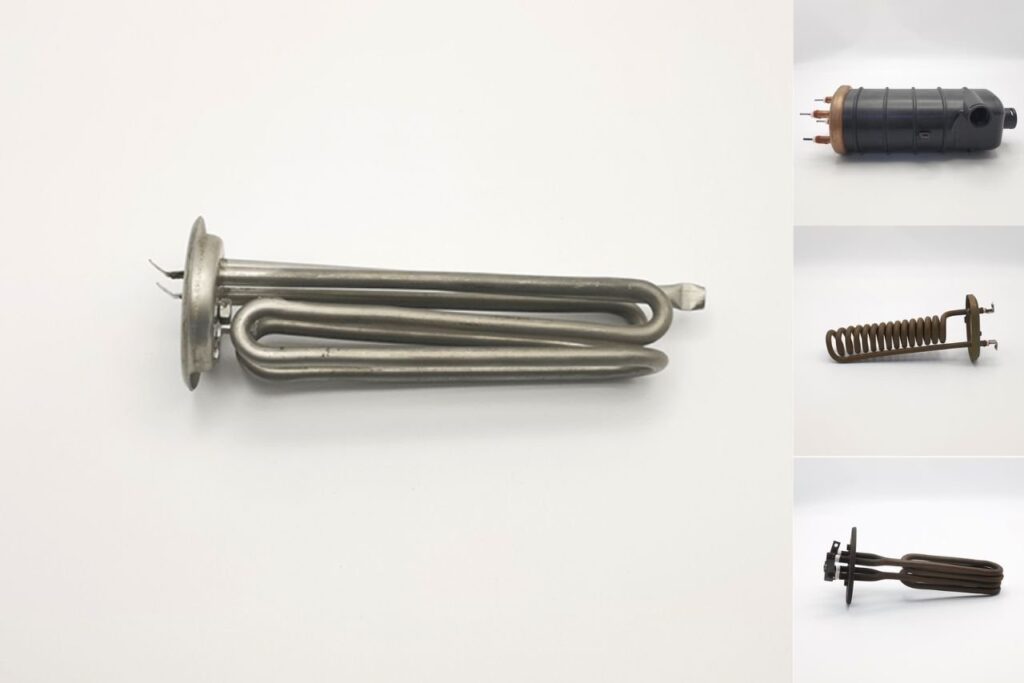
- Heater types beyond dryers (tubes, plates, films, die-cast modules)
- FAQ (3)
- Références et liens externes
- The dryer tumbles normally but produces no heat ou weak heat across multiple cycles.
- The exhaust airflow is verified as not restricted (lint screen, vent path, external hood not blocked).
- A meter test indicates the heater is circuit ouvert (no continuity) or shows evidence consistent with an internal failure.
Dryer heating systems are designed around moving air. When airflow is restricted, temperatures rise in the heater housing and safety devices may interrupt power to protect the unit. The end-user sees no heat, but the element may still be electrically intact.
- Lint buildup beyond the filter
- Crushed/long/blocked vent duct
- External vent hood stuck shut
Many dryers place thermal cutoffs and thermostats in series with the heater circuit. If one opens due to overheating, the heater will not energize even if the coil is good. This is why a systematic test order matters.
- No heat at all vs. heat that cuts out mid-cycle
- Long dry times despite some heat
- Burning smell or repeated thermal trips (often airflow related)
- Lint screen condition and fit
- Internal lint accumulation (if accessible safely)
- Vent duct routing and external exhaust flap
Reason: an airflow restriction can overheat the heater housing and open safety devices, producing a bad element symptom without an element failure.
A reliable diagnosis uses electrical measurements. The goal is to distinguish: heater open circuit heater short-to-ground open safety device wiring/terminal failure
If the reader cannot perform electrical tests safely, stop and use a qualified service provider.
If the heater is open, identify why it failed. A heater that failed from chronic overheating due to restricted airflow may be replaced successfully once, but fail again if the vent restriction remains.
| Constat | Most likely cause | Next action |
|---|---|---|
| Good airflow, heater reads open circuit | Broken heating coil / heater assembly failure | Replace heater assembly; inspect terminals |
| Restricted airflow, heater may test OK | Vent/duct blockage causing thermal interruption | Correct airflow first; then re-test heating circuit |
| Repeated shutdown or burning smell | Overheating condition, lint accumulation | Clean and correct airflow; inspect thermostats/cutoffs |
TUTCO defines a heating element as a component composed of both electrically conductive and insulating material, designed to serve a heating purpose. It emphasizes that an element is more than the heating alloy alone it includes an assemblage of parts and terminations, and it operates through resistive (Joule) heating.
This matters for dryer diagnostics because the failure may occur in: the resistive coil, the insulating supports, ou the terminals/connectors.
- Thermal cycling and peak temperature stress
- Airflow conditions (dryers are convection-driven systems)
- Material variability and éléments traces in alloys (as described by TUTCO)
- The unit has verified airflow and intact safety devices
- The heater assembly fails continuity/resistance tests
- Wiring/terminal issues are corrected at the same time
- Correct airflow restrictions first (vents, lint buildup)
- Inspect the heater housing for lint accumulation
- Verify all wire connections are tight and undamaged
Many dryer heaters are effectively a form of forced-air resistive heater. In other appliances, heating solutions may use tubular heaters, chauffantes en aluminium, thick film heaters, or integrated die-cast heating bodies. Jinzhong categorizes these product families for appliances and industrial contexts.
Élément chauffant Fabricant d'éléments chauffants Usine d'éléments chauffants Solutions de chauffage pour la coulée sous pression
How can someone tell the Samsung dryer heating element is broken without guessing?
The most reliable approach is to confirm the symptom (tumbles, no/low heat), verify airflow is not restricted, then use a meter to check the heater circuit for an open condition. A broken heater typically presents as an open circuit, but safety devices and wiring must also be considered.
Why can airflow issues look like a bad heating element?
Restricted airflow can cause overheating and trigger protective devices that interrupt the heater circuit. The user experiences no heat, but the element may still be intact. Correcting airflow is also important to prevent repeat heater failures.
What is the most common reason a new heating element fails again?
Repeat overheating from unresolved airflow restriction and lint accumulation is a frequent root cause. TUTCO s discussion of heater environment and less obvious costs aligns with this: if operating conditions remain harsh, failures repeat and total cost increases.
- TUTCO Heating Elements (definition, resistive heating, materials, trace elements, and less-obvious costs): https://tutco.com/conductive/heating-elements
- Jinzhong category pages (heater families for appliance and industrial contexts): https://jinzho.com/product-category/heating-element/, https://jinzho.com/, https://jinzho.com/about/, https://jinzho.com/product-category/die-casting-heating-solutions/