
Puede encontrar muchos tipos de elementos calefactores en freidoras eléctricas. Estos tipos son tubulares, de bobina, infrarrojos, cerámicos y combinados. Cada tipo tiene características especiales que cambian el funcionamiento de su freidora. También modifican la facilidad de limpieza de la freidora. Materiales como el acero inoxidable o el nicromo hacen que estas piezas duren más. Siempre verifique si el mantenimiento y el reemplazo son sencillos antes de elegir su freidora.
Principales conclusiones
Las freidoras eléctricas tienen diferentes elementos calefactores. Estos incluyen tipos tubulares, de bobina, infrarrojos, cerámicos y combinados. Cada tipo tiene beneficios especiales para cocinar y limpiar.
La aleación de nicromo y el acero inoxidable se utilizan para fabricar elementos calefactores. Estos materiales ayudan a que duren más. También permiten que los elementos manejen el calor alto de forma segura.
Los elementos infrarrojos y combinados calientan el aceite rápida y uniformemente. Esto ahorra energía y hace que los alimentos se cocinen mejor.
Limpie su freidora con frecuencia y revise si hay daños. Esto ayuda a que su freidora funcione bien y dure más.
Elija elementos calefactores que se adapten a sus necesidades. Use bobina o cerámico en casa. Use tubular o infrarrojo en cocinas grandes.
Tipos de elementos calefactores
Las freidoras eléctricas tienen diferentes tipos de elementos calefactores. La mayoría están hechos de aleación de nicromo o acero inoxidable. Estos materiales ayudan a que duren más y evitan daños por calor. Puede encontrar estos tipos en freidoras domésticas y comerciales. Cada tipo funciona a su manera y tiene beneficios especiales.
Tubular
Los elementos calefactores tubulares parecen tubos metálicos gruesos y curvados. A menudo se doblan en formas de U o espiral. El acero inoxidable o la aleación de nicromo los hacen resistentes para altas temperaturas. Los elementos tubulares se colocan dentro de la freidora, cerca del aceite. Se calientan rápido y distribuyen el calor de manera uniforme. Muchas freidoras comerciales usan elementos tubulares porque duran mucho y soportan un uso intensivo. Puede limpiarlos frotando o remojando.
Consejo: Los elementos tubulares son buenos para una cocción uniforme y menos quemaduras.
Bobina
Los elementos calefactores de bobina tienen forma espiral como las resistencias de una estufa. Se utiliza aleación de acero porque conduce bien el calor. Encuentra elementos de bobina en la parte inferior o lateral de las freidoras domésticas. Se calientan rápido y alcanzan altas temperaturas rápidamente. Esto los hace buenos para freidoras pequeñas y cocción rápida. Pero los elementos de bobina no distribuyen el calor tan uniformemente como los tubulares. Algunas zonas del aceite pueden calentarse más que otras.
Los elementos de bobina pueden tener algunos problemas comunes:
Calentamiento desigual o lento, que puede hacer que los alimentos se cocinen de manera irregular.
Falla total para calentar, a menudo por bobinas quemadas o problemas de cableado.
Daños visibles, como grietas o puntos quemados.
Olores a quemado o ruidos extraños, que pueden indicar problemas eléctricos.
Sobrecalentamiento frecuente o apagado automático.
Debe limpiar los elementos de bobina con frecuencia y revisar si hay daños. Si ve problemas, reemplace el elemento con una pieza en buen estado. El cuidado temprano ayuda a que su freidora dure más y funcione mejor.
Infrarrojos
Los elementos calefactores infrarrojos utilizan resistencia eléctrica para generar calor. Cuando la electricidad pasa a través del metal, se calienta y emite energía infrarroja. Muchos elementos infrarrojos se colocan en el aceite, por lo que lo calientan directa y rápidamente. Esto ayuda a que el aceite se caliente rápido y mantenga la temperatura estable. Obtiene una cocción uniforme y menos pérdida de energía. Los elementos infrarrojos también ayudan a que su aceite dure más porque mantienen la temperatura estable y reducen la degradación del aceite.
Los elementos infrarrojos se calientan rápido y ahorran energía.
Mantienen el aceite a una temperatura estable, lo que ayuda a que los alimentos se cocinen de manera uniforme.
Muchas freidoras comerciales utilizan tecnología infrarroja para una mejor eficiencia energética y menores costos.
Nota: Algunas freidoras infrarrojas tienen controles inteligentes y recubrimientos especiales para durar más y funcionar mejor.
Cerámico
Elementos calefactores cerámicos utilizan un núcleo cerámico para generar calor. La cerámica puede soportar temperaturas muy altas. Estos elementos se calientan lentamente pero retienen bien el calor. A menudo encuentra elementos cerámicos en freidoras especializadas o freidoras de aire. No tocan el aceite. En cambio, calientan el aire o las paredes de la freidora. Los elementos cerámicos usan menos energía y le ayudan a cocinar con menos aceite. Son fáciles de limpiar y no se oxidan.
Combinado
Algunas freidoras eléctricas usan más de un tipo de elemento calefactor. Por ejemplo, una freidora podría usar elementos tubulares e infrarrojos. Este diseño le brinda los beneficios de ambos tipos. Obtiene calentamiento rápido, cocción uniforme y mejor uso de energía. Los elementos combinados son comunes en freidoras de alta gama o comerciales. Le ayudan a cocinar grandes cantidades de alimentos de manera rápida y segura.
Si desea el mejor rendimiento, busque freidoras con elementos calefactores combinados. Ofrecen velocidad, calor uniforme y larga vida útil.
Cómo funcionan los elementos calefactores
Conversión de Electricidad a Calor
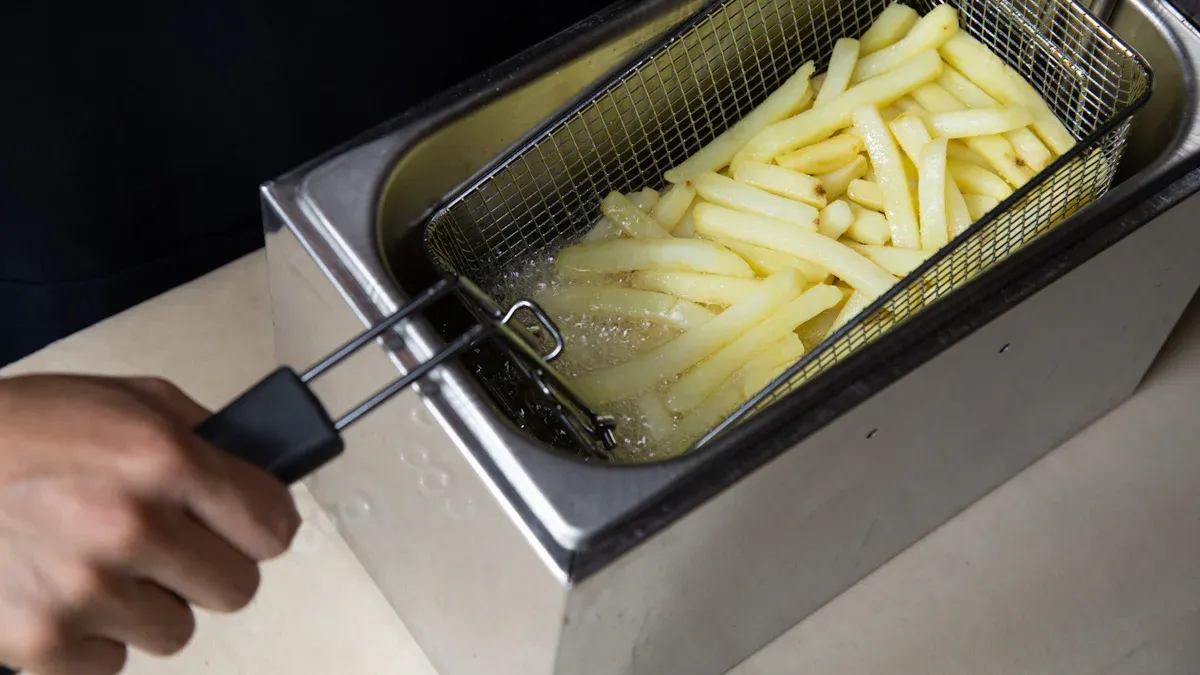
Las freidoras eléctricas se calientan rápido porque usan electricidad. Cuando enciende la freidora, la electricidad se mueve a través de los elementos calefactores. Los elementos se resisten al paso de la electricidad. Esto hace que el metal se caliente. El calor pasa al aceite o al aire dentro de la freidora. Obtiene calor constante para cocinar sus alimentos. El nicromo y el acero inoxidable son buenos para esto. Pueden soportar altas temperaturas y no se rompen fácilmente.
Los elementos calefactores convierten la electricidad en calor. Esto ayuda a que sus alimentos se cocinen de manera uniforme y segura.
Ubicación en las Freidoras
Los elementos calefactores pueden estar en diferentes lugares dentro de las freidoras. Muchas freidoras los colocan en la parte inferior, cerca del aceite. Algunas freidoras los tienen en los laterales. Los elementos calefactores de cinta parecen cables rizados y se colocan en la parte inferior. Esto ayuda a calentar el aceite de inmediato. Usa menos energía y escapa menos calor. Algunas freidoras tienen elementos que permanecen en un solo lugar. Otras tienen elementos con bisagras que se levantan. Los elementos con bisagras facilitan la limpieza y reparación.
Los elementos inferiores calientan el aceite rápidamente.
Los elementos laterales ayudan a distribuir el calor de manera más uniforme.
Los elementos con bisagras facilitan la limpieza de todas las partes.
Materiales Utilizados
Usted desea que su freidora dure mucho tiempo. Por eso la mayoría de los elementos calefactores usan aleación de nicromo o acero inoxidable. El nicromo puede soportar altas temperaturas y no se oxida. El acero inoxidable no se corroe y mantiene su forma. Estos materiales ayudan a que su freidora funcione bien durante muchos años. Algunas freidoras especiales usan cerámica u otros materiales nuevos. Cada material tiene sus propios puntos buenos, pero el nicromo y el acero inoxidable son los más utilizados.
Material | Beneficio principal | Uso común |
|---|---|---|
Aleación de nicromo | Soporta altas temperaturas | La mayoría de las freidoras eléctricas |
Acero inoxidable | No se oxida | Freidoras comerciales/domésticas |
Cerámico | Retiene bien el calor | Freidoras especializadas/de aire |
Pros y contras
Eficiencia
Usted desea que su freidora se caliente rápido y cocine bien los alimentos. Los elementos calefactores tubulares e infrarrojos se calientan rápidamente y se mantienen calientes. Los elementos de bobina también se calientan rápido pero pueden dejar algo de aceite frío. Los elementos cerámicos usan menos energía y son buenos en freidoras de aire, pero se calientan más lentamente. Los elementos combinados le brindan calentamiento rápido y cocción uniforme.
Consejo: Si cocina mucho o desea ahorrar energía, elija freidoras con elementos infrarrojos o combinados.
Durabilidad
La duración de su freidora depende del elemento calefactor y de cómo la cuide. La mayoría de las freidoras eléctricas comerciales duran aproximadamente de 7 a 10 años. Limpiar y cambiar el aceite con frecuencia ayuda a que duren más. Los elementos tubulares y de acero inoxidable no se oxidan y son resistentes. Los elementos cerámicos no se oxidan pero pueden romperse si se caen. Los elementos de bobina pueden dejar de funcionar antes si no los limpia.
Tipo de elemento calefactor | Vida Útil Promedio | Factores de Durabilidad |
|---|---|---|
Tubular | Resistente, resiste la corrosión | |
Bobina | 7-9 años | Necesita una limpieza regular |
Infrarrojos | Hasta 10 años | Estable, eficiente energéticamente |
Cerámico | 7-9 años | Sin óxido, puede agrietarse |
Mantenimiento
Debe mantener su freidora limpia para evitar problemas. Limpie los elementos calefactores después de cada uso. Use un limpiador o mezcle bicarbonato de sodio y vinagre para manchas difíciles. Siempre revise si hay cables sueltos o puntos quemados. Algunos problemas son elementos rotos, fusibles fundidos, y problemas del termostato. Use un multímetro para probar el elemento si su freidora no calienta.
Revise y apriete los cables con frecuencia.
Limpie los filtros y retire los residuos.
Mantenga el agua alejada de las partes eléctricas.
Siga el manual para un uso seguro.
Nota: Limpiar su freidora con frecuencia ayuda a que funcione mejor y dure más. Si observa daños, cambie la pieza de inmediato.
Cómo elegir el elemento calefactor adecuado
Uso Doméstico vs. Comercial
Considere dónde usará la freidora. Las cocinas domésticas y los restaurantes tienen necesidades diferentes. En casa, se cocina menos cantidad y se desea una limpieza fácil. En los restaurantes, las freidoras deben manejar mucha comida y funcionar todo el día.
Uso Doméstico:
Deseará una freidora que se caliente rápido y sea sencilla de limpiar. Muchas freidoras domésticas utilizan elementos calefactores de resistencia o cerámicos. Estos son buenos para comidas pequeñas y recetas sencillas. Algunas freidoras tienen elementos extraíbles, por lo que la limpieza no es difícil.Uso Comercial:
En cocinas muy ocupadas, las freidoras deben mantenerse al ritmo de muchos pedidos. Los elementos calefactores tubulares e infrarrojos son los más adecuados para esto. Calientan el aceite rápidamente y mantienen la temperatura estable. Muchas freidoras comerciales tienen elementos con bisagra o extraíbles para una limpieza rápida. Esto ahorra tiempo y mantiene la cocina funcionando correctamente.
Consejo: Si tiene un restaurante, elija una freidora con elementos calefactores robustos y duraderos. Esto ayuda a evitar problemas durante las horas de mayor actividad.
Factores Clave
Al elegir una freidora, examine algunos aspectos importantes. Estos le ayudarán a encontrar la mejor freidora para sus necesidades.
Tipo de Alimento:
Algunas freidoras son mejores para ciertos alimentos. Las freidoras de fondo plano son excelentes para alimentos con rebozado líquido, como donas y tempura. Las freidoras de tipo tubular funcionan bien para alimentos empanados con migas, como pescado o palitos de queso. Las freidoras de olla abierta son buenas para alimentos con poco sedimento, como papas fritas.Diseño del Elemento Calefactor:
La mayoría de las freidoras eléctricas tienen elementos calefactores bajo el aceite. Esto proporciona calor rápido y una recuperación rápida. Algunas freidoras permiten extraer los elementos para facilitar la limpieza. Si desea menos desorden, busque esta característica.Facilidad de Limpieza:
La limpieza puede llevar mucho tiempo. Las freidoras con elementos extraíbles o con bisagra facilitan la limpieza. Puede acceder a todas las partes y eliminar la acumulación de aceite.Eficiencia energética:
Las freidoras eléctricas suelen usar menos energía que las freidoras a gas. Retienen más calor en su interior, por lo que su cocina se mantiene más fresca.Costo de Operación:
Las freidoras eléctricas pueden tener un costo de operación más alto, dependiendo de los precios locales de energía. Verifique esto antes de comprar.
Aquí hay uno tabla para ayudarle a comparar tipos de freidora y sus mejores usos:
Tipo de Freidora | Mejor caso de uso | Características del Elemento Calefactor | Ventajas | Contras |
|---|---|---|---|---|
Fondo plano | Alimentos con rebozado líquido (donas, tempura) | Elementos bajo el fondo plano, sumergidos en aceite | Excelente para alimentos rebozados; el alimento flota libremente | Sin zona fría; quemado rápido de sedimentos; no para alto volumen; desafíos en la limpieza |
Tipo tubular | Alimentos empanados (pescado, palitos de queso) | Quemadores de gas en tubos, sumergidos en aceite | Eficiencia energética; gran zona fría que extiende la vida del aceite | Difícil de limpiar; los deflectores pueden fallar; gran volumen de aceite en la zona fría |
Olla abierta | Alimentos con bajo sedimento (papas fritas, hash browns) | Elemento fuera de la olla (accionado por gas) | Fácil de limpiar; diseño confiable | Menos eficiencia energética; menor capacidad de sedimento |
Freidoras Eléctricas | No requiere gas; recuperación rápida; eficiencia energética | Elementos sumergidos en aceite; algunos extraíbles para limpieza | Recuperación rápida; eficiencia energética; limpieza fácil; opciones portátiles | Puede ser costosa de operar; quemadores fijos difíciles de limpiar |
Hay muchas opciones al elegir una freidora. Los tipos tubular, de resistencia, infrarrojo, cerámico y combinados tienen sus propios puntos fuertes. Debe considerar de qué están hechos y qué tan bien funcionan. También es importante saber si la limpieza o el cambio de piezas es sencillo. Asegúrese de que la freidora sea adecuada para su hogar o negocio. Los manuales del fabricante y los consejos de expertos le ayudan a usar su freidora de manera segura. Si algo es difícil de reparar, llame a un técnico especializado y haga revisar su freidora con frecuencia. Esto le brinda tranquilidad y mantiene su freidora funcionando.
PREGUNTAS FRECUENTES
¿Cuál es el mejor elemento calefactor para freidoras domésticas?
Debe elegir elementos calefactores de resistencia o cerámicos para freidoras domésticas. Se calientan rápidamente y son fáciles de limpiar. Estos tipos funcionan bien para comidas pequeñas y recetas simples.
¿Cómo sé si es necesario reemplazar mi elemento calefactor?
Busque señales como calentamiento lento, cocción desigual o olores extraños. Si observa grietas o manchas quemadas, reemplace el elemento. Consulte siempre el manual de su freidora para obtener orientación.
¿Puedo limpiar los elementos calefactores con agua?
Nunca sumerja los elementos calefactores eléctricos en agua.
Límpielos con un paño húmedo después de desenchufar la freidora. Para manchas difíciles, use bicarbonato de sodio o vinagre. Seque el elemento antes de usar la freidora nuevamente.
¿Son seguros los elementos calefactores cerámicos para freír en aceite?
Los elementos calefactores cerámicos son seguros para freidoras de aire y freidoras especializadas. No tocan el aceite directamente. No deben usarse para freír grandes cantidades de alimento en aceite.