


Al considerar la reparación de problemas en un horno de 7 años de antigüedad, debe sopesar el costo, la confiabilidad, la seguridad y la eficiencia energética. La mayoría de los hornos duran más de una década, como se muestra a continuación:
| Tipo de horno | Average Lifespan (Years) |
|---|---|
| Estufa eléctrica | 13 – 15 |
| Estufa a gas | 15 – 17 |
Si su horno aún cocina de manera uniforme y solo presenta problemas menores, reparar las piezas del horno a menudo tiene sentido. Sin embargo, para un horno de una década con fallas frecuentes, su decisión debe centrarse en el rendimiento y el valor a largo plazo.
Reparación del horno: Costo de las reparaciones del horno frente al costo de reemplazar el horno
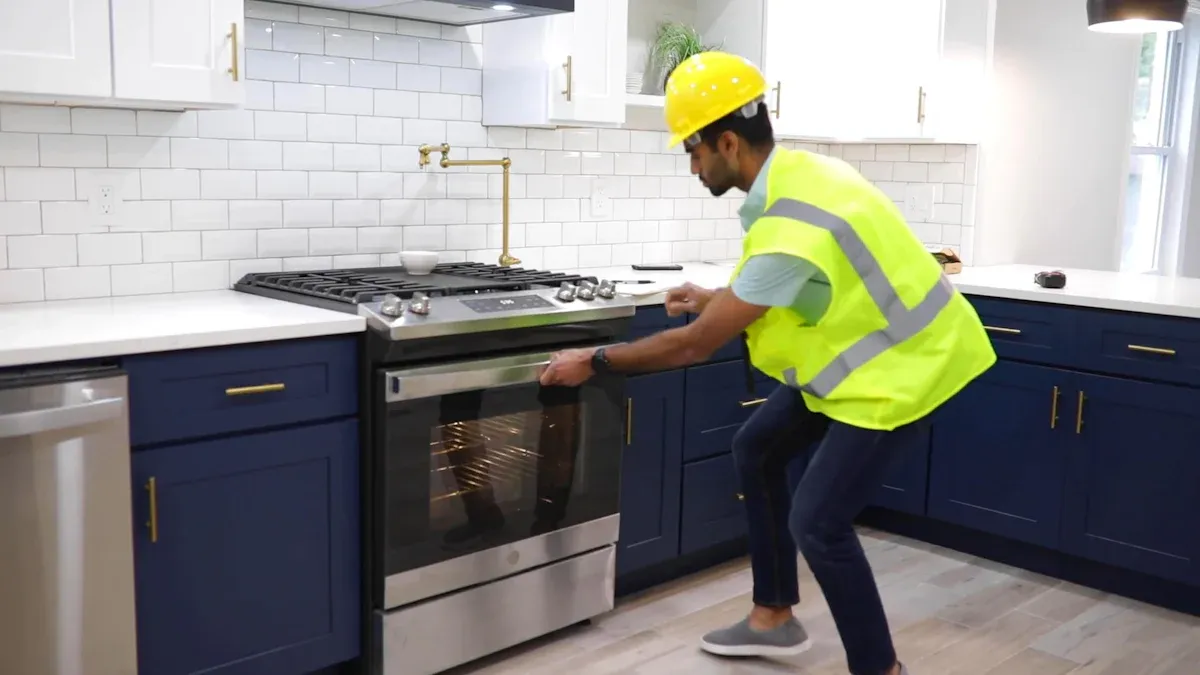
Costo promedio de las reparaciones del horno para electrodomésticos de 7 años
Problemas de reparación comunes y rangos de precios
Al observar el costo de las reparaciones del horno para un electrodoméstico de 7 años, encontrará una amplia gama de precios. La mayoría de los precios de reparación de hornos se sitúan entre $125 y $350, con un precio promedio de reparación de horno alrededor de $200 a $250. La siguiente tabla muestra los costos de reparación típicos para problemas comunes:
| Tipo de reparación | Coste (USD) |
|---|---|
| Reemplazo del encendedor del horno | $150 – $325 |
| Reemplazo del elemento calefactor | $150 – $450 |
| Reemplazo de la placa de control del horno | $150 – $600 |
| Termostato | $150 |
| Puerta del horno | $175 |
| Encendedor | $150 – $250 |
| Placa de control | $225 |
| Elemento calefactor | $275 |
Por lo general, pagará una tarifa de visita de servicio entre $50 y $150, que a menudo está incluida en el total. Las reparaciones de hornos a gas suelen costar entre $100 y $400, mientras que los hornos eléctricos oscilan entre $75 y $325. La mayoría de las reparaciones de un horno de 7 años se encuentran en el rango de $100 a $600, y la mayoría cerca de $200. Estas cifras reflejan los costos de reparación medios para hornos de esta edad.
Factores que afectan al coste de las reparaciones de hornos
Varios factores influyen en el costo de la reparación. El tipo de horno empotrado, la complejidad del problema y la disponibilidad de piezas juegan un papel importante. Para hornos más antiguos, encontrar piezas de repuesto puede ser más difícil y costoso. Las tarifas de mano de obra también varían, generalmente entre $50 y $200 por hora. Si su horno tiene funciones avanzadas o es un modelo de gama alta, puede ver costos de reparación más altos. Comprender los costos de reparación le ayuda a tomar una decisión inteligente sobre la reparación de problemas del horno.
La regla del 50% en las decisiones de reparar o reemplazar
Cuándo los costos de reparación hacen que el reemplazo sea más inteligente
Debe considerar la Norma 50% regla del 50% al enfrentar una decisión de reparar o reemplazar. Si el costo de la reparación supera la mitad del precio de un horno nuevo, el reemplazo se convierte en la opción más inteligente. Esta regla se aplica especialmente si su horno es menos eficiente o tiene averías frecuentes. Los hornos más nuevos a menudo ofrecen mejor eficiencia energética eficiencia energética y funciones avanzadas, lo que puede generar ahorros a largo plazo más allá del costo inicial.
Cómo calcular el umbral del 50%
Para usar la regla del 50%, primero obtenga un presupuesto detallado para la reparación del horno. A continuación, compare esta cifra con el costo de reemplazar el horno. Por ejemplo, si un horno empotrado nuevo cuesta $1,200, debe considerar el reemplazo si la reparación cuesta más de $600. Siempre tenga en cuenta la antigüedad del horno, su confiabilidad y la frecuencia con la que necesita servicio. Si su horno de 7 años solo necesita reparaciones menores y el costo se mantiene muy por debajo del umbral del 50%, reparar los problemas del horno generalmente tiene sentido.
Consejo: Para un horno de 7 años, los costos de reparación generalmente están justificados si se mantienen por debajo de la mitad del precio de un horno nuevo. Si enfrenta reparaciones frecuentes o costos elevados, el reemplazo puede ofrecer un mejor valor.
Costo de reemplazar un horno y consideraciones de valor
Precios de los hornos nuevos
El costo de reemplazar un horno varía según el tipo y las características. En el mercado actual, puede esperar pagar desde $800 por un horno eléctrico básico hasta más de $3,300 por una estufa premium de doble combustible. La mayoría de los modelos populares se encuentran entre $1,000 y $1,800. Este rango cubre hornos empotrados simples y dobles, modelos a gas y eléctricos, y unidades con características como convección, autolimpieza y conectividad Wi-Fi.
Lo que obtiene con un electrodoméstico nuevo
Cuando elige un horno nuevo, obtiene acceso a tecnología avanzada y eficiencia mejorada. Muchos hornos nuevos ofrecen conectividad Wi-Fi, controles impulsados por IA, cocción por convección, freidora de aire y quemadores de inducción. También se beneficia de garantías más largas y completas. Las marcas de alta gama pueden proporcionar dos años de cobertura de mano de obra y piezas, más años adicionales para las piezas. Hay planes de garantía extendida disponibles para mayor tranquilidad. Los hornos nuevos a menudo ofrecen mejor confiabilidad, limpieza más fácil y características de seguridad mejoradas en comparación con los modelos más antiguos.
Nota: Si bien los hornos nuevos ofrecen más funciones y mejores garantías, siempre debe verificar la disponibilidad del servicio y los términos de la garantía antes de tomar una decisión final.
Costos ocultos en las decisiones de reparar o reemplazar
Tasas de instalación y eliminación
Cuando decide reparar o reemplazar su horno empotrado, debe considerar más que solo el precio de etiqueta. Muchos propietarios pasan por alto las tarifas de instalación y eliminación, que pueden agregar varios cientos de dólares a su costo total. Si elige un horno empotrado nuevo, es posible que deba pagar tanto por la mano de obra de instalación como por la eliminación de su electrodoméstico viejo. Algunos minoristas incluyen la eliminación en el precio de compra, pero muchos cobran un extra.
Aquí hay un desglose de los costos típicos de instalación y eliminación para hornos empotrados:
| Componente de costo | Rango de costos típico |
|---|---|
| Mano de obra de instalación | 150 – 300 € |
| Eliminación/retiro del electrodoméstico viejo | $40 – $120 |
| Materiales/suministros adicionales | $50 – $100 |
Puede esperar que las tarifas de instalación y eliminación agreguen $190 a $420 al reemplazo de su horno empotrado. Si su cocina requiere modificaciones para adaptarse a un horno empotrado nuevo, puede enfrentar costos aún más altos. Estos gastos ocultos pueden marcar una diferencia significativa al comparar el costo total de las opciones de reparar o reemplazar.
Consejo: Siempre solicite un presupuesto detallado que incluya la instalación y la eliminación cuando compre un reemplazo de horno empotrado. Esto le ayuda a evitar sorpresas y presupuestar con precisión.
Ahorros potenciales de energía
La eficiencia energética juega un papel clave en el costo a largo plazo de poseer un horno empotrado. Los hornos empotrados antiguos suelen consumir más electricidad o gas que los modelos más nuevos. Si repara un horno empotrado antiguo, es posible que continúe pagando facturas de servicios públicos más altas debido a la tecnología obsoleta. Los hornos empotrados nuevos generalmente cuentan con un mejor aislamiento, controles de temperatura más precisos y modos de ahorro de energía.
Debe sopesar el posible ahorro de energía al decidir si reparar o reemplazar su horno empotrado. Si bien una reparación puede parecer más económica inicialmente, un horno empotrado nuevo puede reducir sus costos mensuales de energía. A lo largo de varios años, estos ahorros pueden compensar parte del gasto inicial de reemplazo.
- Las tarifas de diagnóstico para reparaciones de hornos empotrados suelen oscilar entre $50 y $150 y es posible que no siempre aparezcan en el presupuesto inicial.
- La mano de obra y las piezas para reparaciones de hornos empotrados pueden variar ampliamente, con reparaciones simples a partir de $100 y reparaciones complejas que superan $500.
- Las reparaciones frecuentes en un horno empotrado antiguo pueden acumularse rápidamente e indicar que su electrodoméstico se acerca al final de su vida útil.
- Los hornos empotrados de reemplazo conllevan costos ocultos, como el tiempo y el esfuerzo de instalación, y posibles modificaciones en la cocina.
- El costo inicial de un horno empotrado nuevo suele ser más alto, pero puede beneficiarse de facturas de energía más bajas y menos reparaciones en el futuro.
Al comparar las opciones de reparar o reemplazar, mire más allá del precio inmediato. Considere la instalación, la eliminación y el uso de energía para tomar la mejor decisión para su hogar y presupuesto.
Señales de que su Horno Necesita Atención: Rendimiento y Fiabilidad
Cuándo Tiene Sentido Reparar el Horno
Averías Menores vs. Mayores
A menudo puede solucionar problemas menores en su horno empotrado sin necesidad de un reemplazo completo. Problemas pequeños como un termostato defectuoso, un sello de puerta desgastado o la falla de un solo elemento calefactor generalmente cuestan menos de reparar y no interrumpen la cocina diaria. Si su horno calienta de manera uniforme, cocina los alimentos en el tiempo esperado, y no muestra un comportamiento errático, la reparación es una solución rentable. El mantenimiento regular, como limpiar derrames y verificar los sellos, ayuda a mantener su horno empotrado funcionando de manera eficiente y prolonga su vida útil.
Consejo: Probar el rendimiento de su horno horneando una barra de pan o asando un pollo puede revelar si existen fluctuaciones de temperatura o calentamiento desigual. Estos son signos tempranos de que su horno necesita atención, pero no siempre significan que necesite un electrodoméstico nuevo.
Rendimiento y Calentamiento Consistentes
Un horno empotrado que mantiene una temperatura constante y ofrece resultados fiables indica que la reparación es una opción inteligente. Debe considerar reparar su horno si:
- El horno calienta de manera uniforme en todas las rejillas.
- Las comidas se cocinan en los tiempos estándar.
- El electrodoméstico responde bien a los ajustes de temperatura.
- La eficiencia energética se mantiene cercana a la de los modelos más nuevos.
Si nota solo pequeñas caídas de rendimiento, una reparación específica puede restaurar la función de su horno empotrado y ahorrarle dinero.
Cuándo Reparar o Reemplazar Según las Señales de Advertencia
Averías Frecuentes
Las averías frecuentes en su horno empotrado indican problemas más profundos. Si se encuentra llamando al servicio técnico varias veces al año, o si las reparaciones no resuelven los problemas subyacentes, estas son señales claras de que su horno no tiene reparación. También debe estar atento a:
- Dificultad para mantener encendida la llama piloto en hornos de gas.
- Escape de calor de áreas no previstas, como alrededor de la puerta o debajo del horno.
- Rejillas del horno que se vuelven torcidas o se caen debido a deformaciones.
- Oxidación extensa dentro del horno.
- Calentamiento desigual a pesar de que los elementos funcionen..
- Control de temperatura inexacto..
- Sellos de puerta dañados o desgastados.
- El horno se vuelve imposible de limpiar, incluyendo funciones de autolimpieza fallidas.
Estas señales de advertencia sugieren que su horno empotrado puede estar al final de su vida útil. Reemplazar un horno de una década de antigüedad a menudo proporciona una mejor eficiencia energética, mayor seguridad y funciones avanzadas.
Peligros de Seguridad y Piezas Obsoletas
Los peligros de seguridad, como cables expuestos, fugas de gas o problemas eléctricos persistentes, requieren atención inmediata. Las piezas obsoletas o no disponibles dificultan las reparaciones y las hacen menos fiables. Si su horno empotrado representa un riesgo de seguridad o no puede encontrar componentes de repuesto, el reemplazo es la opción más segura y práctica.
Alerta: Nunca ignore las señales relacionadas con la seguridad de que su horno necesita atención. Abordar los peligros rápidamente protege su hogar y su familia.
Vida Útil y Fiabilidad de los Hornos
Años Promedio de Servicio
Al evaluar el rendimiento y la antigüedad, debe saber que la mayoría de los hornos empotrados duran entre 14 y 20 años, dependiendo del tipo y el cuidado. Los hornos empotrados de gas generalmente superan a los modelos eléctricos debido a componentes más simples y menos tensión eléctrica. Un horno empotrado de 7 años está aproximadamente a la mitad de su vida útil esperada, por lo que la reparación a menudo tiene sentido si el electrodoméstico sigue siendo fiable.
Cómo el Uso y el Mantenimiento Afectan la Longevidad
Sus patrones de uso y hábitos de mantenimiento juegan un papel importante en la duración de su horno empotrado. Los hornos utilizados diariamente a altas temperaturas se desgastan más rápido, especialmente las piezas críticas como los elementos calefactores y los termostatos. La limpieza regular después de cada uso, incluyendo limpiar derrames y migas, evita la acumulación de residuos y protege los componentes internos. Usar la función de autolimpieza con moderación—aproximadamente dos veces al año— ayuda a mantener la limpieza sin causar un desgaste excesivo. Reparar rápidamente las averías menores evita daños mayores y prolonga la vida útil de su horno empotrado.
Nota: Evaluar el rendimiento y la antigüedad, junto con el historial de mantenimiento, le ayuda a decidir si reparar o reemplazar un horno empotrado averiado. Si ve múltiples señales de que su horno no tiene reparación, el reemplazo es el mejor camino a seguir para la seguridad y la eficiencia.
Eficiencia Energética y Tecnología: Reparar o Reemplazar para un Mejor Rendimiento
Uso de Energía en Hornos Antiguos
Clasificaciones de Eficiencia Típicas
Al evaluar su horno actual, debe considerar su eficiencia energética. Los hornos fabricados hace unos siete años a menudo se quedan atrás de los modelos actuales en rendimiento y ahorro de energía. La siguiente tabla destaca la diferencia de eficiencia entre hornos antiguos y modernos:
| Tipo de horno | Eficiencia Alrededor de 2012 (aprox.) | Eficiencia Hoy / Mejoras |
|---|---|---|
| Horno Eléctrico Estándar | ~12% de eficiencia de cocción | Los modelos ENERGY STAR son ~20% más eficientes |
| Horno eléctrico autolimpiante | ~14% de eficiencia de cocción | Los hornos ENERGY STAR ahorran ~1,870 kWh/año (eléctrico) |
| Horno de gas estándar | ~6% de eficiencia de cocción | Los hornos de gas ENERGY STAR ahorran ~30 MBtu/año |
| Horno de gas autolimpiante | ~7% de eficiencia de cocción | Los hornos modernos utilizan convección, velocidad y hornos de vapor |
Puede observar que los hornos modernos ofrecen mejoras significativas en el uso de energía, gracias a las normas federales actualizadas y las tecnologías avanzadas.
Impacto en las facturas de servicios públicos
Los hornos más antiguos suelen consumir más electricidad o gas, lo que aumenta sus facturas mensuales de servicios públicos. Si continúa utilizando un horno menos eficiente, es posible que pague más con el tiempo. Actualizar a un nuevo modelo ENERGY STAR puede reducir sus costos anuales de energía y ayudarle a gestionar los gastos del hogar de manera más efectiva.
Características del horno nuevo vs. Reparación del horno
Funciones inteligentes y controles mejorados
Los hornos modernos ofrecen una variedad de funciones de las que carecen los modelos antiguos. Usted puede beneficiarse de:
- Cocinas de inducción o de combustible dual para una cocción más rápida y un control preciso de la temperatura.
- Ciclos de limpieza basados en sensores y uso ecológico del agua.
- Capacidades de electrodomésticos inteligentes, como control remoto a través de teléfono inteligente, activación por voz y configuraciones de eficiencia energética.
- Funciones de seguridad mejoradas, que incluyen apagado automático y bloqueo para niños.
Estas mejoras hacen que cocinar sea más eficiente y conveniente, al mismo tiempo que apoyan la sostenibilidad.
Seguridad y conveniencia mejoradas
Los hornos inteligentes ahora utilizan microprocesadores para automatizar los procesos de cocción y controlar la potencia con precisión. Puede disfrutar de funciones como:
- Escáneres de código de barras que configuran los ciclos de cocción y le alertan sobre alérgenos.
- Reconocimiento de voz para preferencias de cocción personalizadas.
- Conectividad a Internet para actualizaciones sobre recetas, información nutricional y retiradas de productos.
- Pedido automático de comestibles y seguimiento de ingredientes para el control de la salud.
Estos avances mejoran la seguridad al advertirle sobre alérgenos y retiradas de productos, y facilitan la cocina diaria mediante la automatización y la supervisión remota.
Ahorro a largo plazo: ¿Reparar o reemplazar?
Potencial de ahorro con el tiempo
Reparar su horno puede parecer rentable al principio, especialmente si prefiere las funciones familiares. Sin embargo, las reparaciones repetidas pueden reducir la eficiencia y el rendimiento de cocción. Reemplazar su horno por un modelo moderno a menudo conduce a una mejor eficiencia energética, lo que puede reducir sus facturas de servicios públicos año tras año.
Comodidad y rendimiento de cocción
Un horno nuevo puede mejorar su comodidad y los resultados de cocción. Las características modernas, como los hornos ventilados y las placas de inducción, le ayudan a cocinar los alimentos de manera más uniforme y eficiente. Los hornos nuevos también vienen con garantías, lo que le brinda tranquilidad y un servicio confiable. Al sopesar los beneficios, debe considerar la antigüedad de su horno, los costos de reparación y su deseo de contar con funciones mejoradas.
Actualizar a un horno nuevo puede transformar su experiencia en la cocina, ofreciendo un mejor rendimiento, seguridad y ahorros a largo plazo.
Impacto ambiental: ¿Reparar o reemplazar para la sostenibilidad?
Beneficios de sostenibilidad de reparar el horno
Reducción de residuos electrónicos
Cuando repara su horno en lugar de reemplazarlo, ayuda a reducir los residuos electrónicos. Alargar la vida útil de su electrodoméstico evita que termine en vertederos y minimiza la necesidad de nuevos productos. Los estudios de sostenibilidad muestran que reparar electrodomésticos como los hornos conserva los recursos naturales, como metales y plásticos, y reduce la energía necesaria para la fabricación. Al elegir la reparación, también reduce la demanda de materias primas y disminuye las emisiones de gases de efecto invernadero de la producción y el transporte.
- Reparar su horno reduce los residuos en vertederos al prolongar su vida útil.
- Conserva recursos como energía, agua y materias primas.
- La reparación utiliza menos energía que la fabricación de un horno nuevo.
- Reduce su huella de carbono al evitar las emisiones asociadas a la producción de electrodomésticos nuevos.
- El uso de piezas originales durante la reparación favorece un rendimiento óptimo y la longevidad.
- La reparación apoya a las industrias de reparación locales y fomenta una economía circular.
Reparar su horno le empodera como consumidor y apoya el consumo sostenible.
Prolongación de la vida útil del producto
Usted prolonga la vida útil de su horno cuando elige la reparación en lugar del reemplazo. Este enfoque se alinea con las prácticas sostenibles al reducir la frecuencia de renovación de electrodomésticos. El mantenimiento proactivo y las reparaciones oportunas le ayudan a evitar residuos innecesarios y a aprovechar al máximo su inversión. Los estudios destacan que fomentar la reparación y el mantenimiento es crucial para reducir el impacto ambiental de los electrodomésticos.
Costos ambientales del reemplazo del horno
Impacto de la fabricación y la eliminación
Reemplazar su horno conlleva costos ambientales. La fabricación de hornos nuevos requiere recursos significativos, incluidos metales, plásticos y energía. El proceso genera emisiones y consume agua. La eliminación inadecuada de hornos viejos puede liberar sustancias peligrosas, como mercurio y aceites, al medio ambiente. Estos materiales no se descomponen en los vertederos y pueden contaminar el suelo y el agua.
- Los electrodomésticos contienen productos químicos que requieren una eliminación cuidadosa.
- Los metales y plásticos de los hornos necesitan un procesamiento especial.
- Las sustancias peligrosas pueden dañar a las comunidades cercanas a los vertederos.
- La fabricación y entrega de hornos nuevos aumentan el consumo de recursos.
Opciones de Reciclaje para Hornos Viejos
Usted tiene varias opciones para reciclar su horno viejo. Recicladores locales de chatarra, instalaciones municipales de reciclaje y programas de recompra de minoristas ofrecen soluciones de eliminación responsables. Donar su horno a organizaciones como Habitat for Humanity ReStore puede darle una segunda vida. Los servicios de retiro de electrodomésticos y los programas de recogida de minoristas también ayudan a desviar hornos de los vertederos.
Estos esfuerzos de reciclaje recuperan metales, vidrio y plásticos, reduciendo la necesidad de nuevas materias primas. El reciclaje adecuado evita que sustancias peligrosas entren al medio ambiente y apoya una economía circular.
Tomando la Decisión Más Ecológica: ¿Reparar o Reemplazar?
Cuándo Reparar es Más Ecológico
Reparar su horno es la opción más ecológica cuando:
- El electrodoméstico se encuentra dentro de su vida útil típica (10-15 años)..
- El costo de la reparación es inferior a la mitad del precio de un horno nuevo.
- El horno no requiere reparaciones frecuentes.
- Hay piezas de repuesto disponibles.
- El horno aún funciona de manera eficiente.
Al reparar, se reduce el desperdicio, se conservan recursos y se apoyan los negocios locales de reparación.
Cuándo tiene sentido el reemplazo
El reemplazo se convierte en la opción más sostenible si su horno es antiguo, ineficiente o se descompone con frecuencia.. Los hornos más nuevos ofrecen una mejor eficiencia energética,, lo que reduce sus facturas de servicios públicos y su huella de carbono con el tiempo. Si tiene dificultades para encontrar piezas de repuesto o su horno está cerca del final de su vida útil,, actualizar a un modelo moderno y energéticamente eficiente puede proporcionar mayores beneficios ambientales a largo plazo.
Elegir entre reparar y reemplazar depende de la antigüedad, eficiencia e historial de reparaciones de su horno. Pese ambas opciones para tomar la decisión más sostenible para su hogar.
Reparación de horno por cuenta propia y cuándo llamar a un profesional
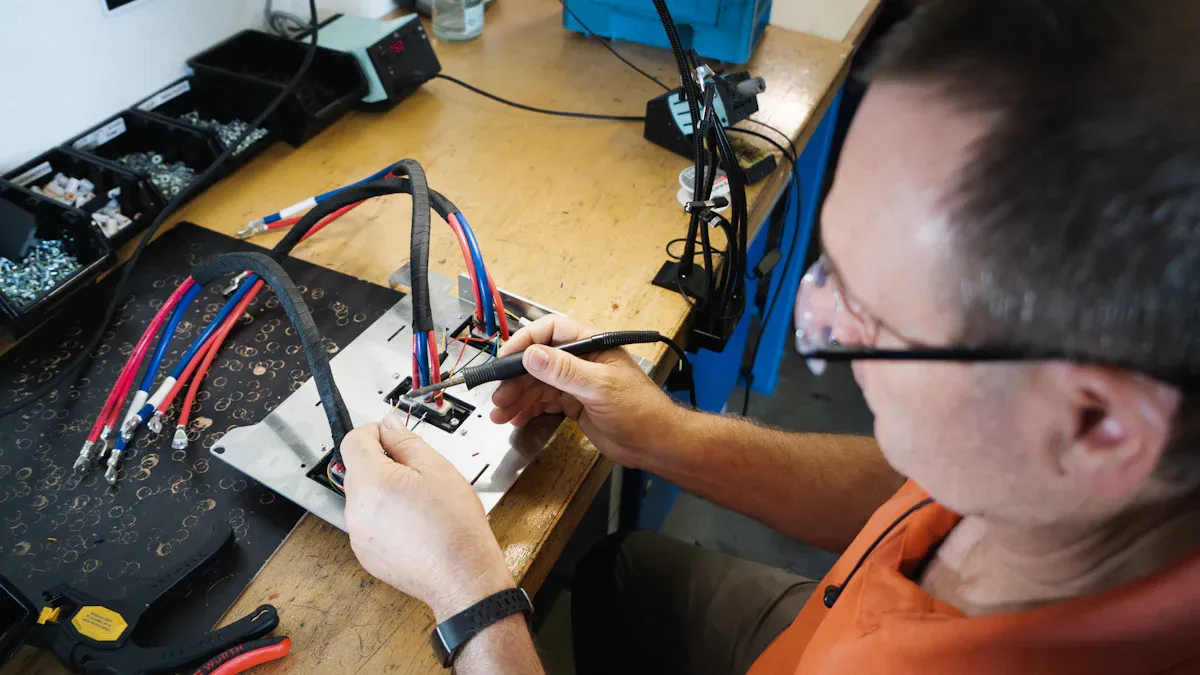
Soluciones simples para hornos en el hogar
Verificación de energía y configuraciones
A menudo puede resolver problemas menores del horno de pared revisando lo básico. Comience por confirmar que el horno esté enchufado y que el interruptor automático no se haya disparado. Inspeccione el panel de control en busca de códigos de error o configuraciones incorrectas. A veces, un simple reinicio o ajustar el temporizador puede restaurar el funcionamiento normal. Si su horno de pared no calienta, verifique si hay un fusible fundido o cableado suelto. Siempre desconecte la alimentación eléctrica antes de comenzar la solución de problemas para evitar descargas eléctricas.
Limpieza y mantenimiento básico
La limpieza y el mantenimiento regulares ayudan a prevenir muchos problemas comunes de los hornos de pared. Retire migajas y derrames del interior del horno después de cada uso. Limpie la junta de la puerta e inspecciónela para detectar desgaste. Reemplace las juntas desgastadas o dañadas para mantener una retención de calor adecuada. También puede calibrar la temperatura del horno si nota una cocción desigual. Estos pasos forman la base de consejos efectivos para el mantenimiento del horno y mantienen su horno de pared funcionando eficientemente. Reemplazar elementos calefactores, ajustar bisagras de puertas y verificar fusibles son tareas seguras de bricolaje si sigue las instrucciones del fabricante y utiliza herramientas aisladas.
Seguridad primero: Siempre desconecte la energía antes de comenzar cualquier reparación o limpieza. Use guantes aislantes y mantenga su espacio de trabajo organizado.
Cuándo se necesita ayuda profesional para reparaciones de hornos
Preocupaciones de seguridad eléctrica y de gas
Algunas reparaciones de hornos de pared requieren habilidades y herramientas especializadas. Intentar reparaciones complejas sin la capacitación adecuada lo expone a riesgos graves:
- Descarga eléctrica por conexiones de alto voltaje
- Fugas de gas que pueden causar incendios o explosiones
- Riesgos de incendio por sobrecalentamiento o cableado defectuoso
- Anulación de las garantías del fabricante
Si sospecha una fuga de gas,, huele a quemado o ve cables expuestos, debe detener la solución de problemas y llamar a un profesional inmediatamente. Los técnicos certificados tienen la experiencia para manejar sistemas eléctricos y de gas de manera segura y garantizar que las reparaciones cumplan con los estándares de seguridad.
Reparaciones complejas y problemas de garantía
Las reparaciones complejas de hornos de pared, como reemplazar placas de control o reparar daños estructurales, van más allá de las habilidades típicas de bricolaje. Las reparaciones no autorizadas pueden anular su garantía y provocar daños más costosos. Los profesionales de reparación utilizan piezas aprobadas por el fabricante y ofrecen protección de garantía por su trabajo. Si su horno aún está en garantía, siempre verifique los términos antes de intentar cualquier reparación usted mismo.
Cómo elegir un técnico calificado en reparación de hornos
Qué buscar en un proveedor de servicios
Cuando necesite un técnico para reparar su horno de pared, busque las credenciales adecuadas. Los técnicos calificados a menudo poseen certificaciones como:
| Certificación / Calificación | Descripción | Importancia |
|---|---|---|
| NASTeC | Certificación Nacional de Técnico de Servicio de Electrodomésticos | Demuestra conocimiento técnico en reparación de hornos |
| PSA CAP | Profesional Certificado en Electrodomésticos | Indica experiencia avanzada |
| EPA Sección 608 | Cumplimiento ambiental para refrigerantes | Requerida para ciertas reparaciones |
| Licencia Estatal | Cumplimiento legal | Lo protege como consumidor |
Estas credenciales garantizan que el técnico cumple con los estándares de la industria y las regulaciones locales.
Preguntas antes de contratar
Antes de programar la reparación de su horno de pared, haga estas preguntas clave::
- ¿En qué marcas se especializa?
- ¿Tiene la licencia y el seguro adecuados?
- ¿Puede proporcionar referencias o reseñas?
- ¿Ofrecen garantía por su trabajo?
- ¿Cuál es su tarifa de servicio?
- ¿Cuánto tiempo llevan en el negocio?
- ¿Tienen piezas comunes para reparaciones rápidas?
- ¿Cómo manejan problemas complejos o recurrentes?
- ¿Será esta reparación rentable en comparación con el reemplazo?
- ¿Tienen certificaciones de fábrica o capacitación?
Hacer estas preguntas le ayuda a encontrar un técnico de reparación confiable y garantiza que su horno de pared reciba atención experta.
Siguiendo estos consejos para el mantenimiento del horno y sabiendo cuándo llamar a un profesional, protege su inversión y mantiene su horno de pared funcionando de manera segura y eficiente. Si alguna vez se siente inseguro durante la solución de problemas, no dude en buscar ayuda experta para resolver problemas del horno.
Cuando enfrente una reparación o reemplazo del horno, considere estos factores:
- Costo de las reparaciones versus un horno nuevo
- Rendimiento y confiabilidad
- Eficiencia energética
- Impacto ambiental
Debe sopesar cada punto cuidadosamente. Si se siente inseguro, consulte a un profesional. Recuerde, tomar la decisión correcta garantiza que su cocina se mantenga segura y eficiente.
Tómese el tiempo para revisar sus opciones. Su elección de hoy define su experiencia culinaria durante años.
PREGUNTAS FRECUENTES
¿Cómo saber si merece la pena reparar su horno?
Debe comparar el costo de reparación con la mitad del precio de un horno nuevo. Si las reparaciones cuestan menos y su horno funciona de manera confiable, la reparación tiene sentido. Las fallas frecuentes o los problemas de seguridad sugieren reemplazo.
¿Cuáles son los problemas más comunes del horno que puede arreglar usted mismo?
A menudo puede solucionar problemas como un interruptor disparado, configuraciones defectuosas o un sello de puerta sucio. Limpiar, verificar la energía y reemplazar las bombillas del horno son tareas seguras de bricolaje. Para problemas eléctricos o de gas, llame a un profesional.
¿Cuánto tiempo debería durar un horno típico?
La mayoría de los hornos duran entre 13 y 17 años con mantenimiento regular. Los hornos a gas generalmente duran más que los modelos eléctricos. Los hábitos de uso y las rutinas de limpieza afectan la vida útil. Puede extender la vida útil abordando problemas menores de inmediato.
¿Reparar un horno viejo ahorra energía?
La reparación puede restaurar la eficiencia si se arreglan elementos calefactores o los sellos. Sin embargo, los hornos más viejos aún pueden usar más energía que los modelos nuevos. Actualizar a un horno ENERGY STAR generalmente reduce las facturas de servicios con el tiempo.
¿Hay beneficios ambientales al reparar en lugar de reemplazar?
Sí. Reparar reduce los desechos electrónicos y conserva recursos. Mantiene los electrodomésticos fuera de los vertederos y apoya una economía circular. El reemplazo tiene sentido solo si su horno es ineficiente o imposible de reparar.
¿Cuándo debe llamar a un profesional para la reparación del horno?
Llame a un profesional por fallas eléctricas, fugas de gas o reparaciones complejas. Si ve cables expuestos, huele a gas o enfrenta fallas repetidas, busque ayuda experta. Los técnicos certificados garantizan seguridad y reparaciones adecuadas.
¿Qué debe preguntar antes de contratar a un técnico de reparación de hornos?
Pregunte sobre certificaciones, experiencia, garantía de las reparaciones y tarifas de servicio. Solicite referencias o reseñas. Confirme que tengan piezas para la marca de su horno. Estas preguntas le ayudan a elegir un técnico calificado y confiable.

