Un elemento calefactor de una máquina de café tiene varias partes principales:
Bobina calefactora
Termostato
Fusible térmico
Aislamiento
Carcasa
Conectores
Cada pieza en los elementos calefactores de las máquinas de café es importante. La bobina calefactora calienta el agua. El termostato controla la temperatura. El fusible térmico mantiene la máquina segura. El aislamiento retiene el calor en el interior. La carcasa y los conectores permiten que todas las piezas funcionen juntas para preparar café.
Principales conclusiones
La bobina calefactora calienta el agua rápidamente y distribuye bien el calor. Esto ayuda a que el café sepa mejor. El termostato mantiene el agua a la temperatura adecuada. Esto hace que el café sea siempre igual y ahorra energía. El fusible térmico evita que la máquina se sobrecaliente. Mantiene la máquina segura y evita que se dañe. El aislamiento retiene el calor dentro de la máquina. También hace que el exterior sea más seguro al tacto. Los buenos conectores y la carcasa mantienen todas las piezas unidas. También hacen que reparar la máquina sea seguro y sencillo.
Elementos Calefactores de Máquinas de Café: Partes Principales
Bobina Calefactora
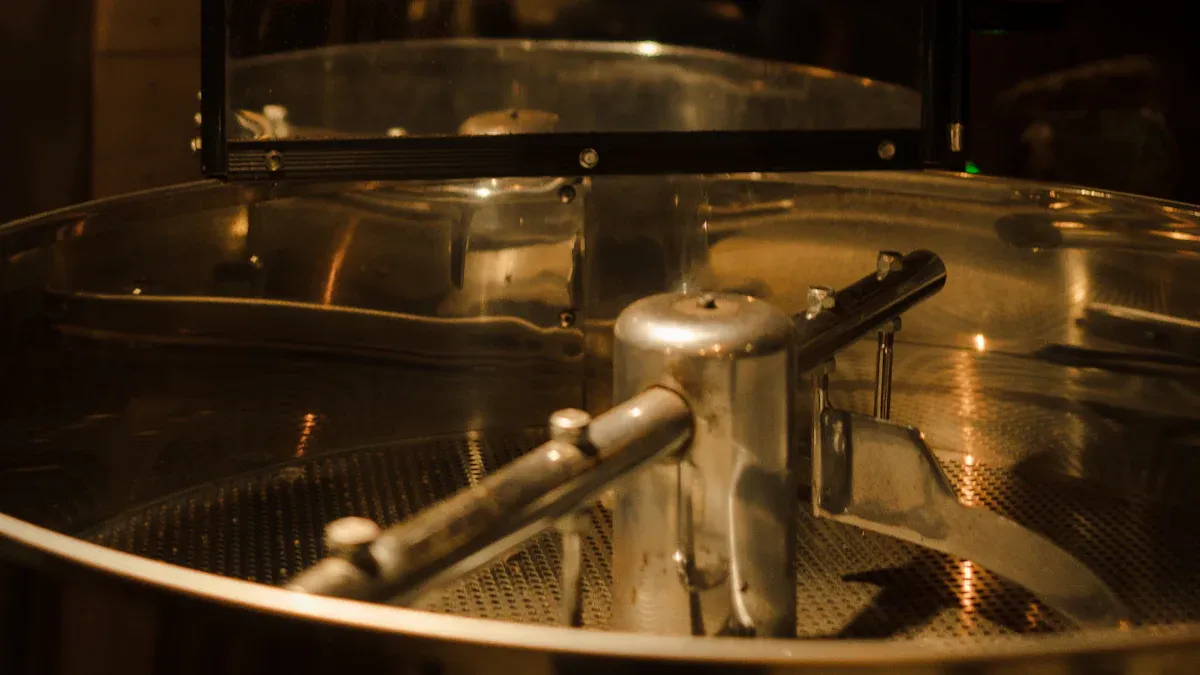
La bobina calefactora es lo que calienta el agua. La mayoría de las bobinas están hechas de metal como el acero inoxidable. El acero inoxidable puede soportar temperaturas muy altas. Algunas bobinas tienen un tubo de acero inoxidable dentro de aluminio. El aluminio ayuda a distribuir el calor alrededor de la bobina. Esto hace que el calor se propague de manera más uniforme. Ayuda a que la máquina funcione mejor y más rápido.
Las bobinas de acero inoxidable son resistentes y duraderas.
Los tubos de aluminio ayudan a transferir mejor el calor.
La bobina está dentro de la máquina y se adapta al paso del agua.
Cuando el calor se distribuye bien, el agua se calienta rápida y uniformemente. Esto ayuda a que el café sepa mejor.
Termostato
El termostato verifica la temperatura en el elemento calefactor. Enciende o apaga la bobina calefactora. Esto mantiene el agua a la temperatura óptima para el café. Si el agua se calienta demasiado, el termostato apaga la bobina. Si el agua se enfría, vuelve a encender la bobina.
Los termostatos ayudan a ahorrar energía.
Evitan que el agua hierva.
Mantienen el sabor del café igual en cada preparación.
Fusible térmico
El El fusible térmico es una pieza de seguridad en el elemento calefactor. Evita que la máquina se sobrecaliente. Si la temperatura sube demasiado, el fusible interrumpe el circuito. Esto detiene el funcionamiento de la bobina y mantiene la seguridad. Cuando el fusible actúa, la máquina puede dejar de calentar o mostrar un error. Esto protege a la máquina de daños.
Los fusibles térmicos también se llaman termostatos de seguridad. Evitan que la máquina se sobrecaliente. Si algo sale mal, el fusible detiene el calor. Muchas máquinas nuevas muestran un error o dejan de funcionar. Esto demuestra lo importante que es el fusible para la seguridad.
Aislamiento
El aislamiento envuelve la bobina y las partes calientes. Mantiene el calor dentro de la máquina. Un buen aislamiento ayuda a ahorrar energía. También mantiene el exterior más frío y seguro al tacto.
El aislamiento está hecho de materiales que resisten el calor.
Ayuda a mantener el agua a la temperatura adecuada.
Evita que otras piezas se calienten demasiado.
Carcasa
La carcasa mantiene unidas todas las partes del elemento calefactor. Cubre la bobina, el termostato, el fusible y el aislamiento. La carcasa está hecha de metal o plástico resistente. Protege las piezas internas del polvo y el agua.
La carcasa le da forma al elemento calefactor.
Mantiene todas las piezas en su lugar.
Cubre las partes calientes para ayudar con la seguridad.
Conectores
Los conectores unen el elemento calefactor a la máquina de café. Llevan electricidad a la bobina y otras partes. Algunos conectores se atornillan y otros se deslizan para conectar y desconectar. Estos conectores facilitan la instalación o extracción del elemento calefactor.
Los conectores roscados se atornillan firmemente.
Los conectores de espada se deslizan fácilmente para conectar y desconectar.
Los buenos conectores mantienen el flujo de electricidad de forma segura.
Cada pieza en el elemento calefactor tiene una función. La bobina calienta el agua. El termostato y el fusible la mantienen segura. El aislamiento retiene el calor. La carcasa protege las piezas. Los conectores vinculan todo.
Funciones de Cada Pieza
Calentar Agua
La bobina calefactora está en el centro del elemento calefactor. Usa electricidad para generar calor. El agua se mueve alrededor de la bobina y se calienta rápidamente. El metal de la bobina distribuye el calor por todas partes. Esto ayuda a que el agua se caliente lo suficiente para el café. Cuando la bobina funciona correctamente, se obtiene café caliente rápidamente.
Consejo: Si mantiene la bobina limpia, el agua se calienta más rápido y el café sabe mejor.
Control de temperatura
El termostato verifica qué tan caliente está el agua. Si el agua se calienta demasiado, apaga la bobina. Cuando el agua se enfría, vuelve a encender la bobina. Esto mantiene el agua al calor óptimo para el café. El termostato ayuda a que cada taza sepa igual.
Parte | Función |
|---|---|
Termostato | Controla la temperatura del agua |
Bobina Calefactora | Eleva la temperatura del agua |
Características de seguridad
El fusible térmico es una pieza de seguridad. Si la bobina se calienta demasiado, el fusible detiene la alimentación eléctrica. Esto evita que la bobina funcione. El fusible mantiene la máquina segura y evita daños. El aislamiento también ayuda con la seguridad. Mantiene el calor dentro y evita que el exterior se caliente demasiado.
Fusible térmico: Evita el sobrecalentamiento
Aislamiento: Retiene el calor y protege a los usuarios
Conexiones Eléctricas
Los conectores unen el elemento calefactor al resto de la máquina. Llevan energía a la bobina y otras partes. Los buenos conectores ayudan a que la máquina funcione de manera segura. También facilitan la reparación o el cambio de piezas. La carcasa mantiene todas las piezas unidas y las protege del polvo y el agua.
Nota: Los conectores ajustados ayudan a prevenir problemas eléctricos en los elementos calefactores de las máquinas de café.
Materiales Utilizados
Rieles
Los elementos calefactores de las máquinas de café necesitan metales resistentes. Estos metales deben soportar el calor y el agua. El acero inoxidable se usa mucho. No se oxida y se mantiene resistente cuando está caliente. Algunos elementos calefactores usan aleaciones de cobre-níquel. Estos metales transfieren el calor rápidamente y duran mucho. El Incoloy y aleaciones especiales como AL-6XN® o Hastelloy® se encuentran en máquinas de gama alta. Estos metales funcionan bien en condiciones difíciles y mantienen el elemento calefactor estable.
Propiedad | Acero Inoxidable (304, 316, 403) | Aleaciones de Cobre-Níquel (70/30, 90/10) |
|---|---|---|
Resistencia a la corrosión | Alta; forma una capa de óxido pasiva | Excelente; forma una capa de óxido protectora |
Resistencia mecánica | Alta resistencia a la tracción, buena dureza | Buena ductilidad, mejorada con aleaciones |
Conductividad térmica | Moderada (8.1–15.1 Btu/(ft·hr·°F)) | Mayor (29–40 W/m·K) |
Idoneidad de la aplicación | Alimentación, marina, industrial | Marina, intercambiadores de calor |
El acero inoxidable y las aleaciones de cobre-níquel duran mucho. Funcionan bien en elementos calefactores.
Tipos de Aislamiento
El aislamiento mantiene el calor dentro del elemento calefactor. Los fabricantes usan mica, fibra de vidrio o cerámica. Las láminas de mica no se queman y evitan que el calor se escape. La fibra de vidrio envuelve las bobinas y bloquea la pérdida de calor. El aislamiento cerámico puede soportar temperaturas muy altas y mantiene el exterior frío. Estos materiales ahorran energía y protegen a las personas de quemaduras.
Mica: Láminas delgadas que resisten el calor
Fibra de vidrio: Fuerte y se dobla con facilidad
Cerámica: Dura y resistente al calor
Materiales de la Vaina
Una vaina cubre la resistencia calefactora y la mantiene segura. Las vainas de acero inoxidable son comunes y no se oxidan. Algunas máquinas utilizan vainas de cobre o Incoloy para mayor seguridad. Estas vainas evitan que el agua y los productos químicos dañen la resistencia. Una buena vaina mantiene el elemento calefactor funcionando correctamente.
Limpiar y revisar la vaina con frecuencia ayuda a prolongar su vida útil y mantiene la cafetera segura.
Instalación y Pruebas
Potencias Nominales
Los elementos calefactores de las cafeteras tienen diferentes niveles de potencia. La mayoría de las máquinas domésticas utilizan entre 600 y 1400 vatios. Las máquinas más grandes de los establecimientos utilizan más potencia para calentar más rápido. El voltaje depende del país. En Estados Unidos, es de 110-120V. En Europa, es de 220-240V. La potencia correcta ayuda a calentar el agua rápidamente y a mantenerla caliente. Al instalar un nuevo elemento calefactor, consulte el manual para conocer la potencia y el voltaje correctos. Usar una potencia incorrecta puede hacer que el calentamiento sea lento o dañar la máquina.
Consejo: Siempre revise la etiqueta del elemento calefactor antes de instalarlo. Asegúrese de que coincida con lo que necesita su máquina.
Sustitución
Los elementos calefactores pueden dejar de funcionar después de un tiempo. Si su café se calienta lentamente, no se calienta en absoluto, o salta el fusible de seguridad, es posible que esté roto. Cuando adquiera un nuevo elemento calefactor, elija uno con la misma potencia y tipo de conector. Muchas máquinas utilizan conectores roscados o de espada. Estos facilitan la extracción e instalación de las piezas. Las marcas de seguridad como UL, CE, NSF y CSA significan que la pieza es segura. Estas marcas indican que la pieza superó las pruebas de seguridad, resistencia y calidad de los materiales.
Las marcas UL, CE, NSF y CSA indican que la pieza es segura.
Las piezas certificadas ayudan a evitar sobrecalentamientos y problemas eléctricos.
Los fabricantes proporcionan manuales para ayudarle a instalar las piezas de forma segura.
Métodos de ensayo
Probar el elemento calefactor ayuda a detectar problemas a tiempo. Los técnicos utilizan un multímetro para comprobar si la electricidad fluye a través de la resistencia. Si no hay flujo, es posible que la resistencia deba cambiarse. Algunas personas utilizan un Dispositivo de Temperatura Scace Thermofilter para realizar pruebas más exhaustivas. Esta herramienta verifica la temperatura del agua en el punto de infusión. Utiliza un termopar Tipo T, que es muy preciso cerca del punto de ebullición. El dispositivo se coloca en el portafiltros y verifica la temperatura durante la preparación real.
Aspecto | Detalles |
|---|---|
Herramienta de Medición | Dispositivo de Temperatura Scace Thermofilter |
Tipo de Sensor | Termopar Tipo T (muy preciso cerca del punto de ebullición) |
Solicitud | Mide la temperatura del agua de preparación para configuración, ajuste y diagnóstico |
Nota de Seguridad | Manipular con cuidado; el agua caliente puede causar quemaduras |
Nota: El uso de elementos calefactores certificados y su prueba de manera correcta mantiene las cafeteras seguras y funcionando bien.
Los elementos calefactores de las cafeteras tienen muchas partes clave. Cada parte cumple una función importante. La resistencia calefactora calienta el agua. El termostato mantiene el calor en el nivel justo. El fusible térmico ayuda a mantener la seguridad. El aislamiento evita que el calor se escape. La carcasa y los conectores mantienen todas las partes unidas. Todas estas partes trabajan juntas para preparar café de forma segura y eficiente. Cuidar su máquina ayuda a que dure más y funcione mejor.
Conocer los elementos calefactores de las cafeteras ayuda a las personas a cuidar sus máquinas.
PREGUNTAS FRECUENTES
¿Qué hace un elemento calefactor de cafetera?
A Un elemento calefactor de cafetera calienta el agua para la preparación. Utiliza electricidad para calentar el agua para el café. El elemento ayuda a que la máquina funcione rápidamente. También mantiene el café a la temperatura correcta.
¿Qué sucede si falla el elemento calefactor?
Si el elemento calefactor deja de funcionar, el agua no se calentará. El café puede salir frío o no prepararse en absoluto. Algunas máquinas muestran un error o se detienen por razones de seguridad.
¿De qué materiales está hecho un elemento calefactor?
La mayoría de los elementos calefactores están hechos de acero inoxidable, aleaciones de cobre-níquel o Incoloy. Estos metales no se oxidan y pueden soportar altas temperaturas. Aislantes como la mica, la fibra de vidrio o la cerámica mantienen el calor en el interior.
¿Qué señales indican que un elemento calefactor necesita sustitución?
Si la máquina calienta lentamente, no sale agua caliente, o salta con frecuencia el fusible de seguridad, es posible que el elemento calefactor necesite ser reemplazado. Un técnico puede usar un multímetro para encontrar problemas.
¿Qué características de seguridad protegen a las cafeteras del sobrecalentamiento?
Las cafeteras tienen un fusible térmico y un termostato por seguridad. El fusible térmico corta la energía si la máquina se calienta demasiado. El termostato evita que el agua se caliente en exceso.