
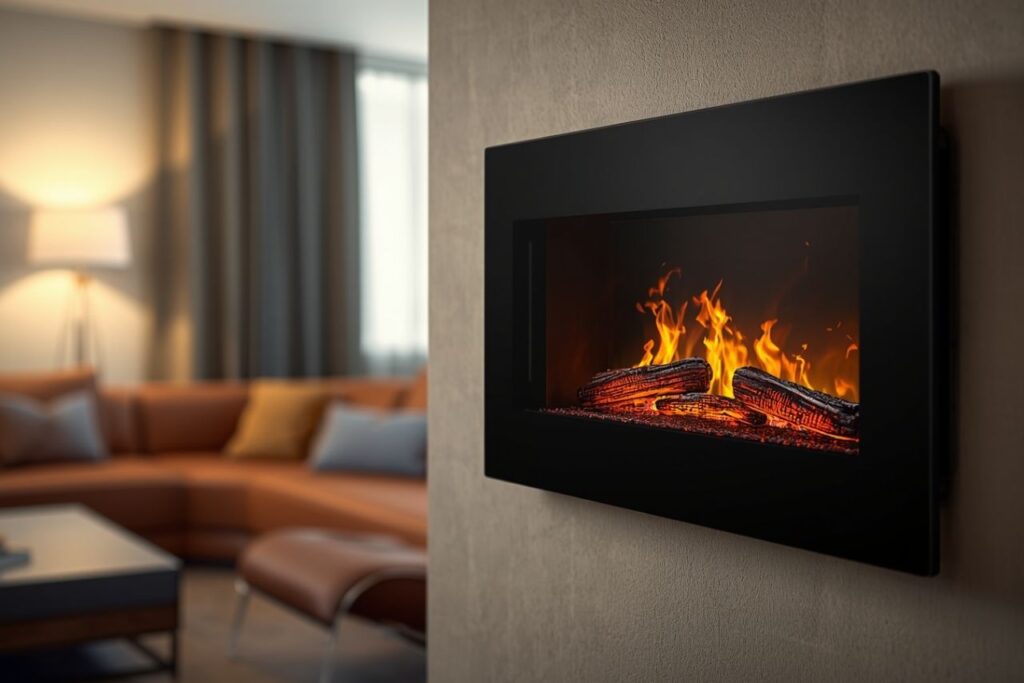
Heating element solutions for electric fireplaces and electric furnaces work best when they are selected as part of a controlled thermal system: the element’s alloy and construction must match the duty cycle, airflow, and enclosure constraints; terminals and insulation must support safe electrical loading; and controls must prevent overshoot that can damage high watt density elements. In practice, the most durable outcome comes from combining three disciplines—heater architecture selection (open-coil vs tubular vs film/plate), system engineering (airflow, sensors, control loop), and procurement controls (rating verification, approvals, warranty/returns)—to reduce field failures and total cost of ownership.
Internal references: Heating Element, Heating Element manufacturer, Heating Element Factory, Die Casting Heating Solutions.
- A systems view: why the element alone is rarely the root cause
- Element architectures used in fireplaces and furnaces
- Materials and construction: what determines life and safety
- Sizing and controls: wattage, airflow, and thermal control loop requirements
- Failure modes and field symptoms
- Replacement and sourcing: rating verification and procurement quality checks
- OEM/ODM manufacturing options for appliance brands
- FAQ (6 questions)
- References and outbound links
A systems view: why the element alone is rarely the root cause
Engineering definitions treat a heating element as a component that combines conductive alloy with insulating framework and lead connectors, designed to deliver heat for a defined purpose. This framing matters in electric fireplaces and furnaces because many “bad element” service calls originate upstream: inadequate airflow, unstable control behavior, or degraded terminal connections raise element temperature and accelerate burnout.
Section summary
For fireplaces and furnaces, reliability is dominated by airflow, connectors, and controls; the element is the visible failure, but not always the initiating cause.
Element architectures used in fireplaces and furnaces
Heating element architecture determines how heat transfers to air and how the element behaves under overload or poor airflow. Engineering frameworks typically classify wire elements by how they contact their insulating structure: suspended, supported, or embedded. Fireplaces and furnaces commonly use designs that prioritize convective heating and serviceability.
| Architecture | How it is built | Strengths in air heating | Typical constraints / risks |
|---|---|---|---|
| Open coil (suspended) | NiCr or FeCrAl coil suspended on ceramic/mica points | High surface exposure to airflow; efficient convective heating | Element sag/contact risk; must avoid inadequate airflow and hot spots |
| Supported coil / channel heater | Coil laid in channels; supported at many points | Improved shape retention; mixed heat transfer modes | Design must control contact points and local temperature non-uniformity |
| Tubular (embedded) | Resistance wire in MgO insulation inside a metal sheath | Rugged; good electrical insulation; tolerates handling and vibration | Lower direct surface exposure; finning often used to increase convection |
| PTC elements | Self-limiting resistive material increases resistance as temperature rises | Inherent temperature limiting; strong safety profile in certain designs | Specific control/packaging requirements; performance depends on design window |
| Film / plate heaters (surface) | Thin-film or thick-film resistive traces on substrate | Uniform heating on surfaces; compact packaging options | Requires correct bonding and insulation system; usually not the primary air heater by itself |
Where Jinzhong product families fit
In appliance component catalogs, these architectures map to families such as heating tubes (sheathed elements with MgO insulation and resistance wire), heating plates (uniform surface heating with robust mechanical strength), and heating films (ultra-thin flexible heaters for compact spaces). Integrated modules built with metal die-casting can further improve heat transfer and mechanical strength in applications where the heater must be part of a rigid thermal module.
Section summary
Open-coil designs maximize airflow heat transfer but demand strong airflow and controls; tubular and integrated designs trade some exposure for robustness and manufacturability.
Materials and construction: what determines life and safety
Heater alloys and insulating systems must be matched to temperature, cycling, and environment. Common appliance alloys include Ni-Cr and Fe-Cr-Al. Engineering notes emphasize that temperature-dependent electrical resistance and thermal expansion vary by material, and that even small differences in alloy composition or trace elements can change oxidation behavior and service life.
Construction quality matters as much as alloy choice. In embedded (sheathed) elements, the coil is locked within insulating powder such as magnesium oxide (MgO), transferring heat by conduction to a sheath, then to fins or surrounding structures. In airflow heaters, insulators (ceramic/mica) and support points reduce sag but add design tradeoffs between cost, complexity, and performance.
Evidence-based construction markers
- Sheath options aligned to environment (stainless steel/copper/special alloy)
- High-purity insulation (e.g., MgO) to maintain dielectric strength
- Stable terminal system with tight, heat-tolerant connections
- Support strategy that prevents sag and contact shorts in airflow
| Construction detail | Risk if poorly executed | Observed field symptom |
|---|---|---|
| Loose spade/lug terminals | Connector resistance heating; arcing; intermittent heating | Discoloration, melted insulation, burning odor near terminal area |
| Inadequate element support | Sag leading to coil contact and shorting | Breaker trip, visible coil deformation, localized burn marks |
| Insulation contamination | Reduced dielectric strength; leakage paths | Nuisance trips, unstable operation in humid/dusty environments |
| Mismatch of sheath to environment | Corrosion and accelerated degradation | Premature failure in harsh air or corrosive exposure zones |
Section summary
Alloy selection and trace elements influence oxidation and cycling life; construction details—insulation purity, sheath choice, terminals, and support—often determine field reliability.
Sizing and controls: wattage, airflow, and thermal control loop requirements
In electric fireplaces and furnaces, the element is designed to heat moving air. Sizing therefore connects watts, airflow, and the required temperature rise. Engineering references commonly use simplified relationships for process air heating (wattage proportional to airflow and temperature rise), then refine design with thermal modeling and test data. Critically, high watt density elements can be damaged by rapid ramping or inadequate airflow, so control strategy is part of sizing.
Control loop discipline in high-temperature air heaters
High watt density air heaters require carefully controlled ramp and overshoot prevention; engineering guidance notes that closed-loop control with a fast loop (on the order of hundreds of milliseconds) can be critical in demanding applications to avoid overshoot damage.
| Input | Why it matters | What a complete requirement statement includes |
|---|---|---|
| Airflow (CFM/SCFM) | Determines convective cooling and delivered heat to space | Nominal, min/max, and blocked-filter worst-case airflow |
| ΔT (target temperature rise) | Connects directly to required power for air heating | Inlet temperature range and desired outlet temperature range |
| Duty cycle and cycling frequency | Thermal cycling influences oxide layer behavior and fatigue | On/off pattern, ramp speed, and expected life cycles |
| Electrical supply | Defines feasible wattage and wiring/connector sizing | Voltage, phase, limits, and control method (SSR/relay) |
| Safety limits | Prevents runaway heating and enclosure damage | High-limit switch, thermal fuse, airflow prove switch, sensor placement |
Specification hygiene (what procurement should insist on)
Strong procurement practice reduces field risk. Product pages for other heater categories commonly list fields such as power rating, materials, ingress protection, safety approvals, and warranty/returns. For example, a plug-in radiator element listing may specify 1000W, materials (ABS and stainless steel), an IP67 ingress rating, UL approval, and a defined warranty and return window. Those fields are not identical to a furnace heater’s requirements, but they illustrate the level of documentation that simplifies supplier qualification.
Section summary
Sizing must consider airflow and ΔT, not watts alone; robust controls and documented specifications are essential in high watt density air-heating designs.
Failure modes and field symptoms
Failure analysis is more efficient when symptoms are mapped to likely causes across the whole heating system. In air-heating appliances, failures typically cluster around airflow restriction, terminal degradation, element sag/contact, and control overshoot.
| Field symptom | High-probability cause | Confirming evidence | Corrective direction |
|---|---|---|---|
| Heat output drops over time | Airflow restriction; element running hotter than intended | Weak blower output; dust buildup; high-limit trips | Restore airflow path; filter and inlet cleaning; verify blower operation |
| Intermittent heat / clicking | Loose terminals; high-limit cycling | Discolored connectors; hot spots; cycling behavior | Replace terminals; tighten connections; verify limit switch operation |
| Breaker trips when heat engages | Short to chassis; coil contact; pinched wire | Burn marks; deformed coil; damaged insulation | Inspect clearances; correct support; replace compromised wiring |
| Rapid burnout of replacement element | Overshoot control; inadequate airflow at startup | Element glows excessively; abnormal ramp profile | Re-evaluate control strategy; add airflow proving; adjust ramp limits |
Safety sequencing is part of failure prevention
Manufacturer-style replacement procedures for heating equipment emphasize verifying the correct replacement by referencing the equipment data plate for voltage and wattage, ensuring wire connections are tight, reinstalling protectors/insulation/covers, and restoring power only when the system is in a safe operating state. These sequencing principles reduce fire and shock risk.
Section summary
Symptom-driven troubleshooting should include airflow, controls, and connectors; repeated element failures often indicate a system-level problem rather than a part-quality issue.
Replacement and sourcing: rating verification and procurement quality checks
Replacement success rate increases dramatically when selection is treated as verification rather than pattern-matching photos. The minimum set of checks includes rating alignment, fit alignment, terminal compatibility, and clear supplier risk controls (warranty and return policy).
| Check | What “pass” looks like | Risk if failed |
|---|---|---|
| Data plate rating match | Replacement matches appliance specifications for voltage and wattage | Overheating, nuisance trips, wiring stress, underperformance |
| Mechanical fit and clearance | Mounting points and clearances prevent element contact and hot spots | Shorting, arcing, premature burnout |
| Terminal interface | Correct spade/lug type and tight engagement | Contact resistance heating, intermittent operation |
| Supplier documentation | Defined warranty/returns and consistent specifications | Higher downtime and hidden replacement costs |
Cross-industry insight: high-load duty and mechanical robustness
While air-heating appliances differ from liquid boilers, the engineering logic for durability under continuous load is similar: robust connections, stable mechanical structures, and materials chosen for the operating environment. High-power liquid-heating modules often highlight thickened tube walls, high-density flange connections, and anti-scaling design to support continuous high-load operation. That same “design for load + environment” mindset applies when specifying furnace heating modules for long duty cycles or high airflow variability.
Section summary
Strong replacement outcomes come from rating and fit verification plus supplier controls; “heavy-duty” design principles translate across air and liquid heating domains.
OEM/ODM manufacturing options for appliance brands
For appliance brands and integrators, OEM/ODM heating element development typically starts with a full requirement set: airflow window, target outlet temperature range, duty cycle, available power, enclosure constraints, compliance targets, and safety architecture. A full-chain manufacturer can shorten iteration cycles by integrating design, molds, and precision manufacturing, and by providing consistent quality control across materials, assembly, and inspection.
| Capability | Why it matters for fireplaces/furnaces | What to request during RFQ |
|---|---|---|
| Element family breadth | Allows architecture selection: tubes, plates, films, integrated modules | Candidate BOM options and tradeoff comparison (cost, life, safety) |
| Process integration | Reduces lead time and variation across suppliers | Inspection plan; critical-to-quality checkpoints; sample test plan |
| Compliance readiness | Supports global shipment and product acceptance | Certificate list and applicability by SKU and region |
| Customization and scaling | Enables multiple wattages and geometries with stable supply | MOQ, lead time for standard vs custom, monthly capacity |
Practical product-family references
Tubular designs emphasize sheath choices and MgO insulation for electrical safety and heat conduction; plates emphasize uniform surface heating and mechanical strength; films emphasize compact integration and uniform heating at low voltages; and integrated die-cast thermal modules can improve heat transfer while adding mechanical robustness in compact assemblies.
Section summary
OEM/ODM success depends on complete requirements, architecture selection across heater families, and demonstrable quality/compliance controls across a scalable manufacturing chain.
FAQ
1) Which heating element type is most efficient for an electric fireplace?
For air heating, efficiency is largely system-dependent: a well-designed open coil heater can transfer heat effectively to airflow due to high surface exposure, while tubular heaters can achieve durable performance with appropriate finning and airflow. The “best” choice depends on airflow window, enclosure constraints, and required duty cycle.
2) Why do some furnace elements fail shortly after replacement?
Early repeat failure is frequently associated with airflow restriction, poor terminal engagement, or control overshoot at startup. These conditions raise element temperature beyond the intended design point, accelerating oxidation, deformation, and connector damage.
3) What must be verified before ordering a replacement heating element?
A disciplined selection verifies the correct replacement by referencing the appliance’s data plate for voltage and wattage, then confirms mechanical fit, terminal type, and supplier documentation (warranty/returns).
4) Are PTC heaters safer than nichrome coil heaters?
PTC heaters can provide inherent temperature limiting because resistance increases as temperature rises, which can reduce overheating risk in certain designs. Safety, however, is system-level: sensor placement, airflow proving, limit devices, and enclosure design remain critical regardless of element type.
5) Do heater alloys matter if the element is “the same shape”?
Yes. Engineering sources emphasize that material properties change with temperature and that alloy composition (including trace elements) influences oxidation behavior, shape retention, and life under cycling. Two visually similar elements can perform differently in the same furnace.
6) What procurement fields indicate a well-documented heating product?
Strong documentation typically includes power rating, materials, relevant protection/approval marks (where applicable), and clear warranty/returns terms. Even for non-furnace heaters, listings that specify power (W), material makeup, IP rating, and UL approval illustrate the kind of clarity that reduces sourcing risk.
Conclusion
Reliable heating element solutions for electric fireplaces and furnaces come from matching heater architecture to airflow-driven heating requirements, selecting alloys and insulation systems appropriate to cycling and environment, and implementing control strategies that prevent overshoot and protect high watt density elements. Field reliability is most improved by addressing airflow and connector integrity, verifying replacement ratings against the appliance data plate, and using procurement controls that reduce hidden costs. For OEM/ODM programs, integrating tubes, plates, films, and die-cast thermal modules within a full-chain manufacturing process can shorten development cycles and stabilize quality at scale.
References and outbound links
Engineering fundamentals (element as an assembly; alloy behavior; suspended/embedded/supported; watt density; environment; hidden costs):
https://tutco.com/conductive/heating-elements
Safety sequencing and replacement verification example (data plate voltage/wattage verification; tight connections; covers secured; restore power only when safe):
https://www.whirlpoolwaterheaters.com/support/help/element-was-out-of-range/24
Product-family and integrated module context:
https://jinzho.com/
https://jinzho.com/product-category/heating-element/
https://jinzho.com/product-category/heating-element/heating-tubes/
https://jinzho.com/produ
Share :

