
Die Reise von einer einfachen Bohne zu einer reichhaltigen, aromatischen Tasse Kaffee ist ein Prozess, der von Präzision bestimmt wird, und im Kern steht eine Komponente, die sowohl grundlegend als auch oft übersehen wird: das Heizelement. Dieses kritische Teil ist der Maschinenraum jeder Kaffeemaschine, verantwortlich für die Umwandlung von kaltem Wasser in das perfekt erhitzte Medium, das für eine optimale Aromaextraktion erforderlich ist. Ohne ein ordnungsgemäß funktionierendes Heizelement wird der gesamte Brühprozess beeinträchtigt, was zu unterentwickeltem, saurem oder bitterem Kaffee führt.
Dieser umfassende Artikel wird in die komplexe Welt des Heizelement-Kaffeemaschine. eintauchen. Wir werden seine grundlegenden Funktionsprinzipien untersuchen, die verschiedenen Typen und Materialien, die in der modernen Fertigung verwendet werden, analysieren und häufige Fehlermodi sowie Fehlerbehebungstechniken identifizieren. Darüber hinaus werden wir die Bedeutung von Qualitätsfertigungsstandards beleuchten und das notwendige Wissen sowohl für Kaffeeliebhaber als auch für Wartungsfachleute bereitstellen, um diese wesentliche Komponente zu verstehen, zu warten und zu reparieren.
Was ist ein Kaffeemaschinen-Heizelement?
Auf grundlegendster Ebene arbeitet ein Heizelement ist ein elektrischer Widerstand, der dazu ausgelegt ist, elektrische Energie durch einen als Joulesche Erwärmung bekannten Prozess in thermische Energie umzuwandeln. In einer Kaffeemaschine besteht seine Hauptfunktion darin, die Temperatur des Wassers im Boiler oder Thermoblock auf einen präzisen Bereich zu erhöhen, typischerweise zwischen 195 °F und 205 °F (90 °C bis 96 °C). Dieser Temperaturbereich wird von der Specialty Coffee Association (SCA) weithin als Industriestandard für die ideale Extraktion anerkannt.
Das Erreichen und Aufrechterhalten thermische Stabilität innerhalb dieses engen Fensters ist von größter Bedeutung. Ist das Wasser zu kalt, werden die gewünschten löslichen Verbindungen aus dem Kaffeepulver nicht extrahiert, was zu einem schwachen und sauren Geschmack führt. Ist das Wasser hingegen zu heiß, kommt es zu einer Überextraktion, bei der unerwünschte bittere Verbindungen gelöst und der Kaffee verbrannt wird. Daher bestimmen die Leistung, Reaktionsfähigkeit und Zuverlässigkeit des Heizelements direkt die endgültige Qualität in der Tasse.
Die Wissenschaft hinter der Hitze: Wie funktionieren sie?
Das Funktionsprinzip eines Heizelements basiert auf der Physik des elektrischen Widerstands. Wenn ein elektrischer Strom durch ein Material mit hohem elektrischem Widerstand geleitet wird, haben die Elektronen Schwierigkeiten, sich hindurchzubewegen. Dieser Widerstand führt zu Kollisionen auf atomarer Ebene, die Wärme erzeugen.
Der Schlüssel zu diesem Prozess ist die Auswahl eines speziellen Widerstandsdrahts, am häufigsten einer Nichrom (Nickel-Chrom)-Legierung. Dieses Material ist aus mehreren entscheidenden Gründen außergewöhnlich gut für Heizanwendungen geeignet:
- Es hat einen hohen elektrischen Widerstand, wodurch es effizient erhebliche Wärme erzeugen kann.
- Beim Erhitzen bildet es eine stabile, haftende äußere Schicht aus Chromoxid, die das innere Material vor weiterer Oxidation und Zersetzung schützt und so eine lange Betriebslebensdauer gewährleistet.
- Es besitzt einen hohen Schmelzpunkt, sodass es bei erhöhten Temperaturen arbeiten kann, ohne sich zu zersetzen.
Diese Nichrom-Draht ist typischerweise gewendelt und in einer schützenden Metallhülle untergebracht. Ein Isolierpulver, wie beispielsweise Magnesiumoxid, füllt den Raum zwischen der Wendel und der Hülle aus. Dieser Isolator ist ein hervorragender Wärmeleiter, aber ein schlechter elektrischer Leiter, sodass Wärme effizient an das umgebende Wasser übertragen werden kann, während gleichzeitig verhindert wird, dass elektrischer Strom austritt, was die Sicherheit gewährleistet.
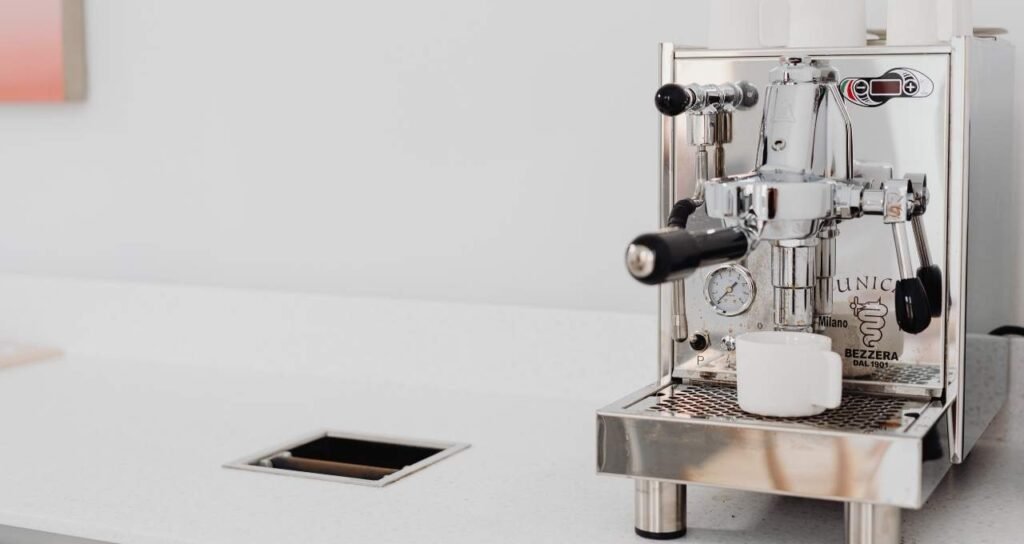
Arten von Heizelementen in Kaffeemaschinen
Heizelemente sind keine Einheitskomponente. Ihr Design und ihre Konstruktion variieren erheblich je nach Art der Kaffeemaschine, ihrem vorgesehenen Einsatzbereich (gewerblich oder privat) und den gewünschten Leistungsmerkmalen.
Eintauch-Rohrheizkörper
Dies ist das am weitesten verbreitete Design in Espressomaschinen mit Boilern. Der Heizelement für Kaffeemaschinen besteht aus einer rohrförmigen Metallhülle, oft aus Edelstahl oder Kupfer, die die Widerstandsspule beherbergt. Dieses Element ist direkt in den Wasserbehälter des Boilers eingetaucht. Es ist typischerweise mit einem Flansch montiert oder in den Boiler geschraubt und mit einer Hochtemperaturdichtung abgedichtet, um Lecks zu verhindern. Ihr Hauptvorteil ist die direkte, effiziente Wärmeübertragung auf ein großes Wasservolumen.
Eingegossene (Druckguss-)Heizkörper
Eine fortschrittlichere Lösung besteht darin, das rohrförmige Heizelement direkt in einen Aluminiumblock einzugießen. Diese Methode, die oft in Thermoblöcken und einigen modernen Brühgruppen angewendet wird, bietet eine überlegene Wärmeleitfähigkeit und Wärmeverteilung. Die Aluminiummasse fungiert als hocheffizienter Wärmespeicher und sorgt für eine gleichmäßige Temperatur über die gesamte Oberfläche. Dieses Design ermöglicht ein schnelles Aufheizen aus kaltem Zustand und eine hervorragende Temperaturerholung zwischen den Bezügen, was in Umgebungen mit hohem Bedarf entscheidend ist.
Dickschicht-Heizkörper
Dickschicht-Heizkörper repräsentieren eine neuere Generation der Heiztechnologie und werden durch das schichtweise Aufdrucken von Widerstands- und Dielektrikumspasten auf ein Keramik- oder Edelstahlsubstrat hergestellt. Dieser Prozess ermöglicht ein sehr flaches, kompaktes Design mit einer extrem schnellen thermischen Reaktion. Sie können Wasser nahezu augenblicklich erhitzen, während es über sie fließt, was sie ideal für Durchlauferhitzer und kompakte Einzelportions-Kaffeemaschinen macht.
[Datendiagramm: Vergleich der Heizelement-Technologien. Eine Tabelle, die Eintauch-Rohrheizkörper, Eingegossene Heizkörper und Dickschicht-Heizkörper anhand mehrerer Schlüsselkennzahlen vergleicht.]
| Merkmal | Eintauch-Rohrheizkörper | Eingegossene (Druckguss-)Heizkörper | Dickschicht-Heizung |
|---|---|---|---|
| Aufheizzeit | Mittel bis Langsam | Schnell | Sehr Schnell |
| Thermische Stabilität | Gut (in großen Boilern) | Exzellent | Gut (durchflussabhängig) |
| Energie-Effizienz | Gut | Sehr gut | Exzellent |
| Dauerhaftigkeit | Hoch | Sehr hoch | Mäßig |
| Typischer Anwendungsfall | Espressomaschinen-Boiler | Thermoblöcke, Brühgruppen | Durchlauferhitzer, Einzelportion |
Wichtige Leistungskennzahlen und Materialien
Bei der Bewertung oder dem Austausch eines Heizelements sind mehrere technische Spezifikationen von entscheidender Bedeutung.
Leistung (Wattzahl) und Spannung
Die Wattzahl gibt die Leistungsabgabe des Elements und seine Fähigkeit zur Wärmeerzeugung an. Ein Element mit höherer Wattzahl erhitzt ein bestimmtes Wasservolumen schneller. Gewerbliche Maschinen verfügen oft über Elemente mit 2000 W bis 6000 W, um den Dauerbetrieb zu bewältigen, während private Maschinen typischerweise im Bereich von 1000 W bis 1600 W liegen. Die Spannung ist ebenso kritisch; ein für 110 V ausgelegtes Element fällt schnell aus, wenn es an eine 230-V-Versorgung angeschlossen wird, und umgekehrt.
Materialzusammensetzung
Die Wahl des Hüllmaterials beeinflusst sowohl die Leistung als auch die Langlebigkeit.
- Rostfreier Stahl: Bietet hervorragende Korrosionsbeständigkeit, was es zu einer langlebigen Wahl macht, insbesondere in Gebieten mit hartem Wasser. Es ist der Standard für die meisten Qualitätsanwendungen.
- Kupfer: Besitzt eine im Vergleich zu Edelstahl überlegene Wärmeleitfähigkeit, ist aber im Laufe der Zeit anfälliger für Korrosion.
- Incoloy®: Eine Nickelbasis-Superlegierung, die außergewöhnliche Beständigkeit gegen Oxidation und Korrosion bei hohen Temperaturen bietet und oft in hochwertigen gewerblichen Maschinen verwendet wird.
Häufige Fehlermodi und Fehlerbehebung
Selbst das robusteste Heizelement wird irgendwann ausfallen. Das Verständnis der häufigsten Ursachen kann helfen, seine Lebensdauer zu verlängern und Probleme effektiv zu diagnostizieren.
Kalkablagerungen
Dies ist die häufigste Ursache für den Ausfall von Heizelementen. Mineralien aus hartem Wasser (Calcium- und Magnesiumcarbonate) fallen aus und bilden eine harte, krustige Schicht auf der Oberfläche des Elements. Diese Ablagerung wirkt als Isolator, zwingt das Element, härter zu arbeiten und zu überhitzen, um Wärme an das Wasser zu übertragen. Diese anhaltende Überhitzung führt schließlich zum Durchbrennen des inneren Widerstandsdrahts. Regelmäßige Entkalken ist die wichtigste Wartungsmaßnahme, um dies zu verhindern.
Elektrischer Ausfall (Durchbrennen)
Trockenlaufen” – der Betrieb der Maschine ohne Wasser im Boiler – ist eine schnelle und sichere Methode, ein Heizelement. zu zerstören. Da kein Wasser vorhanden ist, um die thermische Energie aufzunehmen, steigt die Temperatur des Elements fast augenblicklich in die Höhe, was zum Schmelzen der inneren Spule und zur Unterbrechung des Stromkreises führt. Sicherungen und Thermoschutzschalter sollen dies verhindern, können aber ebenfalls ausfallen.
Korrosion und Lochfraß
Schlechte Wasserqualität, insbesondere Wasser mit hohem Chloridgehalt oder einem ungeeigneten pH-Wert, kann zu Lochfraßkorrosion an der Hülle des Elements führen. Mit der Zeit können diese kleinen Löcher die Hülle durchdringen, sodass Wasser mit den inneren Komponenten in Kontakt kommt und einen Kurzschluss verursacht.
So testen Sie ein Heizelement
Für einen Techniker oder erfahrenen Heimwerker ist das Testen eines vermeintlich defekten Elements unkompliziert. Sicherheit hat oberste Priorität: Trennen Sie die Maschine vor Beginn immer von der Stromquelle.
- Greifen Sie auf die Anschlüsse des Heizelements zu.
- Trennen Sie die zum Element führenden Drähte.
- Stellen Sie ein Multimeter auf die Durchgangsprüfungseinstellung (oft durch ein Tonsymbol gekennzeichnet) oder die niedrigste Widerstandseinstellung (Ohm/Ω).
- Platzieren Sie eine Messspitze an jedem Anschluss des Elements.
- Gutes Element: Das Multimeter sollte piepen oder einen niedrigen Widerstandswert anzeigen (typischerweise zwischen 5-30 Ω), was einen geschlossenen Stromkreis anzeigt.
- Defektes Element (Unterbrochener Stromkreis): Das Multimeter zeigt keinen Durchgang an (kein Piepton) oder einen unendlichen Widerstandswert (OL oder “Open Loop”), was darauf hinweist, dass der innere Draht durchgebrannt ist.
- Prüfen Sie auf einen Kurzschluss gegen Masse, indem Sie eine Messspitze an einen Anschluss und die andere an den Metallflansch des Elements oder das Gehäuse der Maschine halten. Es sollte kein Durchgang. bestehen. Falls doch, ist das Element kurzgeschlossen und unsicher.
[Datentabelle: Fehlerbehebungsleitfaden für Heizelemente. Ein einfaches Tabellenformat zum schnellen Nachschlagen.]
| Symptom | Mögliche Ursache | Lösung |
|---|---|---|
| Maschine heizt nicht | Defektes Heizelement (unterbrochener Stromkreis) | Mit Multimeter prüfen. Bei Fehler ersetzen. |
| FI-/RCD-Schutzschalter löst sofort aus | Kurzgeschlossenes Heizelement | Auf Kurzschluss gegen Masse prüfen. Bei Fehler ersetzen. |
| Lange Aufheizzeiten | Starke Kalkablagerungen | Gründliches Entkalkungsverfahren durchführen. |
| Wasser wird nicht heiß genug | Thermostatproblem oder verkalktes Element | Thermostat prüfen; Maschine entkalken. |
Die Bedeutung von Qualität und Herstellungsstandards
Wenn ein Heizelement ausfällt, ist die Auswahl eines hochwertigen Ersatzteils entscheidend für die Sicherheit, Leistung und Langlebigkeit der Maschine. Der Markt ist mit Teilen unterschiedlicher Qualität überschwemmt, und die Wahl einer billigeren, nicht zertifizierten Komponente kann zu vorzeitigem Ausfall oder sogar zu einem erheblichen Sicherheitsrisiko führen.
Ein etablierter elektrisches Heizelement Hersteller Hersteller hält sich an strenge internationale Standards. Ein Hersteller wie Jinzho, mit über drei Jahrzehnten Erfahrung auf diesem Gebiet, zeigt beispielsweise sein Engagement für Qualität durch Zertifizierungen wie ISO 9001 (Qualitätsmanagement), UL (Underwriters Laboratories) und VDE (VDE Prüf- und Zertifizierungsinstitut). Diese Zertifizierungen stellen sicher, dass das Produkt rigorose Tests hinsichtlich elektrischer Sicherheit, Materialintegrität und Leistungszuverlässigkeit durchlaufen hat. Ein seriöser Hersteller bietet nicht nur ein Teil, sondern eine Garantie für technische Exzellenz und Sicherheit.
Häufig gestellte Fragen (FAQs)
1. Kann ich ein Heizelement einer Kaffeemaschine austauschen? machine heating element es selbst reparieren?
Für Personen mit soliden mechanischen und elektrischen Kenntnissen ist der Austausch eines Heizelements eine machbare Aufgabe. Allerdings beinhaltet dies den Umgang mit unter Spannung stehenden elektrischen Komponenten und das Gewährleisten einer wasserdichten Dichtung beim Wiederzusammenbau. Sicherheit muss oberste Priorität haben. Ziehen Sie immer den Stecker der Maschine, entleeren Sie sie vollständig, und ziehen Sie im Zweifelsfall einen professionellen Reparaturtechniker zu Rate.
2. Wie oft sollte ich meine Kaffeemaschine entkalken, um das Heizelement zu schützen? protect the heating element?
Die Häufigkeit der Entkalkung hängt vollständig von Ihrer Wasserhärte ab. Für Nutzer mit weichem Wasser kann alle 6-12 Monate ausreichend sein. Für diejenigen mit mittelhartem bis sehr hartem Wasser wird dringend empfohlen, alle 1-3 Monate zu entkalken, um schädliche Kalkablagerungen zu verhindern und die Lebensdauer Ihres Heizelements zu erhalten.
3. Ist ein Heizelement mit höherer Wattzahl Heizelement besseren Kaffee?
Nicht unbedingt. Während ein Element mit höherer Wattzahl Wasser schneller erhitzt, was in einem gewerblichen Umfeld für die Temperaturerholung vorteilhaft ist, hat die Präzision und Stabilität des Temperaturregelsystems (Thermostat, PID-Regler) einen größeren Einfluss auf die Kaffeequalität. Ein überdimensioniertes Element ohne präzise Regelung kann leicht die Zieltemperatur überschreiten, was zu bitterem, überextrahiertem Kaffee führt. Ausgewogenheit ist der Schlüssel.
Abschluss
Die das unbesungene Helden der Kaffeemaschine.. Seine Fähigkeit, Wasser schnell und gleichmäßig auf der perfekten Temperatur zu liefern, ist die Grundlage, auf der eine großartige Tasse Kaffee aufbaut. Durch das Verständnis seiner Funktionsprinzipien, der verfügbaren verschiedenen Technologien und der entscheidenden Bedeutung regelmäßiger Wartung wie Entkalkung können Benutzer sicherstellen, dass ihre Maschinen jahrelang optimal funktionieren. Wenn ein Austausch notwendig wird, ist die Wahl eines Bauteils von einem zertifizierten, erfahrenen Hersteller eine Investition in Sicherheit, Zuverlässigkeit und den anhaltenden Genuss von außergewöhnlichem Kaffee.
Verweise
- HowStuffWorks. “Wie man eine Kaffeemaschine repariert.” Abgerufen von https://home.howstuffworks.com/how-to-repair-small-appliances3.htm
- Chris’ Coffee. “Kaffeekessel-Heizelement.” Abgerufen von https://www.chriscoffee.com/products/rocket-coffee-boiler-heating-element
- Stefano’s Espresso Care. “Heizelemente für Espressomaschinen.” Abgerufen von https://espressocare.com/collections/heating-elements
- Coffee Addicts. “Elemente.” Abgerufen von https://coffeeaddicts.ca/collections/elements
- Home-Barista.com. “Testing heating element with multimeter.” Abgerufen von https://www.home-barista.com/repairs/testing-heating-element-with-multimeter-t58900.html
- Jinzho. “Coffee Machine Heating Element.” Abgerufen von https://jinzho.com/coffee-machine-heating-element/
- Elek-Heat. “Coffee Machine Heating Element.” Abgerufen von https://elekheat.com/coffee-machine-heating-element/