Sie können damit rechnen, dass die typischen Kosten für den Austausch eines Heizstabs im Jahr 2025 zwischen 150 TP4T und 350 TP4T liegen, was sowohl Arbeitskosten als auch Teile umfasst. Dieser Preis deckt das neue Heizelement, die Installation und eine grundlegende Inspektion Ihres Warmwasserbereiters ab. Die meisten Hausbesitzer benötigen einen Austausch des Heizstabs, wenn sie einen Abfall der Wassertemperatur oder gar kein heißes Wasser mehr bemerken. Das Heizelement des Wassererhitzers Innere Ihres Warmwasserbereiters kann mit der Zeit verschleißen, sodass ein Austausch unerlässlich ist, um die Effizienz und den Komfort wiederherzustellen. Heizelement oder Heizungsrohre Kosten für den Austausch des Heizstabs eines Warmwasserbereiters im Jahr 2025.
Nationale Durchschnittskosten für den Heizstab eines Warmwasserbereiters
Kosten für die Teile des Heizstabs eines Warmwasserbereiters
Preis für einen Heizstab eines Warmwasserbereiters
Sie werden feststellen, dass die Teil liegt normalerweise zwischen 10 TP4T und 60 TP4T. Das Material des Heizstabs beeinflusst die Kosten. Kupferheizstäbe bieten eine gute Wärmeleitfähigkeit, können aber in hartem Wasser schneller korrodieren. Edelstahlheizstäbe widerstehen Korrosion besser und halten länger, insbesondere in Haushalten mit hartem Wasser. Incoloy-Heizstäbe aus einer Nickel-Chrom-Legierung bieten den höchsten Widerstand gegen Hitze und Korrosion. Universell passende Heizstäbe kosten weniger, während markenspezifische Heizstäbe mit fortschrittlichen Funktionen den Preis erhöhen können. Arbeitskosten für den Austausch des Heizstabs eines Warmwasserbereiters.
Die Arbeitskosten machen einen erheblichen Teil der Gesamtkosten aus. Die meisten Klempner verlangen zwischen 100 TP4T und 250 TP4T für den Austausch. Die Arbeitskosten umfassen das Trennen des Warmwasserbereiters vom Stromnetz, das Entfernen des alten Heizstabs, das Installieren des neuen und die Gewährleistung eines sicheren Betriebs. Wenn Sie einen Notdienst benötigen oder in einer Region mit höheren Arbeitskosten leben, können Sie mehr bezahlen.
Gesamtkosten für den Austausch des Heizstabs eines Warmwasserbereiters.
Die Gesamtkosten für den
Austausch eines Heizstabs eines Warmwasserbereiters liegen im Jahr 2025 typischerweise zwischen 150 TP4T und 350 TP4T. Laut CartersMyPlumber’s Leitfaden 2025 , betragen die durchschnittlichen Kosten für die Reparatur eines Warmwasserbereiters, einschließlich des Austauschs des Heizstabs, etwa 506 TP4T., HomeAdvisor berichtet. , dass die meisten Hausbesitzer zwischen 222 TP4T und 986 TP4T für die Reparatur eines Warmwasserbereiters zahlen, wobei Komponentenreparaturen wie der Austausch von Heizstäben normalerweise zwischen 10 TP4T und 200 TP4T für Teile und Arbeit liegen. Diese Zahlen zeigen, dass die durchschnittlichen Kosten für die Reparatur eines Warmwasserbereiters variieren können, aber Sie können für einen Standardaustausch des Heizstabs eines Warmwasserbereiters mit etwa 200 TP4T rechnen. Reparaturkosten für Warmwasserbereiter nach Typ.
Kosten für den Austausch des Heizstabs eines elektrischen Warmwasserbereiters
Elektrische Warmwasserbereiter verwenden ein oder zwei Heizstäbe, um Wasser zu erhitzen. Die
Kosten für den Austausch eines Heizstabs eines elektrischen Warmwasserbereiters liegen normalerweise zwischen 150 TP4T und 350 TP4T, einschließlich Teile und Arbeit. Wenn Ihr Heizgerät ein hocheffizientes oder spezielles Heizelement verwendet, kann der Preis höher sein. Sie können auch mehr bezahlen, wenn Ihr Gerät ein markenspezifisches Element oder fortschrittliche Funktionen erfordert. Reparaturkosten für Gas-Warmwasserbereiter.
Gas-Warmwasserbereiter verwenden keine elektrischen Heizstäbe. Stattdessen verlassen sie sich auf Gasbrenner. Wenn Sie eine Reparatur benötigen, umfassen die Kosten oft den Austausch des Thermoelements, des Gasventils oder der Brennereinheit. Die durchschnittlichen Reparaturkosten für Gasmodelle liegen zwischen 150 TP4T und 500 TP4T. Der Preis hängt vom Teil und der Komplexität der Reparatur ab. Die Reparaturpreise für Gas-Warmwasserbereiter sind tendenziell höher als der Austausch elektrischer Heizstäbe, da zusätzliche Sicherheitsüberprüfungen und Teile erforderlich sind.
Reparaturkosten für Durchlauferhitzer (tankless).
Durchlauferhitzer (tankless) verwenden fortschrittliche Technologie und haben andere Reparaturanforderungen. Die Kosten für die Reparatur eines Durchlauferhitzers können zwischen 300 TP4T und 1.000 TP4T liegen. Diese Systeme erfordern möglicherweise spezielle Teile und Arbeitskräfte. Hybrid- und Wärmepumpen-Warmwasserbereiter fallen ebenfalls in diese Kategorie und können höhere Anschaffungs- und Installationskosten verursachen. Die
folgende Tabelle fasst die wichtigsten Unterschiede in Kosten und Funktionen zwischen traditionellen und Durchlauferhitzern oder Hybrid-Warmwasserbereitern zusammen: Durchlauferhitzer/Hybrid/Wärmepumpen-Warmwasserbereiter
| Faktor | Traditioneller Warmwasserbereiter | Häufiger (Spülung von Ablagerungen) |
|---|---|---|
| Vorab-Kaufkosten | $500 bis $1.500 | $3.000 bis $4.500 |
| Installationskosten | $500 bis $1.500 | $1.000 bis $3.000 |
| Energie-Effizienz | Basislinie | 22% bis 34% effizienter |
| Jährliche Energieeinsparungen | K.A. | Ungefähr $100 pro Jahr |
| Häufigkeit der Wartung | Weniger häufig (reduzierte Kalkablagerungen) | Rabatte bis zu 300 TP4T, ENERGY STAR-Rabatte, bundesstaatliche Steuergutschriften |
| Lebenserwartung | 10 bis 15 Jahre | bis zu 20 Jahre |
| Finanzielle Anreize | Beschränkt | Hinweis: Durchlauferhitzer und Hybrid-Warmwasserbereiter bieten eine höhere Energieeffizienz und längere Lebensdauer, aber ihre Reparaturkosten und Installationspreise sind höher als bei herkömmlichen Modellen. |
Was ist im Service zum Austausch des Heizstabs eines Warmwasserbereiters enthalten?.
Ein umfassender Service zum Austausch des Heizstabs eines Warmwasserbereiters umfasst mehrere wichtige Schritte, um die Sicherheit zu gewährleisten und die Leistung wiederherzustellen. Sie können den folgenden Prozess erwarten:
Trennen Sie den Warmwasserbereiter aus Sicherheitsgründen von der Stromsteckdose.
- Stellen Sie sicher, dass das Gerät vollständig trocken ist, bevor Sie mit Arbeiten beginnen..
- Entfernen Sie das defekte Heizelement aus dem Warmwasserbereiter.
- Installieren Sie das neue Heizelement und schließen Sie die Stromversorgung wieder an.
- Die meisten Dienstleistungen beinhalten auch eine grundlegende Inspektion Ihres Warmwasserbereiters, um nach anderen Problemen zu suchen. Der Techniker kann empfehlen, den Thermostat auszutauschen, wenn dieser Abnutzungserscheinungen zeigt. Heizelemente bestehen normalerweise aus Metall oder Keramik. Keramikelemente halten länger und widerstehen Korrosion besser. Das Element arbeitet mit einem Thermostatregler zusammen, um die Wassertemperatur zu regulieren. Sicherheitsvorkehrungen sind während des Austauschs entscheidend, um Verletzungen oder Wasserschäden zu vermeiden.
Faktoren, die die Kosten für den Austausch des Heizstabs eines Warmwasserbereiters beeinflussen.
Typ und Größe des Warmwasserbereiters
Der Typ und die Größe Ihres Warmwasserbereiters spielen eine wesentliche Rolle bei der Bestimmung der Gesamtkosten des Austauschs. Größere Tanks erfordern mehr Arbeit und manchmal teurere Teile. Hocheffiziente Modelle verwenden oft spezielle Heizelemente, was die Kosten erhöhen kann. Sie sollten auch bedenken, dass Durchlauferhitzer und Hybridgeräte andere Reparaturanforderungen und Preisklassen haben.
Standard- vs. Hocheffiziente Warmwasserbereiter.
Standard-Warmwasserbereiter haben normalerweise geringere Anschaffungskosten, aber hocheffiziente Modelle können Ihnen im Laufe der Zeit Geld sparen. Hocheffiziente Geräte erfordern oft spezifische Heizelemente, deren Austausch teurer ist. Die Aufrüstung auf energieeffiziente oder Durchlauferhitzermodelle erhöht die Anfangskosten, kann Sie aber für Rabatte oder Steuergutschriften qualifizieren. Die folgende Tabelle zeigt, wie
die Tankgröße die Installationskosten beeinflusst Tankgröße des Warmwasserbereiters:
| Installationskostenspanne (USD) | 40 Gallonen |
|---|---|
| 50 Gallonen | 600–1.200€ |
| 700–1.800 | 75 Gallonen |
| 900–2.300 | 80 Gallonen |
| 1.000–3.000 | Die Marke und das Modell Ihres Warmwasserbereiters können sowohl die Teile- als auch die Arbeitskosten beeinflussen. Premium-Marken oder Modelle mit fortschrittlichen Funktionen erfordern oft spezielle Heizelemente, was die Gesamtkosten erhöhen kann. Einige Marken bieten |
Einfluss von Marke und Modell auf die Kosten
lebenslange Garantien auf Edelstahl-Heizelemente , aber diese haben einen höheren Preis. Sie sollten immer die Lizenzierung und den Ruf des Auftragnehmers überprüfen, um unerwartete Ausgaben zu vermeiden., Arbeitskosten und Variationen der Reparaturkosten für Warmwasserbereiter.
Die Arbeitskosten machen einen erheblichen Teil der Reparaturkosten für Warmwasserbereiter aus. Die Komplexität des Auftrags und Ihr Standort beeinflussen beide, was Sie bezahlen.
Klempner verlangen in der Regel zwischen 45 TP4T und 150 TP4T pro Stunde. , während Elektriker 50 TP4T bis 100 TP4T pro Stunde verlangen können. Diese Sätze können sich schnell summieren, insbesondere wenn Ihre Reparatur schwer zugängliche Geräte oder zusätzliche Teile umfasst., Standard- vs. Notfall-Reparaturkosten für Warmwasserbereiter.
Standard vs. Emergency Hot Water Heater Repair Cost
Sie werden für Notfallreparaturen mehr bezahlen. Standard-Serviceeinsätze kosten in der Regel weniger, aber Reparaturen außerhalb der Geschäftszeiten oder am Wochenende können den Stundensatz verdoppeln. Die nationalen Durchschnittskosten für die Reparatur eines Warmwasserbereiters liegen bei etwa $604, aber die Reparaturkosten können je nach Zeitpunkt und Komplexität zwischen $90 und $1.750 liegen. Notdienste beinhalten oft zusätzliche Gebühren, daher kann die Planung von Reparaturen während der regulären Geschäftszeiten helfen, Kosten zu sparen.
Regionale Unterschiede bei den Kosten für den Austausch des Heizstabs eines Warmwasserbereiters
Ihr Wohnort beeinflusst die Kosten für Warmwasserbereiter-Reparaturen. In Boston, MA, liegen die durchschnittlichen Reparaturkosten beispielsweise bei $762, während sie in Tampa, FL, nur $539 betragen. Arbeitskosten und örtliche Bauvorschriften können die Kosten in einigen Regionen erhöhen. Sie sollten stets mehrere Angebote einholen, um das beste Preis-Leistungs-Verhältnis in Ihrer Gegend zu finden.
Zusätzliche Reparaturen beim Austausch des Heizstabs eines Warmwasserbereiters
Wenn Sie einen Austausch des Heizstabs Ihres Warmwasserbereiters planen, kann sich herausstellen, dass zusätzliche Reparaturen erforderlich sind. Ältere Geräte haben oft verschlissene Thermostate oder korrodierte Verkabelung. Diese zusätzlichen Reparaturen können Ihre Gesamtkosten erhöhen, helfen aber, zukünftige Ausfälle zu vermeiden.
Kosten für den Thermostataustausch
Wenn Ihr Techniker einen defekten Thermostat feststellt, müssen Sie möglicherweise für einen Austausch bezahlen. Die Kosten für den Austausch eines Warmwasserbereiter-Thermostats liegen in der Regel zwischen $100 und $300, inklusive Teile und Arbeit. Der gleichzeitige Austausch von Heizstab und Thermostat kann Ihnen bei zukünftigen Serviceeinsätzen Geld sparen.
Kosten für Elektro- oder Verkabelungsreparaturen
Elektro- oder Verkabelungsprobleme treten manchmal während einer Warmwasserbereiter-Reparatur auf. Die Reparaturkosten für Verkabelungsprobleme können je nach Schadensumfang zwischen $50 und $200 liegen. Die Behebung dieser Probleme während Heizelementaustausch hilft Ihnen, Wasserschäden zu vermeiden und einen sicheren Betrieb zu gewährleisten.
Tipp: Vorbeugende Wartung, wie regelmäßige Inspektionen und das Spülen von Ablagerungen, kann langfristige Reparaturkosten senken und die Lebensdauer Ihres Warmwasserbereiters verlängern.
Garantieabdeckung und Alter des Warmwasserbereiters
Wenn Sie die Kosten für den Austausch des Heizstabs Ihres Warmwasserbereiters in Betracht ziehen, sollten Sie immer zuerst Ihre Garantieabdeckung prüfen. Die meisten Warmwasserbereiter werden mit einer Herstellergarantie geliefert, die für einen bestimmten Zeitraum Teile und manchmal auch die Arbeit abdeckt. Standardgarantien dauern in der Regel zwischen 6 und 12 Jahren. Wenn Ihr Gerät noch unter Garantie steht, müssen Sie möglicherweise nur für die Arbeit bezahlen, was Ihre Gesamtkosten erheblich senken kann.
Tipp: Bewahren Sie Ihre Garantieunterlagen stets an einem sicheren Ort auf. Sie werden sie benötigen, wenn Sie einen kostenlosen oder vergünstigten Austausch beanspruchen möchten.
Mit zunehmendem Alter Ihres Warmwasserbereiters steigt die Wahrscheinlichkeit, dass ein Austausch erforderlich wird. Ältere Geräte fallen oft aus der Garantiezeit. In diesen Fällen müssen Sie die vollen Kosten für Teile und Arbeit tragen. Wenn Ihr Warmwasserbereiter älter als 10 Jahre ist, sollten Sie die Kosten eines Austauschs gegen die potenziellen Vorteile der Installation eines neuen, effizienteren Modells abwägen.
Hier sind einige wichtige Punkte zur Garantieabdeckung und zum Alter:
- Garantiestatus: Wenn Ihr Warmwasserbereiter noch unter Garantie steht, kontaktieren Sie den Hersteller oder Installateur, bevor Sie einen Austausch planen. Einige Garantien decken nur das Heizelement ab, während andere auch die Arbeit einschließen.
- Alter des Geräts: Warmwasserbereiter, die älter als 10 Jahre sind, haben oft häufigere Ausfälle. Die Kosten für fortlaufende Reparaturen können sich schnell summieren.
- Austausch vs. Reparatur: Wenn Ihr Gerät nicht mehr unter Garantie steht und die Kosten für eine Reparatur sich der Hälfte des Preises eines neuen Heizgeräts nähern, sollten Sie möglicherweise in ein neues System investieren.
Die folgende Tabelle fasst zusammen, wie Garantie und Alter Ihre Eigenkosten beeinflussen:
| Alter des Warmwasserbereiters | Typische Garantieabdeckung | Wer bezahlt den Austausch? | Durchschnittliche Kosten für Sie |
|---|---|---|---|
| 0–6 Jahre | Vollständig (Teile & Arbeit) | Hersteller | $0–$100 |
| 7–12 Jahre | Nur Teile | Sie (Arbeit) | $100–$250 |
| 13+ Jahre | Keiner | Sie (volle Kosten) | $150–$350 |
Sie sollten auch alle erweiterten Garantien oder Servicepläne überprüfen, die Sie erworben haben. Einige Pläne decken die Kosten für Ersatzteile auch nach Ablauf der Herstellergarantie ab. Bitten Sie Ihren Klempner stets, die Seriennummer und den Garantiestatus zu überprüfen, bevor er mit der Arbeit beginnt.
Hinweis: Wenn sich Ihr Warmwasserbereiter dem Ende seiner Lebensdauer nähert, können häufige Reparaturen ein Zeichen dafür sein, dass ein vollständiger Austausch auf lange Sicht kosteneffizienter ist.
DIY-Austausch des Heizstabs eines Warmwasserbereiters vs. Beauftragung eines Fachmanns
DIY-Kosten für den Austausch des Heizstabs eines Warmwasserbereiters
Benötigte Teile und Werkzeuge für den Austausch des Heizstabs eines Warmwasserbereiters
Wenn Sie sich entscheiden, den Austausch des Heizstabs Ihres Warmwasserbereiters selbst durchzuführen, müssen Sie mehrere Teile und Werkzeuge. kaufen. Das Heizelement selbst kostet in der Regel zwischen $15 und $80. Möglicherweise benötigen Sie auch einen Durchgangsprüfer, der etwa $10 kostet, und ein Wartungsset für etwa $30. Andere übliche Ersatzteile umfassen Anodenstäbe, Tauchrohre, Druckentlastungsventile und Thermoelemente. Die folgende Tabelle zeigt die Preisspanne für diese Teile:
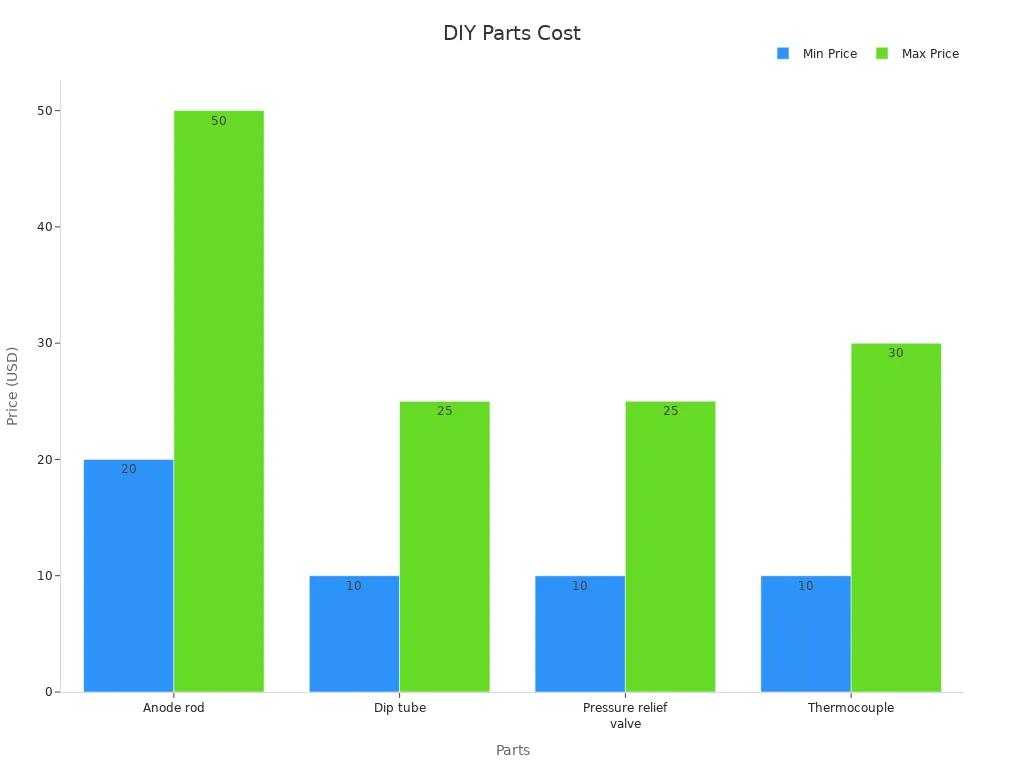
Sie sollten auch grundlegende Werkzeuge wie einen Schraubendreher, einen Schraubenschlüssel und einen Spannungsprüfer bereithalten. Diese Werkzeuge helfen Ihnen, die Reparatur sicher durchzuführen und Schäden an Ihrem Warmwasserbereiter zu vermeiden.
Kostenvergleich für professionelle Warmwasserbereiter-Reparaturen
Wenn Sie einen Fachmann für die Reparatur Ihres Warmwasserbereiters beauftragen, bezahlen Sie sowohl für Arbeit als auch für Teile. Die Arbeitskosten machen den größten Teil aus und liegen in der Regel zwischen $200 und $300. Die folgende Tabelle vergleicht die typischen Kosten für DIY- und professionelle Dienstleistungen:
| Reparaturaspekt | DIY-Kostenspanne | Kostenspanne für professionelle Dienstleistungen |
|---|---|---|
| Heizelementteil | $15 bis $80 | In den Gesamtarbeitskosten enthalten |
| Durchgangsprüfer | Um $10 | K.A. |
| Tuning-Kit | Um $30 | K.A. |
| Arbeit (professionell) | K.A. | $200 bis $300 |
| Typische Gesamtreparatur | Unter $20 (einfache Korrekturen) | $200 bis $300 |
Eine DIY-Reparatur des Warmwasserbereiters kann Geld sparen, insbesondere bei einfachen Reparaturen. Sie benötigen jedoch technische Kenntnisse in Sanitär- und Elektroinstallationen. Fehlerhafte Reparaturen können die Effizienz verringern oder Sicherheitsrisiken schaffen.
Sicherheitsaspekte beim Austausch des Heizstabs eines Warmwasserbereiters
Elektrische Sicherheitsrisiken
Die Arbeit an einem Warmwasserbereiter beinhaltet den Umgang mit elektrischen Komponenten. Sie müssen vor Beginn einer Reparatur stets die Stromversorgung trennen. Andernfalls kann es zu einem Stromschlag oder einer Verletzung kommen. Wenn Sie sich unsicher im Umgang mit elektrischen Leitungen fühlen, sollten Sie einen lizenzierten Fachmann kontaktieren.
Risiken von Wasserschäden
Unsachgemäße Installation oder Reparatur kann zu Lecks und Wasserschäden führen. Sie müssen sicherstellen, dass alle Verbindungen fest sind und der Tank trocken ist, bevor Sie die Stromversorgung wiederherstellen. Selbst ein kleines Leck kann mit der Zeit erhebliche Sachschäden verursachen. Professionelle Techniker haben Erfahrung mit der Installation von Warmwasserbereitern und können potenzielle Probleme erkennen, bevor sie zu kostspieligen Problemen werden.
Tipp: Überprüfen Sie nach Abschluss einer Reparatur stets auf Lecks. Früherkennung hilft, teure Wasserschäden zu vermeiden.
Wann ein DIY-Austausch des Heizstabs eines Warmwasserbereiters sinnvoll ist
Ein DIY-Austausch ist sinnvoll, wenn Sie Erfahrung mit Sanitär- und Elektroarbeiten haben. Sie sollten die Reparatur nur versuchen, wenn Sie sich Ihrer Fähigkeiten sicher sind und die Risiken verstehen. Wenn Ihr Warmwasserbereiter noch unter Garantie steht, kann die Durchführung eigener Reparaturen die Garantieabdeckung ungültig machen. Bei älteren Geräten oder kleineren Problemen kann DIY Geld sparen. Bei komplexen Reparaturen oder mangelnder Erfahrung gewährleistet die Beauftragung eines Fachmanns Sicherheit und zuverlässige Ergebnisse.
Reparatur oder Austausch Ihres Warmwasserbereiters?
Alter und Zustand des Warmwasserbereiters
Typische Lebensdauer eines Warmwasserbereiters
Sie sollten erwarten, dass die meisten herkömmlichen Warmwasserbereiter zwischen 8 und 12 Jahren halten. Durchlauferhitzer-Modelle können Ihnen über 20 Jahre dienen, wenn Sie die regelmäßige Wartung durchführen. Die jährliche Wartung, die zwischen 75 und 200 Euro kostet, umfasst Inspektionen und Teileaustausch. Diese Maßnahmen helfen, teure Reparaturen zu vermeiden und die Lebensdauer Ihres Systems zu verlängern. Mit zunehmendem Alter Ihres Warmwasserbereiters werden Sie wahrscheinlich häufiger Probleme und steigende Reparaturkosten feststellen.
Anzeichen dafür, dass ein Austausch des Warmwasserbereiters ansteht
Sie sollten auf eindeutige Anzeichen achten, die darauf hindeuten, dass ein Austausch des Warmwasserbereiters sinnvoll ist. Wenn Sie rostiges Wasser, ungleichmäßige Temperaturen oder Lecks am Tank bemerken, nähert sich Ihr System möglicherweise dem Ende seiner Nutzungsdauer. Häufige Reparaturen –mehr als zweimal im Jahr– oder Reparaturrechnungen, die mehr als die Hälfte der Kosten eines neuen Geräts betragen, deuten darauf hin, dass ein Austausch in Betracht gezogen werden sollte. Garantien können helfen, Kosten auszugleichen, aber die meisten laufen nach 6 bis 12 Jahren ab. Wenn Ihr Warmwasserbereiter dieses Alter erreicht, sollten Sie die Vorteile von Reparatur oder Austausch sorgfältig abwägen.
Reparaturkosten vs. Austauschkosten des Warmwasserbereiters
Wann sich der Austausch des Heizelements des Warmwasserbereiters lohnt
Sie sollten sich für den Austausch des Heizelements des Warmwasserbereiters entscheiden , wenn Ihr Gerät weniger als 10 Jahre alt ist, keine häufigen Reparaturen erforderte und die Reparaturkosten niedrig sind. Wenn Sie beispielsweise ein einzelnes defektes Heizelement haben und der Rest Ihres Systems einwandfrei funktioniert, kann eine einfache Reparatur die Leistung wiederherstellen und Geld sparen. Garantien können einen Teil oder die gesamte Reparatur abdecken und so Ihre Eigenkosten senken.
Wann ein vollständiger Austausch des Warmwasserbereiters Geld spart
Sie könnten feststellen, dass ein vollständiger Systemaustausch die klügere Wahl ist, wenn Ihr Warmwasserbereiter älter ist, keine Garantie mehr hat oder mehrere Reparaturen pro Jahr erfordert. Die Reparaturkosten können zwischen 200 und 900 Euro liegen, während die Austauschkosten typischerweise zwischen 800 und 3.000 Euro liegen. Wenn Ihre Reparaturrechnungen 50 % der Austauschkosten erreichen oder überschreiten, bietet die Investition in ein neues System oft einen besseren Wert. Neuere Modelle bieten zudem verbesserte Zuverlässigkeit und Energieeffizienz, was Ihre Betriebskosten im Laufe der Zeit senken kann.
Weitere Faktoren bei der Entscheidung über den Austausch des Warmwasserbereiters
Überlegungen zur Energieeffizienz
- Neue Warmwasserbereiter, einschließlich fortschrittlicher Durchlauferhitzer- und Wärmepumpenmodelle, bieten eine höhere Energieeffizienz und bessere Leistung.
- Staatliche und bundesweite Anreize wie Rabatte und Steuergutschriften können die Anschaffungskosten für den Austausch eines energieeffizienten Warmwasserbereiters senken.
- Die Umstellung auf ein effizienteres System kann Ihren Energieverbrauch senken und langfristige Einsparungen ermöglichen.
Häufigkeit von Reparaturen am Warmwasserbereiter
- Wenn Sie Teile Ihres Warmwasserbereiters mehr als zweimal im Jahr reparieren oder ersetzen müssen, wird ein Austausch kosteneffizienter.
- Häufige Ausfälle signalisieren, dass sich Ihr System dem Ende seiner Lebensdauer nähert.
- Eine professionelle Bewertung hilft Ihnen zu entscheiden, ob Sie reparieren oder ersetzen sollten , basierend auf Systemalter, Reparaturhistorie und Effizienz.
Tipp: Wägen Sie die Kosten für Reparaturen gegen die Vorteile eines neuen, energieeffizienten Warmwasserbereiters ab. Ein Austausch kann Seelenfrieden, niedrigere Energiekosten und weniger unerwartete Ausfälle bieten.
So sparen Sie Geld beim Austausch des Heizelements des Warmwasserbereiters
Holen Sie mehrere Kostenvoranschläge für die Reparatur des Warmwasserbereiters ein
Sie können Ihre Kosten erheblich senken, indem Sie vor der Beauftragung einer Reparatur Angebote von mehreren Dienstleistern vergleichen. Viele Hausbesitzer berichten, dass das E-Mailen mehrerer Klempner oder Auftragnehmer – wie sie beispielsweise auf Craigslist zu finden sind – oft zu besseren Preisen führt. Wenn Sie Angebote vergleichen, können Sie marktübliche Preise erkennen und Überzahlungen vermeiden.
- Die meisten Kostenvoranschläge für Reparaturen am Warmwasserbereiter liegen um einen bestimmten Preis, meist knapp über 1.000 Euro für größere Arbeiten.
- Preisvergleiche helfen Ihnen, angemessene Kosten zu identifizieren und überhöhte Gebühren zu vermeiden.
- Einige Anbieter verlangen möglicherweise mehr für Service außerhalb der Geschäftszeiten oder an Feiertagen, fragen Sie daher immer nach dem Zeitpunkt.
- Die Wahl eines Klempners, der Ersatzteile auf seinem Fahrzeug vorrätig hat, kann Ihnen Verzögerungen und Zusatzkosten ersparen.
- Ein Gleichgewicht zwischen Preis, Servicequalität und Garantieabdeckung stellt sicher, dass Sie das beste Preis-Leistungs-Verhältnis erhalten.
Servicegebühren und Stundensätze können stark variieren. Einige Auftragnehmer berechnen stundenweise, während andere Festpreise anbieten. Fordern Sie stets schriftliche Kostenvoranschläge an, um die Gesamtkosten einschließlich Arbeit und Material vergleichen zu können. Dieser Ansatz hilft Ihnen, bei den Reparaturkosten des Warmwasserbereiters zu sparen und stellt sicher, dass Sie nicht mehr als nötig bezahlen.
Prüfen Sie Garantien oder Rabatte für Warmwasserbereiter
Bevor Sie Reparaturen planen, überprüfen Sie die Garantie Ihres Warmwasserbereiters und suchen Sie nach verfügbaren Rabatten. Regelmäßige Wartung und Garantieabdeckung helfen Ihrem System, effizient zu laufen und seine Lebensdauer zu verlängern. Garantien können Sie vor teuren Reparaturen schützen und für Seelenfrieden sorgen. Viele Hersteller decken Teile oder Arbeit für mehrere Jahre ab, was Ihre Eigenkosten senken kann.
Rabatte bieten ebenfalls eine praktische Möglichkeit, Ihre Ausgaben zu reduzieren. Versorgungsunternehmen und Hersteller bieten oft Rabatte für den Austausch oder die Aufrüstung von Warmwasserbereitern an. Die folgende Tabelle zeigt typische Rabattbeträge basierend auf dem Warmwasserbereitertyp und dem Austauschszenario:
| Warmwasserbereitertyp | Austausch eines elektrischen Warmwasserbereiters | Austausch eines Erdgas-Warmwasserbereiters |
|---|---|---|
| Warmwasserbereiter mit Speicher | $550 | $350 |
| ENERGY STAR Warmwasserspeicher | $650 | $400 |
| Tankloser Wassererhitzer | $700 | $550 |
Um teilnahmeberechtigt zu sein, müssen Sie ein aktiver Kunde sein und geeignete Geräte kaufen. Reichen Sie Ihren Rabattantrag mit einer bezahlten Rechnung innerhalb von 12 Monaten nach der Installation ein. Einige Programme erfordern eine Überprüfung vor der Zahlung. Die Prüfung von Garantien und Rabatten kann Ihre Reparatur oder Ihren Austausch erheblich erschwinglicher machen.
Planen Sie Reparaturen am Warmwasserbereiter außerhalb der Hauptzeiten
Der Zeitpunkt Ihrer Reparatur kann ebenfalls Ihre Kosten beeinflussen. Standard-Serviceeinsätze während der regulären Geschäftszeiten kosten in der Regel weniger als Notfalleinsätze oder Reparaturen außerhalb der Geschäftszeiten. Viele Klempner erhöhen ihre Preise für Abende, Wochenenden oder Feiertage. Indem Sie Ihre den Austausch des Heizelements des Warmwasserbereiters entscheiden Reparatur außerhalb der Hauptzeiten planen, vermeiden Sie Aufpreise und halten Ihre Kosten niedrig.
Tipp: Planen Sie voraus und buchen Sie Ihre Reparatur, sobald Sie ein Problem bemerken. Frühzeitiges Handeln hilft Ihnen, Notfallgebühren zu vermeiden und gibt Ihnen mehr Flexibilität bei der Auswahl eines qualifizierten Fachmanns.
Wenn Sie diese Schritte befolgen, können Sie Ihre Ausgaben kontrollieren und fundierte Entscheidungen treffen. Mit sorgfältiger Planung können Sie die Leistung und Zuverlässigkeit Ihres Warmwasserbereiters aufrechterhalten, ohne zu viel auszugeben.
Warten Sie Ihren Warmwasserbereiter, um Reparaturkosten zu senken
Sie können Ihren Warmwasserbereiter effizient laufen lassen und teure Reparaturen vermeiden, indem Sie einen regelmäßigen Wartungsplan einhalten. Viele Hausbesitzer übersehen einfache Aufgaben, die die Lebensdauer ihres Warmwasserbereiters verlängern und die Betriebskosten senken. Die EPA berichtet, dass Jeder Dollar, den Sie für vorbeugende Wartung ausgeben, spart vier Dollar an vermiedenen Ausfall- und Reparaturkosten. Durch routinemäßige Pflege reduzieren Sie außerdem den Energieverbrauch um 5 % bis 15 %. Richtige Installation und Wartung können Ihre Energiekosten um bis zu 30 % senken. Wenn diese Schritte vernachlässigt werden, führt dies zu mehr Serviceeinsätzen und höheren Reparaturkosten, wie ein Beispiel zeigt: Ein Einzelhändler, der die Wartung ausließ, verzeichnete einen Anstieg der Serviceeinsätze um 9 % und fast doppelt so hohe Reparaturausgaben.
Sie sollten sich auf diese wesentlichen Wartungsaufgaben konzentrieren:
- Spülen Sie den Speicher jährlich: Im Tank setzt sich Sediment ab, was die Effizienz verringert und das Heizelement stärker belastet. Durch jährliches Entleeren und Spülen des Tanks wird dieser Ablagerung entfernt.
- Überprüfen Sie die Opferanode: Die Opferanode verhindert Rost im Inneren des Tanks. Kontrollieren Sie sie alle zwei bis drei Jahre und tauschen Sie sie aus, wenn sie korrodiert aussieht.
- Testen Sie das Sicherheitsventil: Betätigen Sie den Hebel des Ventils, um sicherzustellen, dass es Wasser abgibt. Dieser Schritt verhindert gefährlichen Druckaufbau.
- Prüfen Sie die Thermostateinstellungen: Stellen Sie den Thermostat Ihres Warmwasserbereiters auf 48 °C (120 °F) ein. Diese Temperatur liefert ausreichend Warmwasser, spart Energie und verringert die Verbrühungsgefahr.
- Achten Sie auf Lecks oder Korrosion: Untersuchen Sie Tank und Anschlüsse auf Anzeichen von Wasseraustritt oder Rost. Eine frühzeitige Erkennung hilft, größere Reparaturen zu vermeiden.
Wenn Sie einen Durchlauferhitzer besitzen, müssen Sie das System jährlich oder halbjährlich spülen, um Kalkablagerungen und Korrosion zu verhindern. Experten betonen, dass vielen Kunden die Bedeutung der Entkalkung nicht bewusst ist. Regelmäßiges Spülen verbessert nicht nur die Wasserqualität, sondern erhält auch Ihre Garantie. Hersteller fordern oft jährliche Wartung; wird diese unterlassen, kann die Garantie erlöschen und teure Ersatzbeschaffungen notwendig werden.
Tipp: Legen Sie eine Erinnerung im Kalender für die jährliche Wartung an. Diese einfache Gewohnheit hilft, unerwartete Ausfälle zu vermeiden und hält Ihren Warmwasserbereiter zuverlässig in Betrieb.
Indem Sie diese Aufgaben in Ihre häusliche Wartungsroutine integrieren, lassen Sie regelmäßige Pflege die Reparaturkosten senken und die Systemleistung verbessern. Sie gewinnen auch die Gewissheit, dass Ihr Warmwasserbereiter zuverlässig Warmwasser liefert, wenn Sie es benötigen.
Sie können mit Kosten zwischen 200 € und 300 € für den Austausch eines Heizelements im Warmwasserbereiter im Jahr 2025 rechnen. Mehrere Faktoren beeinflussen den Endpreis, darunter Arbeitskosten, Notdienstgebühren, Art des Warmwasserbereiters und regionale Gegebenheiten. Um Geld zu sparen und die beste Wahl für Ihr Zuhause zu treffen, beachten Sie diese Tipps:
- Planen Sie Reparaturen während der regulären Arbeitszeiten, um Zusatzgebühren zu vermeiden.
- Vergleichen Sie Angebote lokaler Klempner.
- Führen Sie jährliche Wartung durch, wie das Spülen des Tanks und die Überprüfung der Opferanode.
- Reparieren Sie jüngere Geräte, ersetzen Sie jedoch ältere oder häufig defekte Warmwasserbereiter.
FAQ
Woran erkennen Sie, ob das Heizelement Ihres Warmwasserbereiters ausgetauscht werden muss?
Mögliche Anzeichen sind lauwarmes Wasser, lange Aufheizzeiten oder gar kein Warmwasser. Wenn das Zurücksetzen der Sicherung nicht hilft, ist das Element wahrscheinlich defekt. Ein Fachmann kann das Element mit einem Multimeter testen.
Kann man ein Heizelement austauschen, ohne den Tank zu entleeren?
Sie sollten den Tank unterhalb des Elementniveaus entleeren, bevor Sie es entfernen. Dies verhindert, dass Wasser austritt und Schäden verursacht. Schalten Sie vor Beginn der Arbeiten immer die Stromversorgung aus.
Wie lange dauert der Austausch eines Heizelements?
Ein Fachmann erledigt die Arbeit in der Regel in 1 bis 2 Stunden. Ein DIY-Austausch kann länger dauern, wenn Sie mit dem Vorgang nicht vertraut sind. Vorbereitung und Nacharbeit kommen zusätzlich hinzu.
Behebt der Austausch des Elements alle Probleme am Warmwasserbereiter?
Nein. Der Austausch des Elements löst nur Heizprobleme, die durch ein defektes Element verursacht werden. Andere Probleme wie Thermostatfehler oder Tanklecks erfordern andere Reparaturen.
Welche Werkzeuge benötigen Sie für den DIY-Austausch eines Heizelements?
Sie benötigen einen Schraubendreher, einen Element-Schlüssel, einen Spannungsprüfer und gegebenenfalls einen Gartenschlauch zum Entleeren.
Tipp: Verwenden Sie aus Sicherheitsgründen stets isoliertes Werkzeug.
Ist es sicher, ein Heizelement selbst auszutauschen?
Sie können es selbst austauschen, wenn Sie über elektrische und installateurtechnische Erfahrung verfügen. Wenn Sie unsicher sind, beauftragen Sie einen zugelassenen Fachmann. Falsche Installation kann zu Stromschlag oder Wasserschäden führen.
Wie oft sollte ein Heizelement ausgetauscht werden?
Die meisten Elemente halten 6 bis 10 Jahre. Hartes Wasser oder mangelnde Wartung können die Lebensdauer verkürzen.
| Wasserqualität | Erwartete Lebensdauer des Elements |