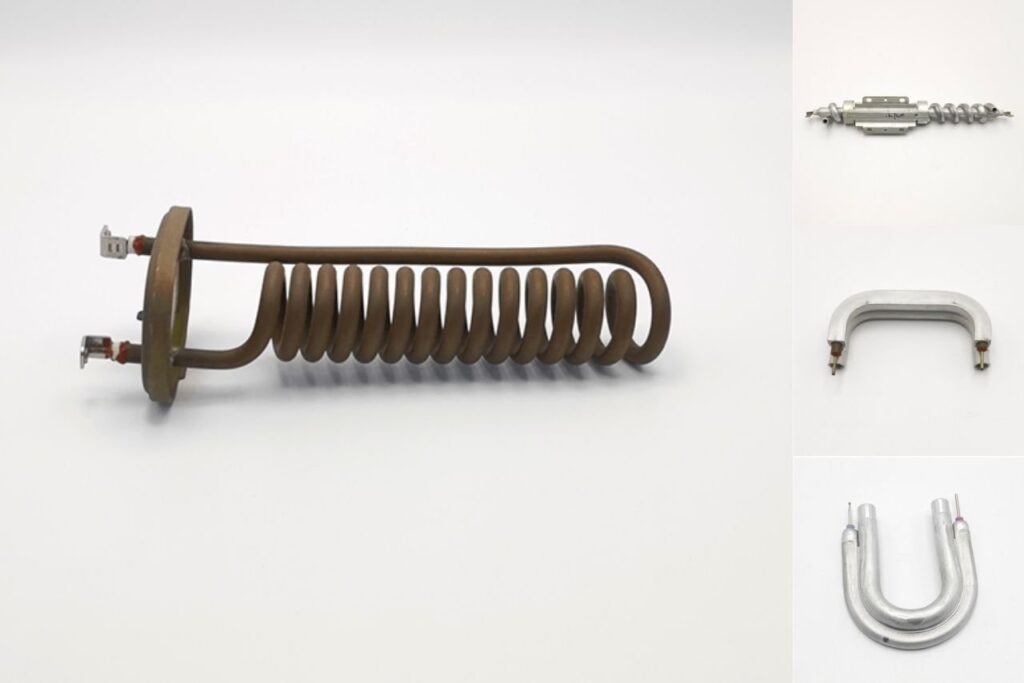
A Samsung dryer that tumbles normally but won t heat usually points to one of two gatekeepers in the heating circuit: the Heating Element itself or a thermostat/thermal safety device that s preventing power from reaching it. This guide helps you separate the two safely and logically before you buy parts.
- Quick symptom clues (element vs thermostat)
- Safety first (don t dry fire a heater)
- How a heating element works (in plain terms)
- A simple diagnosis flow you can follow
- Common heating element failure patterns
- Common thermostat / thermal cut-off patterns
- How to choose the right replacement part
- When to call a technician
- If you re designing appliances: element options & manufacturing
- FAQ
- Dryer runs normally, but heat is weak or intermittent and gets worse over time.
- You see a visibly broken coil (if your model allows a peek through the heater housing).
- Unit heats briefly, then stops heating (a coil can open when hot if it s damaged).
- No heat at all, suddenly, after an overheating event (restricted vent, heavy lint).
- Dryer overheats, then later stops heating (a safety device may open to protect the unit).
- Heat comes back only after long cool-down (cycling thermostat behavior or airflow issue).
One of the fastest ways to destroy a heating element is to energize it without the correct operating conditions. Whirlpool s water-heater guidance is a good analogy: don t apply power until the system is ready. In their heating-element replacement steps, they explicitly warn not to turn power back on until the tank is full otherwise the element can burn out ( dry fire ). (See: Whirlpool: Replace the Heating Element.)
For a dryer, the ready condition is primarily airflow. Running heat with blocked venting can overheat the element housing and trip thermal safeties (or damage components).
A heating element is not just a wire that gets hot. It s an assembly: an electrically conductive resistance alloy plus an insulating framework and safe electrical terminations. TUTCO explains that the core is resistive (Joule) heating: current through a resistance alloy converts electrical energy into heat. The element s physical integration suspended, supported, or embedded affects heat transfer and durability. (Source: TUTCO: Heating Elements.)
- Clean lint filter and check the blower path if accessible.
- Inspect the vent run to the exterior for kinks, crushed flex duct, or heavy lint buildup.
- If airflow is poor, fix that first otherwise new parts can fail again.
If you have a multimeter and are trained to use it safely, the fastest separation is: Is the heating element electrically continuous? and Are the thermal safety devices closed (continuous)?
If you don t have a meter: your best non-meter indicators are visual coil damage (element) and sudden no-heat after overheating (thermal cut-off). But a meter test is the most reliable.
Heating elements are consumable components; oxidation, deformation, and electrical resistance changes can eventually lead to failure. TUTCO notes that all resistance heating elements eventually burn out, and cycling/overheating accelerates that process.
A thermostat or thermal cut-off can open the circuit to prevent overheating. If airflow was restricted, this is especially common.
- Broken coil / open circuit: the classic failure no heat because current can t pass through the element.
- Overheated element from poor airflow: can sag, deform, or damage insulators; may fail soon after.
- Material/environment mismatch: TUTCO highlights that contaminants and operating conditions affect alloy life; overheating and improper watt density shorten life.
- Thermal cut-off blown after overheating: often sudden no-heat.
- Cycling thermostat issues: heat may be erratic (but airflow or a clogged vent can mimic this).
- Underlying cause still present: if you replace a safety device without fixing airflow, it may fail again.
For any heating element replacement, you must match electrical and mechanical requirements. Whirlpool s guidance for water-heater elements stresses verifying the replacement by checking the unit s data plate for voltage and wattage; the same principle applies to appliance heaters don t almost match a heater.
If you re sourcing components or building appliances, Jinzhong (JINZHONG) presents a broad heater portfolio across: Heating Tubes, Heating Plate, and Heating Film, plus Die Casting Heating Solutions.
If you re doing OEM/ODM work, Jinzhong s homepage emphasizes full-chain capabilities (design mold development precision manufacturing) and one-stop processes (die-casting, stamping, CNC, surface treatment), with standard product delivery as fast as 3 days in their strengths section. (Source: Jinzhong Electric Heating.)
- You re unsure how to safely test live circuits or interpret meter readings.
- Breaker trips, you smell burning, or wiring looks heat-damaged.
- Repeated failures after part replacement (usually indicates airflow restriction or a control/power problem).
TUTCO breaks heating elements down by construction and integration (suspended/embedded/supported) and also covers flexible heaters, thick film, thin film, and more each with tradeoffs in heat transfer, durability, cost, and controls. (Source: TUTCO: Heating Elements.)
Jinzhong s catalog-style categories map well to common appliance needs:
- Heating tubes: includes items like Boiler Heating tube, bundle rod heater, and appliance-oriented heaters (coffee machine, fryer, etc.).
- Heating plates: aluminum/stainless composite style plates (e.g., coffee maker heating plate, kettle heating plate).
- Heating film: thick film and thin film heater variants, including ceramic substrate thick-film and sputtered thin-film types.
- Die-casting heating solutions: die-cast aluminum alloy substrate + thick film resistor tech appears repeatedly in the product list (coffee maker parts, boiler heat exchanger, etc.).
Yes. A thermostat/thermal cut-off in series with the heater can open the circuit, so the element never receives power even if it s physically fine. That s why continuity checks (element + safeties) are the cleanest way to separate causes.
It can fail intermittently (for example, a coil that opens when hot), or it can be intact but the dryer still won t heat due to airflow, control, or power-supply issues. Overheating and high watt density accelerate wear and burn-out risk, as discussed in TUTCO s heater-life section.
Often, yes. A cut-off commonly opens because the system overheated frequently from restricted airflow (lint, crushed vent, long duct runs). Fix the airflow problem or you risk repeating the failure.
- Heating Element (category overview)
- Heating Element manufacturer (Jinzhong Electric Heating homepage)
- Heating Element Factory (about / factory context)
- Die Casting Heating Solutions